
Review · DUBLIN
Wicklow Mountains, Avoca and Glendalough Rail Tour from Dublin
Ireland gets rural fast.
This seven-hour trip combines a scenic rail journey from Dublin with a coach ride through Wicklow, then gives you time at Avoca’s working hand-weaving mill and the ancient settlement at Glendalough. I especially like the relaxed pace and the chance to see coastal views, mountain roads, lakes, villages, and monastic ruins in one day. The main drawback is that the schedule can feel slow for children or anyone who wants a full day of hiking.
The best guides, including Paddy, Liam, Patrick, Raymond, and Edmund, have added humor, useful local facts, and careful attention to the group. Still, Glendalough deserves more time than the schedule allows, and the Avoca stop can feel commercial if shopping is not your thing.
Five things to know before you book
- Train travel adds real variety: You leave Dublin by rail, enjoy views along the coast, then switch to a coach for Wicklow’s narrow country roads.
- Avoca is more than a photo stop: You can watch weavers at work at Ireland’s oldest hand-weaving mill, founded in 1723, then eat and shop nearby.
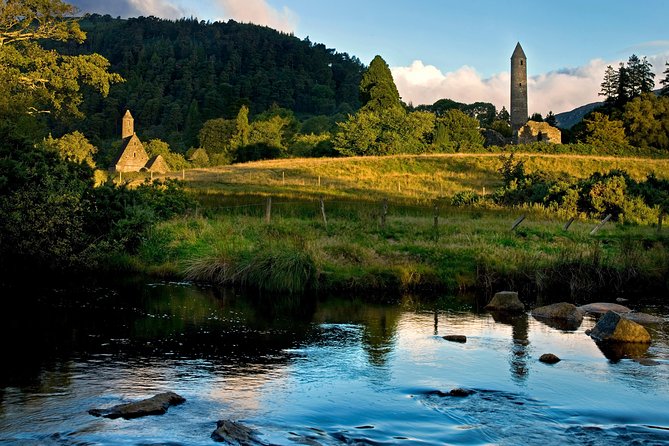
- Glendalough is the day’s main historic sight: The seventh-century monastic settlement includes a famous round tower and ruins dating mainly from the 12th century.
- The pace is gentle: You get roughly two hours at Avoca and two hours at Glendalough, with scenic driving between them.
- Good guides make a difference: Paddy receives especially strong praise for being attentive, entertaining, and careful not to leave anyone behind.
- Pack for changing weather: The tour requires good weather, and rain can make the walking areas at Glendalough less pleasant.
From Connolly Station to Wicklow by rail
The tour begins at 9:10 a.m. at Connolly Train Station on Amiens Street in Dublin. You need to make your own way there, since hotel pickup is not included. The meeting point is central and close to public transportation, but give yourself enough time to find the correct station area and meet the host.
A host accompanies you on the train, and reserved seats are included. That removes much of the fuss that can come with finding seats in a busy station. It also gives the day a pleasant start. Instead of sitting on a coach from the first minute, you ease out of Dublin by rail and watch the city give way to coastal and rural scenery.
The train portion is one of the tour’s strongest ideas. You get a change of pace and a different view of Ireland than you would from a motorway. One passenger described the coastal scenery as especially picturesque, while another liked seeing the sea and countryside before reaching Wicklow County.
I would choose a window seat if you can. The tour is not built around a long lecture on the train, so the pleasure here is simple: sit back, watch the views, and let someone else manage the transport.
At Arklow, the group continues by coach toward Avoca. This rail-to-road change is what makes the outing feel more varied than a standard coach excursion from Dublin. It also means you should expect some movement between transport modes rather than one continuous ride.
More Train Journeys in Dublin:
- Northern Ireland Including Giant’s Causeway Rail Tour from Dublin
★ 4.5 · 325 reviews - Sustainable Ring of Kerry Rail Tour from Dublin
★ 4.5 · 277 reviews - 3-Day Blarney Castle, Ring of Kerry, & Cliffs of Moher Rail tour
★ 4.5 · 211 reviews
Avoca and the working mill
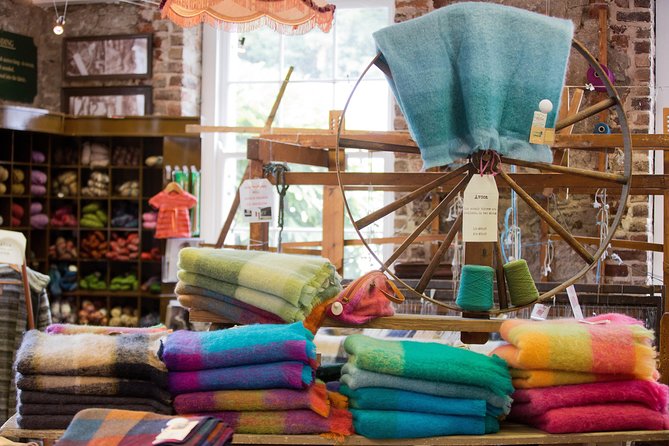
The first major stop is Avoca, a small village associated with the BBC series Ballykissangel. If you know the program, this adds a bit of television nostalgia. If you do not, Avoca still works as a compact village stop with a famous craft center, places to eat, and time to browse.
The center of the visit is Avoca Handweavers, described as Ireland’s oldest hand-weaving mill, dating to 1723. You can watch the weavers at work, which gives the stop more substance than a simple shop visit. Seeing scarves, blankets, and other wool goods being made helps explain what you are looking at on the shelves.
The shopping is not compulsory, but it is clearly part of the experience. Avoca products can be expensive, so you may enjoy the working mill without buying anything. That is an important distinction. The stop offers a look at Irish craft production, but it also has a strong retail side and may feel like a tourist shop if you are not interested in textiles.
You have about two hours at Avoca, which is enough time to watch the weaving, browse, and eat lunch. The tour team recommends eating here because Glendalough does not offer enough free time for a proper meal. I would take that advice seriously. Glendalough is better used for walking, the lake, and the ruins than for sitting down to a long lunch.
Local food and drinks are not included in the tour price. A pub lunch in the village is one option, and one passenger particularly enjoyed eating at Fitzgerald’s Pub. Since the schedule is fixed, keep an eye on the departure time and return to the coach when your host asks.
A small point about the timing: some people would gladly trade a little shopping time for more time at Glendalough. If your priority is scenery and ancient ruins, do not let Avoca’s retail facilities swallow the whole stop.
The Meeting of the Waters and Wicklow’s country roads
After Avoca, the coach heads north toward Glendalough. If time allows, there may be a photo stop at the Meeting of the Waters, a place linked with the poetry and songs of Thomas Moore, the 18th-century Irish poet.
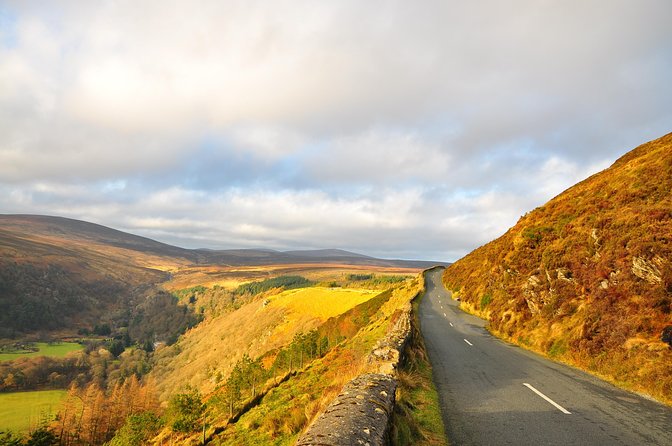
This part of the day is as much about the road as the formal stops. The coach passes Rathdrum, where the guide points out mountain views, village streets, pubs, shops, and the local church. These small details give you a sense of ordinary Wicklow rather than only its headline sights.
The route also passes Clara, described as Ireland’s smallest community, with one school, one church, and two houses. Your host may point out the location of its pub, if there is one. It is a tiny detail, but these small stories are often what make a guided drive more engaging than looking out of a bus window in silence.
You then pass through Laragh on the way to Glendalough. The roads in this part of Wicklow are narrow and winding, so having a qualified driver-guide handle the driving is useful. You can concentrate on the views instead of trying to read road signs or navigate bends.
The quality of the commentary depends on the guide assigned to your group. Paddy received especially warm praise for sharing stories, speaking with everyone, and making sure no one was left behind. Liam was also praised for his fun facts and good pace. Other guides named in feedback include Patrick, Raymond, and Edmund.
That said, one person felt the commentary was lighter than expected. I would not book this as a nonstop history lecture. Think of it as a guided country outing, with information, stories, and practical instructions mixed with quiet time to look around.
Glendalough’s lakes, ruins, and round tower
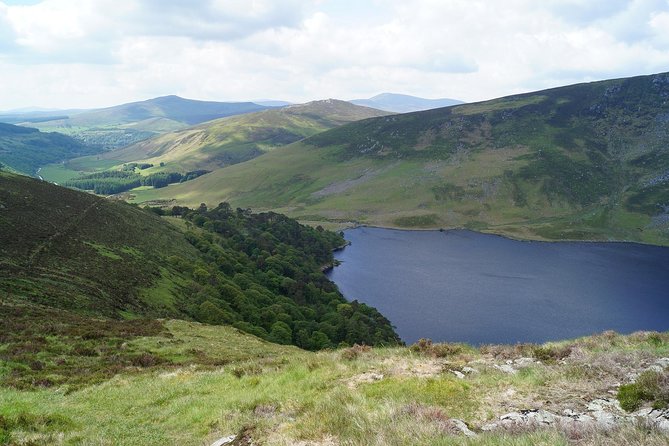
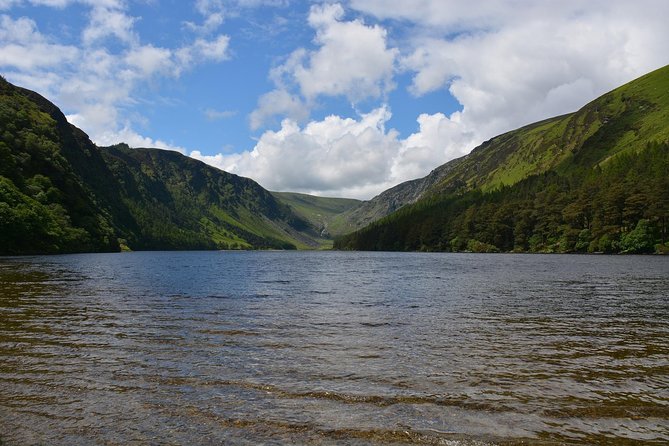
Glendalough means the valley of two lakes. The coach passes the lower lake, and you get time to see the upper lake as well, depending on the precise instructions and timing given by the host.
The lakes are the scenic heart of the tour. One passenger called the upper lake one of the most beautiful sights they had seen, and another wished for more time beside it. That tells you how to plan your expectations: Glendalough is not just a quick ruin visit. The water and mountain setting are a major part of its appeal.
You also visit the ancient monastic settlement founded by St. Kevin in the seventh century. Glendalough has been a pilgrimage site since that period, although many of the ruins visible today date from the 12th century. The site includes a celebrated round tower, one of the finest examples in Ireland.
The round tower is a particularly useful detail to look for. Ireland has about 65 such towers, while only a few related examples survive in Scotland and on the Isle of Man, built by Irish monks. At Glendalough, the tower gives the ruins a distinctive shape and helps you understand why this site is one of Ireland’s best-known early Christian settlements.
You have around two hours at Glendalough, including time for the settlement and the upper lake area. That sounds generous until you add walking, photos, reading the site, and moving between areas. Wear shoes suitable for walking and keep track of the return time. The coach cannot wait for a leisurely final look at the lake.
Rain does not necessarily ruin the visit. One person still found Glendalough impressive in wet weather. But the experience is better with dry conditions, and the operator may cancel the trip if the weather is poor. You will be offered another date or a full refund in that case.
The biggest compromise is clear: you see both the historic site and the lakes, but you do not get a full hiking day. If you want long trails through the Wicklow Mountains, this is too short. If you want a guided taste of the area without planning transport, the time is useful.
Same tracks, a different day out:
- Rail Tour: The Cliffs of Moher & Bunratty Castle Tour
★ 4.6 · 122 reviews - Rail Tour from Dublin: The Ring of Kerry
★ 4.4 · 106 reviews - Aran Islands Scenic Flight and Galway Rail Tour from Dublin
★ 4.0 · 102 reviews - Dublin: Cruise Excursion Hop-On Hop-Off Tour & Rail Ticket
★ 4.3 · 101 reviews
The return through Annamoe, Roundwood, and Sugarloaf
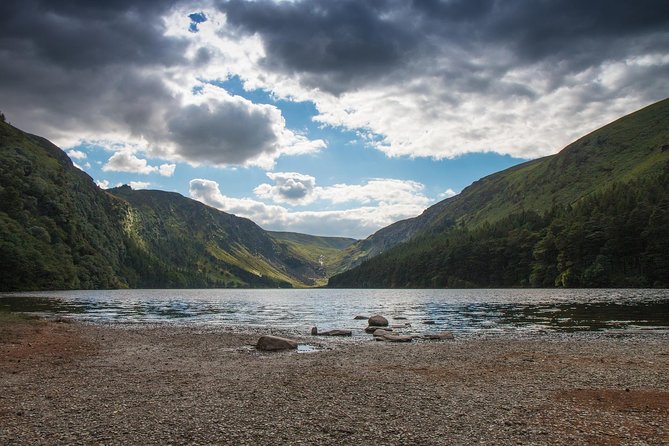
The return journey adds several more Wicklow landmarks rather than simply retracing the route. The coach passes Annamoe, associated with actor Daniel Day-Lewis, and Roundwood, identified as Ireland’s highest town at roughly 200 metres above sea level.
The final scenic landmark is Sugarloaf Mountain, described as the only alpine-shaped mountain in the area. From there, the coach descends toward the N11, the main road back to Dublin.
This last section is a reminder that the tour is designed as a broad overview. You see many places from the road, but you do not stop at every one. That is useful for first-time visitors who want to understand the shape of Wicklow, though it may frustrate anyone hoping to hike or explore each village on foot.
The expected return to Dublin is around 5 p.m., back at the original meeting point. The tour does not include hotel drop-off, so plan your evening around returning to Connolly Station.
Is the $128.21 price fair?
At $128.21 per person, this is not the cheapest way to leave Dublin. The price includes reserved train seats, a train host, an information pack, coach travel, and a qualified driver-guide. It does not include lunch, drinks, or hotel transportation.
I think the price is reasonable if you value convenience and variety. Organizing this day independently would mean working out the train connection, reaching Avoca, finding a way to Glendalough, and navigating Wicklow’s narrow roads. The tour also gives you a guide who can explain the places between the main stops.
The value is less convincing if you mainly want a long mountain walk. In that case, you are paying for transport and several stops that may not match your priorities. The Avoca mill can also feel too commercial for some people, particularly if shopping is not appealing.
The group can include up to 41 people, though some departures may be much smaller. A small group can feel personal and easy to manage. One complaint involved an unusually small vehicle that made the trip uncomfortable, so the transport experience may vary by departure.
There is also a minimum number of participants. The tour has occasionally been canceled when too few people booked, sometimes at short notice. If this outing is essential to your plans, avoid placing it on the final day of your Dublin stay. The operator offers a different date, another experience, or a full refund when the minimum is not met.
Who will enjoy this Wicklow day trip?
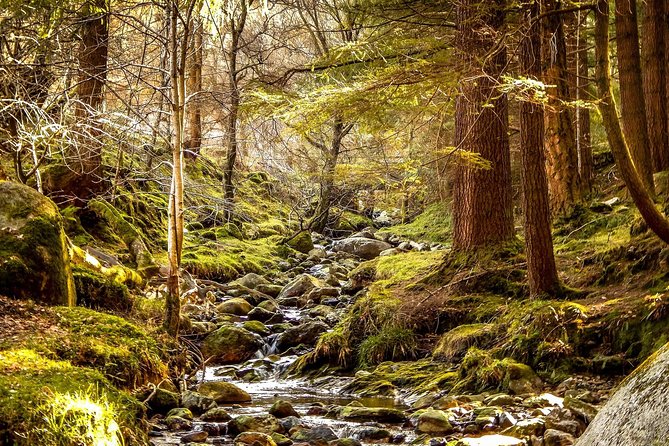
I would recommend this tour to you if you want to see several sides of rural Ireland in one day. It works especially well for first-time visitors who do not want to rent a car or handle country roads and train connections.
It also suits people who appreciate a relaxed day. The schedule is not built around racing from one photo stop to another, and the best guides give you time to walk around rather than filling every minute with commentary.
The tour is a good match for:
- Couples and adults who want scenery, local craft, and history in one outing
- Visitors who enjoy train journeys as part of the travel experience
- Fans of Ballykissangel who want to see Avoca
- People who prefer guided transport on narrow, winding roads
- Anyone seeking a gentle introduction to Glendalough
I would think twice if you are traveling with children who need constant activity. One family found the pace boring for children aged 11 and 13. The coach rides, shopping time, and historic ruins may not hold a young child’s attention for seven hours.
You should also choose another type of excursion if your main goal is serious hiking. Glendalough gives you walking time, but the schedule does not provide a full day on the trails.
What to bring and how to make the day better
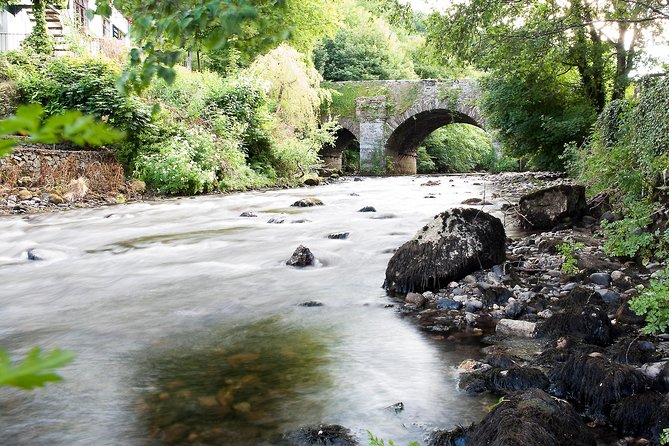
Bring a camera. The coastal rail views, upper lake, mountain roads, and village scenery provide plenty to photograph, and one passenger wished they had brought a better camera.
Plan to eat lunch at Avoca. Food and drinks are not included, and the time at Glendalough is better spent outdoors. Keep some flexibility for the weather, since conditions can change and the tour requires suitable weather to operate.
Listen carefully when your host gives the return time. This matters most at Avoca and Glendalough, where it is easy to wander a little farther toward a shop, lake, or ruin and lose track of the schedule.
If you have mobility concerns, note that most people can participate and service animals are allowed, but the experience includes train travel, coach transfers, and walking around a historic site and lake area. The supplied information does not promise step-free access throughout.
Free cancellation is available up to 24 hours before the start time. Changes or cancellations inside that window are not refunded, except when the operator cancels because of weather or insufficient bookings.
Should you book the Wicklow Mountains rail tour?
Book it if you want a well-organized sampler of Wicklow with train scenery, a working wool mill, village time, mountain roads, lakes, and one of Ireland’s finest early Christian sites. The strongest part is the combination of transport and scenery, especially when you get a friendly guide such as Paddy or Liam.
Skip it if you want a demanding hike, a fast-moving schedule, or a full day devoted only to Glendalough. The tour makes a few compromises to cover more ground, and the Avoca shopping stop will not suit everyone.
For most first-time visitors without a car, I think the trip offers solid value. Eat at Avoca, watch the departure times, bring rain protection and a camera, and treat the day as a scenic introduction rather than an exhaustive Wicklow expedition.
FAQ
Where does the tour start and finish?
It starts at Connolly Train Station on Amiens Street in Dublin at 9:10 a.m. The tour ends back at the same meeting point.
How long does the tour last?
The experience lasts about seven hours, with an expected return to Dublin at around 5 p.m.
Is lunch included?
No. Food and drinks are not included. Lunch at Avoca is recommended because there is not enough time for a full meal during the Glendalough stop.
What transport is used?
The tour includes reserved train seats, rail travel from Dublin, and coach travel through Wicklow. A host accompanies you on the trains, and a qualified driver-guide operates the coach.
How much time do you get at Avoca and Glendalough?
The planned time is about two hours at Avoca and about two hours at Glendalough. Your host gives the exact return times for each stop.
Can I cancel for a refund?
You can cancel at least 24 hours before the start time for a full refund. Cancellations or changes made less than 24 hours before departure are not accepted for a refund.
Just added around Dublin
- 6-day All Ireland & Northern Ireland Rail Tour from Dublin★ 4.0 · 37 reviews
- 4-Day Cork, Ring of Kerry, Dingle, Cliffs of Moher and Galway Bay Rail Tour★ 4.5 · 48 reviews
- Waterford Crystal and Kilkenny Full-Day Rail Tour from Dublin★ 5.0 · 3 reviews
- Sustainable Connemara and Galway Bay Rail Tour from Dublin★ 4.0 · 54 reviews
- 2-Day Rail Tour: Galway, Cliffs of Moher & Medieval banquet in Bunratty Castle★ 4.5 · 19 reviews
- 2-Day Northern Ireland Rail Tour: Belfast, Antrim Coast, and Giant’s Causeway★ 4.5 · 23 reviews
- 3-Day Cliffs of Moher, Connemara and Aran Islands Rail Tour from Dublin★ 4.5 · 15 reviews
- 2-Day Cork, Blarney Castle and Ring of Kerry Rail Trip from Dublin★ 4.0 · 47 reviews
Dublin Train Journeys, compared.
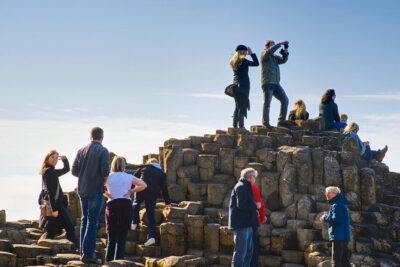
Northern Ireland Including Giant’s Causeway Rail Tour from Dublin
Read our review →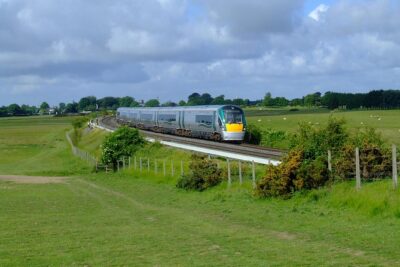
Sustainable Ring of Kerry Rail Tour from Dublin
Read our review →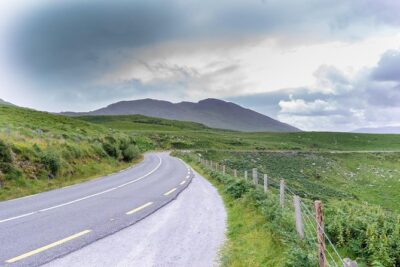
3-Day Blarney Castle, Ring of Kerry, & Cliffs of Moher Rail tour
Read our review →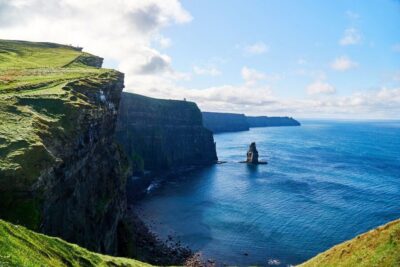
Rail Tour: The Cliffs of Moher & Bunratty Castle Tour
Read our review →
Aran Islands Scenic Flight and Galway Rail Tour from Dublin
Read our review →
Cruise Excursion Hop-On Hop-Off Tour & Rail Ticket
Read our review →
Sustainable Connemara and Galway Bay Rail Tour from Dublin
Read our review →Browse the lists this tour appears in