
Review · SPAIN
Granada City Train 1 or 2-Day Hop-On Hop-Off Ticket
Granada’s hills are easier by little train. This open carriage ride threads through narrow streets and up toward the Alhambra, giving you panoramic views without making every outing a steep walk. I like the chance to see the city first, then choose where to stop. I also like the low $8 price, especially if you use the train more than once.
The main catch is waiting. Trains run every 30 to 45 minutes, and busy days can mean a long queue or no seat on the next departure. The ride is also bumpy on Granada’s old stone streets, so bring patience, and bring your own headphones for the audio guide.
Key points before you board
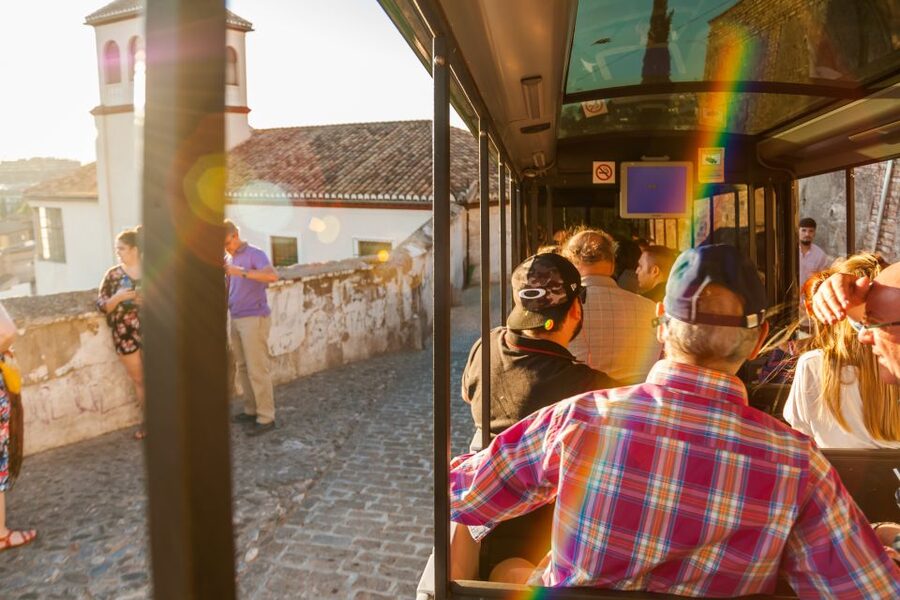
- The Alhambra Route climbs to the monument: Stops include Alhambra Generalife and Puerta de la Justicia, making the train useful on Granada’s steep upper streets.
- A full circuit takes you past major sights: You can see Plaza Nueva, the Cathedral, Mirador de San Cristóbal, Arco de Elvira, Campo del Príncipe, and more.
- The audio guide covers 12 languages: English, Spanish, French, German, Italian, Portuguese, Russian, Chinese, Japanese, Korean, Arabic, and Catalan are available.
- The best plan is usually a complete first loop: You get your bearings, note the stops you like, then hop off with a plan.
- Crowding is the chief practical problem: Holiday weekends and summer days may bring long waits and full trains.
- Your ticket choices are flexible: Choose a single trip, a one-day pass, or a two-day hop-on, hop-off ticket.
Why Granada’s city train earns its place
Granada is compact on a map, but it is not flat. The city rises from the commercial center toward the Albaicín and the Alhambra, with slopes, stone streets, and winding lanes that can make a sightseeing day harder than expected.
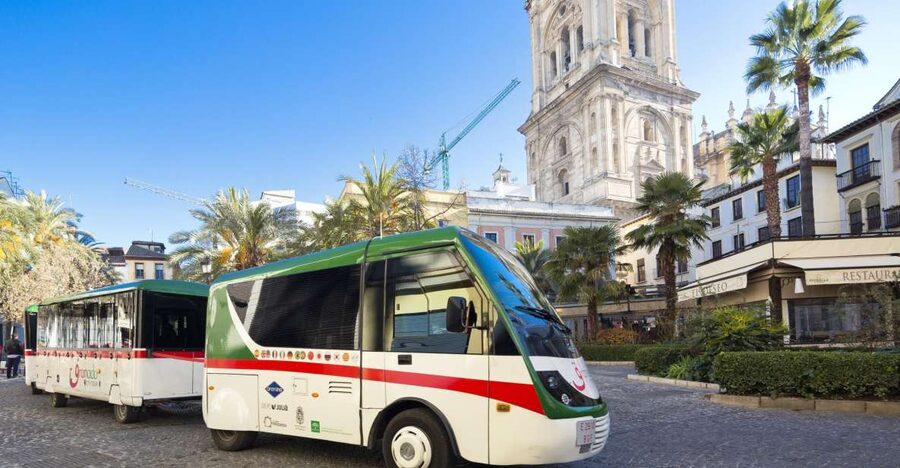
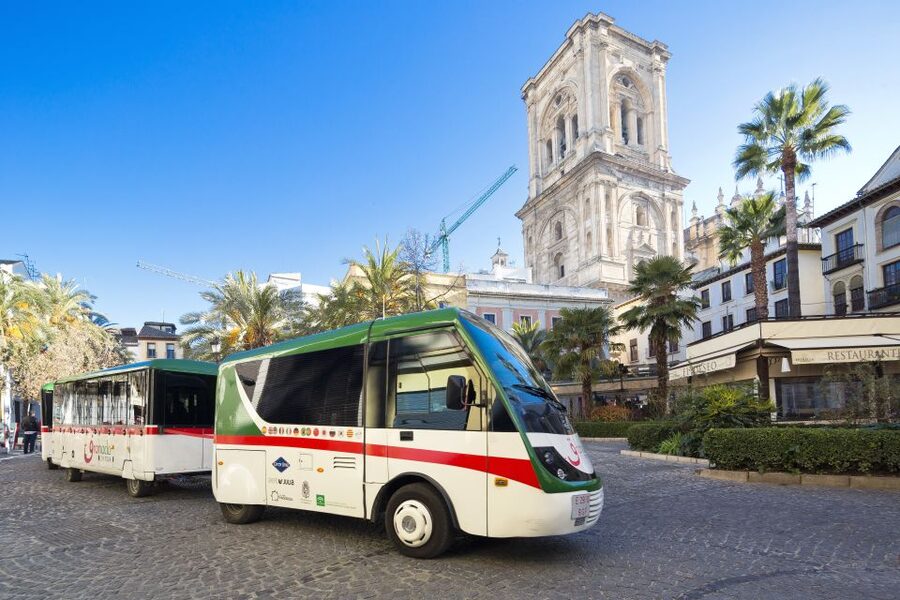
This is where the city train makes sense. It is not a polished coach with a smooth motorway ride. It is a small tourist train designed for narrow urban streets. You sit in an open carriage, hear the city around you, and get a moving view of buildings and hillsides that may be easy to miss from inside a taxi.
I would use it as both transport and orientation. On a first ride, stay aboard for the full circuit. You can see where the Cathedral sits in relation to Plaza Nueva, how far the Alhambra is from the lower center, and which viewpoints deserve a proper stop later.
The low price changes the value calculation. At $8 per person, even a single full ride is an inexpensive way to get an overview. A one-day or two-day ticket becomes more useful if you plan to return to several stops, or if walking uphill is not appealing.
More Two-Day Trips in Spain:
- 2-Day guided tour Caceres & Sevilla from Madrid by Bus and High Speed Train
★ 4.0 · 2 reviews - Cusco: Machu Picchu 2-Day Inca Trail with Panoramic Train
★ 4.9 · 260 reviews - From Hanoi: 2-Day 2-Night Sapa Tour by Overnight Train
★ 4.4 · 96 reviews
Starting at Alhambra Generalife
The route begins at the ticket office at Stop No. 1, Alhambra Generalife. This is also a practical starting point if you are already visiting the Alhambra area, though you need your own admission for the monument. The train ticket does not include Alhambra entry.
The Alhambra route, marked as the green line, also stops at Alhambra and Puerta de la Justicia. These locations put you close to one of Granada’s essential sights, but do not confuse the train with an Alhambra tour. It provides transport and commentary. You still need a separate timed ticket if you want to enter the palace complex.
The uphill ride is one of the strongest reasons to choose this service. You save your legs for the Alhambra itself, where there is plenty of walking. A practical plan is to ride up, visit the monument if you have a reservation, and then use the train or walk downhill afterward.
From Monday through Friday, service to the Alhambra pauses from 2:00 p.m. to 2:30 p.m. because municipal rules close access through the Cuesta del Caidero. The train runs its normal route outside that period.
Plaza Nueva, the city’s easy meeting point
Plaza Nueva is one of the most useful stops on the route. It is Granada’s oldest square and a natural place to pause for coffee before continuing through the center.
This stop works well for first-time orientation. From here, you are close to the lower approaches to the Alhambra, the Cathedral area, and several streets leading into the older quarters. If you want to split the ride into manageable pieces, Plaza Nueva is an obvious place to get off.
There is one practical warning. Because the square is central and popular, trains can fill here. If you step off during a busy period, you may need to wait for a later departure rather than boarding the first train that appears.
Alhóndiga and the central streets
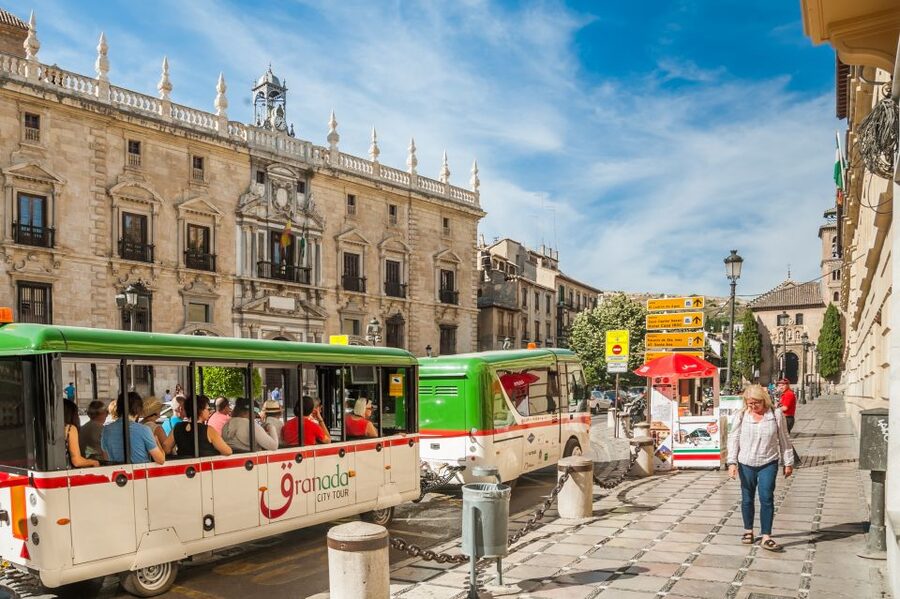
The Alhóndiga stop puts you into the busy central part of Granada. This is a good place to combine the train with shopping, food, or a short walk through the city center.
I would not treat this stop as a major sight on its own. Its value is location. You can use it to break up the route and explore the central streets on foot, then reconnect with the train at another listed stop.
The city train is most useful when you do not demand that every stop be a full attraction. Some stops are gateways to neighborhoods and squares rather than monuments with a ticket desk. That flexibility lets you shape the day around your own interests.
More Tickets in Spain:
- Alhambra tickets with Nasrid Palaces + Tourist Train
★ 3.0 · 40 reviews - Marvellous Montserrat Private Day Tour : Train & Cable-car tickets Included
★ 4.5 · 2 reviews - Christ the Redeemer Entry Ticket by Corcovado Train
★ 4.4 · 4,476 reviews - Interlaken: Funicular Ticket to Harder Kulm
★ 4.7 · 1,469 reviews
Cathedral and Royal Chapel

The Cathedral and Royal Chapel stop is one of the route’s most important. Granada’s Cathedral is a major architectural landmark, while the Royal Chapel is associated with Ferdinand and Isabella.
You can get off here for a closer look at the buildings and the surrounding center. This is also a sensible stop for visitors who want to mix sightseeing with a meal or coffee break.
The audio guide adds context during the ride, but it does not replace visiting the monuments. Think of the commentary as an introduction that helps you decide where to spend your limited time. If your schedule is short, use the first circuit to identify the sights that deserve a longer stop.
Mirador de San Cristóbal and Jardines de Zoraya
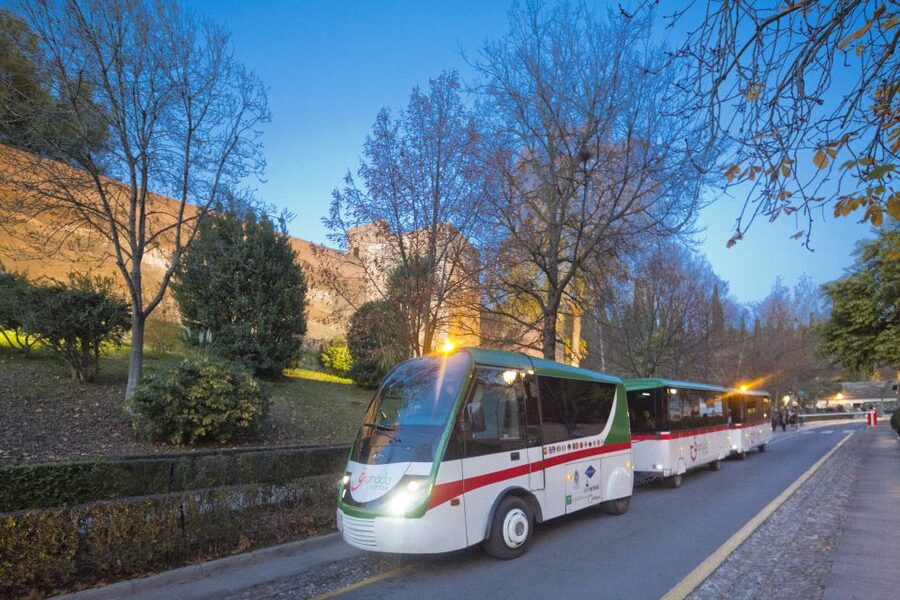
For views, pay attention to the Mirador de San Cristóbal and Jardines de Zoraya stop. The viewpoint is one of the more rewarding places to leave the train, especially if you want a broad look across Granada.
The exact feel of the stop depends on your timing and the weather, but the appeal is clear: you trade the enclosed center for an open outlook. This is a good place to use the camera, take a breath, and see how Granada’s neighborhoods fit together.
One visitor specifically found Stop No. 6 useful for sunset. The stop numbering can vary by map or route information, so check the current onboard map rather than relying only on the number. The useful tip remains: plan a viewpoint stop late in the day if the service is operating and your timing works.
Arco de Elvira and Hospital Real
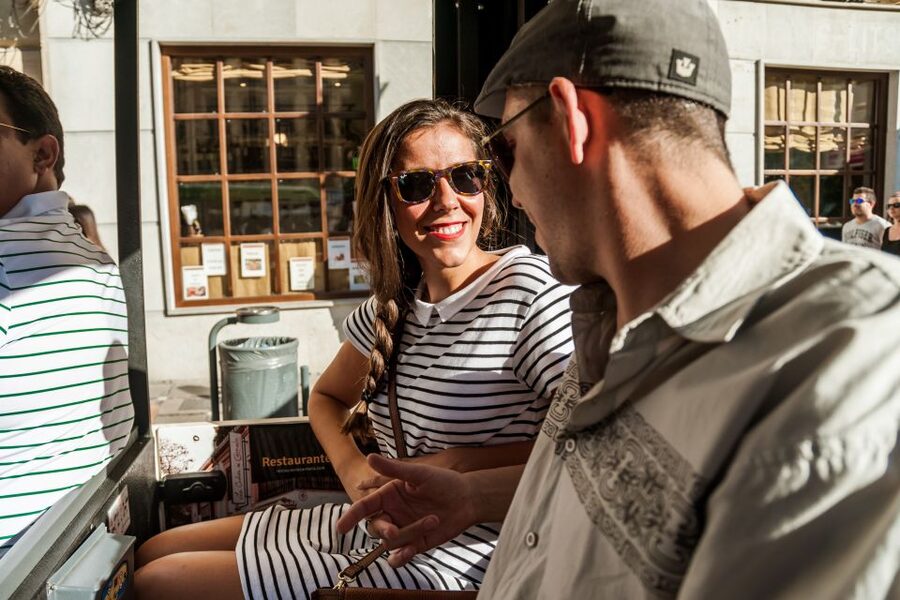
The Arco de Elvira and Hospital Real stop reaches another important part of Granada. The arch marks one of the historic entrances to the city, while Hospital Real is a notable building connected with Granada’s past.
This stop is well suited to visitors who want more than the standard Cathedral and Alhambra circuit. You can see a different side of the city here, with architecture and older routes that do not always appear on a quick walk through the center.
It is also a useful reminder that the train is not only a shuttle between famous monuments. The route helps connect distinct parts of Granada, including areas you might otherwise skip if you spend the day only around the main shopping streets.
Reyes Católicos and Plaza Isabel la Católica
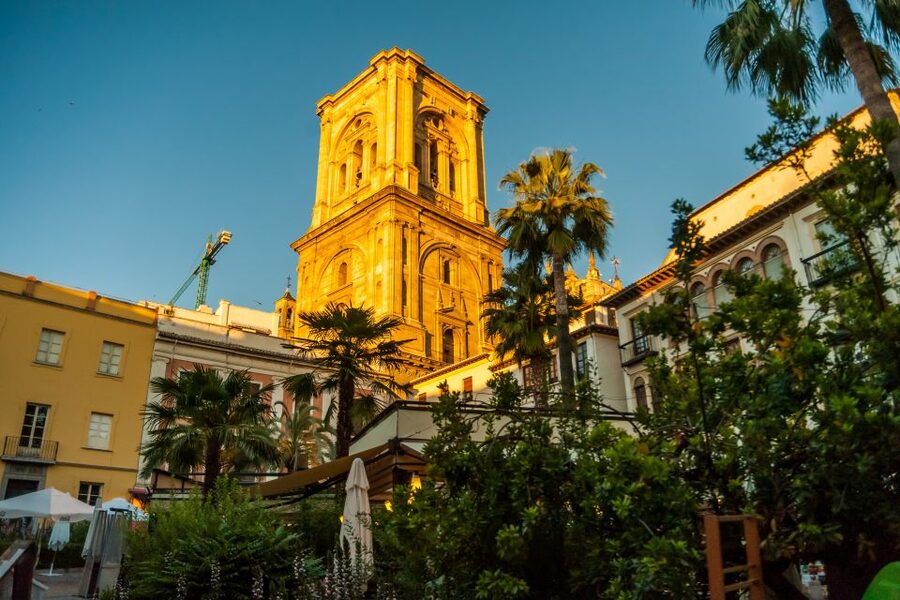
The Calle Reyes Católicos and Plaza Isabel la Católica stop sits in a central, easy-to-use position. It is a strong choice for joining the train if you are staying in the central area or have already begun walking through the city.
This stop works particularly well for a first circuit. You can board here, listen to the commentary, and watch the route change from central streets to hillier sections.
If you are using a one-trip ticket, this is also a convenient place to start and finish. You get the full sightseeing ride without needing to plan several stops. The single trip is less flexible than the day passes, but it can be enough if your goal is simply to understand Granada’s layout.
Campo del Príncipe and Carmen de los Mártires
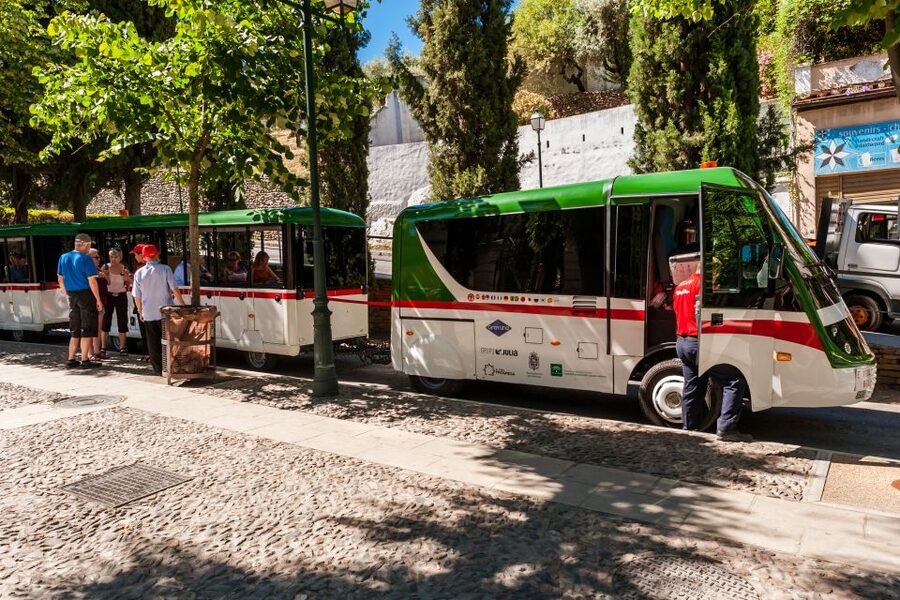
The Calle Molinos and Campo del Príncipe stop serves the area below the Alhambra. Campo del Príncipe offers a quieter change from the dense central streets, while the route also includes Carmen de los Mártires.
These stops are helpful if you want to explore the streets and gardens around the Alhambra rather than visiting only the palace complex. They also give you a chance to use the train for the uphill sections and walk some of the less demanding downhill stretches.
The ride itself can be rough here and elsewhere. Granada’s old paving produces jolts, squeaks, and sudden braking. One passenger even found a carriage door opening while the train was moving, an unusual complaint but a reason to stay seated and pay attention. If you have a chronic back problem, the bumps may outweigh the convenience.
How to use the one-day and two-day tickets
The best strategy is simple: complete one circuit before hopping off. It takes roughly an hour and a half according to one detailed experience, though the timetable and traffic can affect the actual duration.
During that first ride, mark three things:
- The stops closest to sights you want to visit
- The viewpoints worth returning to
- The places where you would rather walk than wait
A one-day pass is enough for most short visits. You can ride the whole route, get off at the Alhambra or Cathedral, and use later departures to connect with another area.
A two-day pass suits a slower visit. You can use the train as light transport between sightseeing areas and spread your stops across two days. One passenger used the two-day ticket almost like personal transport, which is a fair description if you are comfortable with the timetable.
Do not build a tight schedule around it. The official frequency is every 30 to 45 minutes, but busy periods can stretch your wait. Several departures may also fill before reaching your stop. If you have a timed Alhambra entry, leave a generous margin and do not depend on the last possible train.
Audio commentary and what to bring
The audio guide is included in 12 languages: Spanish, Catalan, Chinese, English, French, German, Italian, Japanese, Arabic, Portuguese, Russian, and Korean.
You need to bring headphones. They are not included, and forgetting them can make the commentary useless. Older accounts also mention paying extra for headphones, but the current practical instruction is clearer: bring your own set.
The commentary gives the ride more purpose. Without it, you are mainly getting transport and views. With it, you can connect the streets, monuments, and neighborhoods you pass, then choose what deserves your time on foot.
The open carriage also changes the experience. You get more direct views and fresh air, but you are exposed to sun, noise, and the bumps of the road. On a hot summer day, the ride can be a welcome break from walking. On a busy or rough section, it can feel less restful.
Timing, crowds, and seasonal changes
Crowding is the biggest weakness. Summer, holiday weekends, Easter week, and other busy periods can leave people waiting for the next train. Some passengers report boarding quickly, while others waited close to an hour when demand was high.
If your schedule is flexible, ride early in your stay and avoid the most crowded times when possible. Buying a pass does not guarantee an immediate seat. The service may not add trains during a holiday weekend, so allow extra time.
Special hours apply during Easter and Christmas. From April 10 to April 16, service runs from 9:00 a.m. to 3:00 p.m. On April 17, it runs from 4:00 p.m. to 8:00 p.m. On December 24 and 31 and January 5, hours are 10:00 a.m. to 4:00 p.m.
The service can also change because of city events, traffic, or other conditions beyond the operator’s control. Check the current starting time before you set out.
Who should choose this Granada ride?
I would recommend it most strongly to:
- First-time visitors who want a quick city overview
- People who find Granada’s slopes tiring
- Families who prefer a simple sightseeing ride
- Anyone staying for one or two days
- Visitors who want easy access toward the Alhambra area
- Those who enjoy seeing a city from the street rather than from a sealed coach
I would be more cautious if you dislike bumpy rides, need strict timing, or expect a seat at every stop. Granada is also small enough to cover many central sights on foot, particularly if you are happy walking downhill and taking your time.
For families, folded strollers are allowed if they are no more than 35 centimeters high and 55 centimeters wide. You should be ready to fold the stroller before boarding.
Is the $8 ticket good value?
At the stated $8 price, the value is strong. A single circuit gives you a broad introduction for less than the cost of many organized sightseeing options, and a one-day pass can replace several short taxi rides if you plan your stops well.
The value is not only financial. The train saves energy on steep sections and helps you understand the city before you commit to a walking route. That matters in Granada, where a wrong turn can turn a short connection into a long uphill climb.
The price looks less attractive if you wait through several full departures or use the train only once for a short distance. In that case, the single-trip option may be the better choice. For repeated rides, the one-day ticket is easier to justify. The two-day ticket is best for a relaxed visit, not for someone who plans to walk most of the time.
Should you book the Granada City Train?
Book it if you want a cheap overview, need help with Granada’s hills, or plan to visit several parts of the city. Start with one full loop, bring headphones, and avoid giving yourself tight connections.
Choose the one-trip ticket if you only want an introduction. Choose one day for a short stay with several stops, and two days if you want to use the train as a flexible link between neighborhoods.
I would not book it as your only sightseeing plan. Use it to get oriented, reach the Alhambra area, and rest your legs, then explore the Cathedral, viewpoints, squares, and older streets on foot. That mix gives you the convenience of the train without missing Granada’s close-up character.
FAQ
Where does the Granada City Train route start?
The route starts at the ticket office at Stop No. 1, Alhambra Generalife.
Does the ticket include entry to the Alhambra?
No. The ticket takes you to Alhambra area stops, but admission to the Alhambra monument is not included.
How often do the trains run?
The Alhambra Route trains generally run every 30 to 45 minutes.
Which languages are available for the audio guide?
The audio guide is available in Spanish, Catalan, Chinese, English, French, German, Italian, Japanese, Arabic, Portuguese, Russian, and Korean.
Do I need to bring headphones?
Yes. Headphones are not included, so you should bring your own to use the audio guide.
Can I use the train for more than one day?
Yes. You can choose a one-day or two-day hop-on, hop-off ticket. A single-trip option is also available.
Are strollers allowed?
Yes, but the stroller must be folded and no more than 35 centimeters high and 55 centimeters wide.
Just added around Spain
- The Train Track Trail Mountain Bike Ride – Private experience★ 5.0 · 14 reviews
- Half Day Guided Tour in Soller Train and Tram★ 4.0 · 7 reviews
- Soller Port with Train and Tram Mallorca Half Day Trip★ 3.5 · 54 reviews
- Boat, Tram and Train Tour in Mallorca from the South★ 4.0 · 9 reviews
- Seville in One Day by High speed Train from Madrid Private Tour★ 4.5 · 30 reviews
- Island Tour with Train Tram Boat and Bus from Cala Millor★ 4.5 · 8 reviews
- Private Tour: Cordoba Day Trip from Madrid by High-Speed Train★ 5.0 · 3 reviews
- Córdoba Private Day Trip from Madrid by High-Speed Train★ 4.0 · 9 reviews
Tickets, compared.
Christ the Redeemer Entry Ticket by Corcovado Train
Read our review →

Plitvice Lakes Tour: Secured Tickets, Train & Boat Ride
Read our review →
Castle Entry Ticket with Optional Funicular Ride
Read our review →


Postal Museum Entry Ticket and Underground Rail Ride
Read our review →
Caserta Palace Ticket and Train with Audioguide
Read our review →Browse the lists this tour appears in