
Review · TOKYO
Mt Fuji & Hakone Cruise, Drum Show Bullet Train 1 Day from Tokyo
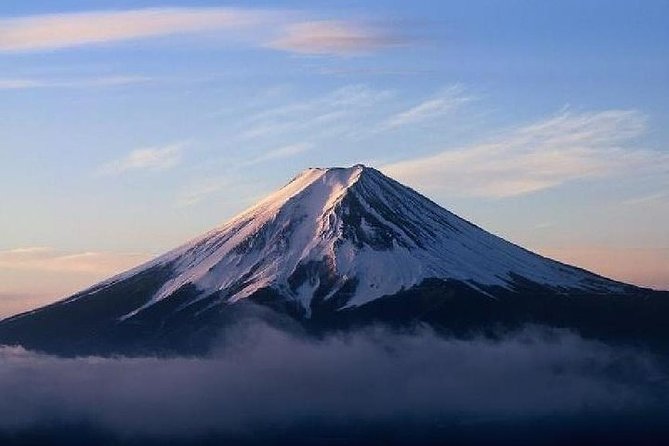
Fuji is only half the story. This long, busy day pairs Mount Fuji’s 5th Station with a Lake Ashi cruise, the Mt. Komagatake Ropeway, a Japanese drum performance, and a Shinkansen ride back to Tokyo. I like the smart one-way design: you travel out by coach and return by bullet train, avoiding a second long highway journey.
I also like the range of experiences packed into one ticket, from mountain air and shrine gates to a short lake cruise and traditional wadaiko drumming. Guides such as Joy, Shige, Miko, Marie, Sky, and Hiroaki have been praised for clear explanations and friendly help. The main drawback is the pace. Thirty minutes at the 5th Station can feel very short, and bad weather can turn much of the day into transportation rather than sightseeing.
Key points to know before booking
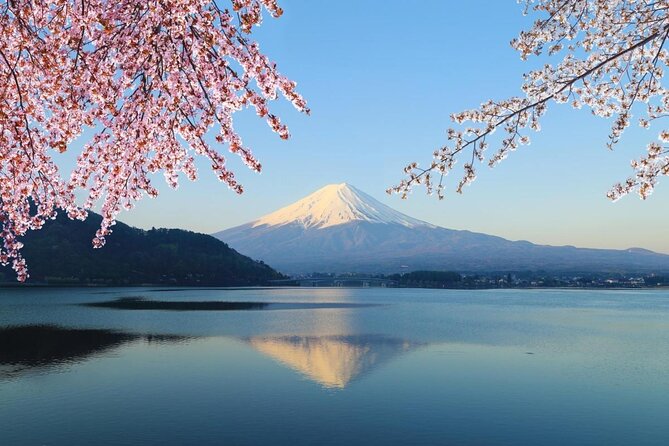
- Mount Fuji 5th Station reaches 2,300 meters: You get a high mountain viewpoint, shrine buildings, torii gates, shops, and possible views of the surrounding lakes, subject to weather.
- The return trip is by Kodama Shinkansen: The 34-minute train ride from Odawara to Tokyo is a fun finish, but seating is in the non-reserved section.
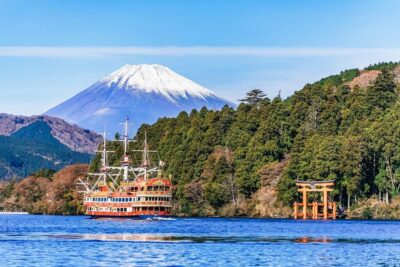
- The Lake Ashi cruise is short but scenic: The Sorakaze boat gives you a water-level look at Hakone National Park and the surrounding peaks.
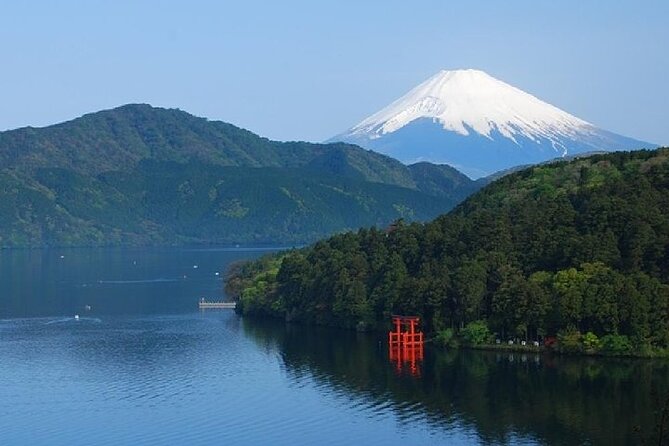
- The ropeway leads toward Hakone Shrine Mototsumiya: At the summit of Mt. Komagatake, you can walk to the shrine and look across Lake Ashi.
- Lunch is optional: The meal upgrade includes a Japanese-style lunch and the chance to request vegetarian, Muslim-friendly, or Indian thali food.
- Weather can change the entire day: Fuji may be hidden, the ropeway or cruise may close, and no refund is provided solely because poor conditions spoil the views.
Why this 11-hour day works for first-time visitors
This is a sightseeing sampler, not a relaxed mountain escape. The schedule begins early in central Tokyo and can last around 11 hours and 50 minutes, with the day ending at Tokyo Station between 5pm and 8pm.
I see the appeal immediately. Mount Fuji, Hakone, a boat ride, a ropeway, a cultural performance, and the bullet train each require separate planning if you organize them yourself. Here, a guide handles the transfers and keeps the day moving. That matters in Japan, where a missed connection or unclear rural bus schedule can cost you half a day.
The tradeoff is that you spend a lot of time on the road. The outward drive to the Fuji area takes about two and a half hours, and traffic can stretch the schedule. The itinerary covers several major sights, but each receives a quick visit rather than a deep look.
This suits you best if you have only one free day from Tokyo and want a broad taste of the Fuji and Hakone area. I would not choose it if your top priority is quiet time, long walks, or a strong guarantee of seeing Mount Fuji.
More High-Speed Trains in Japan
- Tokyo Mt Fuji 5th St & Hakone Cruise Bus Tour w/Bullet Train
★ 4.4 · 5,024 reviews - Mt. Fuji and Hakone Day Trip From Tokyo with Bullet Train Option
★ 4.0 · 368 reviews - Snow Monkey Park and Miso Production Tour Bullet Train from Tokyo
★ 4.5 · 26 reviews
Mount Fuji 5th Station at 2,300 meters
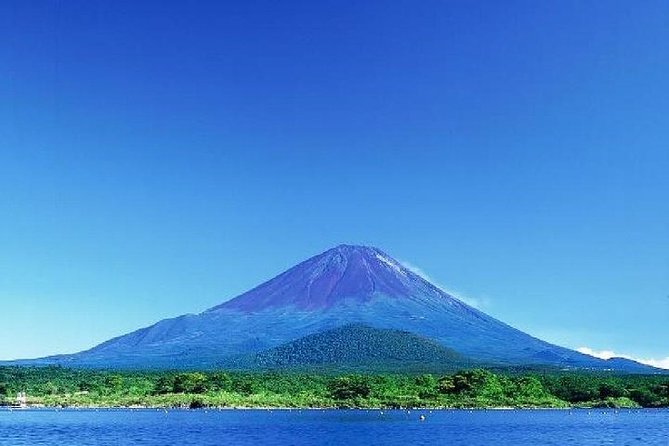
The coach heads up the Fuji Subaru Line toward the 5th Station, about halfway up Mount Fuji at 2,300 meters, or roughly 7,546 feet. This is the highest planned stop on the mountain and a useful place to feel the change from Tokyo’s city climate to cooler, thinner mountain air.
At the station, you can expect shrine buildings, torii gates, souvenir shops, mountain views, and climbers preparing for or returning from an ascent. On a clear day, the height gives you a striking view toward Fuji’s upper slopes and the surrounding lakes. On a cloudy day, you may see very little beyond the station itself.
The scheduled stop is about 30 minutes. I recommend using that time with a plan: first check the view, then take your photos, then visit the shrine area or shop. You may find snacks such as mitarashi dango, and one review specifically praised the chance to try it there. If you wander too far, you risk holding up the group.
Bring a warm layer even in summer. The listed reference temperatures range from about 14 degrees Celsius during summer daytime visits to minus 5 degrees Celsius in winter. The Fuji Subaru Line usually operates from around late April through November. Snow, ice, or road closures can prevent the coach from reaching the 5th Station from December through early April.
If Fuji is hidden, the tour still runs. Depending on conditions, the replacement may be Fujisan Museum, Lake Kawaguchi Oishi Park, the Fujisan World Heritage Center, Itchiku Kubota Art Museum, or Oshino Hakkai. That policy protects the schedule, but it also means you should book this as a weather-dependent outing, not as a guaranteed Fuji photo opportunity.
Lunch, cultural context, and the wadaiko performance
After the mountain stop, the coach continues to the Fuji Zakura Hotel if you select the lunch option. The meal is Japanese-style, with tea or coffee, and the listed alternatives include vegetarian, Muslim-friendly, and Indian thali meals.
The Muslim-friendly meal does not use pork or alcohol, but it is not halal certified. Vegetarian and Indian thali meals do not use meat or fish. Allergy-friendly and gluten-free meals are not available, so I would select the no-lunch option if you need those restrictions.
The no-lunch choice needs planning. The schedule says there are no cafes, restaurants, or other food options near the lunch stop, so you should prepare food before departure. This is one of the few practical details that can make or break the day. Do not assume you can simply buy lunch when the group arrives.
The lunch break may include a wadaiko performance by the Social Welfare Corporation Fugakukai. Japanese taiko drumming is a lively traditional art, and this short performance adds cultural value to what might otherwise be a standard meal stop. It may be canceled without notice, and it will not be held on February 28, 2026. No partial refund applies if you miss it.
Food quality can vary with the schedule. One account found the meal tasty but noted that fried dishes were cold after a delayed departure. That is a fair warning: the timing depends on traffic and on the whole group returning to the bus promptly.
Lake Ashi and the Sorakaze boat
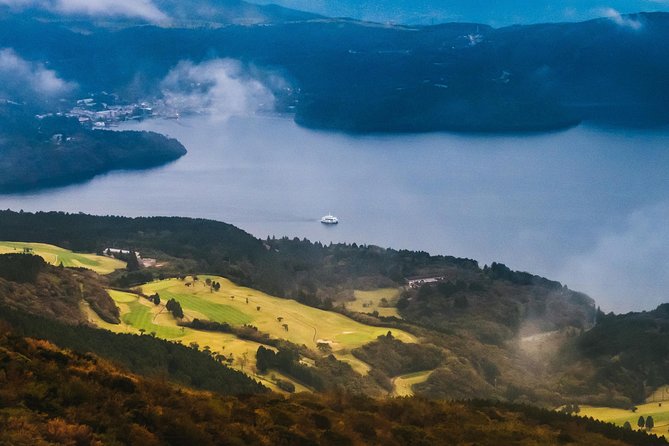
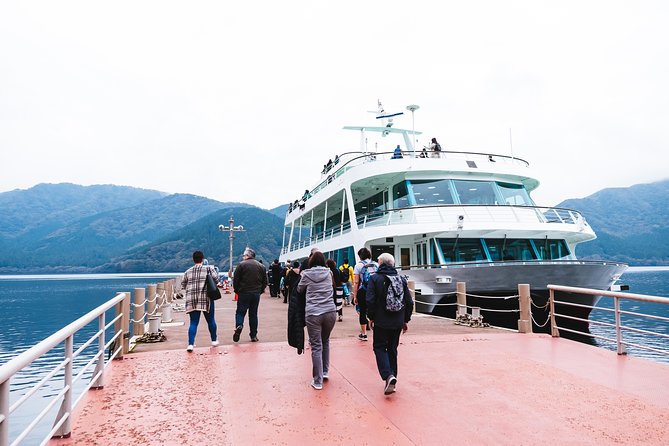
From the lunch area, the route continues to Hakone National Park and Lake Ashi. The Sorakaze cruise lasts about 15 minutes, so think of it as a scenic crossing rather than a full lake excursion.
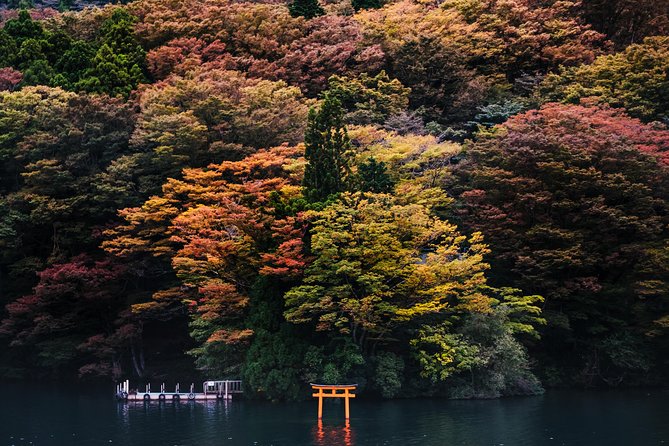
The boat gives you a different angle on Hakone. Instead of looking down from a road or mountain station, you see the wooded slopes and water together. On clear days, Mount Fuji may appear beyond the lake. On misty days, the atmosphere can still be pleasant, but the wide views disappear quickly.
The short duration keeps the day moving, but it is also a limitation. If you want a leisurely cruise with plenty of time on deck, this will feel too brief. The route may also change if the cruise is not operating because of weather or other conditions. Alternatives can include a boat on Lake Kawaguchi, a Lake Yamanaka cruise, the Hakone Pirate Ship, or another scheduled attraction.
I like this part because it breaks up the bus ride. You get a few quiet minutes on the water before the next transport change, and the contrast between the coach, boat, ropeway, and train gives the day a satisfying rhythm.
More High-Speed Trains in Tokyo:
- Mt Fuji & Hakone Private Tour from Tokyo: Return by Bullet Train
★ 5.0 · 22 reviews - Bullet Train Experience & Mishima Shrine Private Tour from Tokyo
★ 5.0 · 9 reviews - Bullet Train and Mt. Fuji Famous Food Tour
★ 5.0 · 4 reviews - 3-Day Private Tokyo and Nagano: Snow Monkeys, Tsukiji Market and Bullet Train
★ 5.0 · 2 reviews
Mt. Komagatake Ropeway and the summit shrine
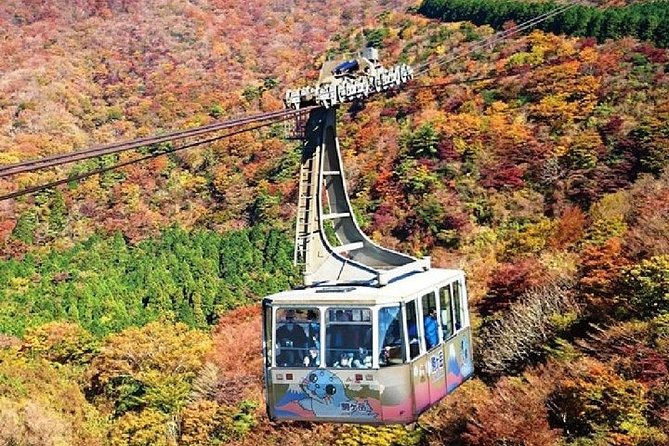
The ropeway lifts you from the Lake Ashi area toward the summit of Mt. Komagatake in an enclosed cabin. The ride provides broad views toward the lake and Hakone National Park, assuming the weather cooperates.
At the top, you can walk along a short trail to Hakone Shrine Mototsumiya, the original shrine associated with the mountain. The bright shrine structures and open views make this one of the most memorable stops when visibility is good.
The scheduled time here is about 50 minutes. That sounds generous, but the group must move between the ropeway, summit paths, shrine area, and return departure. Wear shoes you can walk in, and be ready for stairs and uneven ground. One account noted around 30 stairs near the cableway area, while another pointed out that the experience is not well suited to people with disabilities.
The ropeway is especially weather-sensitive. Strong wind, rain, or poor visibility may close it. Alternatives can include the Hakone Ropeway, Hakone-en Aquarium, Narukawa Art Museum, Owakudani, Hakone Shrine, Odawara Castle, or other listed sites.
I would not treat the alternative as a failure. An aquarium or museum cannot replace a clear mountain view, but it can keep a rainy day from becoming a series of locked gates and empty roads. Still, if the ropeway is the main reason you book, check the forecast and accept that the operator will not cancel or refund the tour simply because the ride is unavailable.
The Kodama Shinkansen back to Tokyo
After Hakone, the coach takes you to Odawara Station. You board a Kodama Shinkansen in the non-reserved section for the 34-minute ride to Tokyo Station.
This is a clever finish. After a full day on roads, the clean, fast train feels like a reward. It also gives you a small taste of long-distance rail travel in Japan without requiring a separate train reservation.
There are two things to know. First, the guide may not accompany you on the Shinkansen. Guides have helped people find the platform and understand the final transfer, but the train portion may be unguided.
Second, your seat is not reserved. Large luggage with combined height, width, and length over 160 centimeters cannot be taken into the non-reserved cars. If you are carrying bulky bags, arrange luggage delivery yourself.
The tour ends at Tokyo Station, not at your hotel or original meeting point. You make your own way onward. This is easy if your accommodation is near Tokyo Station, but less convenient if you began in Shinjuku or another part of the city. One useful detail from the day’s operation is that a guide may help point you toward the local train platform, but you should still know your own final route.
Guides, buses, and group size
The tour can carry up to 44 people, and the vehicle may be a large bus, mid-size bus, small bus, or hired car depending on the number booked. The coach is air-conditioned and heated, but a full vehicle means the experience is shared and structured.
The guide can make a major difference. Joy has been praised for explaining the prefectures and local specialties. Shige has been described as a strong source of information about Japan and daily life. Miko has used small activities such as origami while keeping the group on time. Hiroaki, Marie, Sky, and TK have also received praise for warmth, clear explanations, or practical help.
That praise matters because the schedule has many moving parts. You need someone to explain where to stand, when to return, and how to manage the final train connection. A good guide also gives meaning to the scenery between stops, since you spend hours passing villages, forests, and farmland from the coach window.
The meeting point is at Tokyo Station, at 1 Chome-9 Marunouchi. Arrive early. Late arrivals can have their reservations canceled, and the operator advises allowing plenty of time. Directions to the exact meeting location deserve extra care, since finding the right spot around Tokyo Station can be harder than the map suggests.
Is the $149.94 price good value?
At $149.94 per person, I consider this fair value if you want transportation and several admissions bundled together. The price includes the English national government licensed guide interpreter, the coach, the Lake Ashi cruise, the ropeway or alternative admission, other listed entry fees, and the one-way Shinkansen ticket.
Lunch is the main choice affecting the price. If you select the meal upgrade, you get the Japanese-style meal and access to the scheduled drum performance area. If you skip lunch, you save money but must bring food before departure.
Doing all this independently would require arranging the Fuji transport, Hakone connections, boat ticket, ropeway ticket, and Shinkansen ride. You might save money with careful planning, but you would lose the convenience of a single coordinated day. I think the price is strongest for first-time visitors who value ease and want to return to Tokyo without repeating the long coach ride.
The value weakens if clouds block Fuji and the ropeway closes. In that case, you are still receiving transport, a guide, meals if selected, and replacement visits, but not the main visual payoff. That is why I would avoid booking this on a nonrefundable schedule or on the only day when seeing Fuji is essential.
Who should book this day trip?
I would recommend it to you if you have one open day in Tokyo and want a broad introduction to Mount Fuji and Hakone. It is also a good fit for families and first-time visitors who prefer a guide, organized transfers, and a mix of natural and cultural stops.
You should be comfortable with an early start, long coach stretches, limited time at each stop, stairs, cool mountain weather, and a finish at Tokyo Station. Children up to age five may join free, but they do not receive a bus seat or lunch unless booked at the child rate. Anyone under 18 needs written parental permission, and children under 15 or not yet in middle school must be accompanied by a parent or guardian.
I would choose another plan if you need wheelchair-friendly access, want to hike, dislike group schedules, or want a strong chance of clear Fuji views. I would also think twice if you need to return to a specific hotel area at the end of the day.
Should you book the Mt Fuji and Hakone tour?
Book it if you want maximum variety in one long day and accept that weather controls the best views. The combination of the 5th Station, lake cruise, mountain ropeway, drum performance, and Shinkansen return offers good value and a memorable first look at the region.
Skip it if you want a slow, flexible day or cannot accept substitutions. The tour’s greatest strength is its efficiency, and its greatest weakness is the same thing. You see a lot, but you rarely linger.
FAQ
How long does the Mt Fuji and Hakone tour last?
The tour lasts approximately 11 hours and 50 minutes. The day begins in central Tokyo and ends at Tokyo Station, usually between 5pm and 8pm.
Where does the tour start and end?
The tour starts at Tokyo Station at 1 Chome-9 Marunouchi, Chiyoda City. It also ends at Tokyo Station, where you continue to your next destination independently.
Is lunch included?
Lunch is included only if you select the With Lunch option when booking. The No Lunch option does not include food, and you should prepare your own meal before departure because there may be no nearby food outlets at the lunch break area.
Can I request a special meal?
The With Lunch option allows requests for vegetarian, Muslim-friendly, or Indian thali meals. Muslim-friendly meals do not use pork or alcohol but are not halal certified. Allergy-friendly and gluten-free meals are not available.
Will I definitely see Mount Fuji?
No. Visibility depends on weather, and the tour operates even when Fuji cannot be seen. If the Fuji Subaru Line is closed or conditions prevent a visit to the 4th or 5th Station, the tour uses an alternative attraction and does not provide a refund for the weather-related change.
When is the Fuji 5th Station normally accessible?
The 5th Station is generally visited from around late April through November. The Fuji Subaru Line may close from around December through early April because of snow, ice, or other winter conditions.
Is the bullet train seat reserved?
No. The return Kodama Shinkansen ticket is for the non-reserved section. Large luggage exceeding a combined height, width, and length of 160 centimeters cannot be brought into those cars.
What happens if the cruise or ropeway closes?
The tour continues with an alternative attraction if the Lake Ashi cruise or Mt. Komagatake Ropeway cannot operate. Possible replacements include other boats, ropeways, museums, an aquarium, Owakudani, Hakone Shrine, Odawara Castle, or Oshino Hakkai. No refund is issued for this change.
Can children join the tour?
Children up to five years old may join free, but they do not receive a bus seat or lunch unless booked at the child rate. Participants under 18 need written parental permission, and anyone under 15 or not yet in middle school must travel with a parent or guardian.
More One-Day Trips in Tokyo
- Tokyo: Izu Scenic Oceanview Train, Volcano, Coast Day Trip
★ 3.4 · 4 reviews - From Tokyo: Seibu Railway 1 Day Pass and Nagatoro
★ 4.7 · 4 reviews - Zurich: Day Trip to Grindelwald, Interlaken & Lauterbrunnen
★ 4.5 · 4,699 reviews - From Milan: Bernina Train and St. Moritz Day Trip
★ 4.5 · 4,495 reviews
More Shows in Tokyo
- Silver-Tails Rail Sunset With Smithy’s Dinner and Show
★ 5.0 · 6 reviews
Just added around Tokyo
- Train in Samurai Swordsmanship and Defeat the Demon in Tokyo★ 5.0 · 5 reviews
- Private tour with Yasushi and Yoko – by car, train, on foot★ 5.0 · 2 reviews
- Mt Fuji & Hakone Private Tour from Tokyo: Return by Bullet Train★ 5.0 · 22 reviews
- Tokyo-Izu: Volcano, Ocean& Capybara Cuddle with Izu Scenic Train★ 3.5 · 3 reviews
- Bullet Train and Mt. Fuji Famous Food Tour★ 5.0 · 4 reviews
- Bullet Train Experience & Mishima Shrine Private Tour from Tokyo★ 5.0 · 9 reviews
- 3-Day Private Tokyo and Nagano: Snow Monkeys, Tsukiji Market and Bullet Train★ 5.0 · 2 reviews
- Tokyo: Kamakura & Enoshima Day Tour with Pickup & Train Ride★ 4.1 · 61 reviews
High-Speed and Bullet Trains, compared.
Tokyo Mt Fuji 5th St & Hakone Cruise Bus Tour w/Bullet Train
Read our review →
Taj Mahal & Agra Tour by Gatimaan Express Train
Read our review →
Pompeii Tour with Wine and Lunch by High Speed Train
Read our review →
Venice Day Trip from Rome by High-Speed Train with Happy Hour
Read our review →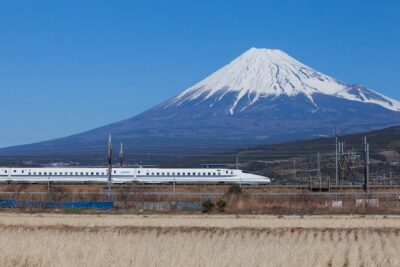
Mt. Fuji and Hakone Day Trip From Tokyo with Bullet Train Option
Read our review →
Suzhou Private Day Trip from Shanghai with Bullet Train Option
Read our review →

“Taj Mahal” Tour from Delhi by India’s Fastest Train (Gatiman Express)
Read our review →Browse the lists this tour appears in