
Review · USA
Rockies to the Red Rocks Train – Moab to Denver – SilverLeaf Plus
The best views arrive by rail.
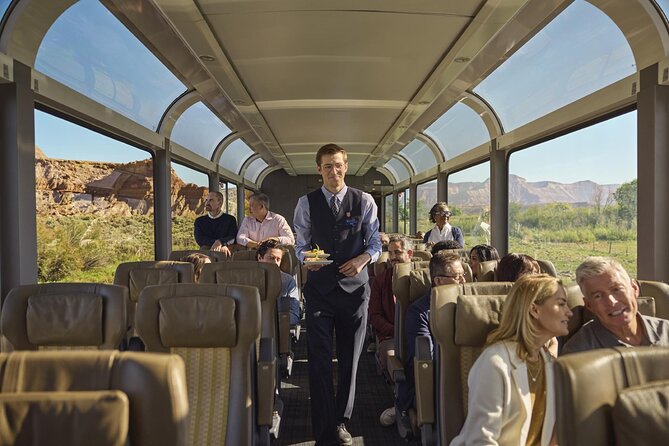
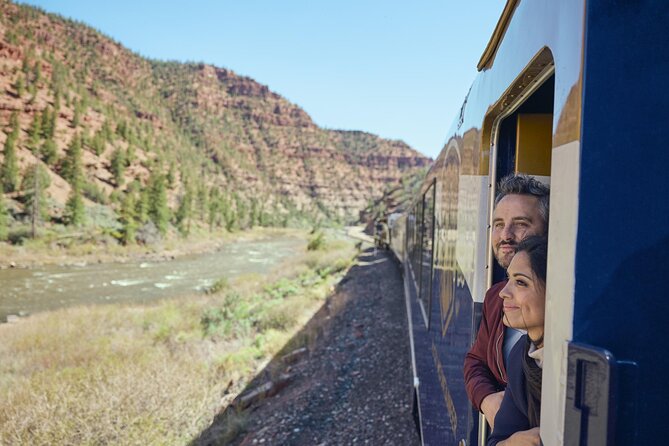
Rocky Mountaineer’s two-day journey from Moab to Denver links Utah’s red-rock country with Colorado’s mountain canyons, and it does so at a pace that lets you watch the scenery instead of watching the road. I especially like the large windows and relaxed seating, plus the way meals, drinks, storytelling, and luggage handling are built into the trip. The train follows stretches of the Colorado River that are difficult to reach by car, giving you a grand tour without the work of driving.
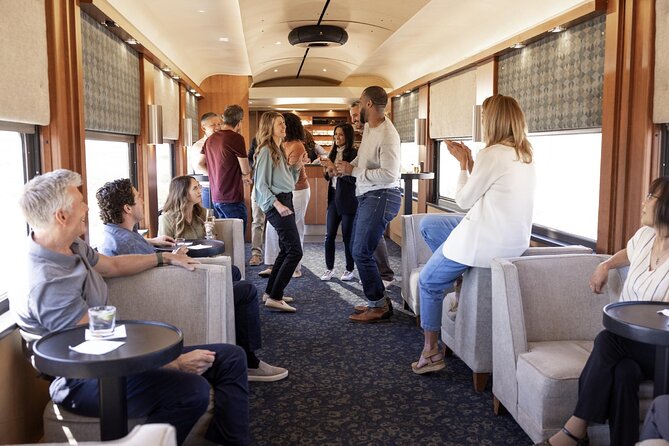
I also like the SilverLeaf Plus lounge car, where you get extra room, premium alcoholic drinks, signature cocktails, and a small outdoor viewing area. The main caution is price: at $2,327 per person, this is a high-cost way to travel between Moab and Denver. You are paying for comfort, service, food, scenery, and the rail experience, not simply for transportation.
Key points to know before booking
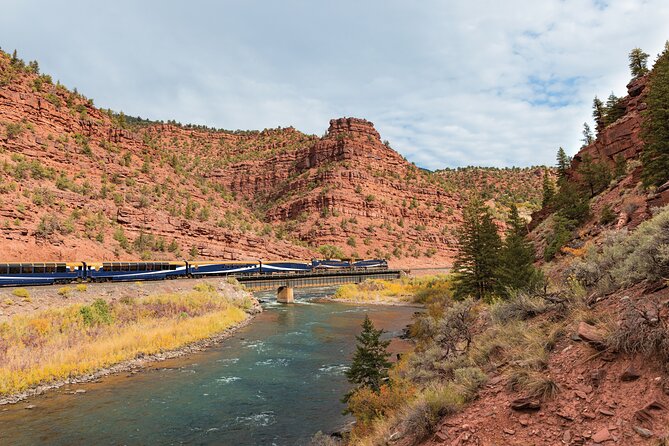
- Red rocks give way to high mountains: Day one runs past Arches country, Ruby Canyon, western Colorado fruit towns, and the Colorado River.
- The train does not stop at most scenic points: Arches National Park, Ruby Canyon, Gore Canyon, Winter Park, Boulder, and other sights are viewed from the windows.
- SilverLeaf Plus is worth considering for long hours onboard: The added lounge space and outdoor viewing area give you another place to sit when you want a change from your assigned seat.
- Glenwood Springs breaks up the journey: Your overnight stop includes a moderate, clean hotel and time to visit the famous hot springs if timing allows.
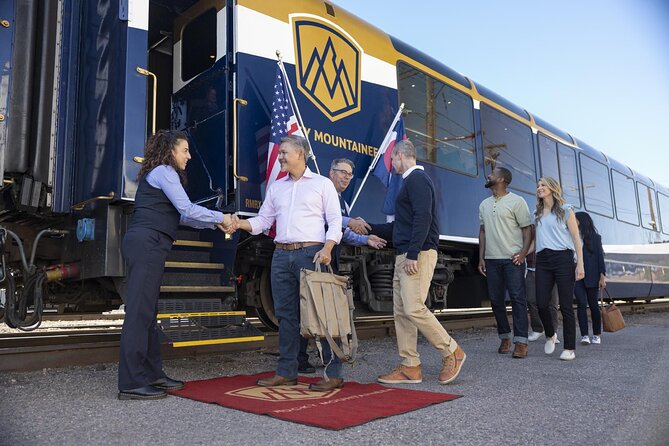
- Service is a major part of the value: Hosts handle meals, drinks, storytelling, transfers, and checked baggage, leaving you free to watch the scenery.
- Plan around a strict cancellation policy: The booking is non-refundable and cannot be changed, except when poor weather causes the operator to cancel.
What the $2,327 price really buys you
The fare looks steep if you compare it with a regular train ticket, rental car, or bus. That comparison misses the point. Rocky Mountaineer is selling a two-day sightseeing journey with meals and service, not a basic ride from Utah to Colorado.
Your fare includes lunch, dinner, breakfast, an overnight hotel in Glenwood Springs, onboard restroom access, gratuities, baggage transfers, motorcoach connections, and onboard Hosts. SilverLeaf Plus also includes premium alcoholic beverages and signature cocktails, along with access to the lounge car.
I think the price makes the most sense for someone who values comfort and scenery more than speed or independence. You can sit back while the crew takes care of bags and meals. You also avoid two long days behind the wheel, although the train itself is not a quick point-to-point service.
The value is weaker if you mainly want to reach Denver cheaply, or if you expect frequent stops and national park visits. This is a sightseeing train. You pass through remarkable places, but you do not get off to hike Arches, explore Ruby Canyon, or walk around Winter Park.
More Train Journeys in the USA:
- Key West Conch Tour Train
★ 4.5 · 792 reviews - Skunk Train: Pudding Creek Express from Fort Bragg
★ 4.0 · 260 reviews - Skunk Train: Wolf Tree Turn from Willits
★ 4.5 · 258 reviews
Day one begins among Moab’s red rocks
Boarding begins at the Rocky Mountaineer Moab Guest Centre at 59 South Main Street. The listed start time is 2:00 p.m., and the meeting point for the train departure is confirmed in your final travel documents.
Moab is a fitting place to begin. It is the main base for exploring Utah’s famous national parks, including Arches and Canyonlands, and the town has a strong outdoor identity. If you are adding this rail journey to a wider Utah trip, plan extra time in Moab before boarding. The train itself is not a substitute for visiting Arches National Park.
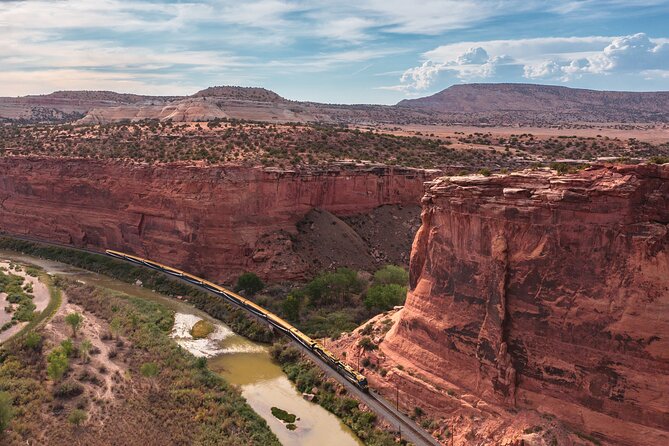
Once underway, the red sandstone scenery arrives quickly. You pass near Arches National Park, with the La Sal Mountains rising in the distance. Arches contains more than 2,000 natural arches, including Landscape Arch, whose opening stretches about 306 feet. From the train, you get a broad view of the area, but you do not enter the park or stop there.
That distinction matters. If your main goal is Delicate Arch, a park hike, or close views of the formations, arrange a separate visit before the train. The rail journey gives you a moving panorama and useful geographic context rather than a park tour.
Ghost towns, old rail stops, and Ruby Canyon
As the train moves east, the scenery shifts from Moab’s famous formations to quieter desert communities and old rail corridors. Thompson Springs has only a few remaining buildings, but the nearby Thompson Wash Rock Art District contains Native American petroglyphs and pictographs. You pass through without stopping, so the interest here is in knowing what lies beyond the window.
Cisco offers another glimpse into the changing American West. Once a watering stop for steam locomotives, it declined after interstate highways and diesel trains changed the pattern of travel. Its ghost-town appearance even earned a place in the film Thelma and Louise. Again, this is a passing sight, not a walking stop.
Ruby Canyon is one of the strongest scenic sections of the first day. Red sandstone walls line a roughly 25-mile canyon along the Colorado River. The railway gives you access to views that are otherwise hard to reach, and you may spot the painted Utah and Colorado border marker on the canyon wall.
This is exactly where rail travel earns its keep. A road trip gives you flexibility, but some stretches of the river corridor are much easier to appreciate from the train. Keep your camera ready, but do not spend the whole trip looking through a screen. The canyon changes quickly, and the best view may be on the opposite side of the coach.
Western Colorado towns with a local flavor
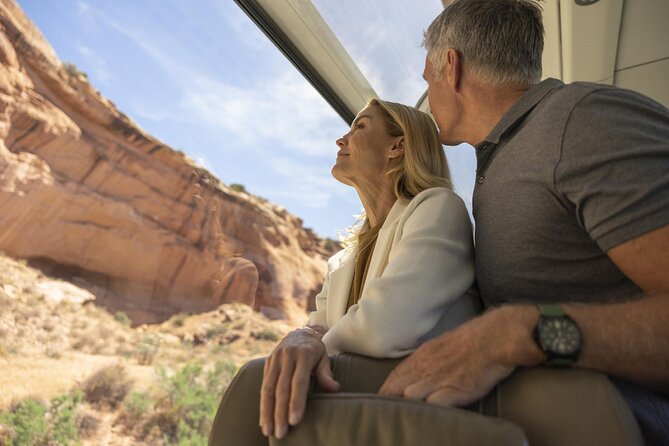
The train continues through Fruita, Grand Junction, Palisade, and New Castle. These places provide a change of mood after the bare red-rock country.
Fruita is surrounded by mesas and is known for dinosaur fossils. It is also linked with the odd local story of Mike the Headless Chicken, remembered each May with a festival. The detail is quirky, but it helps explain that this route is not only about grand scenery. It also passes through working communities with their own traditions.
Grand Junction sits near the meeting point of the Gunnison River and the Colorado River, which was once called the Grand River. It became an important fruit-growing area after its founding in the late nineteenth century.
Palisade is especially appealing if you like food and drink. The town is known for peaches and is Colorado’s first wine region. Mount Garfield rises above it, marking the high Book Cliffs that stretch for roughly 200 miles between Colorado and Utah.
New Castle brings you farther into mountain country. The Colorado River remains a constant companion, and the surrounding terrain supports deer, elk, black bears, and mountain lions. You may not see wildlife from the train, but the route’s natural setting gives you a real sense of how the river connects these communities.
Same tracks, a different day out:
- Key West Conch Train Tour
★ 4.5 · 234 reviews - Fairbanks: Gold Dredge 8 Historic Train Tour
★ 4.7 · 219 reviews - Wild West Day Trip to Virginia City from Tahoe with Train Ride
★ 4.0 · 142 reviews - All-Day Guided Zipline Tour with Train Ride and Lunch in Durango
★ 5.0 · 133 reviews
Glenwood Springs makes a useful overnight break
You arrive in Glenwood Springs in the evening and leave the train for the night. A hotel transfer is provided, though the accommodation may also be within walking distance. The specific hotel is assigned a few days before departure and appears on your boarding pass at check-in.
The overnight hotel is described as moderate, clean, and comfortable, with essential amenities. That wording is worth noting. This is not a luxury resort stay bundled into a luxury rail trip. The focus is a practical overnight stop with good service.
Glenwood Springs is famous for its hot springs, so a soak can be a pleasant way to end the first day. Your available time depends on arrival, hotel location, and the next morning’s departure instructions. The operator provides pickup details before you settle in, so do not plan an elaborate evening schedule.
The overnight stop also prevents the journey from becoming an exhausting marathon. You get a proper bed instead of spending the night in your seat, and your checked luggage is transferred to and from the hotel. That baggage handling is one of the trip’s most useful conveniences.
Day two follows the Colorado River into the Rockies
The second morning begins with a two-course hot breakfast made with locally sourced ingredients. The train leaves Glenwood Springs and enters Glenwood Canyon, widely regarded as one of the most scenic natural features in the upper Colorado region.
Glenwood Canyon is a powerful reminder of the route’s scale. The river, cliffs, railway, highway, and engineering work all share a narrow corridor. From your seat, you can appreciate the geology and the challenge of building transport links through this country.
Gore Canyon is even more dramatic. Cliffs rise more than 1,000 feet above the river, and the upper section drops about 300 feet over three miles. The Colorado River here includes difficult Class 4 and Class 5 rapids, with names such as Fisherman’s Nightmare and Applesauce.
You do not stop for rafting, and this is not an adventure sports trip. Still, the train gives you a calm view of a river that is anything but calm. Byers Canyon follows, with more steep walls and possible wildlife sightings.
For much of the second day, the Colorado River is your guide. Rafters sometimes greet passing trains, so watch the river as well as the cliffs. The route has an enjoyable rhythm: meal service, narration, a new canyon, then another bend in the river.
Winter Park, the Moffat Tunnel, and the Continental Divide
Winter Park brings a change from canyon walls to a mountain resort setting. Skiing began there in 1940, and the area receives about 300 inches of snow each year across roughly 3,000 acres of ski terrain.
You pass through rather than stopping. That is fine for a scenic rail journey, but less useful if you want time for a town visit or a mountain activity. The main attraction here is the transition from river corridor to high mountain route.
After Winter Park, the train enters the Moffat Tunnel. The tunnel cuts through 6.2 miles of mountain terrain as the route crosses the Continental Divide. This is one of the engineering highlights of the trip, though naturally it is a dark stretch from the passenger’s point of view.
The train then continues past Gross Reservoir, which supplies water to Denver and agricultural areas farther east. As you gain elevation and move toward the Front Range, Boulder appears below.
Boulder, the Big Ten Curve, and arrival in Denver
Boulder is known for breweries, food, outdoor activities, and the Flatirons. From the train, you may glimpse the city and the distinctive rock formations that mark the meeting point of the Rocky Mountains and the plains.
You will not have time to explore Boulder on this journey. If the city matters to you, add it before or after the rail trip rather than expecting a stop.
Near the end of the route, the train tackles the Big Ten Curve, a series of tight 10-degree curves that add distance to the track and keep the grade at a manageable 2 percent. It is a small but revealing detail: rail routes often solve steep terrain with patience and geometry rather than brute force.
After leaving the train, a motorcoach transfer carries you through Denver’s River North Art District, usually called RiNo. The area is known for creative businesses and large murals, with rhino motifs appearing around the neighborhood.
The rail journey ends at Denver Union Station, at 1701 Wynkoop Street. From there, you can explore Lower Downtown, listen to live music, or make your own plans in Denver.
SilverLeaf Plus: who benefits from the upgrade
SilverLeaf Plus is the right choice if you want more room during two long days of sitting. The lounge car offers additional space, a small outdoor viewing area, premium alcoholic drinks, and signature cocktails.
The lounge is more than a minor perk. Scenic train travel involves long stretches when you want to change position, talk with other passengers, or get a different angle on the view. Several passengers found the lounge seating more comfortable than the regular coach seats and spent much of the trip there outside meal times.
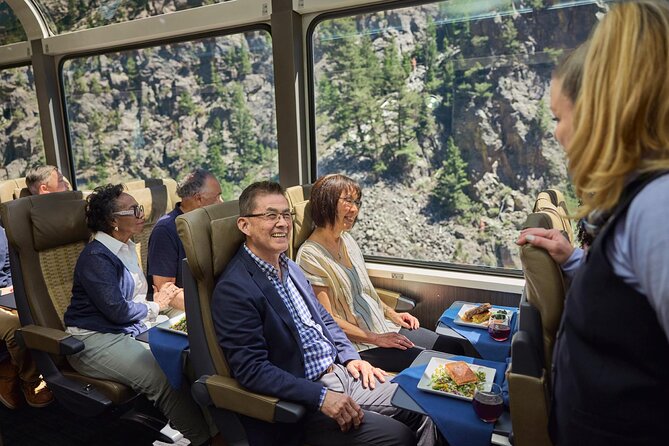
The main coach still matters. It has large windows, air conditioning, generous legroom, and meal service brought to your seat. One useful practical point is that food quality received strong praise, though one assessment found it flavorful but not always piping hot. Expectations should be set accordingly: this is high-quality onboard dining, not a restaurant kitchen operating beside your table.
The hosts are central to the experience. Crew members including Mike, Joey, Tristan, Jessica, Sabina, Lacey, Olivia, Nephi, Crystal, Rae, and Leigh were singled out for warm service, good regional stories, and careful attention. One crew member helped accommodate a diabetic passenger with alternative meal choices, and staff also took extra care with a passenger using a scooter.
Food, luggage, and the small practical details
Meals are included throughout the journey. Day one brings dinner, snacks, and complimentary drinks. Day two begins with breakfast, followed by additional meal service as the train continues toward Denver.
Luggage handling is another strong point. You may check up to two pieces per person, with a total allowance of 30 kilograms or 60 pounds per person. No single piece may weigh more than 23 kilograms or 50 pounds.
Your bags are transferred between the train, hotel, and onward destination, so you do not need to wrestle with them at every stage. Keep medication, documents, valuables, and anything needed overnight in a small personal bag.
WiFi is not included onboard. That is a minor inconvenience for some and a welcome excuse to look out the window for others. Mobile service may vary, but the supplied information does not promise connectivity, so plan as if you will be offline.
The trip can accommodate most passengers, and service animals are allowed. If you have mobility needs, mention them when booking and confirm the arrangements in advance. The staff has shown care with mobility equipment, but specific train and transfer details should be confirmed before departure.
Should you book the Moab to Denver train?
I would book this journey if you want a slow, comfortable way to connect Utah’s red-rock country with Colorado’s mountain scenery, and if the rail experience itself is part of the point. It is especially well suited to couples, families celebrating a special occasion, and anyone who dislikes long drives but still wants to see remote canyon country.
I would skip it if your priority is low cost, frequent sightseeing stops, or independent control over your schedule. You will pass many famous places without stepping off the train, and the non-refundable fare requires firm plans.
For the strongest version of the trip, spend extra time in Moab before boarding, choose SilverLeaf Plus if the budget allows, keep a small overnight bag with you, and treat Glenwood Springs as a pleasant pause rather than a full resort stay. The train is expensive, but the combination of scenery, meals, service, and hands-off logistics makes the cost easier to justify for the right kind of trip.
FAQ
Where does the Moab to Denver journey begin?
It begins at the Rocky Mountaineer Moab Guest Centre, 59 South Main Street, Suite 3, Moab, Utah. The listed start time is 2:00 p.m., and final travel documents provide the meeting details.
Where does the journey end?
The train journey ends at Denver Union Station, 1701 Wynkoop Street, Denver. The listed end point is in the Lower Downtown area.
How long does the trip take?
The journey lasts approximately two days, with one overnight stay in Glenwood Springs, Colorado.
Is hotel accommodation included?
Yes. One night of accommodation in Glenwood Springs is included. The hotel is moderate, clean, and comfortable, and the specific property is assigned a few days before departure.
Does the train stop at Arches National Park or Ruby Canyon?
No. The train passes near these places but does not stop. You view the scenery from onboard.
What meals are included?
Lunch, dinner, and breakfast are included. The journey also includes snacks and complimentary beverages, with SilverLeaf Plus adding premium alcoholic drinks and signature cocktails.
What luggage can I bring?
You may check up to two pieces of luggage per person. The total weight per person cannot exceed 30 kilograms or 60 pounds, and each piece may weigh no more than 23 kilograms or 50 pounds.
Can I cancel or change my booking?
The experience is non-refundable and cannot be changed for any reason. If poor weather causes the operator to cancel, you can choose another date or receive a full refund.
Just added around the USA
- Ventura: Rail Bike Guided Tour with Farm Stand Stop★ 4.1 · 18 reviews
- Virginia City Day Tour From Lake Tahoe with Train Ride★ 4.8 · 19 reviews
- Winnipesaukee Scenic Railroad★ 4.5 · 7 reviews
- Laughton Glacier Hike and White Pass Rail Adventure★ 5.0 · 12 reviews
- Verde Canyon Rail Day Adventure from Scottsdale or Phoenix★ 5.0 · 4 reviews
- Train Ride Adventure through Mother Natures Giant Redwoods Park★ 4.5 · 9 reviews
- Grape Train Escape: Wine Tasting and Verde Canyon Railroad Adventure★ 4.5 · 30 reviews
- Grand Canyon Excursion from Sedona with First Class Train Ride★ 4.5 · 47 reviews
USA Train Journeys, compared.
Skunk Train: Pudding Creek Express from Fort Bragg
Read our review →
Wild West Day Trip to Virginia City from Tahoe with Train Ride
Read our review →
All-Day Guided Zipline Tour with Train Ride and Lunch in Durango
Read our review →
Browse the lists this tour appears in