
Review · USA
Rockies to the Red Rocks Train Moab to Denver SilverLeaf
Red rock country looks best from a train window. Rocky Mountaineer’s two-day Rockies to the Red Rocks route links Moab and Denver by rail, passing Arches country, Ruby Canyon, the Colorado River, mountain gorges, and the Continental Divide. I like the slow pace and the fact that the train reaches scenery you cannot easily see from the highway. I also like that meals, drinks, baggage handling, and one night in Glenwood Springs are built into the fare.
The main drawback is the $1,723 per-person price, before your pre- and post-trip lodging or transportation. You also do not tour Arches National Park or stop in most of the towns and canyons along the way. This is a scenic rail journey, not a sightseeing tour with frequent walks.
Key points to know before booking
- Moab to Denver in two days: You travel east from Utah red rock country to Colorado’s high mountains, with an overnight stay in Glenwood Springs.
- SilverLeaf service: Meals and drinks come to your seat, with hosts providing commentary and help throughout the ride.
- Arches without a park visit: You pass near the red rock formations and La Sal Mountains, but the train does not stop.
- Glenwood Springs overnight: Your fare includes one hotel night, with time to visit the famous hot springs if your schedule allows.
- The Colorado River is your constant companion: Much of the second day follows river canyons, including Gore Canyon and Byers Canyon.
- Denver arrival at Union Station: The train ride ends at 1701 Wynkoop Street, giving you an easy start in downtown Denver.
Moab boarding and the first red rock views
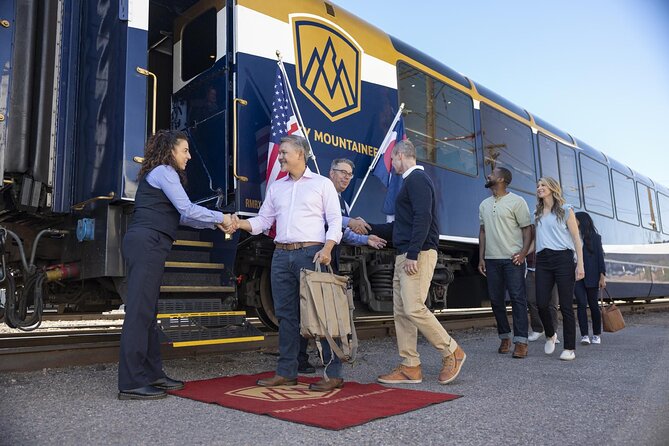
Your journey begins at the Rocky Mountaineer Moab Guest Centre at 59 South Main Street. The listed start time is 2:00 p.m., and final travel documents provide the exact meeting details. A motorcoach transfer takes you from a central meeting point to the train departure location, so you should not need to find a remote rail siding on your own.
Moab is a sensible starting point. It is the gateway to Arches and Canyonlands, and many people add this rail trip to a larger Utah and Colorado holiday. If you have time before boarding, Moab also gives you a chance to see the town’s outdoor culture and red rock setting, though those extra activities are not part of the rail fare.
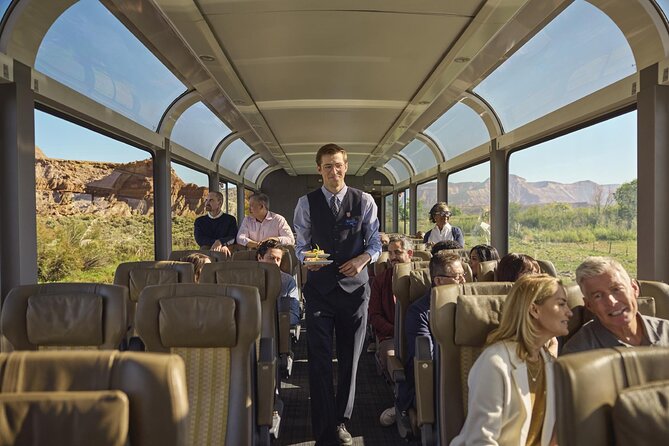
Once aboard, the train moves through the sandstone country near Arches National Park. You will see red cliffs and the La Sal Mountains, Utah’s second-highest mountain range, rising in the distance. The view is broad and open, and the train gives you time to watch the colors change without worrying about traffic or parking.
There is one important limit: you do not enter Arches National Park. The train passes by the area, but there is no stop for Delicate Arch, Landscape Arch, or the park roads. Think of this as a moving preview. If Arches is a major goal, schedule a separate park visit before the train.
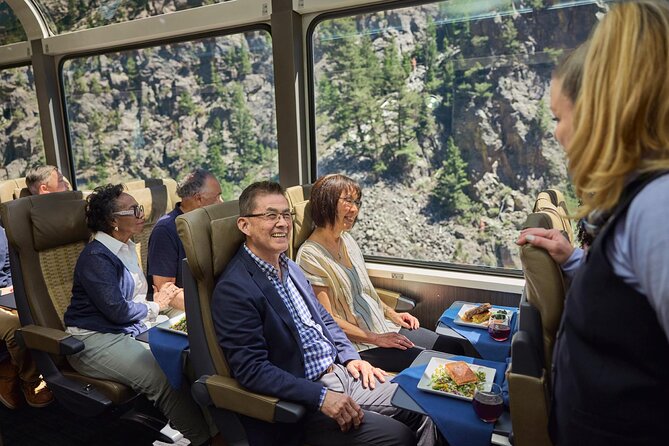
Dinner, snacks, and complimentary beverages are served onboard. SilverLeaf is the standard service, with food and drinks brought directly to your seat. That setup keeps the ride comfortable, but it also means you are watching the scenery from your assigned seating area rather than moving freely through a large collection of train cars.
More Train Journeys in the USA:
- Key West Conch Tour Train
★ 4.5 · 792 reviews - Skunk Train: Pudding Creek Express from Fort Bragg
★ 4.0 · 260 reviews - Skunk Train: Wolf Tree Turn from Willits
★ 4.5 · 258 reviews
Thompson Springs, Cisco, and the old railroad corridor
The route then follows an older railroad corridor through small Utah communities with strong ties to rail travel. Thompson Springs has only a few remaining buildings and is close to the Thompson Wash Rock Art District, an archaeological area with petroglyphs and pictographs. You pass through without stopping, so the value here is the view and the stories from your onboard host, not an excursion.
Cisco has a similar feel. Once a watering stop for steam locomotives, it lost much of its purpose after steam engines disappeared and Interstate 70 took over long-distance road traffic. The town later became familiar to film fans because Thelma and Louise passed through it. From the train, you get a quick look at a place shaped by changing transportation routes.
These stops help explain what makes rail travel appealing here. You are not just moving between Moab and Denver by the fastest route. You are following a corridor built around rivers, canyons, rail grades, and former service towns. The drawback is that the train’s pace can feel fast when an interesting site appears, since there is no stop for exploring or photography.
Ruby Canyon and Colorado’s western slope
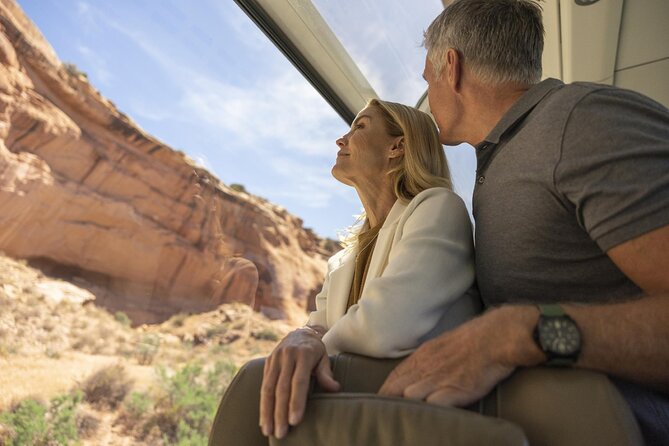
Ruby Canyon is one of the strongest scenic sections on the first afternoon. Red sandstone walls line a roughly 25-mile stretch of the Colorado River, and much of the canyon is difficult to reach by road. The train gives you a useful view into this otherwise hard-to-access corridor.
Look for the painted border marker identifying Utah and Colorado. It is a small detail, but it adds a sense of place to the changing scenery. The canyon is also connected with river rafting, so you may see the waterway from a different angle than you would on a highway or a standard national park drive.
The train continues through Fruita and Grand Junction. Fruita is known for dinosaur fossils and the unusual story of Mike the Headless Chicken, remembered each May with a festival. Grand Junction sits where the Gunnison River meets the Colorado River and has long been tied to fruit growing.
Palisade follows, with its famous peaches, wine region, and views toward Mount Garfield and the Book Cliffs. This is a good stretch for watching the scenery shift from Utah desert to Colorado’s western slope. You pass through New Castle later in the day, where the Colorado River supports fishing, rafting, and kayaking.
None of these communities is a walking stop. You see them from the train, and the onboard storytelling gives the places more meaning than a simple name on a route map. If you want local food, wineries, or town streets, plan separate visits before or after the rail trip.
Glenwood Springs gives the journey a useful pause
You reach Glenwood Springs in the evening and leave the train for the night. Your fare includes one night of accommodation, luggage handling to and from the hotel, and a motorcoach transfer if needed. The hotel may be within walking distance, but the included transfer is useful after a full afternoon onboard.
Glenwood Springs is more than a practical halfway point. It is a historic resort town known for its hot springs, and you may have time to soak after arrival. Check the timing carefully, since your arrival, dinner, and the next morning’s departure shape how much free time you get.
The overnight stop also breaks up what could otherwise be a long continuous rail day. You can unpack a little, sleep in a proper bed, and return to the train in the morning. The tradeoff is that this is not a full town visit. You should treat the hot springs as an optional evening activity, not a guaranteed extended spa session.
A Rocky Mountaineer representative gives you the next morning’s pickup information. Keep essentials in a small overnight bag, even though your main luggage is handled for you. That makes the hotel change easier and avoids rummaging through larger bags.
Same tracks, a different day out:
- Key West Conch Train Tour
★ 4.5 · 234 reviews - Fairbanks: Gold Dredge 8 Historic Train Tour
★ 4.7 · 219 reviews - Wild West Day Trip to Virginia City from Tahoe with Train Ride
★ 4.0 · 142 reviews - All-Day Guided Zipline Tour with Train Ride and Lunch in Durango
★ 5.0 · 133 reviews
Glenwood Canyon begins the second day
The second morning starts with a two-course hot breakfast made with locally sourced ingredients. As the train leaves Glenwood Springs, it enters Glenwood Canyon, one of the most dramatic natural sections on the route. The canyon’s steep walls and river corridor make a strong contrast with the open desert scenery from the previous afternoon.
This is where a train has a clear advantage over a standard road trip. You can keep your attention on the canyon instead of watching traffic or searching for a turnout. Your host also adds context about the places outside the window, which makes the scenery easier to understand.
The route then reaches Gore Canyon, with cliffs rising more than 1,000 feet above sections of the Colorado River. Upper Gore Canyon drops about 300 feet over three miles, and its rapids include names such as Fisherman’s Nightmare and Applesauce. You do not raft the canyon, of course, but you get a view of the river’s power and the narrow route through the mountains.
Byers Canyon continues the river scenery. Wildlife lives in these mountain corridors, so keep your eyes open, though no sightings are guaranteed. Much of the ride follows the Colorado River, and rafters may sometimes offer a friendly wave as the train passes.
Winter Park, the Moffat Tunnel, and the Continental Divide
Winter Park adds a different note to the second day. This mountain resort began its ski era in 1940, when the Denver and Rio Grande Western Railroad operated the Winter Park Express. Today, the area is known for heavy snowfall and extensive ski terrain.
You pass through rather than stop for a ski day. Still, the town helps show how railroads shaped mountain recreation in Colorado. The route then enters the Moffat Tunnel, which cuts 6.2 miles through the mountains as the train crosses the Continental Divide.
A tunnel of that length is not a scenic window moment, but it is a useful reminder of the engineering behind the trip. Rail lines need grades gentle enough for trains, and the route’s curves and tunnels reflect that challenge. The Big 10 Curve later makes the same point, using tight 10-degree curves to keep the grade near 2 percent.
Near the end of the journey, you pass Gross Reservoir Dam and can see Boulder below. The city sits where the Rocky Mountains meet the Plains, with the Flatirons forming its best-known mountain outline. You may also spot Boulder and Bear Peaks, though visibility depends on the weather and your seat.
SilverLeaf service, meals, and onboard comfort
SilverLeaf is the standard level of service on this trip. Meals and beverages come to your seat, and the fare includes breakfast, lunch, dinner, snacks, and complimentary drinks. Restrooms are available onboard, and gratuities are included.
The food receives especially strong praise from the available feedback. Rae, the chef named in one account, prepared creative meals, while Tristan served as a host and explained the area’s geography, history, plants, and wildlife. That combination matters. A scenic train ride is far better when the food is dependable and the stories help you read what you see outside.
You can purchase SilverLeaf Plus as an upgrade. It adds access to a lounge car with more room to relax and a small outdoor viewing area, along with wine pairings, premium alcoholic drinks, and signature cocktails. SilverLeaf itself is the included service, so decide based on how much you value extra space and outdoor viewing rather than assuming the upgrade is required.
Wi-Fi is not included or available as a listed feature. If you need constant internet access, this may feel restrictive. I see it as a reason to download maps, messages, and entertainment before departure. The best parts of this ride are outside the window anyway.
What the $1,723 fare really covers
At $1,723 per person, this is a major travel purchase. You are paying for more than transportation. The fare includes two days of rail service, meals, drinks, one hotel night, baggage transfers, motorcoach connections, onboard hosts, restrooms, and gratuities.
That package can make sense if you would otherwise pay separately for a hotel, two days of meals, a rental car, fuel, and the time and effort required to drive the same route. It is also useful if you want to see the Colorado River canyons without handling the driving yourself.
The price is harder to justify if you mainly need a practical way to get from Moab to Denver. The train does not stop for park visits, town walks, or canyon hikes. A road trip offers more freedom and may cost less, especially for two or more people sharing a car.
You also need to budget for lodging before Moab and after Denver, plus airfare or other transportation to reach the region. Wi-Fi is not included, and the cancellation terms are strict: the experience is non-refundable and cannot be changed for any reason. Only book once your dates and connections are firm.
Who will enjoy this rail journey most
I would recommend this trip to you if you value scenery, comfort, and local storytelling more than independence. It suits people who want to watch the red rock and mountain views without driving, as well as anyone interested in railroads, river corridors, and the history of western transportation.
It also works well for a short two-day add-on to a Utah or Colorado holiday. Pair it with a separate Arches visit in Moab and a few nights in Denver, since the train itself only gives you passing views of the national park and Boulder.
You should think twice if you need frequent stops, outdoor activity, or a low-cost transfer. The maximum group size is listed as 15, and most people can participate, but the experience remains a seated rail journey. Service animals are allowed, and the Moab start and Denver finish are near public transportation points.
The available score is 4.5 from two ratings, so it is encouraging but not a large sample. The strongest praise centers on attentive service, informed hosting, and creative food. Those are precisely the details that can turn a long train ride into a pleasant trip rather than two days of simply sitting by a window.
Should you book the Moab to Denver route?
Book it if the journey itself is the point. You will see Ruby Canyon, Glenwood Canyon, Gore Canyon, the Colorado River, the Moffat Tunnel, and the Continental Divide while someone else handles the road. The included hotel, meals, baggage service, and host commentary add real value.
Skip it if you want to hike Arches, explore Cisco, tour Glenwood Springs at leisure, or control every stop. For the right person, this is a comfortable scenic crossing of the American West. For everyone else, a road trip may offer more freedom for less money.
FAQ
Where does the train journey begin?
It begins at the Rocky Mountaineer Moab Guest Centre at 59 South Main Street, Moab, Utah. The listed start time is 2:00 p.m., with exact meeting details provided in the final travel documents.
Where does the journey end?
The train journey ends at Denver Union Station, at 1701 Wynkoop Street in Denver.
Is accommodation included?
Yes. The fare includes one night of accommodation in Glenwood Springs, the midpoint of the journey.
Are meals included?
Yes. Breakfast, lunch, dinner, snacks, and complimentary beverages are included. SilverLeaf meals and drinks are brought to your seat.
Does the train stop at Arches National Park?
No. The train passes through the red rock country near Arches National Park but does not stop there.
Is Wi-Fi available onboard?
Wi-Fi is not included as part of the experience. Airfare and connecting transportation before or after the rail journey are also not included.
Just added around the USA
- Ventura: Rail Bike Guided Tour with Farm Stand Stop★ 4.1 · 18 reviews
- Virginia City Day Tour From Lake Tahoe with Train Ride★ 4.8 · 19 reviews
- Winnipesaukee Scenic Railroad★ 4.5 · 7 reviews
- Laughton Glacier Hike and White Pass Rail Adventure★ 5.0 · 12 reviews
- Verde Canyon Rail Day Adventure from Scottsdale or Phoenix★ 5.0 · 4 reviews
- Train Ride Adventure through Mother Natures Giant Redwoods Park★ 4.5 · 9 reviews
- Grape Train Escape: Wine Tasting and Verde Canyon Railroad Adventure★ 4.5 · 30 reviews
- Grand Canyon Excursion from Sedona with First Class Train Ride★ 4.5 · 47 reviews
USA Train Journeys, compared.
Skunk Train: Pudding Creek Express from Fort Bragg
Read our review →
Wild West Day Trip to Virginia City from Tahoe with Train Ride
Read our review →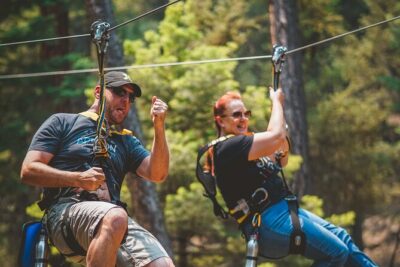
All-Day Guided Zipline Tour with Train Ride and Lunch in Durango
Read our review →
Browse the lists this tour appears in