
Review · SPAIN
Cuenca: Tourist Train Tour
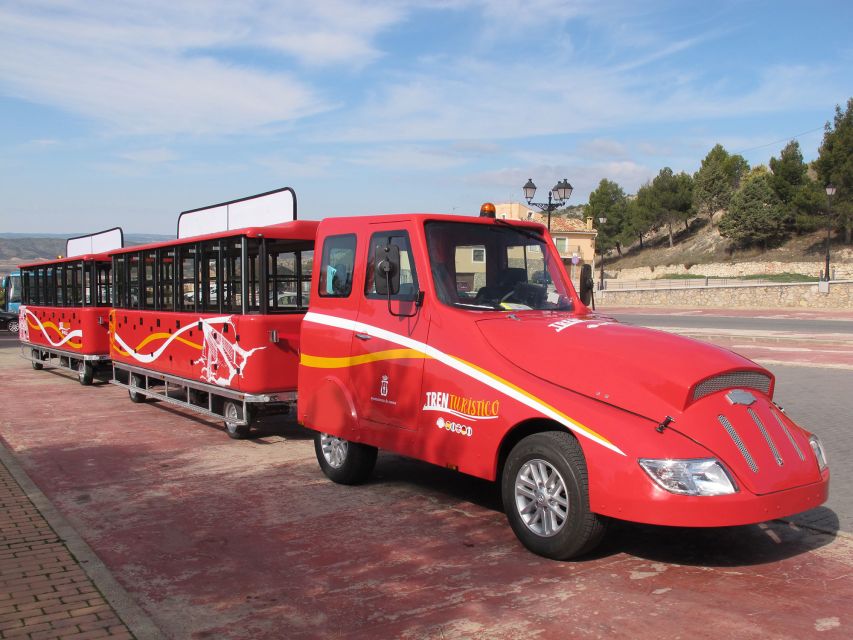
Cuenca rewards a quick overview. This 45-minute panoramic ride gives you an easy first look at the UNESCO-listed old city, with audio commentary in English, Spanish, French, German, and Italian. I like the low $8 price and the chance to see several major sights without planning a route through steep streets and polished cobbles.
I also like that the train leaves from Plaza Mayor, right in front of the cathedral, so you begin in the heart of old Cuenca. The main drawback is the ride itself: cobbled streets and speed bumps can make it rough, the commentary may be hard to hear, and the route is not suitable for wheelchair users or people with reduced mobility.
Key points to know before you go
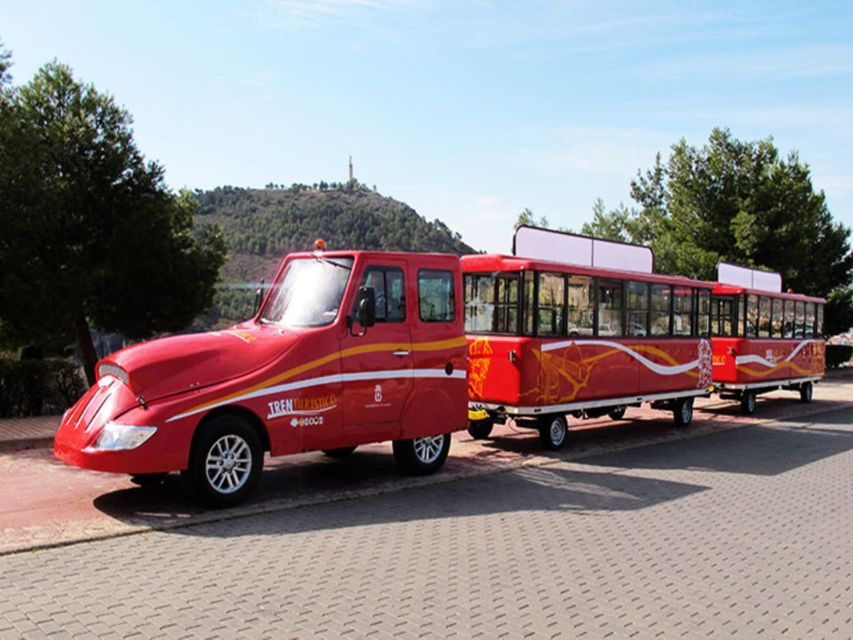
- The route lasts about 45 minutes, making it a useful introduction rather than a full-day sightseeing plan.
- Plaza Mayor is both the starting and ending point, in front of Cuenca Cathedral.
- The advertised route includes major sights such as San Julián Park, the cathedral, the Hanging Houses, the Huécar River, and the castle quarter.
- The audio guide comes in five languages, with headphones supplied for the ride.
- The train does not include monument entry, food, drinks, or hop-on, hop-off stops.
- Cobbles can make the ride uncomfortable, especially for anyone with back problems or limited mobility.
Starting in Plaza Mayor beside Cuenca Cathedral
The meeting point is simple: Plaza Mayor, directly in front of Cuenca Cathedral. That is a useful arrangement because you do not need to search for a remote bus stop or walk across the modern part of town before beginning.
Plaza Mayor also gives you an immediate sense of Cuenca’s old center. The Gothic-style cathedral is one of the main sights on the route, and starting here puts you close to several of the city’s key monuments before the train even moves.
You will receive personal headphones for the audio guide. The five language choices are Spanish, English, French, German, and Italian. That makes the ride more useful for independent visitors who want some context but do not want a live guide speaking over the whole group.
The commentary focuses on explanations and legends connected with Cuenca’s landmarks. That matters here. A short drive can show you a building, but a story about a monument gives you a reason to remember it later when you return on foot.
The train starts and finishes in the same place. You do not need to worry about finding your way back from another neighborhood, but you should treat the ride as a circuit, not as transport between sights.
More Tourist and Miniature Trains in Spain:
- From Málaga: Ronda+Setenil de las Bodegas with Little Train
★ 4.6 · 4,115 reviews - Alhambra tickets with Nasrid Palaces + Tourist Train
★ 3.0 · 40 reviews - Key West Conch Tour Train
★ 4.5 · 792 reviews
San Julián Park and the first look at the city
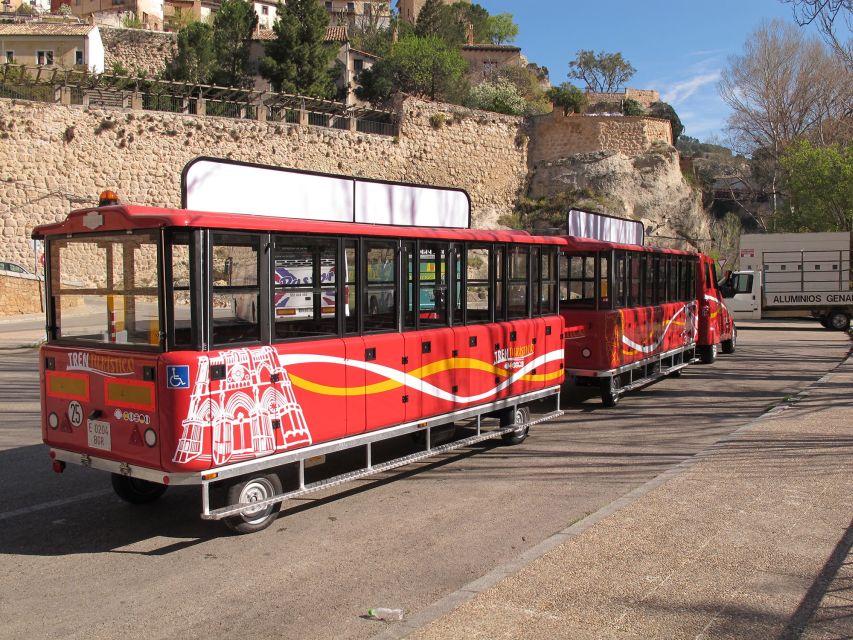
San Julián Park is one of the named points along the route. It offers a change from the dense old streets and helps you see Cuenca as more than its famous cliffside buildings.
The value of this part of the ride is orientation. If you have only one day, it can be hard to understand how the old quarter, the river valleys, and the newer city fit together. A moving view gives you a basic map in your head before you begin walking.
Do not expect a long stop here. This is a panoramic tour, not a series of guided visits. You may have a chance to look and take photographs, but the train is designed to keep moving.
That is useful if your main goal is to get your bearings quickly. It is less useful if you want time to study each view, wait for the best light, or hear every word of the commentary without road noise.
Cuenca Cathedral and the old center
The Gothic cathedral is one of the most important landmarks on the route. Because the train leaves from Plaza Mayor, you can easily return later to explore it independently, subject to its opening arrangements and any admission requirements.
The tour does not include access to the cathedral or any other monument. That keeps the ticket cheap, but it also means you should budget time and money separately if you want to go inside.
From the train, you get an outside view and historical context through the audio guide. You will not get the same detail as a proper interior visit. I would use the train to decide which sights deserve your walking time, then return to the cathedral after the ride.
The old center is also where the cobbles become an important issue. One passenger found the ride very rough, with bumps sending jolts through the body. Another specifically noted that the old town’s cobbled streets made the commentary difficult to hear, even with the volume turned up.
That is not a minor detail. If you have back trouble, joint pain, or a low tolerance for bumpy transport, this may not be the relaxed sightseeing ride you imagine from the word panoramic.
The Hanging Houses and the Huécar River
The famous Casas Colgadas, or Hanging Houses, are among Cuenca’s signature sights. They cling to the edge above the Huécar River and are the sort of buildings most people want to photograph during a first visit.
The route description includes the Hanging Houses and the river area, so this is one of the main reasons to choose the train. The ride can give you a quick view without requiring you to work out the best approach through Cuenca’s high old quarter.
There is one important caution. The exact experience may not always match your expectations. One passenger reported that the train did not pass the Hanging Houses and instead spent more time in the city area. I would not book this ride solely for one guaranteed photograph from a particular angle.
If the Hanging Houses are your top priority, use the train as an overview and confirm the current route at the departure point. Then visit the houses on foot as well. That gives you control over your viewing time and avoids relying on a moving vehicle for the city’s most famous sight.
The river setting also explains why Cuenca feels so dramatic. The old buildings sit high above the Huécar gorge, and the train can help you understand the relationship between the houses, the cliff edge, and the water below. The audio stories add character, but your view will depend on the train’s exact path and the traffic conditions.
More Train Journeys in Spain:
- Montserrat & Cogwheel Train, Gourmet Wine Tasting & Tapas/Lunch
★ 5.0 · 6,290 reviews - Mallorca: Island Tour with Boat, Tram & Train from the South
★ 4.4 · 3,888 reviews - Montserrat with Cog-Wheel Train & Black Madonna Priority Access
★ 4.5 · 3,400 reviews - Granada City Train 1 or 2-Day Hop-On Hop-Off Ticket
★ 3.5 · 3,128 reviews
The castle quarter and Cuenca’s upper streets
The route also gives you a chance to see the castle quarter. This is valuable because the upper part of Cuenca is easy to underestimate when you focus only on the cathedral and Hanging Houses.
The castle area helps explain the city’s defensive position and its unusual shape. You get a broader sense of the old settlement rather than a simple procession between famous buildings.
Again, the train offers a moving look rather than a full visit. You will not be getting off to explore every lane, and there are no advertised hop-on, hop-off stops. One passenger said additional safe photo stops would have made the ride more useful, especially for someone visiting Cuenca for only 24 hours.
That criticism is fair. A fixed route gives you convenience, but it limits your choices. You cannot pause at every viewpoint, and you may pass a good photo opportunity before you are ready with your camera.
Still, the castle quarter is one reason the ride can be worthwhile at the beginning of a day. You can mark places that deserve a closer look, then return on foot after the train brings you back to Plaza Mayor.
What the audio guide adds, and where it falls short
The audio guide is included in the ticket, and headphones are provided. Five languages make this a practical choice for couples or families who do not speak Spanish.
The content includes explanations and legends linked to Cuenca’s landmarks. That is more helpful than a simple list of names. You can connect the cathedral, river, Hanging Houses, and castle area with stories as you move through town.
The weak point is sound quality during the bumpiest sections. Road noise, rattling, and speed bumps can make the narration difficult to follow. Turning up the volume may help, but it cannot fix every problem.
I would listen closely during smoother stretches and accept that some commentary may be easier to catch after the ride, when you revisit the sights on foot. If a detailed spoken explanation is essential to your visit, a walking tour or a full guide-led visit may suit you better.
The audio is best treated as an added layer, not the sole reason to book. The train’s main service is visual orientation.
A cheap ticket, but not a complete day of sightseeing
At $8 per person, the price is modest. For that fee, you receive the train ride, headphones, the audio guide, and compulsory travel insurance. You do not pay separately for the panoramic circuit itself.
The value is strongest if you want a quick overview before choosing where to spend the rest of your day. It can save you from walking directly uphill into every part of the old quarter without knowing what lies ahead.
The value is weaker if you expect a long, detailed tour with frequent stops. The ride is about 45 minutes, and access to monuments is not included. Food and drinks are also your responsibility.
A useful way to judge the price is to ask what problem the train solves. If you want to see the broad layout of Cuenca quickly, $8 is reasonable. If you want close views, long photo stops, or interior visits, the ticket is only a small part of your total sightseeing plan.
The train can also be a good choice for someone with limited time, as long as that person can manage the rough ride and the access conditions. A visitor spending just 24 hours in Cuenca may appreciate seeing several areas before deciding where to walk.
Comfort, access, and the rough ride
This is not a suitable experience for wheelchair users or people with reduced mobility. The supplied information specifically says it is not suitable for people with mobility impairments, and the cobbled route adds a practical concern for anyone who struggles with jolting or uneven movement.
The ride may also be a poor choice for people with back problems. One passenger described it as unsuitable for someone with a damaged back, while another found the jolts particularly uncomfortable over speed bumps.
Hot weather can make the experience less pleasant as well. A summer passenger disliked the heat and felt the route did not cover the sights expected. Since exact vehicle conditions and weather can affect comfort, I would be cautious about choosing the train during the hottest part of the day.
Pets, smoking, and food are not allowed in the vehicle. Bring water for before or after the ride, but do not plan to eat during the circuit.
The driver received praise for being friendly and, on one occasion, allowing a passenger to board an hour earlier. That suggests some flexibility may be possible at the departure point, but you should not rely on early boarding unless the staff confirms it.
How I would fit the train into one day in Cuenca
I would take the train early, then use the route as a planning tool. Start at Plaza Mayor, listen to the audio guide, and note which sights you want to revisit slowly.
After returning to the square, walk to the cathedral and the Hanging Houses. If the train gave you only a quick view of the Huécar River or did not pass the buildings as expected, this second look becomes especially important.
Next, use the castle quarter and upper streets for a closer visit if your energy and mobility allow. The train cannot replace this walking time, but it can help you understand where the major areas sit before you begin.
Keep your expectations realistic. You are buying a short circuit, not a full guided day. The best use of the ticket is to combine it with independent exploration.
Who should book the Cuenca Tourist Train?
I would recommend it to first-time visitors who want a quick outline of Cuenca, people with only one day in town, and anyone who enjoys seeing a city from a moving viewpoint. The five-language audio guide is a useful extra, and the $8 cost keeps the risk low.
I would be cautious if you have back problems, reduced mobility, or strong concerns about comfort. I would also skip it if your main goal is a guaranteed, extended stop at the Hanging Houses or a series of photo breaks.
Book it if you see the ride as a short introduction. Skip it if you need smooth transport, frequent stops, or detailed monument visits. For most able-bodied visitors, it can be a sensible first look, provided you follow it with time on foot.
FAQ
Where does the Cuenca Tourist Train start?
It starts at Plaza Mayor de Cuenca, in front of the cathedral.
Where does the tour finish?
The train returns to Plaza Mayor, where the tour ends.
How long is the train ride?
The route takes approximately 45 minutes.
What languages are available for the audio guide?
The audio guide is available in Spanish, English, French, German, and Italian.
Are headphones provided?
Yes. Personal headphones are included for listening to the audio guide.
Does the ticket include entry to Cuenca Cathedral or other monuments?
No. The ticket covers the panoramic train tour and audio guide, but monument access is not included.
Is the tour suitable for wheelchair users?
No. The experience is listed as unsuitable for wheelchair users and people with reduced mobility.
Can I bring food, smoke, or bring a pet on the train?
No. Pets, smoking, and food are not allowed in the vehicle.
Just added around Spain
- The Train Track Trail Mountain Bike Ride – Private experience★ 5.0 · 14 reviews
- Half Day Guided Tour in Soller Train and Tram★ 4.0 · 7 reviews
- Soller Port with Train and Tram Mallorca Half Day Trip★ 3.5 · 54 reviews
- Seville in One Day by High speed Train from Madrid Private Tour★ 4.5 · 30 reviews
- Island Tour with Train Tram Boat and Bus from Cala Millor★ 4.5 · 8 reviews
- Boat, Tram and Train Tour in Mallorca from the South★ 4.0 · 9 reviews
- Private Tour: Cordoba Day Trip from Madrid by High-Speed Train★ 5.0 · 3 reviews
- Córdoba Private Day Trip from Madrid by High-Speed Train★ 4.0 · 9 reviews
Tourist and Miniature Trains, compared.
From Málaga: Ronda+Setenil de las Bodegas with Little Train
Read our review →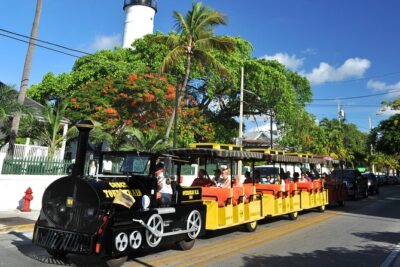
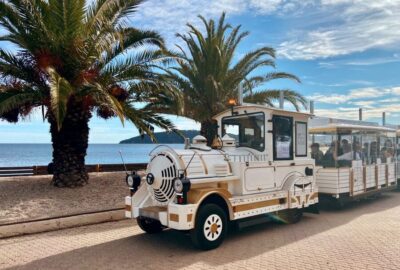
Antibes: 2-Way Little Train of Antibes Tour to Juan-les-Pins
Read our review →
Saint-Raphaël : The Little Train of Saint Raphaël Tour
Read our review →
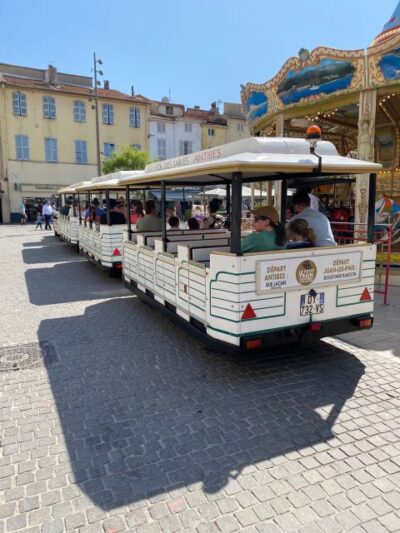
Aix-en-Provence by Electric Tourist Train – City Center Circuit
Read our review →Browse the lists this tour appears in