
Review · CANADA
Exporail, the Canadian Railway Museum
Old trains still have work to do. At Exporail, the Canadian Railway Museum near Montreal, locomotives, streetcars, passenger cars, and cabooses turn railway history into something you can walk through, touch, and picture in daily use. I like the hands-on access to historic vehicles, and I like the way the museum shows the people who worked inside them, not just the machines.
Your $17 admission includes the museum’s current exhibitions, parking, and indoor and outdoor areas for a packed lunch. The main drawback is simple: much of the visit takes place outdoors, so a rainy or cold day can limit your enjoyment, especially since the recommended visit is only about one hour and several optional activities depend on the day’s schedule.
Key Points Before You Go
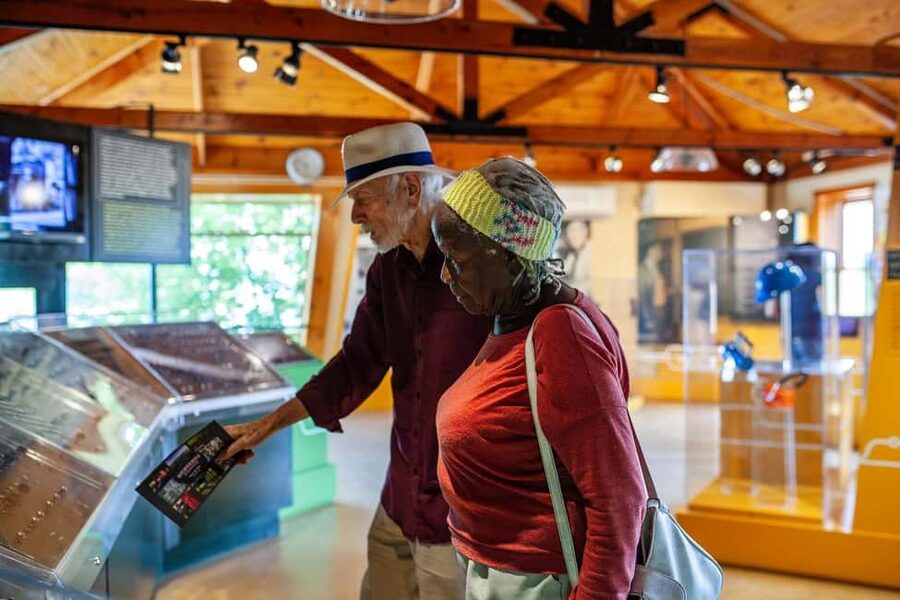
- 400 artifacts in an immersive tunnel: The entrance experience sets the scene with railway objects that connect the machines to Canadian life.
- Historic vehicles you can enter: Explore streetcars, passenger cars, steam locomotives, and a caboose from the inside.
- Eight exhibitions in one admission: Your ticket gives access to the current exhibition program, which changes with the season.
- A living museum near Montreal: Exporail presents railway history through vehicles, workspaces, stories, and optional rides.
- Outdoor time matters: Wear comfortable, closed-toe shoes and check the weather before setting out.
- French and English service: Guided tours are offered on Saturdays and Sundays, with information available in both languages.
What Exporail Does Better Than a Display Hall

Many transport museums ask you to look at vehicles from behind a rope. Exporail takes a more useful approach. You can climb aboard selected streetcars, passenger cars, and locomotives, then consider what each space was made for and who depended on it.
That physical access changes the visit. A steam locomotive is not just a large black machine when you can see the cramped working areas. A passenger car is easier to understand when you stand inside it rather than view it from a platform. A caboose becomes more than the last car on a train when you learn that a railway worker lived and worked there.
I especially like the attention given to ordinary railway workers. One part of the museum presents the school car and the teacher who taught inside it. Another introduces the worker who lived and worked in a caboose. These details give the collection a human scale, which is often missing from large transport displays.
Exporail calls itself a living museum, and the phrase fits the format. The collection is not only about dates, names, and technical specifications. It shows how railways affected work, schooling, travel, and the growth of Canada.
More Railway Museums in Canada:
- Skip the Line: Historic RailPark and Train Museum Ticket with Guided Tour
★ 4.5 · 59 reviews - Prague: Railway Kingdom Giant Model Railway Museum
★ 4.4 · 54 reviews - Vienna: Kingdom of Railways Museum Entry Ticket
★ 3.6 · 50 reviews
The 400-Artifact Tunnel Sets the Tone
Your visit begins with an immersive tunnel containing more than 400 artifacts. This is a smart introduction because it gives you a quick visual guide to the railway world before you reach the larger vehicles.
Expect a concentration of objects rather than a quiet, single-subject gallery. The displays help you connect rail transport with the wider society it served. You may see tools, railway equipment, and other objects tied to the people and systems behind the trains.
The tunnel is also useful if your time is tight. With a one-hour visit, you need a place where you can get a broad sense of the museum quickly. Start here, then choose the vehicles or exhibitions that interest you most.
Do not rush past this section simply because the locomotives are waiting outside. The objects in the tunnel explain the human work behind the equipment. That context makes the later vehicle visits more meaningful.
Eight Exhibitions Cover More Than Locomotives
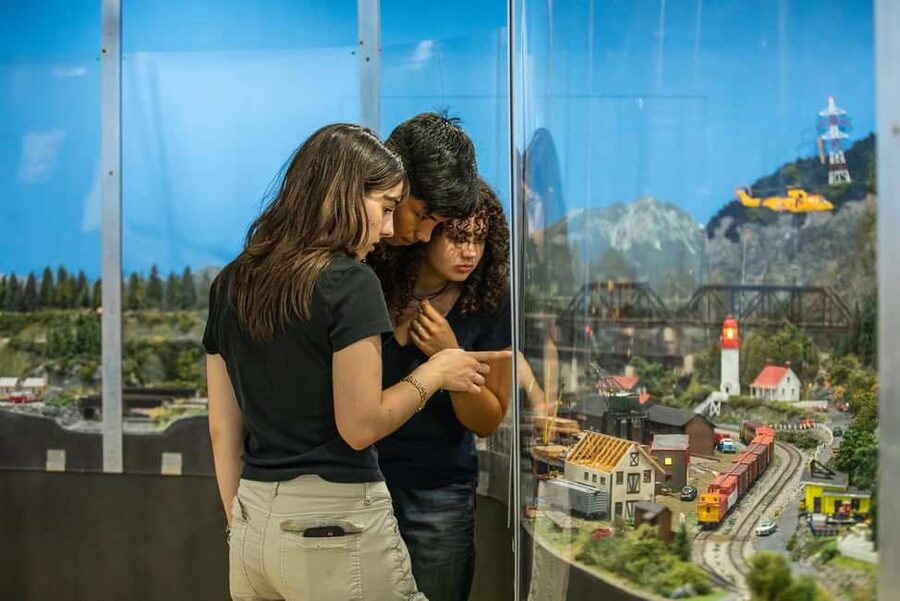
Admission includes access to eight simultaneous exhibitions, with the exact selection depending on the season. This matters because Exporail is not a one-room collection built around a few famous trains.
The exhibitions trace the development of rail transport and its effect on Canadian society. You will find different ways of looking at the subject: technology, transportation, work, education, and everyday life all fit into the museum’s larger story.
Because the exhibitions can vary by season, I would avoid planning your visit around a single named display unless you confirm it in advance. The safer plan is to treat the ticket as access to the museum’s current program and allow time for both indoor and outdoor areas.
The indoor sections are especially useful in poor weather. They also give you a break from walking between the vehicles. If you are visiting with children, the changing scale of the displays can help hold attention: small artifacts lead to full-size cars, then back to interpretive material.
Climbing Aboard Steam Locomotives and Passenger Cars
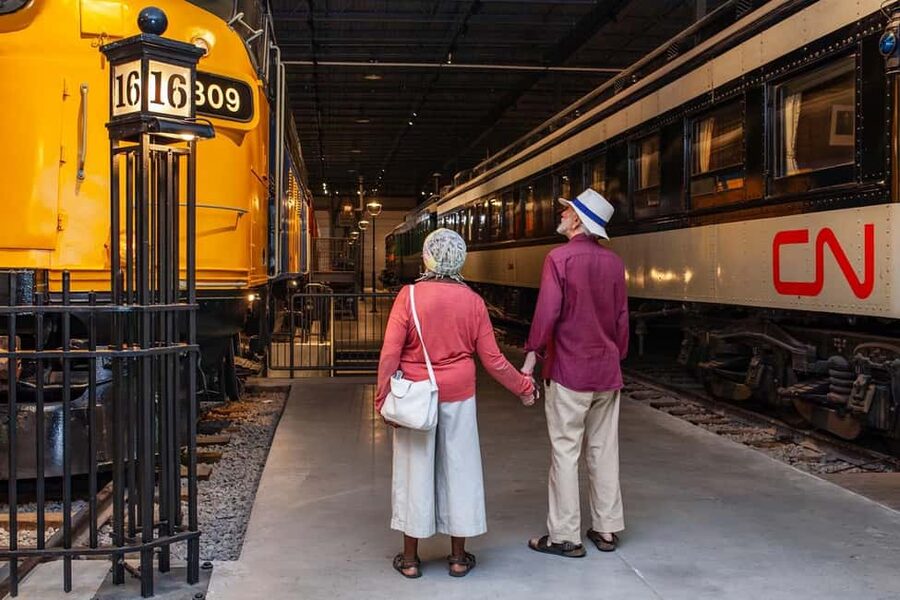
The main attraction is the chance to enter historic railway vehicles. The collection includes legendary steam locomotives, streetcars, passenger cars, and cabooses open to the public.
Each type of vehicle offers a different experience. A streetcar shows the practical side of city transportation. A passenger car helps you picture longer journeys and the people who used rail travel to move through Canada. A steam locomotive presents the power and labor required to keep a train moving.
The vehicles also provide some of the strongest photo opportunities, though the experience is more rewarding when you slow down and examine the working spaces. Look at the layout, the separation between areas, and the way each vehicle was built for a specific job.
Not every vehicle is necessarily open at every moment, and the available program can depend on the season or day. Still, the ability to enter several types of railway equipment is a major reason to choose Exporail over a museum that limits you to viewing trains from a distance.
Wear closed-toe shoes. You will be walking through and around large vehicles, and comfortable footwear will make the visit easier. The museum is wheelchair accessible, but the historic vehicles themselves may have different access conditions. If that matters for your visit, ask at reception about the specific areas open that day.
More Museum Visits in Canada:
- Brussels: Train World Museum Entrance Ticket
★ 4.7 · 524 reviews - London: Postal Museum Entry Ticket and Underground Rail Ride
★ 4.6 · 363 reviews - Brussels Train World Museum Entrance Ticket
★ 4.5 · 220 reviews - From Krakow: Zakopane Tour with Gubalowka Funicular & Museum
★ 4.5 · 80 reviews
The People Inside the Railway Story
Exporail’s best material is not always the biggest object. The stories of the railway workers help explain how these vehicles functioned as places of work and, at times, places of daily life.
The school car is a particularly useful example. It brings education into the railway story and shows how a train could serve a social purpose beyond carrying passengers or freight. The teacher who taught in the car gives the exhibit a clear human focus.
The caboose story works in a similar way. Learning about the railway worker who lived and worked there helps you see the caboose as a working environment, not merely the small car at the back of a train.
These examples also make the museum suitable for families. Younger visitors may be drawn to the size and shape of the trains, while adults can pay attention to the work, routines, and social changes connected to them. The strongest visit lets both groups explore at their own pace.
Rides Add More to the Basic Admission
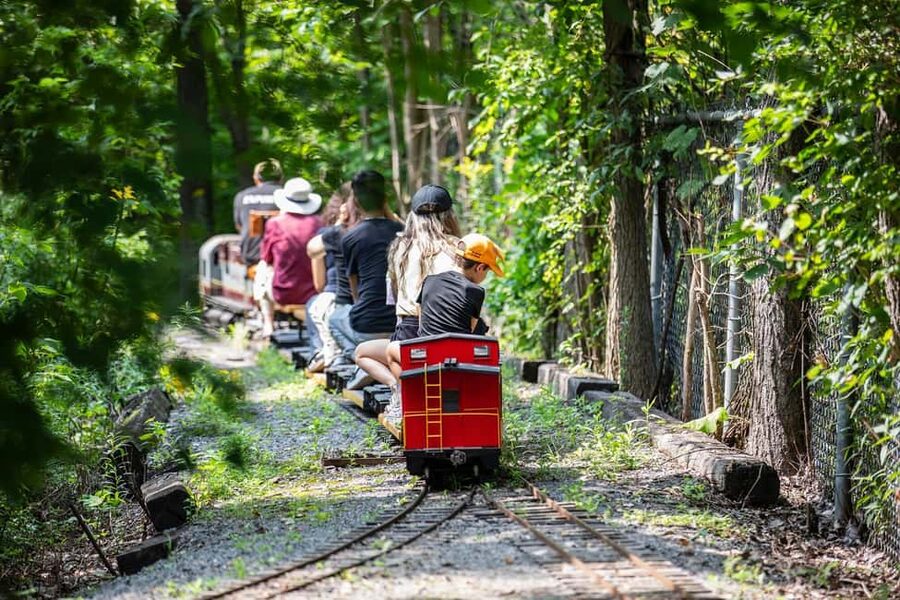
Exporail offers optional rides on a tram, passenger train, or miniature railway. These are not included in the basic admission, and they depend on the day’s schedule.
If a ride is running during your visit, it can be a worthwhile addition. Riding gives you a sense of movement and distance that static exhibits cannot provide. It also gives your group a shared activity after time spent reading displays and walking through vehicles.
Do not assume every ride will operate every day. Ask at reception for the schedule when you arrive, especially if a tram or miniature railway is a priority. Since the museum’s core admission is already reasonably priced, you can decide on the spot if an optional activity feels worth adding.
The one-hour duration is enough for a brisk introduction, but not enough to see every exhibition slowly and add every activity. If you want the full experience, plan your route before you begin and treat the rides as extras rather than guaranteed parts of the visit.
The Discovery Trail and Outdoor Layout
The discovery trail gives you another way to see the collection. Instead of moving directly from one building to the next, you can take time outdoors and let the railway equipment shape your route.
This is where weather matters most. A clear day will make the outdoor sections more pleasant, while rain or cold can shorten your visit. One useful tip is to check the forecast before you go and dress for walking rather than treating Exporail as a completely indoor museum.
The outdoor layout also means the museum may suit you better if you enjoy moving around. If you prefer a compact gallery with everything under one roof, the grounds could feel less convenient. If you like seeing full-size vehicles in open space, the arrangement adds to the sense of scale.
Bring a packed lunch if you want to make the visit more relaxed. Indoor and outdoor dining areas are available depending on the season, so you do not need to build your plans around finding a restaurant on site.
Is $17 a Good Value?
At $17 per person, Exporail offers solid value if you care about historic machinery, Canadian transportation, or hands-on museum visits. Your admission includes all current exhibitions and free parking, which keeps the basic cost clear.
The value depends on how you use the museum. For a quick one-hour visit, the price is fair, especially if you focus on the tunnel, a few vehicles, and the most interesting exhibitions. If you spend more time on the discovery trail, read the displays, and add a ride, you get more from the same admission.
Optional activities cost extra, but you can choose them according to your interests and the day’s schedule. That flexibility is useful for families or mixed groups. Someone fascinated by trains may want a ride, while another person may be satisfied with the exhibitions and vehicle access.
The museum shop is another part of the visit. It is designed to appeal to both children and adults, so it can be a pleasant final stop. I would not treat the shop as a reason to buy admission, but it gives you a chance to take home a railway-themed item after seeing the collection.
Planning Your One-Hour Visit
Begin at the current main entrance, P1, near the railroad tracks that cross St. Pierre Street. Access through P2 is currently closed, so follow the signs for P1 rather than assuming the older entrance remains available.
At reception, ask what is open and which activities are scheduled. You can also find out about the themed tour offered that day. Guided tours are available on Saturdays and Sundays, in French and English.
For a brisk one-hour route, I would suggest this order:
- Start with the tunnel and its more than 400 artifacts.
- Visit the main indoor exhibitions.
- Choose the vehicles you most want to enter.
- Walk part of the discovery trail.
- Add a tram, passenger train, or miniature railway ride if the schedule allows.
- Finish at the shop or dining area.
This order gives you the broad story first, then the full-size equipment. If you arrive mainly for a particular locomotive or ride, ask about it before following this route.
Who Will Enjoy Exporail Most?
Exporail is a strong choice for families, railway enthusiasts, history-minded visitors, and anyone looking for an activity close to Greater Montreal. Children get large vehicles and optional rides, while adults get social history and working details.
It is also a good fit for people who prefer a museum with movement. You are not expected to spend the entire visit in quiet galleries. You walk outdoors, enter vehicles, follow a trail, and choose how much time to give each exhibition.
The experience may be less satisfying if you dislike outdoor walking or want a fully guided tour from beginning to end. The advertised visit lasts about one hour, but the optional activities and exhibitions need more time if you want to take them seriously.
Language should not be a major obstacle. The experience is offered in French and English, and some material appears in its original language. Ask at reception if you need help understanding the themed tour or a particular display.
Practical Details That Matter
Bring comfortable shoes with closed toes. This is not the place for delicate footwear or a visit planned entirely around sitting down.
Pets are not permitted, although assistance dogs are allowed. Alcohol and drugs are also not permitted on site.
Exporail is open all year, but the balance between indoor and outdoor activity changes with the season. Dining areas and current exhibitions also depend partly on the season, so check conditions before you leave.
The experience is wheelchair accessible. Because the site includes historic vehicles and outdoor paths, ask reception about access to specific cars or areas if you need a fully step-free route.
Cancellation is free up to 24 hours in advance, with a full refund. You can also reserve now and pay later, which helps if your Montreal plans are still shifting.
Should You Book Exporail?
Book Exporail if you want more than a quick look at old trains. The strongest parts are the ability to enter historic vehicles, the 400-artifact tunnel, and the human stories of railway workers, including the teacher in the school car and the worker in the caboose.
I would choose a dry day when possible, arrive through P1, ask about the day’s ride schedule, and allow more than one hour if you want to read carefully. The basic $17 admission is a good deal for the exhibitions and parking, while the optional rides let you decide how much more to spend.
Skip it only if outdoor walking is a serious problem for your group or if your schedule allows just a very rushed stop. For families and anyone curious about how railways helped shape Canada, Exporail offers a practical, full-size look at the subject without requiring a long trip from Montreal.
FAQ
Where is Exporail located?
Exporail is in Greater Montreal, Quebec, Canada. The current main entrance is P1, near the railroad tracks crossing St. Pierre Street.
How much does admission cost?
The listed price is $17 per person. Admission includes access to the current exhibitions and free parking.
How long does a visit to Exporail take?
The stated duration is one hour. You may want additional time if you plan to visit several exhibitions, walk the discovery trail, or add an optional ride.
Is Exporail open all year?
Yes. Exporail is open all year, although some exhibitions, dining areas, and optional activities depend on the season or day.
What does the admission include?
Your ticket includes the current exhibitions, access to the museum collection, and free parking. Optional rides and activities are not included.
Are guided tours available?
Guided tours are offered on Saturdays and Sundays. Information is available in French and English, and reception provides details about the themed tour offered that day.
Can I ride a tram or train?
Optional tram, passenger train, and miniature railway rides are available depending on the day’s schedule. These activities are not included in the basic admission.
Is Exporail wheelchair accessible?
Yes, the museum is wheelchair accessible. Historic vehicles and particular areas may have different access conditions, so ask at reception for details.
Can I bring food or pets?
You can bring a lunch and use the indoor or outdoor dining areas, depending on the season. Pets are not allowed, but assistance dogs are permitted.
Just added around Canada
- Whistler Train Wreck, Suspension Bridge & Hidden Waterfall Adventure★ 5.0 · 24 reviews
- 6-Day Rocky Mountaineer Train Tour, From Vancouver to Rockies★ 4.5 · 10 reviews
- 5-Day Rocky Mountaineer Train Tour, From Vancouver to Rockies★ 4.5 · 8 reviews
- Quebec City Scenic Walking Tour with 1 Funicular Ride★ 4.5 · 7 reviews
- Guided Bike Tour on Historical Kettle Valley Railway at Myra Canyon & Wine Tour★ 5.0 · 19 reviews
- Quebec City Private Walking Tour with Funicular Ride★ 4.8 · 10 reviews
- Shore Excursion: Private Walking Tour with Funicular★ 5.0 · 31 reviews
- Bicyle Tour on Historical Kettle Valley Railway from Myra Canyon to Penticton★ 5.0 · 62 reviews
Railway Museums, compared.
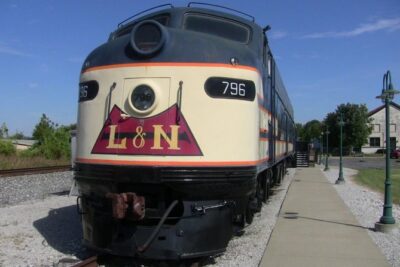
Skip the Line: Historic RailPark and Train Museum Ticket with Guided Tour
Read our review →

Skip the Line: Kingdom of Railways Entrance Ticket in Prague
Read our review →
Bowling Green: Historic RailPark & Train Museum Entry & Tour
Read our review →
Kusadasi Day Trips Magnesia, Train Museum Turkish Bath
Read our review →Browse the lists this tour appears in