
Review · TOKYO
Private tour with Yasushi and Yoko – by car, train, on foot
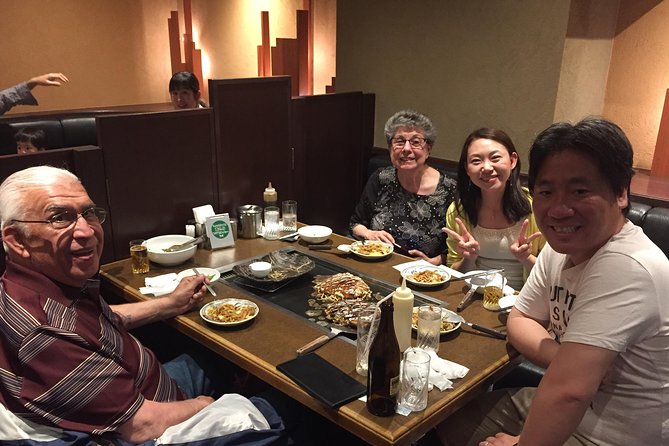
Tokyo makes a fine first-day puzzle. I like the private format, which lets Yasushi and Yoko adjust the day around your interests, and I like the sharp mix of old Tokyo, food, gardens, and modern pop culture. The main drawback is that your own transport, meals, and admissions are extra, so the advertised group price is only part of the final cost.
Yasushi and Yoko have each lived abroad, with Yasushi spending four years in Canada and Yoko three years in Australia. Both have worked as licensed guides in Japan for about a decade, which should help if you want explanations in clear English and a day shaped around your pace.
The route is built for first-time visitors, but it is not locked in stone. You can request changes or even arrange multiple days. The tour ends in a town or at a station rather than at your hotel, and careful planning matters because late changes may not be accepted.
Key points to know before booking
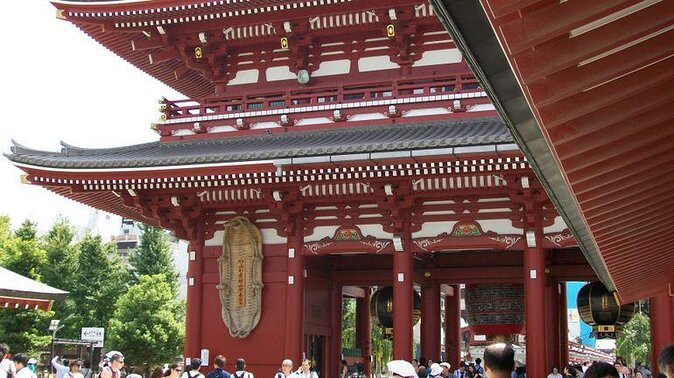
- Four very different sides of Tokyo: You move from Buddhist tradition at Senso-ji to seafood at Tsukiji, imperial gardens, and Japanese anime culture in Akihabara.
- A genuinely private day: Only your group participates, with room for up to six people.
- Yasushi and Yoko guide personally: Both are government-licensed guides with overseas study and work experience.
- The price is per group: The listed rate is $190.02 for up to six people, before your meals, transport, and admissions.
- The route uses several types of transport: Expect a combination of car, train, and walking, with your group paying its own fares.
- Plan around garden closures: The East Gardens of the Imperial Palace are closed on Mondays and Fridays.
A seven-hour introduction to Tokyo
This is a practical first look at Tokyo rather than a single-theme outing. In roughly seven hours, you visit a major Buddhist temple, a food market, an imperial garden, and the center of Japan’s anime, manga, and gaming culture.
That range is the tour’s strongest feature. You do not spend the whole day in one district or one historical period. Instead, the route gives you four useful reference points for the rest of your stay.
The private setup also changes the rhythm. If your group wants more time for shopping at Senso-ji, less time in Akihabara, or a different Japanese garden when the Imperial Palace grounds are closed, you can discuss that with the guide. You are not tied to a fixed group schedule.
The day is listed at about seven hours. That is long enough to cover the main stops without turning the outing into a rushed city checklist, though the exact pace will depend on walking, lunch, shopping, and the transport between districts.
More Train Journeys in Tokyo:
- Mt Fuji & Hakone Cruise, Drum Show Bullet Train 1 Day from Tokyo
★ 4.0 · 7,413 reviews - Tokyo Mt Fuji 5th St & Hakone Cruise Bus Tour w/Bullet Train
★ 4.4 · 5,024 reviews - Mt. Fuji and Hakone Day Trip From Tokyo with Bullet Train Option
★ 4.0 · 368 reviews
Senso-ji and the traditional start in Asakusa
The first stop is Senso-ji, one of Tokyo’s best-known Buddhist temples. You have about an hour and a half here, including time for the shopping street lined with traditional Japanese souvenirs.
This is a smart place to begin. Senso-ji gives you the visual and cultural setting many first-time visitors hope to find in Tokyo, with a temple precinct and a commercial street that makes the area easy to explore. You can ask Yasushi or Yoko about the temple, Buddhist customs, and the meaning behind what you are seeing instead of simply walking through and taking photographs.
The shopping street is useful if you want an early look at Japanese gifts and small traditional items. It also gives the guide a chance to learn what interests your group. If you are shopping for presents, tell the guide early so the time here can work harder for you.
Admission to Senso-ji is listed as free. Your main costs at this stop would be personal purchases and any food or drinks you choose to buy.
One consideration is that Senso-ji is a major sight, so it may feel lively and commercial rather than quiet or secluded. That is part of its character. You get both a working temple district and a place designed for visitors, not a remote religious site.
Tsukiji Jogai Market and a flexible lunch
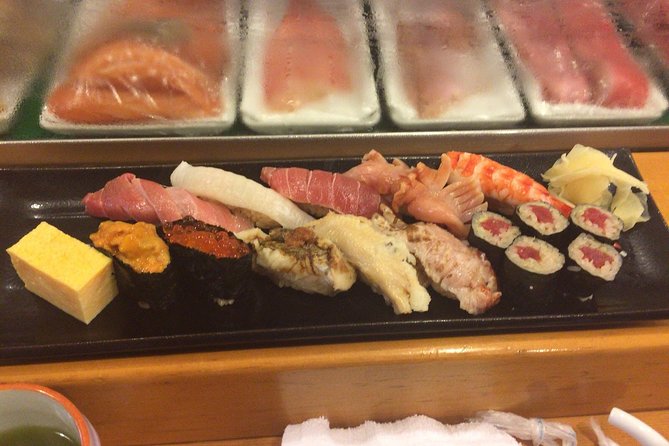
The tour then moves to Tsukiji Jogai Market for about an hour and 15 minutes. Lunch is planned here, with fresh sushi and seafood as the main draw.
This is one of the most useful stops for a first visit because it combines sightseeing with a meal. You can taste Japanese seafood in a market setting and ask the guide for help understanding what is available. The information provided does not name a specific restaurant or guarantee a particular dish, so your meal will depend on what you choose on the day.
If seafood is not for you, the tour states that other lunch options are available. That makes the stop more workable for a mixed group, especially when one person wants sushi and another would rather eat something else.
The market is also a good place to ask Yasushi or Yoko how to approach unfamiliar food. A private guide can help keep lunch from becoming a time-consuming guessing game. You can focus on trying something new without needing to solve every menu question alone.
Lunch is not included in the tour price. Plan to pay for your own food, and note that the guide’s meal is also not included. The market stop is listed as free admission, but that only refers to entering the area, not to anything you eat or buy.
The 75-minute schedule gives you time for a meal and a look around, but it is not an open-ended food tour. If eating is your main reason for booking, ask in advance how much of the stop can be devoted to lunch and tastings.
The Imperial Palace East Gardens and Edo Castle remains
The East Gardens of the Imperial Palace provide a change of pace after the market. You have about an hour to see an imperial garden with seasonal flowers and the remains of Edo Castle.
This stop adds historical and visual balance to the day. Senso-ji introduces Buddhist tradition, while the Imperial Palace grounds connect you with the political history of Tokyo and the former Edo period. The garden setting also gives you room to slow down after the food market.
The Edo Castle ruins are especially useful for understanding how Tokyo developed. You are not just seeing a modern capital full of towers and rail lines. You are also seeing traces of the castle city that shaped the capital’s past.
The timing detail matters here: the East Gardens are closed on Mondays and Fridays. If your chosen day falls on either of those days, the plan calls for another Japanese garden instead. That backup keeps the day moving, but it means you should not book this experience expecting the East Gardens themselves on a Monday or Friday.
Admission is listed as free. The garden visit may appeal most to you if you want flowers, open space, and historical context rather than nonstop shopping. If your group prefers pop culture and food, you may want to discuss how much time to spend here before the tour begins.
Same tracks, a different day out:
- Tokyo: Kamakura & Enoshima Day Tour with Pickup & Train Ride
★ 4.1 · 61 reviews - Snow Monkey Park and Miso Production Tour Bullet Train from Tokyo
★ 4.5 · 26 reviews - Mt Fuji & Hakone Private Tour from Tokyo: Return by Bullet Train
★ 5.0 · 22 reviews - Tokyo:Izu Penisula Train Mt Omuro, Capybara Sightseeing Trip
★ 4.1 · 10 reviews
Akihabara and Tokyo’s pop-culture center
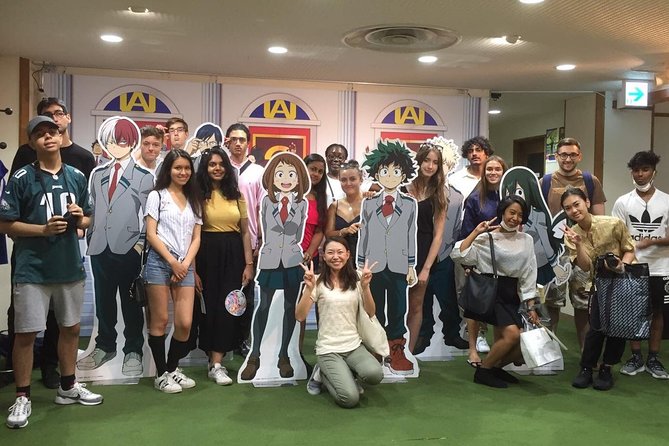
The final listed stop is Akihabara, with about an hour devoted to J-pop culture, anime, manga, and games.
This is a useful finish because it shows a very different side of Tokyo from the morning’s temple and garden visits. You can ask the guide to focus on the parts of Akihabara that matter most to your group, especially if you already know whether you are interested in anime, manga, games, or Japanese pop culture more broadly.
An hour is enough for an introduction and some browsing, but it is not enough for a serious shopping mission across the district. If you have a long list of items to find, tell the guide before the day starts. The tour description allows itinerary changes, and a private guide can help you decide where to give the available time.
The schedule also makes Akihabara a good place to end if some people in your group want to continue on their own. Since the tour ends in a town or at a station rather than at your hotel, you can remain in the area after the guided portion if that suits your plans. The tour itself does not include a hotel drop-off.
How the private transport arrangement works
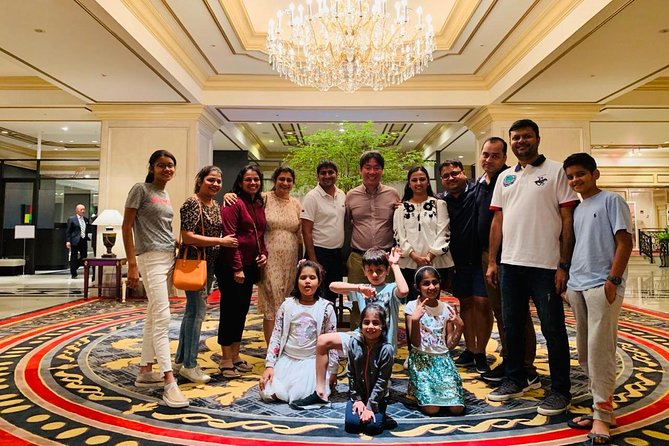
The experience uses car, train, and walking. This is more flexible than relying on one mode all day, especially across Tokyo’s spread-out districts.
The guide fee and the train fare for the guide to travel to your hotel for pickup are included. Your own transportation is not included, and the tour states that you also pay the guide’s transportation during the tour. That wording is important when you work out the total cost.
Pickup is offered, but the exact pickup details should be settled when you book. The day may begin at your hotel and end elsewhere, most likely in one of the areas on the route or at a station.
Because the tour crosses several parts of Tokyo, comfortable shoes are a sensible choice. The experience is accessible to most participants, is near public transportation, and permits service animals. Still, a seven-hour day that includes walking, trains, markets, and outdoor gardens may feel tiring if anyone in your group has limited stamina.
Is $190.02 good value for a group of six?
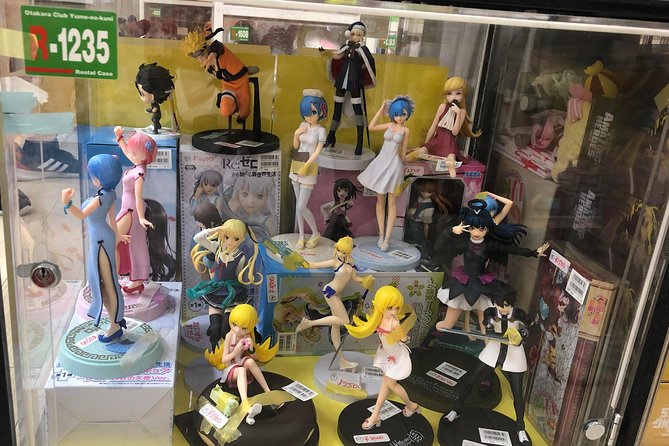
The listed price is $190.02 per group of up to six people, not per person. Split among six, the guide fee works out to roughly $32 per person before transport, food, and any admissions. For a couple, the per-person cost is much higher, but you still receive a private guide for the group rather than joining strangers.
The value depends on what you want from Tokyo. If you need help finding your way, prefer direct answers, and want to combine several districts in one day, the price can be reasonable. A private guide is also useful when your group has mixed interests, since the day can be adjusted instead of forcing everyone through the same fixed route.
The advertised rate is not an all-inclusive day cost. Add your train or other transport fares, meals for your group and guide, and any paid admissions that arise. The four listed stops are free to enter, but personal shopping and food can quickly increase spending.
For six people, this arrangement is much easier to justify. For one or two people, compare it with the cost of a shared tour or a self-guided day before booking. The private format is the reason to choose this experience, not a promise of the cheapest possible sightseeing.
Who will get the most from this tour?
I would consider this a strong match for first-time visitors who want a broad introduction to Tokyo without planning every train ride and neighborhood change themselves.
It also suits families and small groups with different interests. One person can ask about temples, another can focus on food, and someone else can look forward to anime and games. The guide can help connect those interests within one day.
The tour may also work well for visitors who want to request a custom plan. The provider says the itinerary can be adjusted and that multiple-day arrangements are possible. If you want something beyond the listed route, contact the guides well ahead of time, since last-minute requests may be difficult to accept.
This is less suitable if you want a slow day at one site, a specialist food tour, or a fully inclusive package with all costs covered. It is also not the best choice if you need to be returned to your hotel, since the tour ends in a town or at a station.
Yasushi and Yoko bring useful international experience to the day. Yasushi studied and worked in Canada for four years, while Yoko did the same in Australia for three years. Both have been licensed guides in Japan for about ten years, and that background may be especially helpful if you want clear communication while discussing a custom plan.
Booking details and weather concerns
Confirmation is sent within 48 hours of booking, subject to availability. The experience is typically booked about 19 days ahead, so I would avoid waiting until the last minute, especially if you need a certain date or want itinerary changes.
Free cancellation is available up to 24 hours before the local start time. Changes or cancellations made less than 24 hours ahead are not accepted for a refund.
The tour requires good weather. If poor weather causes cancellation, you are offered another date or a full refund. Since the day includes outdoor temple, garden, and market time, check the forecast before you finalize plans.
FAQ
How long does the private Tokyo tour last?
The tour lasts approximately seven hours.
How many people can join the private tour?
The listed price covers one private group of up to six people.
What stops are included in the recommended itinerary?
The route includes Senso-ji Temple, Tsukiji Jogai Market, the East Gardens of the Imperial Palace and Edo Castle ruins, and Akihabara.
Are meals included?
No. Lunch is planned at Tsukiji Jogai Market, but you pay for your own meal and the guide’s meal.
Are transportation costs included?
The guide fee and the train fare for the guide to reach your hotel for pickup are included. Your own transportation costs and transportation for the guide during the tour are not included.
Is the Imperial Palace East Gardens open every day?
No. The East Gardens are closed on Mondays and Fridays. On those days, the tour uses another Japanese garden.
Can the itinerary be changed?
Yes. The guides can arrange the itinerary around your requests, including multiple-day plans. Last-minute requests or changes may be difficult to accept, so contact them well in advance.
Should you book this private Tokyo day?
Book it if you want a personal guide and a broad first look at Tokyo, especially with a group of four to six people. The best parts are the strong contrast between the four stops, the chance to shape the day, and the direct help from licensed guides Yasushi and Yoko.
Before booking, budget for your own transport, lunch, shopping, and other expenses. Confirm the pickup point, the end station or town, and your preferred stops in advance. If those details work for you, this is a practical way to get your bearings quickly while still leaving room for your group’s interests.
Just added around Tokyo
- Train in Samurai Swordsmanship and Defeat the Demon in Tokyo★ 5.0 · 5 reviews
- Mt Fuji & Hakone Private Tour from Tokyo: Return by Bullet Train★ 5.0 · 22 reviews
- Bullet Train and Mt. Fuji Famous Food Tour★ 5.0 · 4 reviews
- Bullet Train Experience & Mishima Shrine Private Tour from Tokyo★ 5.0 · 9 reviews
- Tokyo-Izu: Volcano, Ocean& Capybara Cuddle with Izu Scenic Train★ 3.5 · 3 reviews
- 3-Day Private Tokyo and Nagano: Snow Monkeys, Tsukiji Market and Bullet Train★ 5.0 · 2 reviews
- Tokyo: Kamakura & Enoshima Day Tour with Pickup & Train Ride★ 4.1 · 61 reviews
- Tokyo:Izu Penisula Train Mt Omuro, Capybara Sightseeing Trip★ 4.1 · 10 reviews
Tokyo Train Journeys, compared.
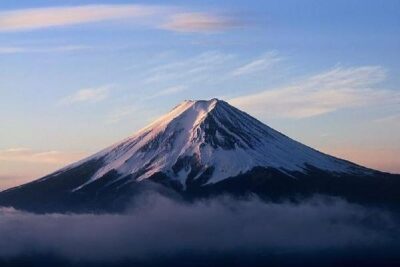
Mt Fuji & Hakone Cruise, Drum Show Bullet Train 1 Day from Tokyo
Read our review →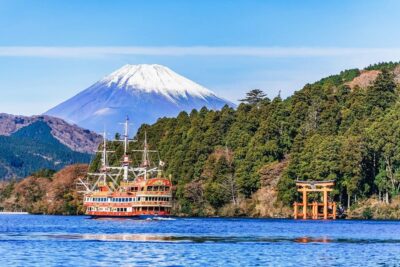
Tokyo Mt Fuji 5th St & Hakone Cruise Bus Tour w/Bullet Train
Read our review →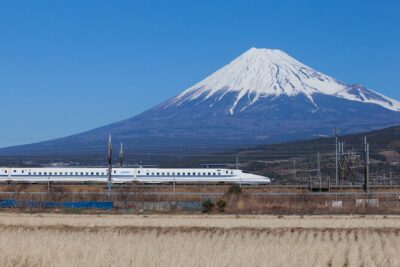
Mt. Fuji and Hakone Day Trip From Tokyo with Bullet Train Option
Read our review →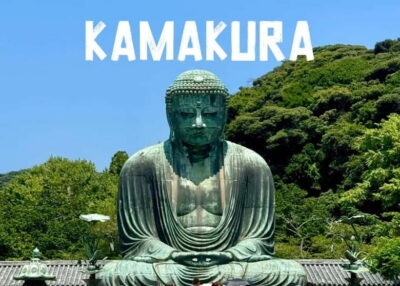
Kamakura & Enoshima Day Tour with Pickup & Train Ride
Read our review →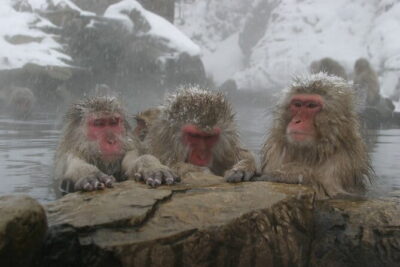
Snow Monkey Park and Miso Production Tour Bullet Train from Tokyo
Read our review →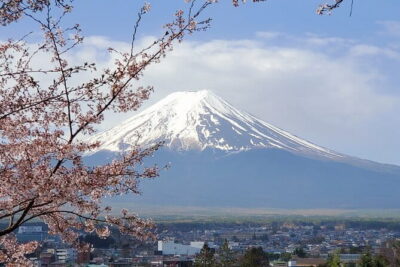
Mt Fuji & Hakone Private Tour from Tokyo: Return by Bullet Train
Read our review →
Izu Penisula Train Mt Omuro, Capybara Sightseeing Trip
Read our review →
Bullet Train Experience & Mishima Shrine Private Tour from Tokyo
Read our review →Browse the lists this tour appears in