
Review · JAPAN
Osaka: Private Samurai Experience – Train with Sword Master
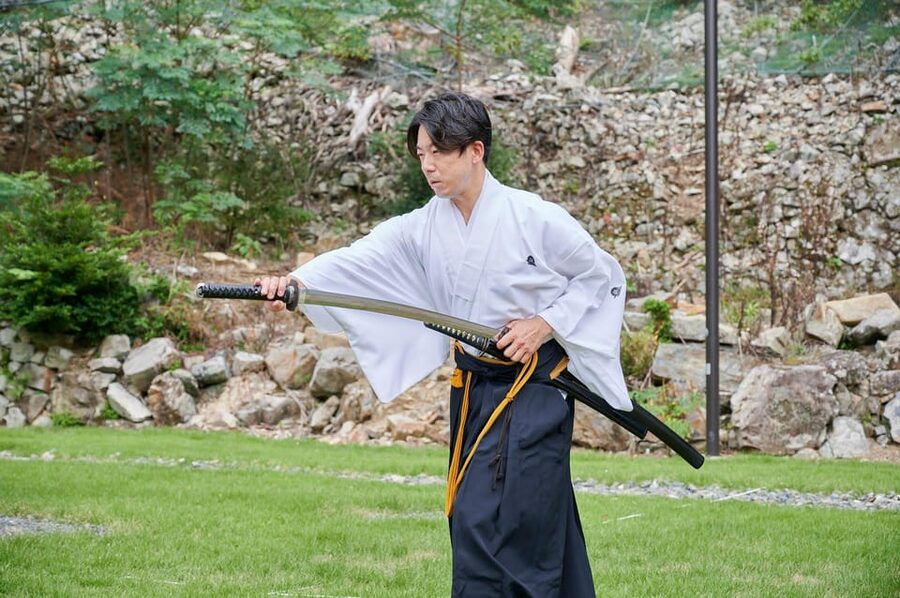
A quiet temple, a serious sword lesson. This private experience takes you from Minoh Station to a restricted temple area near Osaka, where sword master Tatsuya Watanabe demonstrates traditional techniques and teaches you basic movements with a wooden sword. I like the rare setting and the personal instruction, especially with the chance to see historic weapons and a special sword performance. I also like that the experience feels cultural as well as physical, with time spent learning about the temple and the philosophy behind the practice.
The main consideration is time. The program packs a temple visit, interpretation, a performance, and about 1.5 hours of training into roughly three hours, with the booking information also listing 270 minutes. If you want a long martial arts course, this is too brief. If you want a focused introduction with a real sense of place, it is a strong choice.
Key points to know before booking
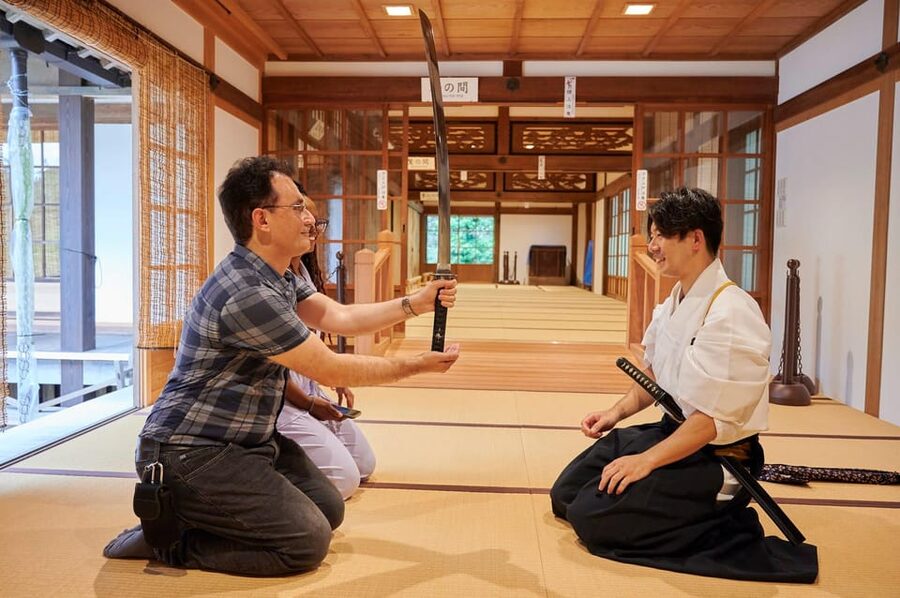
- Train at a normally restricted temple site: The sword practice takes place in private grounds at Ryuan-ji or Saiko-ji Temple, areas not generally open to the public.
- Meet sword master Tatsuya Watanabe: He began with kendo, later studied Yagyū Shinkage-ryu, and became headmaster of Suishin-ryu at a notably young age.
- Expect more than sword handling: The program connects posture, movement, discipline, meditation, and the spiritual side of Japanese sword culture.
- An interpreter matters: Guides speak English, Japanese, and French, and past sessions have included interpreters such as Benoit, Aimu, and Claire.
- The training uses wooden swords: Some sessions also included viewing real swords and practicing a simple paper-cutting demonstration with a live blade.
- Plan around Minoh Station: You meet in front of the station, look for the yellow DeepExperience sign, and walk with the guide to the temple.
From Minoh Station to a secluded temple
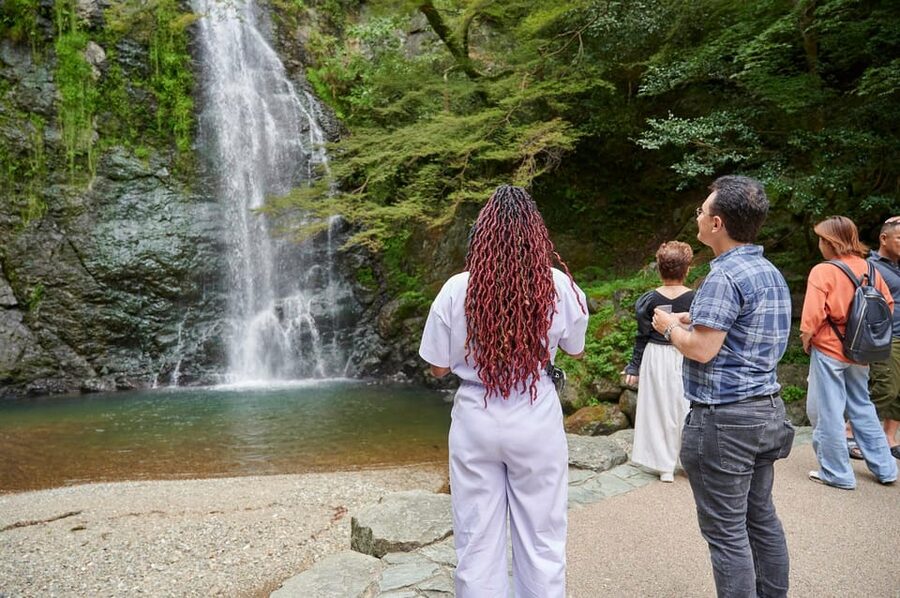
Your meeting point is straightforward: the front of Minoh Station. Look for the guide holding a yellow DeepExperience sign. This is a useful arrangement because you do not need to search for a remote temple on your own, and the walk gives the guide time to explain the area.
The temple setting is one of the best reasons to choose this experience. Instead of practicing in a modern studio or a tourist center, you enter a sacred site connected with long-standing religious and cultural traditions. The training area is normally closed to the public, so the session has a sense of privacy that ordinary sightseeing cannot provide.
The exact temple is described as Ryuan-ji or Saiko-ji, depending on the program arrangements. Ryuan-ji is associated with Minoh, in the hills outside central Osaka. The change from city streets to a quiet temple setting helps the lesson feel less like a staged attraction and more like a special appointment.
Your guide also provides background on the temple and surrounding area. Benoit has been especially useful as an interpreter, explaining local history and translating the technical instruction. Other sessions have used Aimu and Claire. Since Watanabe-san speaks Japanese, strong interpretation is important, not a small extra.
More Train Journeys in Japan:
- Mt Fuji & Hakone Cruise, Drum Show Bullet Train 1 Day from Tokyo
★ 4.0 · 7,413 reviews - Tokyo Mt Fuji 5th St & Hakone Cruise Bus Tour w/Bullet Train
★ 4.4 · 5,024 reviews - Mt. Fuji and Hakone Day Trip From Tokyo with Bullet Train Option
★ 4.0 · 368 reviews
Tatsuya Watanabe’s path to swordsmanship
The instructor is not simply a performer hired to wave a sword for photographs. Tatsuya Watanabe began studying kendo as a teenager, then pursued older forms of Japanese swordsmanship during university.
He studied Yagyū Shinkage-ryu, a respected classical school of kenjutsu, and later trained in Suishin-ryu. He was appointed soke, or headmaster, of Suishin-ryu in his twenties. That role carries responsibility for preserving the school’s techniques, teachings, style, and values.
This background gives the session more weight. You are not learning a random collection of movie-style gestures. The class introduces movements rooted in established traditions, while Watanabe also explains the discipline and mental focus that support them.
You should keep your expectations sensible. A three-hour program cannot make you an accomplished swordsman. It can show you how much control, balance, and repetition sit behind a movement that looks simple when performed by an expert.
The opening performance sets the tone
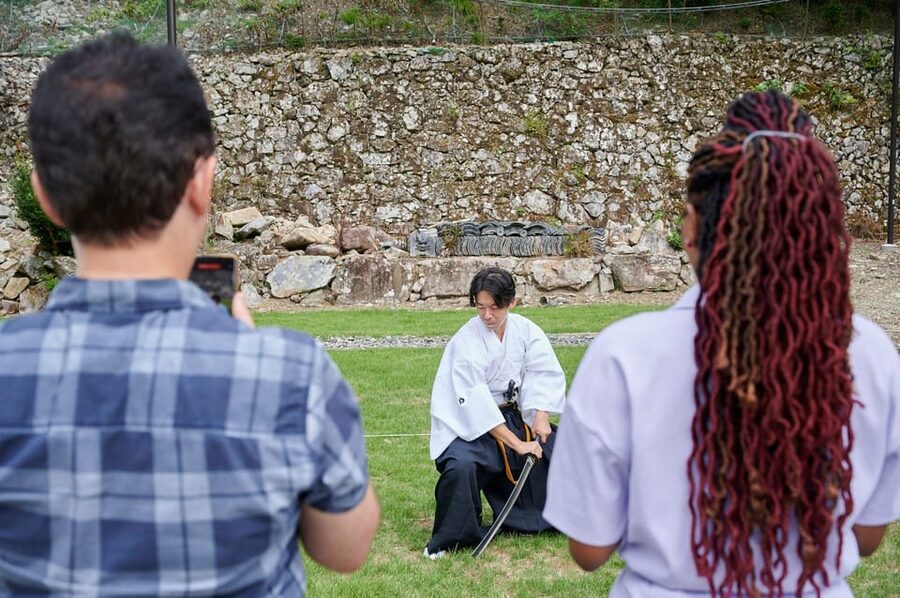
The session includes a special sword performance reserved for this program. This is not just entertainment before the lesson. It gives you a visual guide to the qualities you will later work on yourself: controlled motion, timing, posture, economy, and concentration.
Watanabe’s demonstrations have made a strong impression because they show the difference between forceful movement and disciplined movement. The performance also gives you a chance to see the sword as part of a wider tradition, rather than treating it as a prop from an action film.
This is where the experience can be especially meaningful for families and first-time students. A parent and child can watch the same demonstration, then practice together at a manageable level. The lesson is active, but the emphasis is on control and attention rather than competition.
The exact performance details can vary, and you should follow the master’s instructions carefully. Sword traditions are built around respect and precision. The serious tone is part of the appeal, although anyone hoping for a theatrical combat show may find the presentation more restrained than expected.
What you learn during the 1.5-hour training

The practical lesson is the heart of the program. The supplied itinerary lists a class of about 1.5 hours, within a total experience of roughly three hours, though the booking details also state 270 minutes. Expect the schedule to include more than nonstop sword practice.
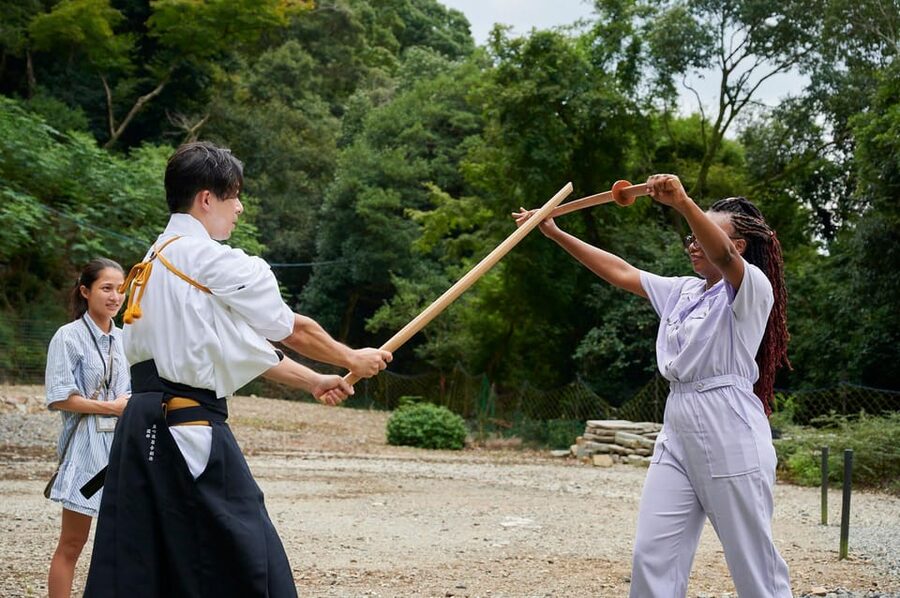
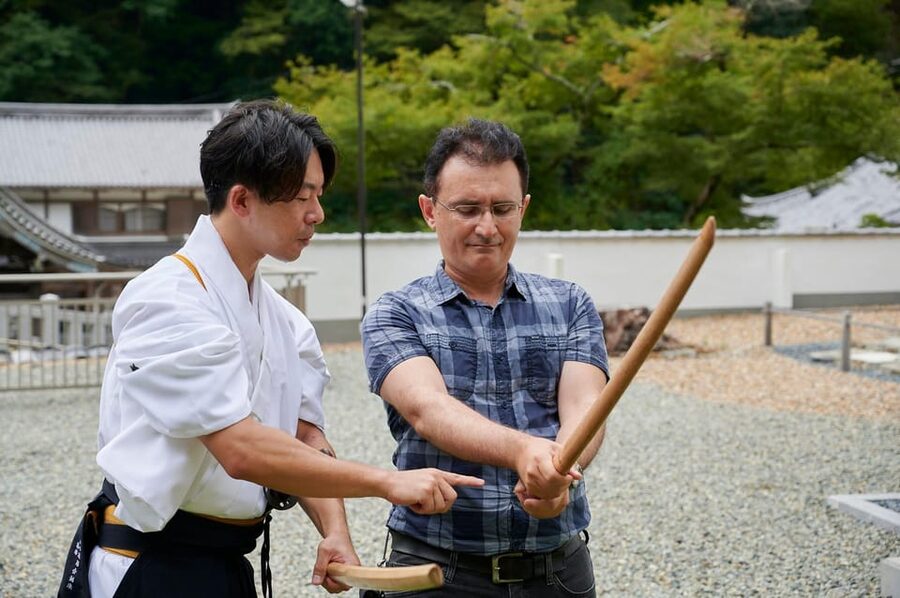
Training may cover how to hold the sword, how to stand, how to strike, and how to cut through a movement without wasting energy. Past participants also described work on posture, fluidity, and the meditative quality of repeated actions.
Most of the hands-on practice uses a wooden sword, often called a bokken. This is the right tool for an introduction. You can focus on balance and form without the added risk of handling a sharpened blade during basic instruction.
Some sessions have included the opportunity to see actual swords inside the temple setting. One participant described seeing Watanabe’s personal sword and a sword dating from 1370. Another described practicing a paper cut with a real sword after learning the basic movements. These details are not guaranteed as a fixed part of every session, so treat them as possible additions rather than promises.
The lesson is likely to feel more demanding than its tourist-friendly format suggests. Even simple movements require attention to the feet, hands, spine, and direction of the cut. Watanabe’s approach emphasizes the whole body and mind, not just the arms.
Same tracks, a different day out:
- From Osaka: Sagano Train Ride and Kyoto Guided Day Tour
★ 4.3 · 180 reviews - Fukuoka: Takachiho Gorge & Scenic Railway One Day Tour
★ 4.8 · 178 reviews - Sagano Romantic Train & Arashiyama, Kiyomizudera, Fushimi Inari Taisha Day Tour
★ 4.5 · 171 reviews - Hakone: Train Pass with Unlimited Rides & Activity Discounts
★ 4.4 · 102 reviews
Why the interpreter makes a real difference
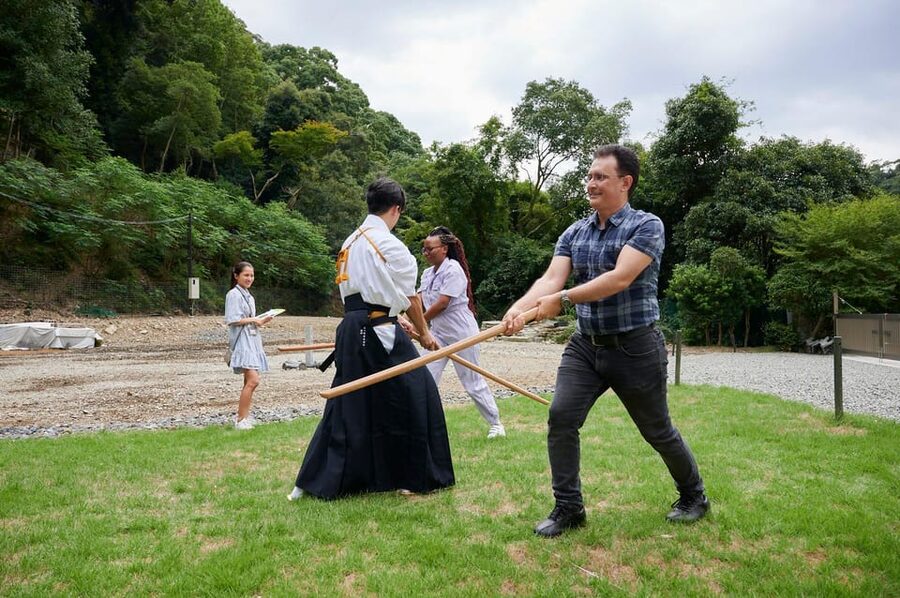
The activity is available in English, Japanese, and French, but the sword master primarily teaches in Japanese. An interpreter helps you understand not only the general story but also small corrections during practice.
This matters because martial arts instruction often depends on short, precise cues. A phrase about where to place your weight or how to finish a strike can change the movement completely. Past sessions praised Benoit for translating clearly and adding useful information about the area and temple.
You can also ask questions through the interpreter. That gives the session a more personal feel than a recorded explanation. You may hear about Watanabe’s training routine, the spiritual side of swordsmanship, or the way classical techniques are presented to people today.
The language support is one reason I would not treat this as a self-guided cultural visit. The guide connects the temple, the teacher, and the practice. Without that link, much of the meaning would be lost.
A temple visit with cultural depth
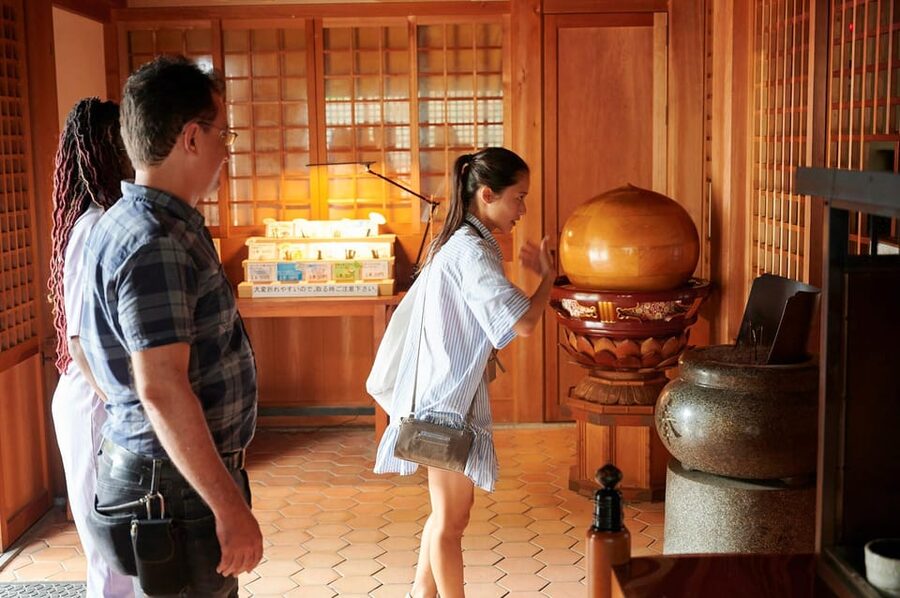
The temple is not just a backdrop for photographs. It provides the setting for a conversation about discipline, ritual, history, and the preservation of traditional arts.
As you walk through the grounds, the guide explains the temple’s heritage and its place in the Minoh area. The quieter surroundings also help you understand why swordsmanship was tied to mental training. The movements are physical, but the goal is not simply strength.
Inside the temple house, you may have a chance to see weapons connected with the school and its teacher. Being able to view real swords in this setting gives the object a different meaning than seeing one behind glass in a large museum. Still, access to specific pieces should be understood as dependent on the day’s program.
This cultural side makes the activity a good match for visitors who are interested in Japan beyond food, shopping, and famous city sights. You get a short history lesson, a temple visit, a demonstration, and a guided class in one outing.
Is $158 per person good value?
At $158 per person, this is not a cheap activity. You are paying for a private group experience, guide service, interpretation, access to normally restricted temple areas, and direct instruction from a headmaster of a traditional sword school.
The value depends on what you want from Osaka. If you are looking for a basic sword-fighting attraction or a quick photo opportunity, the price may feel high. There are likely less expensive cultural activities in the city.
I think the price makes more sense if you care about personal instruction and a rare setting. You are not only renting equipment for an hour. You are meeting a specialist, hearing the ideas behind the art, and entering a place that is usually not open for this kind of visit.
A private group also changes the feel of the lesson. You can receive individual corrections rather than standing in a large class. That is particularly useful if you are traveling with a child, a partner, or a small family group and want the experience to feel shared.
Who will enjoy this most?
This is a good pick for you if you:
- Want an activity away from central Osaka’s standard sights
- Have a real interest in samurai culture or Japanese martial arts
- Prefer a small private group to a large tour
- Enjoy learning through demonstration and practice
- Appreciate temples, old weapons, and historical context
- Are traveling with a child or friend who enjoys hands-on activities
- Want an unusual memory from Japan rather than another city-viewing stop
It is less suitable if you want an advanced martial arts course, a long session with a live blade, or a purely theatrical show. The experience is an introduction, not professional certification or a full training program.
You should also be comfortable with a respectful atmosphere. The class is not presented as a casual costume activity. You will be asked to listen, copy carefully, and treat the sword tradition seriously.
Practical details that affect your day
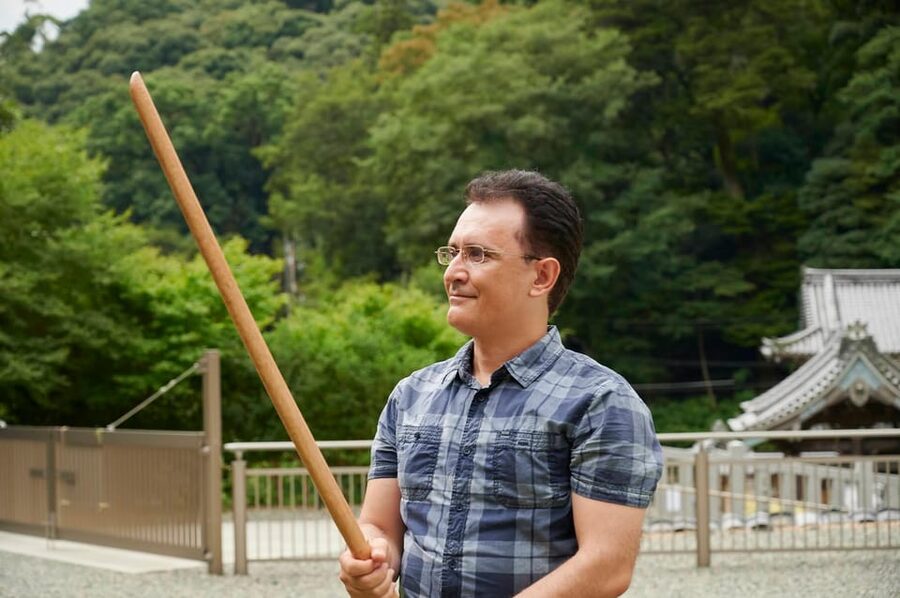
The activity begins at Minoh Station and returns there after the visit. Meeting at the station keeps the start simple, but you should allow enough time to arrive before the agreed meeting time. One participant arrived late and still received a full experience, but you should not rely on that courtesy.
The program is listed as three hours, while the booking details also describe it as 270 minutes. Confirm the exact starting time and length when you reserve, especially if you have another Osaka activity planned afterward.
Guides are available in English, Japanese, and French. The group is private, and the guide fee and sword experience fee are included in the listed price.
Cancellation is free up to 24 hours before the activity for a full refund. You can also reserve now and pay later, which helps if your Osaka plans are still shifting.
Because the training takes place at a temple, wear clothing that allows comfortable movement and follow the guide’s instructions about conduct. The available information does not specify accessibility arrangements, so ask the operator directly if you have mobility concerns or need special assistance.
Should you book the Minoh sword experience?
I would book this if you want a thoughtful, small-scale cultural experience with real instruction. The strongest parts are the private temple setting, Watanabe’s background, the careful demonstration, and the interpreter’s help during practice.
The $158 price is easier to justify for people who value access and personal guidance. It is less convincing if your main goal is a dramatic sword show or a long martial arts class.
For the best fit, set aside a half day around Minoh Station, arrive ready to listen, and view the wooden sword training as an introduction to a much larger tradition. You may leave with better posture, a new respect for repetition, and perhaps the urge to continue training with a bokken of your own.
FAQ
Where does the sword experience begin?
You meet your guide in front of Minoh Station. The guide will hold a yellow sign with the DeepExperience logo.
Where does the experience take place?
The program takes place in secluded areas of Ryuan-ji or Saiko-ji Temple. These training areas are normally closed to the public.
How long does the experience last?
The activity is described as three hours, with the booking information also listing 270 minutes. Check the available start times and exact duration when reserving.
What languages are available?
Live guides are available in English, Japanese, and French.
Is this a private tour?
Yes. The activity is arranged for a private group.
Who teaches the swordsmanship?
Sword master Tatsuya Watanabe leads the sword instruction. He studied kendo, Yagyū Shinkage-ryu, and Suishin-ryu, and he became the headmaster of Suishin-ryu in his twenties.
Do I use a real sword during the class?
The training uses wooden swords. Some sessions have also included viewing real swords and a paper-cutting demonstration, but those elements should not be treated as guaranteed for every visit.
Is a sword performance included?
Yes. The experience includes a special sword performance exclusive to the program.
What is included in the price?
The sword experience fee and guide fee are included.
Can I cancel the booking?
You can cancel up to 24 hours in advance for a full refund. The activity also offers a reserve now and pay later option.
Just added around Japan
- Mt Fuji & Hakone Private Tour from Tokyo: Return by Bullet Train★ 5.0 · 22 reviews
- Train in Samurai Swordsmanship and Defeat the Demon in Tokyo★ 5.0 · 5 reviews
- Private tour with Yasushi and Yoko – by car, train, on foot★ 5.0 · 2 reviews
- Bullet Train and Mt. Fuji Famous Food Tour★ 5.0 · 4 reviews
- Bullet Train Experience & Mishima Shrine Private Tour from Tokyo★ 5.0 · 9 reviews
- Tokyo-Izu: Volcano, Ocean& Capybara Cuddle with Izu Scenic Train★ 3.5 · 3 reviews
- 3-Day Private Tokyo and Nagano: Snow Monkeys, Tsukiji Market and Bullet Train★ 5.0 · 2 reviews
- Guided Half-day Tour(PM) to Toyota Commemorative Museum & SCMAGLEV Railway Park★ 5.0 · 3 reviews
Japan Train Journeys, compared.

Mt Fuji & Hakone Cruise, Drum Show Bullet Train 1 Day from Tokyo
Read our review →
Tokyo Mt Fuji 5th St & Hakone Cruise Bus Tour w/Bullet Train
Read our review →
Mt. Fuji and Hakone Day Trip From Tokyo with Bullet Train Option
Read our review →

Fukuoka: Takachiho Gorge & Scenic Railway One Day Tour
Read our review →
Sagano Romantic Train & Arashiyama, Kiyomizudera, Fushimi Inari Taisha Day Tour
Read our review →
Train Pass with Unlimited Rides & Activity Discounts
Read our review →
Kamakura & Enoshima Day Tour with Pickup & Train Ride
Read our review →Browse the lists this tour appears in