
Review · GERMANY
Take the U Train: An Audio Story of Berlin’s Oldest Elevated Railway Line
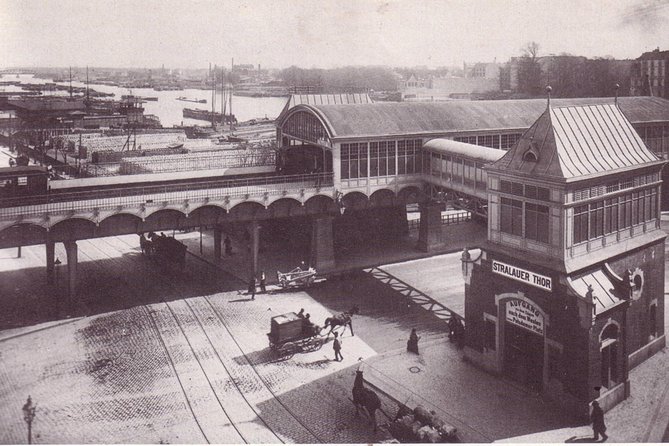
Old Berlin runs above your head. This two-hour self-guided audio walk follows the city’s first Hochbahn route from Warschauer Straße to Gleisdreieck, pairing railway history with a close look at streets, bridges, and the steel viaduct.
I like the GPS-triggered storytelling, which starts the next audio segment at the right place without making you constantly check a map. I also like the freedom of an offline tour, since you can walk at your own pace and explore without a guide or group. The main drawback is clear: despite the title, you spend only a small part of the time riding the train. This is mainly a walking tour beside the U-Bahn line.
Key points to know before you go
- The route begins at Warschauer Straße, a station served by the U1 and U3 in Friedrichshain.
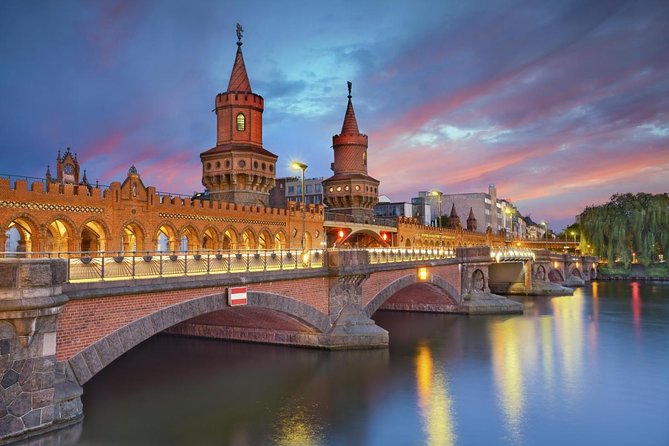
- Oberbaumbrücke is an early highlight, with the route crossing the Spree toward Kreuzberg.
- The tour follows the original railway corridor along Skalitzer Straße, Gitschiner Straße, Hallesches Ufer, and Tempelhofer Ufer.
- Gleisdreieck marks the end, where the eastern branch of the original line stopped.
- You need a separate BVG ticket, either a day ticket or a single ticket valid for two hours on one route.
- The experience works offline through VoiceMap, but you must bring your own smartphone and headphones.
Why this Berlin railway walk is different
Many city audio tours take you from one monument to another. This one follows infrastructure. Its subject is Berlin’s first Hochbahn line, built by Siemens & Halske at the end of the 19th century.
That choice gives the experience a useful focus. You are not simply hearing general facts about Berlin while walking through town. You are following one transport route and seeing how its bridges, tracks, stations, and surrounding streets fit together.
I find that kind of focus valuable because Berlin can feel scattered. The city has layers from the Prussian period, the imperial era, the Cold War, reunification, and modern redevelopment. A railway line gives you a thread to follow. You can watch the route change from a busy station area to a river crossing, then to long stretches of steel viaduct and broad waterside streets.
The audio uses your phone’s GPS to trigger each section at the right point. Once the tour has been downloaded, the maps, recordings, and location data work offline. That means you can save mobile data and keep your attention on the route rather than on a screen.
Still, set your expectations correctly. This is not a two-hour train ride with a few stops. It is an audio walking tour that follows the U-Bahn line. You may ride briefly, but most of the experience happens on foot near the railway.
More Self-Guided Tours in Germany:
- From Cairns: Self-Guided Kuranda Trip with Train and Skyrail
★ 4.6 · 3,392 reviews - Oslo To Bergen Self-Guided Full Day Trip with Flåm Railway And Fjord Cruise
★ 4.0 · 69 reviews - Zurich: Audio Guided City Tour and Train to “Top of Zurich”
★ 4.2 · 65 reviews
Starting at Warschauer Straße in Friedrichshain
The meeting point is Warschauer Str. 35, near Warschauer Straße station. This station serves the U1 and U3, so it is easy to reach by Berlin’s public transport system.
It is a fitting starting point. The route begins in Friedrichshain, an area tied directly to Berlin’s modern railway network and its eastern neighborhoods. You start with the practical job of finding the station and getting the VoiceMap app ready, then the audio guides you onward.
Give yourself a few minutes before pressing start. Check that your phone has enough battery, confirm that your headphones work, and make sure the offline files are available. GPS tours are most useful when you can listen without stopping every few minutes to troubleshoot your device.
The start is also where you need to handle your transport ticket. The tour price does not include transportation. You need either a valid BVG day ticket or a single ticket, known as an Einzelfahrschein, that covers two hours along a single route.
Validate the ticket before boarding. Keep it with you for the entire tour and do not throw it away after entering the train. That small detail matters, since a ticket that has already been used is still the document you may need during the journey.
Crossing the Spree on Oberbaumbrücke
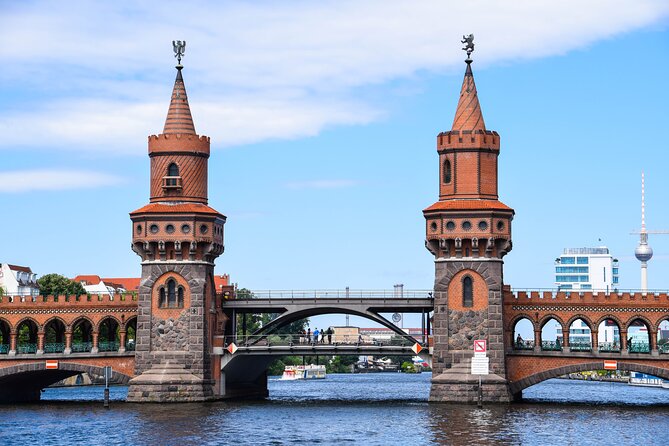
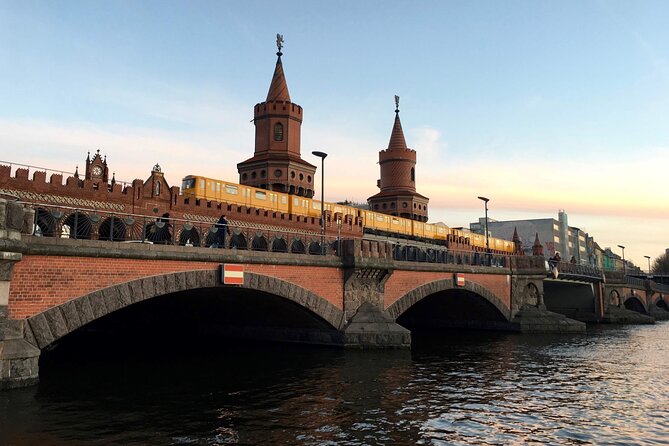
From Warschauer Straße, the route continues toward Oberbaumbrücke. This 1896 bridge connects Friedrichshain and Kreuzberg across the River Spree.
This is likely to be one of the most memorable parts of the tour because the railway story meets one of Berlin’s best-known bridges. The crossing gives you a clear sense of how the route links districts that feel different on street level but are joined by the same transport corridor.
The bridge also helps explain why this route was important. A railway line is not only a set of stations. It has to cross water, connect neighborhoods, and carry people through parts of the city that roads and older transport routes could not serve as efficiently.
The audio format works well here. Instead of standing in a group waiting for a guide to finish, you can look at the bridge, the river, and the structure around you while the story plays through your headphones. If you want a closer look or a photo stop, you can pause the tour and restart it when you are ready.
The drawback is that GPS audio needs a little patience. If you move away from the expected route, a segment may not start exactly when you expect it. Stay near the route and keep the app open enough for location services to do their job.
Following the steel viaduct along Skalitzer Straße
After Oberbaumbrücke, the route follows the steel viaduct down Skalitzer Straße. This is where the experience becomes most clearly a railway walk.
You are tracing the physical line rather than simply hearing about it from a museum room. The viaduct gives the story a visible shape. Look up and you can connect the audio explanation with the ironwork above the street, the track alignment, and the way the railway occupies the urban space.
That visual connection is the strongest reason to choose this tour over a general Berlin history recording. The audio tells you what you are looking at, while the route keeps you moving through the actual setting.
Skalitzer Straße also shows the practical side of the line. The railway is not isolated from the city. It runs through a working urban corridor, beside streets and buildings, with everyday Berlin continuing below it. You may find the route more interesting if you enjoy transport design, city planning, and engineering details rather than only famous sights.
This section can feel less like a traditional sightseeing walk. There may not be a new major attraction at every turn. The reward comes from noticing how the viaduct continues and how the railway shaped movement through the area.
The audio has been praised for providing a lot of detailed information. That is good news if you want context, but it also means you should not expect a short, breezy commentary with only a few facts. Use the pause button when you need a break, especially if you want to study the route or take photographs.
More Audio Tours in Germany:
- Rotorua Railcruising: Self-Drive Rail Car with Audio Guide
★ 4.6 · 19 reviews
Gitschiner Straße and the changing city below
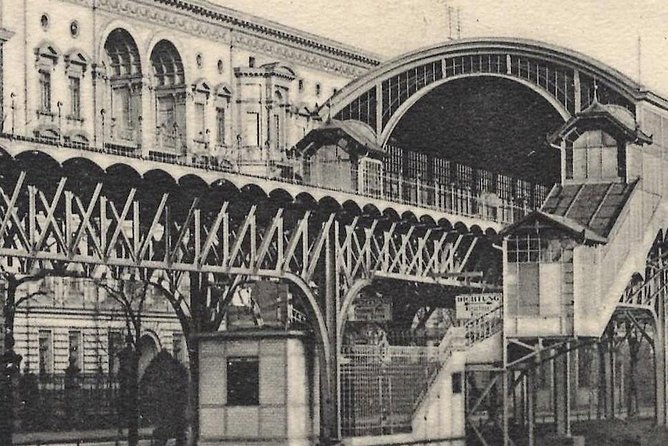
The route then continues along Gitschiner Straße. This section keeps the focus on the line itself and the streets beneath it.
I like the steady progression here because it lets you understand the route as a continuous piece of infrastructure. You are not hopping between unrelated points. The audio can explain how one stretch connects to the next, while you follow the same direction on foot.
For you, the key question is how much attention you want to give the surroundings. If you want a fast transfer from one station to another, this tour will feel slow. If you want to understand why the original line was built where it was and how it passes through Berlin, the walking pace makes sense.
This is also a good point to remember that the tour is private in the practical sense. Only your group participates, and there is no scheduled group moving at someone else’s pace. You can pause for food, stop to check the map, or take a short break, although anything you buy along the way is your own expense.
The tour does not include food or drinks, so plan around that. The supplied details do not specify stops or included refreshments. Bring what you need, or simply treat the route as a sightseeing walk with your own break points.
Along Hallesches Ufer and Tempelhofer Ufer
The audio route continues beside Hallesches Ufer and Tempelhofer Ufer. These waterside sections give the journey a different setting from the earlier streets.
The names matter because they help you keep your bearings. You are moving along the canal and waterside corridors toward the railway junction at Gleisdreieck. The route is easier to follow when you treat these streets as a sequence rather than trying to memorize every turn.
This part may appeal most to anyone who likes Berlin’s transport story in physical form. The viaduct, railway alignment, waterways, and broad urban streets all show how the city’s movement systems overlap.
It is worth keeping one practical point in mind: the tour lasts about two hours, but walking speed varies. The exact pace depends on how often you stop, how quickly you move, and how closely you follow the route. The audio is designed to play at the appropriate location, so rushing ahead could reduce the value of the commentary.
I would plan this as a dedicated half-day activity even though the recorded route is approximately two hours. That gives you time to reach Warschauer Straße, handle the ticket, get oriented, and finish at Gleisdreieck without feeling pressed.
Finishing at Gleisdreieck
The route ends at today’s U-Bahnhof Gleisdreieck. This is where the eastern branch of the original elevated line ended.
That ending gives the tour a clear historical shape. You begin at Warschauer Straße, follow the old route across the Spree and through several streets, then finish at a station tied to the original line’s eastern limit.
Gleisdreieck is also a practical endpoint. You are not left at an arbitrary street corner. You finish at a current U-Bahn station, making it easier to continue elsewhere in Berlin using public transport.
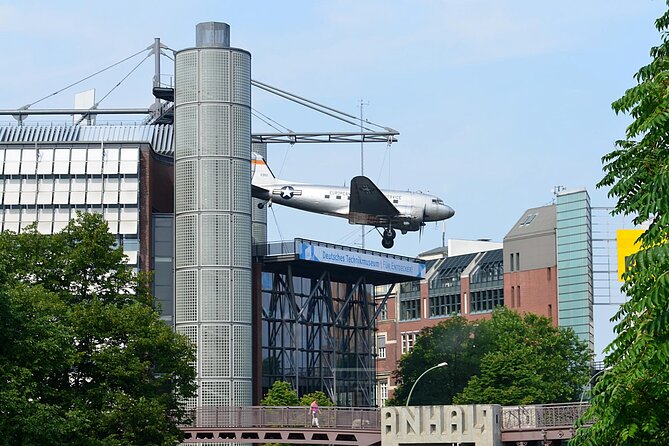
The experience does not include admission to museums or other attractions along the way. If you want to visit something nearby, treat that as a separate plan and allow extra time. The audio tour itself is about following the railway route, not entering attractions.
What the $14.99 price really buys
At $14.99 per person, this is a modestly priced private activity, but the value depends on how you use it.
You are paying for lifetime access to this particular VoiceMap tour, the app, and offline access to the audio, maps, and geodata. You are not paying for a guide, transport, food, museum entry, or headphones.
That makes the price reasonable for someone who wants a structured route and detailed commentary without joining a scheduled group. It is less attractive if you already know the railway line well or prefer to explore Berlin without audio.
The lifetime access is useful if you want to pause and finish later, or repeat the route on another visit. The tour is listed as available every day at all hours, so you have flexibility in choosing when to start. The exact recording route remains the same, but your timing can fit around the rest of your Berlin plans.
Remember to add the cost of a BVG day ticket or a valid two-hour single ticket. Also budget for your own phone, headphones, and any food or drinks. The tour’s low headline price does not mean every part of the outing is included.
Who will enjoy this audio tour most?
I would recommend it to you if you enjoy:
- Berlin transport history and old railway engineering
- Self-guided walks with a clear route
- Audio storytelling rather than a live guide
- Seeing the city through bridges, viaducts, waterways, and streets
- Flexible sightseeing that works at your own pace
- Offline navigation and recorded commentary
It is also a good match for solo visitors or small private groups. You do not need to coordinate with a guide, and most people can participate.
I would hesitate to recommend it if your main goal is to ride Berlin’s U-Bahn for two hours. The train ride is limited. The stronger experience is walking beside the route and looking at the railway from street level.
You also need to be comfortable managing your own technology. The app provides the content and navigation, but you supply the smartphone and headphones. If your phone battery is unreliable or you dislike listening while walking, a live tour may suit you better.
Practical tips for a smoother route
Download and check the tour before leaving. The offline function is one of the best features, but it helps to confirm that the audio, maps, and location data are ready before you reach Warschauer Straße.
Wear comfortable shoes. Even though the tour follows a railway line, the supplied description makes clear that much of it is on foot. A two-hour walk can feel longer if you treat it like a train excursion and arrive in unsuitable footwear.
Validate your BVG ticket before boarding and keep it until the tour is finished. This is the most important transport rule for the experience.
Use headphones that let you hear the recording without completely losing awareness of the street around you. The tour plays automatically at the correct points, so you can keep your hands free for the map, camera, or railings.
Finally, do not judge the tour only by how much time you spend inside a carriage. Its purpose is to connect the railway’s story with the places it passes through. The bridge, viaduct, streets, waterways, and endpoint are the real content.
Should you book Take the U Train?
Book it if you want a focused, affordable introduction to Berlin’s oldest Hochbahn route and prefer exploring independently. The GPS narration, offline access, private format, and clear Warschauer Straße to Gleisdreieck route give you plenty of control.
Skip it if you want a ride-centered activity or a live guide who can answer questions along the way. The most accurate description is a detailed walking tour that follows the U-Bahn, with only limited time actually spent on the train.
For the right audience, $14.99 is fair. You get a complete route, location-based audio, and lifetime access, but you must supply the transport ticket and equipment. Go in expecting a railway history walk, not a long subway journey, and the experience makes much more sense.
FAQ
Where does the tour start?
It starts at Warschauer Str. 35, 10245 Berlin, Germany, near Warschauer Straße station in Friedrichshain.
Where does the tour finish?
It finishes at U-Bahnhof Gleisdreieck, at 10963 Berlin, Germany.
How long does the tour take?
The tour lasts approximately two hours.
Do I need a BVG ticket?
Yes. You need a valid BVG day ticket or a single ticket, known as an Einzelfahrschein, valid for two hours along a single route.
Should I validate my ticket?
Yes. Validate it before boarding the train and keep it with you for the entire tour. Do not throw it away.
Do I need a smartphone and headphones?
Yes. A smartphone and headphones are not included, so you must bring your own.
Does the tour work without mobile data?
Yes. VoiceMap provides offline access to the audio, maps, and geodata.
Just added around Germany
- City tour through Nuremberg with the little train – Christmas tour★ 4.0 · 23 reviews
- Salzburg History & Food Private Tour with Munich train add-on★ 4.5 · 24 reviews
- From Berlin to Sachsenhausen Camp: Private Tour by Car or Train★ 5.0 · 3 reviews
- Stuttgart: Curling rail rental★ 3.3 · 9 reviews
- Potsdam Bike Tour with Rail Transport from Berlin★ 4.5 · 81 reviews
- City tour through Regensburg with the little train★ 4.0 · 67 reviews
- Herrenchiemsee Palace and Fraueninsel Rail Trip from Munich★ 4.5 · 97 reviews
- Nuremberg: Nuclear Bunker in Main Railway Station★ 4.7 · 262 reviews
Self-Guided Tours, compared.
Self-Guided Kuranda Trip with Train and Skyrail
Read our review →
Oslo To Bergen Self-Guided Full Day Trip with Flåm Railway And Fjord Cruise
Read our review →
Audio Guided City Tour and Train to “Top of Zurich”
Read our review →
Self-Guided 22-Hour Round Trip From Oslo To Sognefjord With Flåm Railway
Read our review →
Rotorua Railcruising: Self-Drive Rail Car with Audio Guide
Read our review →
Self-Guided Toledo Day Trip from Madrid with Panoramic Train
Read our review →
Electric Bike and Train Self Guided Tour of North San Diego Coast
Read our review →Browse the lists this tour appears in