
Review · GERMANY
Potsdam Bike Tour with Rail Transport from Berlin
Potsdam is best seen at bicycle speed. This six-and-a-half-hour outing combines a train ride from central Berlin with a relaxed 17-kilometer cycle through royal parks, palace grounds, old streets, and Cold War sites. I especially like the easy rail connection and the chance to see far more than you could on foot, including Sanssouci Palace, the Dutch Quarter, Cecilienhof, and Glienicke Bridge. The main tradeoff is time: you spend about four and a half hours on the bike, so this is not a good match if you want a slow palace interior tour.
I also like the small-group format, capped at 18 people, and the way the guide ties Prussian royal life to the Potsdam Conference and the former Berlin Wall. Guides such as Marco, Maggi, Simon, Nick, and Alicia have earned warm praise for their storytelling and care with the group. Bring water, dress for changing weather, and remember that lunch, palace admissions, and drinks are not included.
Key points to know before booking
- 17 kilometers of mostly easy cycling: The route is described as leisurely and fairly flat, though you still need moderate fitness.
- Train travel is included: You meet near Berlin’s Alexanderplatz TV Tower, then travel together to Potsdam.
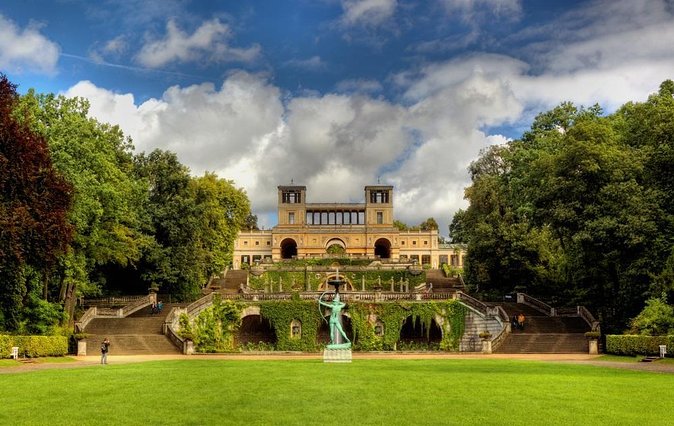
- Palaces are mainly exterior stops: You see Sanssouci, the New Palace, the Orangery, Cecilienhof, and other sites from outside.
- History comes in layers: Prussian kings, Frederick the Great, the Potsdam Agreement, the Berlin Wall, and the Bridge of Spies all feature.
- Lunch is your own expense: You get about 45 minutes in or near the Dutch Quarter to find food.
- Comfortable cruiser bikes are provided: Helmets are supplied but optional, so ask for one if you want it.
Starting near Alexanderplatz and taking the train
The tour begins at 9:30 a.m. near the entrance to Berlin’s TV Tower at Alexanderplatz. This is a useful meeting point because Alexanderplatz is one of Berlin’s major transport hubs, but allow extra time to find the exact Unlimited Biking, formerly Fat Tire Tours, location at Panoramastraße 1A.
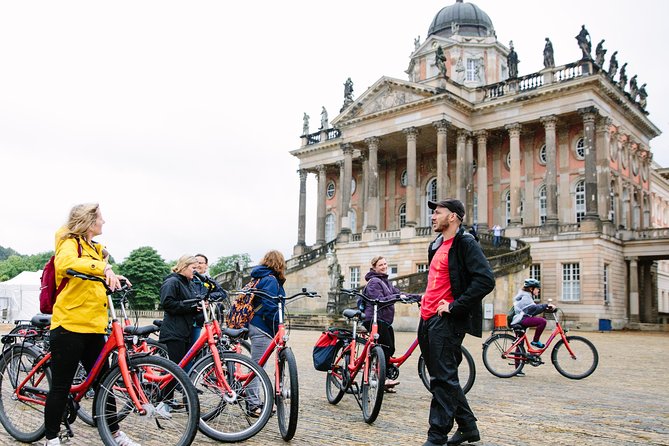
You meet the English-speaking guide and the rest of the group before being fitted with a city-cruiser-style bicycle. The bikes are designed for comfort rather than speed, which suits the route. A helmet is available, though optional. One practical point is worth stressing: the tour operator handles the rail transportation to and from Potsdam, so you do not need to plan a separate regional train journey.
The train ride is brief, and the guide gives you an introduction to Potsdam before the cycling begins. This shared start helps the day feel organized. You are not left to work out the transport, bike rental, and route on your own.
The group limit of 18 is large enough to create a social atmosphere but small enough for the guide to keep an eye on the back of the pack. Several guides have been praised for stopping to make sure nobody was left behind. That matters on a city ride, where traffic lights, pedestrians, and narrow sections can split a group.
More Train Journeys in Germany:
- Nuremberg: City Tour with the Bimmelbahn Train
★ 4.4 · 2,475 reviews - Würzburg: City Tour with the Bimmelbahn Train
★ 4.4 · 1,322 reviews - Regensburg: City Tour with the Bimmelbahn Train
★ 4.3 · 1,010 reviews
A relaxed route through royal Potsdam
Potsdam was shaped by Prussian kings, especially Frederick the Great. The ride gives you a useful sense of how royal residences, formal gardens, military buildings, immigrant communities, and waterways fit together.
You begin around the historic center and move through parks and residential districts rather than staying on one straight sightseeing road. The pace is intended to be easy, with regular stops for photos and short explanations. You should expect to cycle, listen, pause, and cycle again, not race from one attraction to the next.
The tour covers around 10.5 miles, or 17 kilometers, over roughly four and a half hours. Some descriptions refer to closer to 14 miles, so the exact distance may vary with the day’s route. Either way, this is a substantial ride, though the route is generally described as flat and manageable for people with ordinary cycling ability.
Sanssouci Palace and the gardens of Frederick the Great
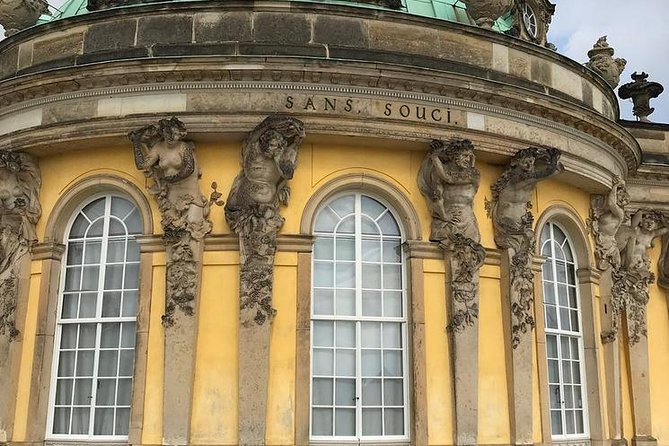
Sanssouci Palace is the star of the day. You see it from the outside and hear about Frederick the Great’s early life and his wish for a private retreat. The palace sits within the enormous Sanssouci park system, where the gardens are as important as the buildings.
The exterior stop lasts about 15 minutes, enough for photographs and a clear introduction. It is not enough for a detailed visit inside, and admission to palace interiors is not included. If your main goal is to see the rooms, paintings, and furnishings of Sanssouci, plan a separate visit.
The bike route adds several nearby sights. At the Chinese House, you see the unusual garden pavilion commissioned by Frederick the Great. Its decorative style reflects eighteenth-century European fascination with China, and it makes a good short photo stop.
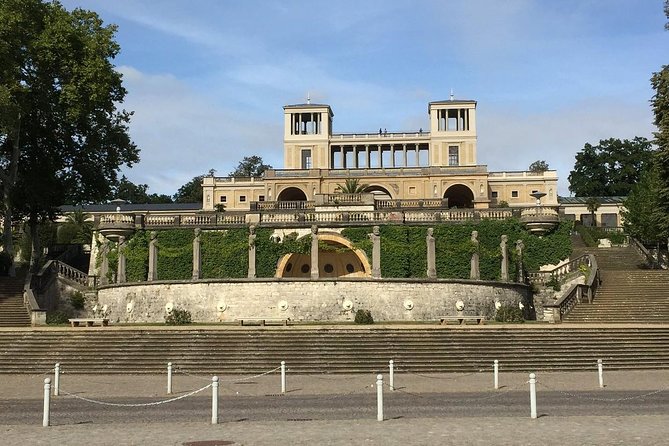
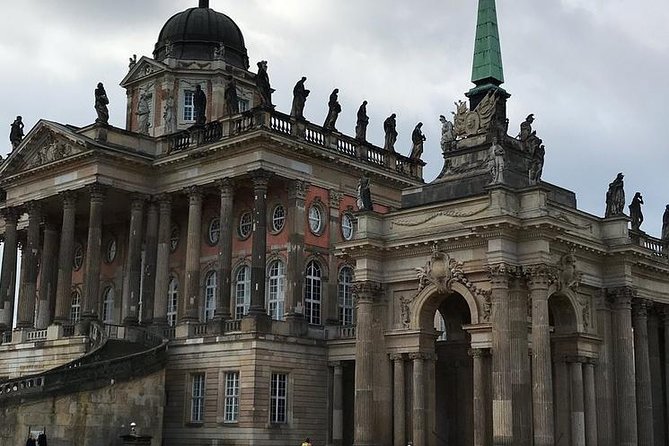
The Orangery Palace offers a different look. It was commissioned by Frederick William IV in the High Renaissance style and included greenhouse space for exotic fruit such as oranges and lemons. The New Palace, built after Frederick the Great’s victory in the Seven Years’ War, is larger and more formal. You see the building from the outside during a stop of about ten minutes.
The route also passes the historic windmill and gardens, the rebuilt mill area, and the broad park paths often called Potsdam’s Paradise Garden. These sections are where the bicycle really earns its place. You can cover ground between the grand buildings while still moving slowly enough to notice the park design.
Cecilienhof and the politics of the twentieth century
Cecilienhof changes the mood of the tour. The building is linked to the 1945 meeting where Churchill, Truman, and Stalin discussed the postwar division of Germany. The tour stops outside for about ten minutes and explains the Potsdam Agreement.
You may find this one of the most meaningful parts of the day because the setting connects elegant royal architecture with the hard political decisions that followed World War II. Admission is not included, and the route does not promise a full interior visit. If you want to enter Cecilienhof, check separately before booking.
The tour also touches the Marble Palace from outside. The guide’s storytelling helps connect Potsdam’s royal past with the twentieth-century events that reshaped Germany. This mix is a strong reason to choose the bicycle tour over a simple palace transfer.
Same tracks, a different day out:
- Dachau Concentration Camp Memorial Tour with Train from Munich
★ 4.5 · 955 reviews - Guided Dachau Concentration Camp Memorial Site Tour with Train from Munich
★ 5.0 · 920 reviews - Nuremberg: Nuclear Bunker in Main Railway Station
★ 4.7 · 262 reviews - Private Sachsenhausen Concentration Camp tour with train
★ 5.0 · 205 reviews
Glienicke Bridge and the former border
Glienicke Bridge is one of the most memorable stops. During the Cold War, it became famous for spy exchanges, including the 1962 exchange involving Rudolf Abel and Gary Powers. The bridge links Potsdam and Berlin, but its real importance comes from the invisible political boundary it once carried.
You also cycle beside sections of the former Berlin Wall in Potsdam, including the area that was once no man’s land and the death strip. These stops help you understand that the border was not only a line through central Berlin. It reached into the surrounding towns, waterways, and wooded edges.
The route follows parts of Jungfernsee, or Virgin Lake, and the Havel River. These stretches add open water and quieter cycling to a day otherwise filled with royal buildings and political history. You also pass places connected with the former division between East and West Berlin.
For me, this balance is one of the tour’s strengths. You get grand architecture, but you also see ordinary routes and border spaces where history happened outside museums.
The old town, Brandenburg Gate, and Dutch Quarter
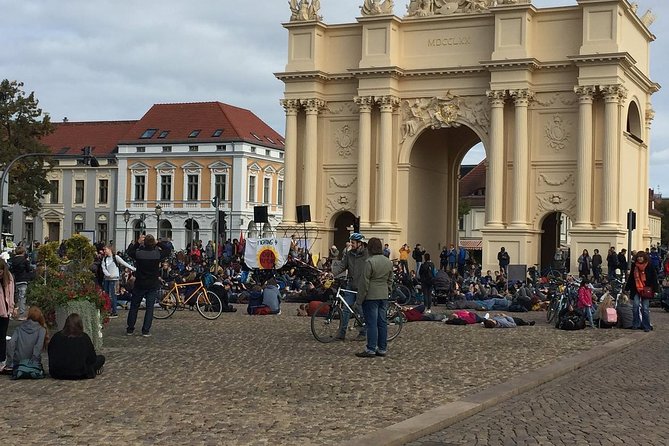
Potsdam’s center gives the tour a more everyday feel. At the Brandenburg Gate, the guide explains Potsdam’s role as a garrison town and the growth of Prussia’s military power. This is Potsdam’s own gate, not Berlin’s better-known Brandenburg Gate, so listen carefully when the guide explains the distinction.
The ride continues through Luisenplatz, named for Queen Louise, and toward the Old Market Square. Around Alter Markt, you discuss the Prussian royal family and the city’s central history. St. Nicholas Church and the Old Town Hall are among the main landmarks.
The square has changed over time, and some buildings now serve modern purposes. The former Barberini Palace, modeled after Rome’s Palazzo Barberini, now houses part of Hasso Plattner’s private art collection. The tour generally views such buildings from outside, with short explanations rather than long admissions.
The Dutch Quarter is the lunch base. Frederick William I had 134 Dutch-style houses built in the eighteenth century to attract Dutch craftsmen, including stone workers and linen weavers. The quarter retains its distinctive character and makes a pleasant place to pause.
You get about 45 minutes for lunch, but food and drinks are not included. One useful tip is to ask the guide for specific restaurant suggestions. The schedule gives you time to eat and wander, but you may otherwise spend part of the break deciding where to go.
Alexandrowka, gates, and smaller details
The route includes Potsdam’s Russian colony, Alexandrowka, built in the 1820s on the orders of Frederick William. It gives you another side of the city’s past, showing how rulers used planned neighborhoods to support cultural and political ties.
You also ride by Jägertor, or Hunters’ Gate, and Nauener Tor, built in 1755. These are quick passing sights rather than long visits, but they help you read Potsdam as a former royal and military center.
The Obelisk is another brief stop. Its original decoration included the faces of Prussian electors and early Hohenzollern kings. Short stops like this are easy to miss on your own, especially when you are focused on getting from one major palace to another. The guide gives them a place in the larger story.
What the guides add to the day
The quality of the guide matters a great deal on this tour. The best guides do more than identify buildings. They explain why Frederick the Great built particular palaces, how immigrants shaped Potsdam, and why a bridge or garden has political meaning.
Simon has been praised for a relaxed manner and for including LGBTQ+ history connected with Frederick the Great. Maggi has been singled out for keeping different cycling abilities together while offering clear historical context. Marco, Nick, Alicia, Thor, Peter, Alex, Jeff, Bindi, and others have also received strong praise for friendliness, humor, and storytelling.
Guide assignments can change, so you should not book on the assumption that one named person will lead your departure. Still, the repeated pattern is useful: this company’s guides are a major part of the value, and the experience depends less on speed than on the quality of the explanations.
Price, group size, and what you get
At $102.58 per person, the tour is not the cheapest way to reach Potsdam. The price includes the bike, the guide, the rail transport to and from Potsdam, and an optional helmet. You still pay for lunch, drinks, and any palace or museum admission.
I think the price is reasonable if you want a guided overview in one day. You would otherwise need to arrange train tickets, rent a bike, choose a route, navigate between palace grounds, and research the Cold War sites yourself. The tour also covers a wide area that would be tiring to connect on foot.
The value is weaker if you mainly want to tour palace interiors. Most stops are exterior visits of five to fifteen minutes, so independent visitors with a strong museum focus may prefer a slower Potsdam day.
The tour is offered in English and is recommended by 94 percent of customers, with a 4.7 rating from 81 reviews. Those figures suggest a dependable experience, but they do not remove the basic need to judge your own fitness and interests.
Who should book this Potsdam ride?
I would choose this tour if you want a lively introduction to Potsdam, enjoy cycling, and like history that reaches from Prussian royalty to the Cold War. It also suits families with active teenagers. One family found it a highlight of a Berlin visit, and the ride’s easy pace can work for people who are not expert cyclists.
You should think twice if you dislike riding for several hours, need extensive palace access, or want a fully private schedule. Crowded sidewalks and streets can appear at times, and the group must keep moving to fit the many stops into one day.
Wear comfortable clothes and shoes, prepare for possible drizzle, and take the offered helmet if that makes you feel safer. The tour runs in changing weather, as one account of a morning ride in light rain makes clear, so a weather check is sensible.
Should you book it?
Book it if you want the broadest possible Potsdam introduction in one outing. The combination of rail travel, comfortable bikes, royal parks, the Dutch Quarter, Cecilienhof, the former border, and Glienicke Bridge gives you a strong sense of why Potsdam matters.
Skip it if you want to spend hours inside Sanssouci or Cecilienhof. For most people who can handle a moderate, mostly flat ride, this is a practical and enjoyable day trip from Berlin, with enough history to make the scenery memorable and enough free time to enjoy lunch at your own pace.
FAQ
Where does the Potsdam bike tour begin?
It begins at Unlimited Biking, formerly Fat Tire Tours, at Panoramastraße 1A near the entrance to the TV Tower in Alexanderplatz, Berlin.
What time does the tour start?
The scheduled start time is 9:30 a.m.
How long does the experience last?
The tour lasts approximately six hours and 30 minutes, including the train journey between Berlin and Potsdam.
Is train transportation included?
Yes. Rail transportation to and from Potsdam is included in the tour price.
Is the bicycle included?
Yes. A city-cruiser-style bicycle is provided.
Is a helmet included?
Yes. A helmet is provided, but wearing it is optional.
Is lunch included?
No. The tour includes a lunch break in or near the Dutch Quarter, but you pay for your own food and drinks.
Do you enter the palaces?
The itinerary mainly includes exterior views and explanations. Palace admissions are not included, so you should not expect full interior tours as part of the standard experience.
How many people can join the tour?
The maximum group size is 18 people.
Just added around Germany
- City tour through Nuremberg with the little train – Christmas tour★ 4.0 · 23 reviews
- Salzburg History & Food Private Tour with Munich train add-on★ 4.5 · 24 reviews
- Take the U Train: An Audio Story of Berlin’s Oldest Elevated Railway Line★ 4.0 · 2 reviews
- From Berlin to Sachsenhausen Camp: Private Tour by Car or Train★ 5.0 · 3 reviews
- Stuttgart: Curling rail rental★ 3.3 · 9 reviews
- City tour through Regensburg with the little train★ 4.0 · 67 reviews
- Herrenchiemsee Palace and Fraueninsel Rail Trip from Munich★ 4.5 · 97 reviews
- Private Sachsenhausen Concentration Camp tour with train★ 5.0 · 205 reviews
Germany Train Journeys, compared.
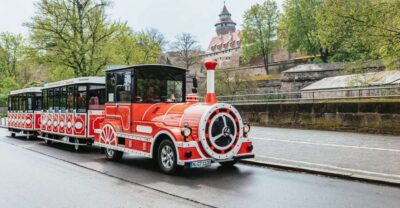
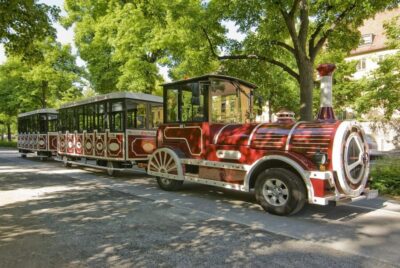
Würzburg: City Tour with the Bimmelbahn Train
Read our review →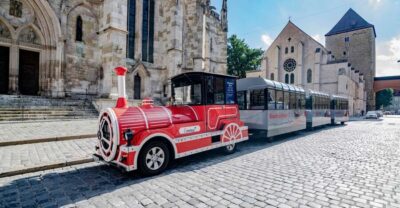
Regensburg: City Tour with the Bimmelbahn Train
Read our review →
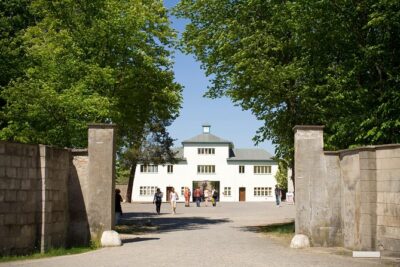
Private Sachsenhausen Concentration Camp tour with train
Read our review →
Herrenchiemsee Palace and Fraueninsel Rail Trip from Munich
Read our review →
City tour through Regensburg with the little train
Read our review →
Salzburg History & Food Private Tour with Munich train add-on
Read our review →Browse the lists this tour appears in