
Review · BEIJING
One day tour to downtown Tianjin from Beijing by high speed train
Tianjin makes a fine second city. From Beijing, this high-speed train day trip gives you a quick look at former foreign concessions, riverfront squares, old shopping streets, and the home of China’s last emperor. I like the tidy route and the chance to see Tianjin without arranging local transport yourself. I also like the historical focus, especially Jiefang North Road and Jingyuan Palace.
The main catch is the price structure. The tour costs $234, but the return second-class train ticket, listed at CN¥118 per person, is paid separately on the day. Eleven hours is also a long day, with several short stops rather than much free time.
Key points at a glance
- High-speed rail from Beijing to Tianjin: The train leaves at about 9:00 and returns to Beijing South Railway Station around 19:40.
- A strong history route: Jiefang North Road, the Five Great Avenues, the former Italian concession, and Jingyuan show different sides of Tianjin’s past.
- Jingyuan Palace included: You visit the former residence of Puyi, China’s last emperor, where he lived from 1929 to 1931.
- Lunch and Tianjin transport are covered: Hotel transfers in the defined Beijing pickup area are included, along with local transportation and lunch.
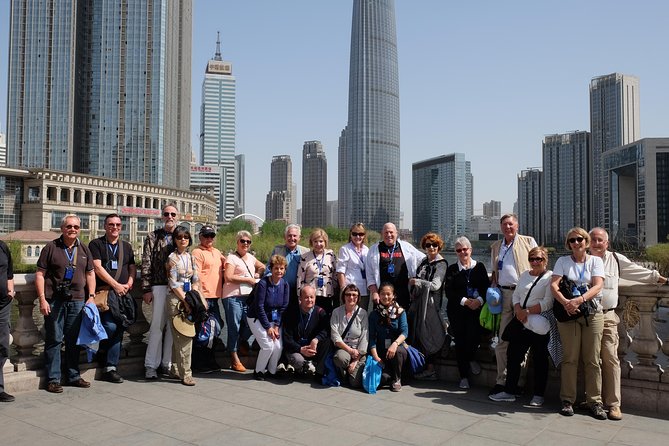
- Small enough to stay manageable: The maximum group size is 20 people, and guide Cindy Zhang receives especially warm praise for her history knowledge and friendly manner.
- Budget for the train separately: The return ticket is not included in the listed price, so check the final cost before booking.
Why Tianjin works as a Beijing day trip
Beijing can fill a week on its own, but Tianjin gives you a useful change of pace. The cities are linked by high-speed rail, so you can see a second major Chinese city without packing an overnight bag or dealing with a complicated independent day out.
Tianjin’s appeal is different from Beijing’s. Instead of imperial courtyards and monumental avenues, you get a city shaped by river trade and foreign concessions. British, French, Italian, and other European influences appear in old banks, clubs, consulates, villas, and commercial buildings. The result is a city with a noticeably mixed architectural character.
The tour is built around that contrast. You begin beside the Haihe River and Tianjin Railway Station, then move through old concession districts, traditional streets, a former imperial residence, and modern riverfront areas. It is not a slow, wandering day. It is a broad introduction, with the guide helping connect the buildings and places into a story.
I would choose this trip if you want context as much as sightseeing. If your ideal day means sitting in one neighborhood for hours, eating at length, and photographing every doorway, the schedule may feel tight.
More High-Speed Trains in China:
- Suzhou Private Day Trip from Shanghai with Bullet Train Option
★ 5.0 · 366 reviews - Beijing to Datong See YunGang Cave, Hanging Temple (Bullet Train)
★ 5.0 · 39 reviews - LUXURY Bullet Train: Private Hangzhou Day Trip From Shanghai
★ 5.0 · 34 reviews
The train ride and your first look at Tianjin
The day begins with a train departure at around 9:00. Hotel pickup is offered in a defined area, while the tour ends back at the Beijing South Railway Station meeting point. The exact arrangement matters, since pickup outside that area may cost extra.
The return trip reaches Beijing South at approximately 19:40. That timing makes this a full day, not a casual half-day outing. You should be ready for an early start, several hours on your feet, and a fairly structured route.
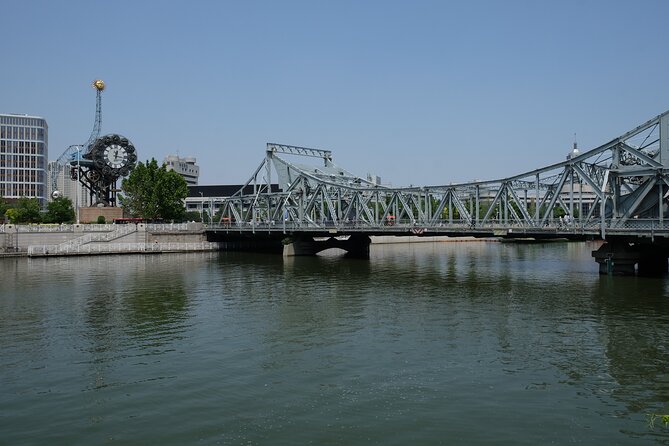
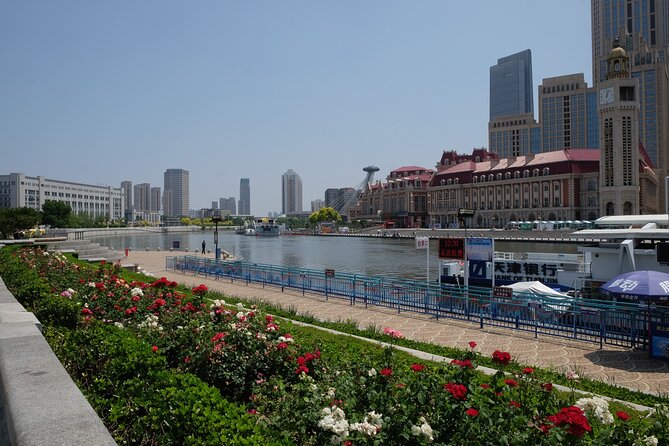
Your first stop is Tianjin Railway Station, where you see the Haihe River, Jinwan Plaza, Liberation Bridge, and the Century Clock. The stop lasts about 15 minutes, so think of it as an orientation and photo stop rather than a long visit.
This opening is useful because Tianjin’s riverfront helps explain the city’s shape. The Haihe is not just scenery. It runs through the center of the city and ties together several of the day’s later sights. Still, the brief timing means you will not have much room to explore beyond the planned viewpoint.
Jiefang North Road and Tianjin’s former concessions
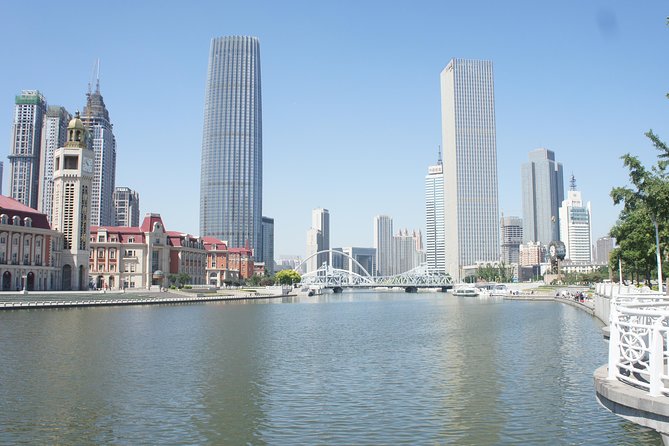
The longest early stop is Jiefang North Road, where you spend about 1 hour and 20 minutes. This was the financial street of old Tianjin, running through former French and British concession areas.
You see historic buildings connected with banks, foreign firms, clubs, barracks, and consulates. The route also includes the first post office of the Qing Dynasty. These are the places that make Tianjin different from a standard Beijing side trip. You are looking at a commercial port shaped by international trade and foreign administration.
I like this section because the buildings provide a physical record of Tianjin’s past. A guide is particularly useful here. Without explanation, a row of handsome stone buildings can blur into a pleasant architecture walk. With historical background, you can better understand why so many European-style structures appeared in this part of China.
The drawback is that the experience centers on exterior views and a walking route. The provided schedule does not promise extensive interior visits. Wear comfortable shoes, keep an eye on the group, and listen for the guide’s explanations as you move between buildings.
Five Great Avenues and the Little White Building area
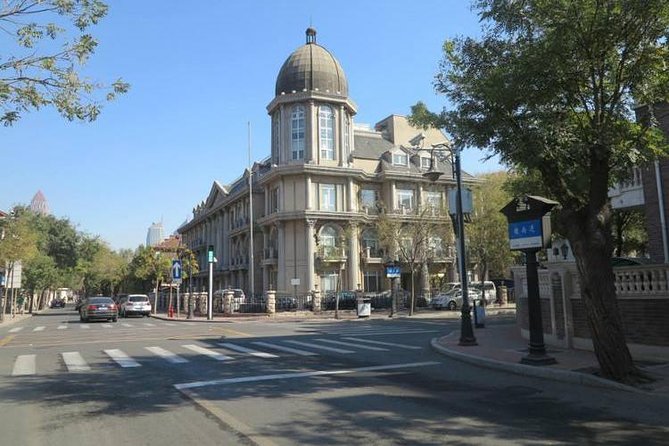
Next comes the Xiaobailou, or Little White Building, area, once one of Tianjin’s most prosperous districts. The Five Great Avenues are a traditional residential quarter formed by five east-west streets.
This is a quieter architectural chapter of the day. You see the former residential side of concession-era Tianjin, including streets associated with foreign residents and upper-class life. The route also points out Keissling, one of the four Western restaurants in China identified in the tour description.
The scheduled visit lasts about 30 minutes. That is enough to understand the area and see its character, but not enough for a long café stop or an extensive walk through every avenue. If you enjoy architecture, you may wish the schedule allowed more time here. Still, as part of a one-day overview, it gives you a useful sample without taking the entire afternoon.
More One-Day Trips in China:
- Great Wall Origins: Beijing Bullet Train to Qinghuangdao Private Day Trip
★ 4.5 · 7 reviews - Luoyang & Shaolin Temple Day Trip from Xian by High-speed Train
★ 5.0 · 6 reviews - Mt Fuji & Hakone Cruise, Drum Show Bullet Train 1 Day from Tokyo
★ 4.0 · 7,413 reviews - Zurich: Day Trip to Grindelwald, Interlaken & Lauterbrunnen
★ 4.5 · 4,699 reviews
Italian Style Street and a taste of Tianjin
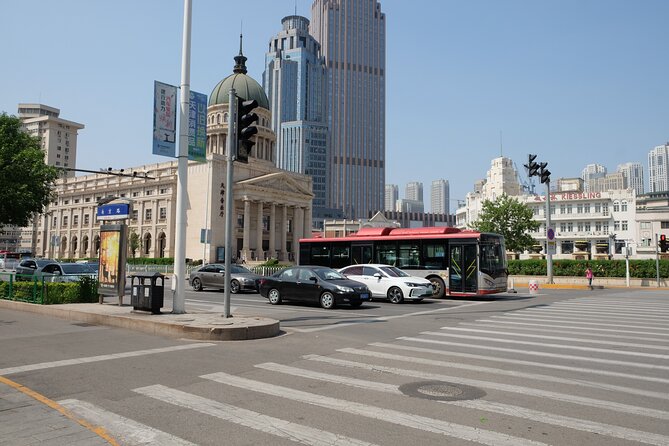
Italian Style Town occupies the center of the former Italian concession. Today, it functions as a recreational district with shops, food, and drink, while its historic buildings provide the visual setting.
You have about 50 minutes here. The tour gives you a chance to try a local street food, Chinese crepes, also known as Tianjin jianbing. Lunch is included, but the information does not specify the restaurant or exact menu, so do not plan your food expectations around a particular dish.
This stop helps break up the architecture and history. You get time to look at the area as a present-day public space rather than only as a preserved colonial district. At the same time, it is a polished tourist zone, so it may feel less distinctive than the older streets and riverfront areas.
Ancient Culture Street and Tianhou Palace
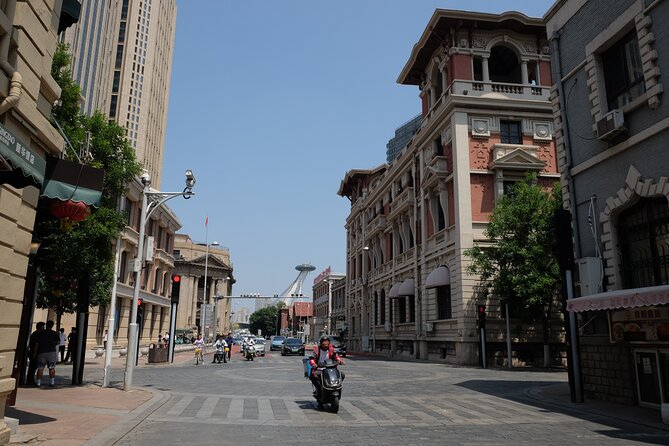
Ancient Culture Street, or Gu Wenhua Jie, offers a different side of Tianjin. It is a traditional-style shopping street beside Tianhou Palace, described as the earliest building in Tianjin.
The site sits near the confluence of three rivers, identified as the birthplace of the city. That location gives the stop genuine importance. Tianjin grew through its water routes, and the street helps show the older Chinese commercial and religious setting beneath the later foreign concessions.
You have around 50 minutes, and admission is included. Expect a traditional-style shopping environment rather than a quiet museum. The street can be more commercial in feel, but that is part of its role. You can look at local goods, notice the temple setting, and compare this Chinese urban tradition with the European-style quarters visited earlier.
The schedule does not mention a detailed temple tour, so your experience will depend on how the guide structures the visit and how much time is available. Keep some attention on the architecture rather than treating the street only as a shopping stop.
The Tianjin Eye and the Haihe River
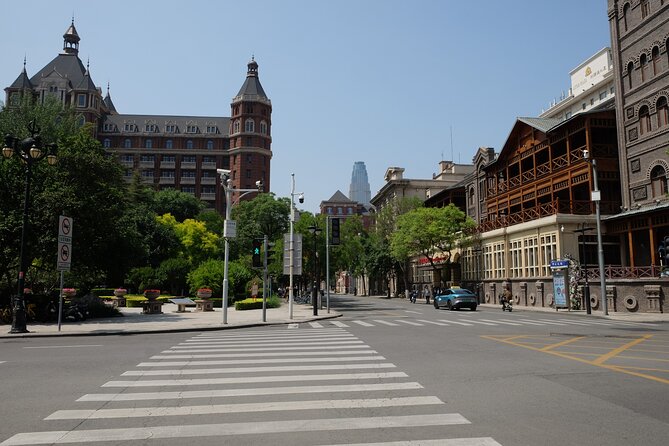
The Ferris wheel known as the Tianjin Eye is built on a bridge over the river. The tour describes it as the only Ferris wheel built on a bridge across a river in the world. You stop for about 10 minutes at a good viewing point.
That short pause tells you exactly what to expect: a look and a photograph, not a ride. Admission is free because you are not entering the attraction. If riding the wheel is important to you, this tour does not list that as part of the program.
Later, you walk along Haihe Cultural Square for about 40 minutes. This is one of the better chances to slow down and see how local life meets the riverfront. You can appreciate the water views and walk before returning to Tianjin Railway Station.
The two river stops work well together. The Tianjin Eye gives you a distinctive landmark, while Haihe Cultural Square offers a more relaxed public space. Neither is a long independent exploration, but together they help you understand the city’s central waterway.
Jingyuan Palace and Puyi’s Tianjin years
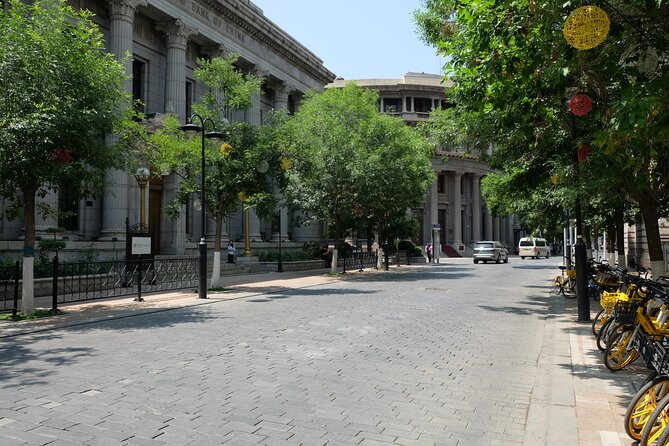
Jingyuan, also called Jing Garden, is the historical centerpiece for many people. It was the former residence of Puyi, the last emperor of China, who lived there from 1929 to 1931.
You spend about an hour here, and admission is included. That is enough time to give the building proper attention rather than treating it as a passing photo stop. The guide can explain Puyi’s years in Tianjin and place the residence within the larger story of the end of imperial China.
I especially like that this stop adds a personal and political layer to the day. The concessions show how foreign powers shaped Tianjin’s streets. Jingyuan brings the focus back to China’s own modern transition and to the life of a former emperor living away from the Forbidden City.
The tour description does not list every room or exhibit, so the exact interior experience may vary. Still, Jingyuan is more than another old building. It gives the day a clear historical anchor and makes the price easier to assess for anyone interested in modern Chinese history.
Porcelain House, Heping Road, and the final walk
Near Heping Road, you see the Porcelain House, a French-style building decorated with porcelain pieces, vases, and ornaments. The schedule allows about 30 minutes for this area, including a walk around Heping Road and Binjiang shopping streets.
The Porcelain House is visually unusual, and it provides a memorable final urban stop. Heping Road adds a more traditional pedestrian shopping setting, so this part of the tour combines an eccentric architectural attraction with everyday commercial streets.
Do not expect a long museum visit or a leisurely shopping afternoon. The route is designed to show you several distinct parts of Tianjin in one day. After the stop, you walk along the Haihe River, then return to the railway station to wait for the train back to Beijing.
What the $234 price really covers
At $234, this is not a cheap independent rail outing. The value comes from what is bundled around the train journey: hotel transfers in the defined area, transportation within Tianjin, a guide, lunch, and admission to Jingyuan.
The listed price does not include the return second-class train ticket. That ticket can be paid on the tour day at CN¥118 per person. Because this is a meaningful extra, compare the full cost rather than judging the headline price alone.
For me, the tour makes the most financial sense if you value convenience. You avoid arranging the rail booking, planning Tianjin transport, working out a route across several districts, and finding historical context at each stop. If you are comfortable organizing trains and taxis yourself, you may prefer an independent day and spend less.
Group size is capped at 20 people. That is not a private tour, but it is more manageable than a large coach group. The strongest praise goes to Cindy Zhang, who is described as friendly, chatty, highly familiar with Tianjin’s streets and buildings, and very strong on local history. That matters here because the city’s appeal depends heavily on explanation.
Who should book this day trip?
I would recommend it for a first-time Tianjin visit from Beijing, especially if you want a structured introduction rather than one isolated attraction. It suits people who enjoy urban history, architecture, riverfront walks, and a guide who can explain why the city looks the way it does.
It also works well for anyone who wants to add another Chinese city without changing hotels. Families and small groups may appreciate the included lunch, local transport, and hotel transfer option. A moderate level of physical fitness is required, since the day includes walking through several districts and time on your feet at stations and attractions.
I would be cautious if you want a relaxed pace, extensive shopping, or long meals. Many stops last 10 to 50 minutes, and the full day runs from the morning train to an evening return. The schedule gives breadth, not deep time in one place.
Cancellation is free up to 24 hours before the start time. Inside that window, refunds are not provided, and changes are not accepted. The tour can also be moved or refunded if poor weather or insufficient bookings cause cancellation.
Should you book it?
Book this tour if you want the easiest way to see Tianjin’s major historic districts in one day and you value Cindy Zhang’s personal guidance. The strongest parts are the concession-era streets, Jingyuan Palace, the riverfront route, and the simple train connection.
Skip it if you want to travel at your own speed or if the additional return train charge pushes the total beyond your budget. For a broad, well-organized first look at Tianjin from Beijing, though, the route offers a sensible mix of history, architecture, food, and city views.
FAQ
How long does the Beijing to Tianjin tour last?
The tour lasts approximately 11 hours. The return train is expected to reach Beijing South Railway Station around 19:40.
Where does the tour begin?
The stated meeting point is Beijing South Railway Station, at Bei Jing Nan Zhan in Beijing.
Where does the tour end?
The activity ends back at the meeting point at Beijing South Railway Station.
Is hotel pickup available?
Yes. Hotel transfers are included within the defined pickup area. Transfers outside that area may require an extra payment.
Is the return train ticket included in the $234 price?
No. The return second-class train ticket is paid separately on the tour day and is listed as CN¥118 per person.
Is lunch included?
Yes. Lunch is included in the tour price, although the exact restaurant and menu are not specified.
What admission is included?
Admission to Jingyuan Palace is included. Admission to Ancient Culture Street is also listed as included.
How large is the group?
The maximum group size is 20 people.
What happens if I need to cancel?
You can receive a full refund if you cancel at least 24 hours before the experience start time. Cancellations or changes made within 24 hours are not accepted for a refund.
Just added around China
- 2 Days Tour of Xian & Beijing via Train: Terracotta Warriors & Great Wall★ 5.0 · 6 reviews
- Bullet Train Private Tour: Beijing Tiananmen Square, Forbidden City & Great Wall★ 5.0 · 3 reviews
- 4-Hour Private Shanghai Modern Impression Tour with Tower and Maglev Train Ride★ 4.5 · 2 reviews
- Private Tour:Zhujiajiao Water Town, Shanghai Tower & Maglev Train★ 5.0 · 2 reviews
- Luoyang & Shaolin Temple Day Trip from Xian by High-speed Train★ 5.0 · 6 reviews
- Day Tour to Shenzhen from Hong Kong by High Speed Bullet Train★ 5.0 · 6 reviews
- LUXURY Bullet Train: Private Hangzhou Day Trip From Shanghai★ 5.0 · 34 reviews
- Day Tour to Hong Kong from Guangzhou by Round-way Bullet Train★ 5.0 · 6 reviews
High-Speed and Bullet Trains, compared.

Mt Fuji & Hakone Cruise, Drum Show Bullet Train 1 Day from Tokyo
Read our review →
Tokyo Mt Fuji 5th St & Hakone Cruise Bus Tour w/Bullet Train
Read our review →
Taj Mahal & Agra Tour by Gatimaan Express Train
Read our review →
Pompeii Tour with Wine and Lunch by High Speed Train
Read our review →
Venice Day Trip from Rome by High-Speed Train with Happy Hour
Read our review →
Mt. Fuji and Hakone Day Trip From Tokyo with Bullet Train Option
Read our review →
Suzhou Private Day Trip from Shanghai with Bullet Train Option
Read our review →
Browse the lists this tour appears in