
Review · GERMANY
Private Sachsenhausen Concentration Camp tour with train
History can be hard to face. This six-hour private tour brings you from Berlin to Sachsenhausen with a personal guide, useful context, and time to ask difficult questions. I like the one-to-one attention and the way guides such as Martin, Maria, Ioana, Klaus, and Nickolai adjust the pace and depth to suit each group. I also like that the tour begins with Oranienburg, not just the camp gates, helping you see how the town and its businesses were tied to the Nazi system. The main drawback is practical: you travel by public train and walk a lot, often 11,000 to 16,000 steps over the day.
The price is $338.15 per person, which is a serious outlay for a memorial visit. You are paying for a private, hotel-to-hotel service with a licensed guide trained by the memorial authority, not for private transport. The tour suits you best if you want a thoughtful, flexible visit and are willing to spend most of a day on it. If you expect a private car, this is not the right booking.
Key points to know before booking
- The train ride is part of the experience: You travel from Berlin to Oranienburg by public transport, with your guide explaining the setting along the way.
- Oranienburg adds vital context: The town benefited from industries that used prisoners as forced labor.
- Expect a long day on foot: The route can involve roughly 11,000 to 16,000 steps, including uneven surfaces.
- Private guiding makes a real difference: You can ask questions freely and slow down at places that matter to you.
- The memorial is serious and emotionally heavy: This is a place for learning and remembrance, not casual sightseeing.
- Transport details need checking: Hotel pickup and drop-off are offered, but the experience itself uses trains, buses, and sometimes taxis.
Why the private format matters at Sachsenhausen
Sachsenhausen is not a quick stop. The grounds are broad, the subject is difficult, and the meaning of each building or empty space can be lost without explanation. A private guide gives you room to ask why the camp was built, how it operated, and how its role changed over time.
You are not simply following a fixed speech. Guides have adapted the visit for families, couples, larger private groups, and people with different levels of prior knowledge. Daniel was praised for reading a family’s mood well, while Klaus reportedly knew when to stop speaking and allow quiet reflection. That instinct matters here.
The guides also bring different areas of expertise. Martin has local experience and worked at the memorial itself for an extended period. Ioana has been praised for shaping the day around a guest’s existing understanding. Paul has added background on Hitler’s rise to power and other Berlin sites. These details suggest that the guide can make the difference between seeing a collection of buildings and understanding how the camp fit into Nazi rule.
You should also expect a respectful tone. This is not a tour built around entertainment. A little warmth or humor may appear during the travel portions, but the memorial visit itself requires restraint. The strongest guiding combines clear facts, survivor accounts, pauses, and a willingness to answer direct questions without softening the horror.
More Train Journeys in Germany:
- Nuremberg: City Tour with the Bimmelbahn Train
★ 4.4 · 2,475 reviews - Würzburg: City Tour with the Bimmelbahn Train
★ 4.4 · 1,322 reviews - Regensburg: City Tour with the Bimmelbahn Train
★ 4.3 · 1,010 reviews
The journey from Berlin to Oranienburg
The tour begins with hotel pickup. From there, you and your guide make your way to the railway system and take a train north to Oranienburg. The ride is not private, and that is important to understand before you pay.
Some guides provide or arrange the necessary transit tickets, while other accounts describe guests already holding their own tickets or taking a short taxi from Oranienburg. Ask exactly what is covered when you book. The phrase hotel pickup and drop-off means the guide meets you at your accommodation and accompanies you, not that a car carries you door to door.
The train has a useful purpose beyond getting you there. Your guide can explain the camp’s place in Berlin’s wider Nazi story before you arrive. You also see an ordinary part of modern German life, then gradually move toward a site shaped by dictatorship, forced labor, and mass imprisonment.
From Oranienburg station, the camp is about a 20 to 25 minute walk in many versions of the route. A bus or taxi may be used instead, depending on the day and the group’s needs. One guide arranged taxis for a group whose members would have struggled with the walking, and another adapted the route for a person using a wheelchair. Still, the official advice calls for moderate fitness and says the experience is not recommended for people with limited mobility.
Wear supportive shoes. Bring water. A rain jacket is sensible because much of the visit takes place outdoors, and one group completed the tour during heavy rain and storms. The visitor facilities are limited enough that you should plan ahead rather than count on buying everything you need at the site.
Oranienburg, a town tied to the camp economy
The first planned stop is a roughly 25-minute walk through Oranienburg. At first, this may seem like an odd prelude to a concentration camp memorial. It is one of the tour’s most useful choices.
Oranienburg was not separate from what happened at Sachsenhausen. Its businesses and factories used prisoners as forced labor, including firms producing materials for the Nazi war effort. Some residents took part directly. Others knew enough to understand that something brutal was happening nearby and accepted the economic benefits or stayed silent.
That local setting helps you avoid a common mistake: imagining the camp as an isolated place hidden from society. The prison system depended on transport, industry, administration, guards, and local cooperation. Seeing the town first makes that connection harder to ignore.
The walk is also a chance to ask questions before entering the memorial. If you have spent the train ride discussing Nazi Germany, Oranienburg gives those ideas a physical setting. The drawback is that this adds time and more walking to an already long day. If you want only the memorial grounds, you may find the town portion less essential. If you want to understand how the camp functioned within its surroundings, it earns its place.
Entering the Sachsenhausen memorial grounds
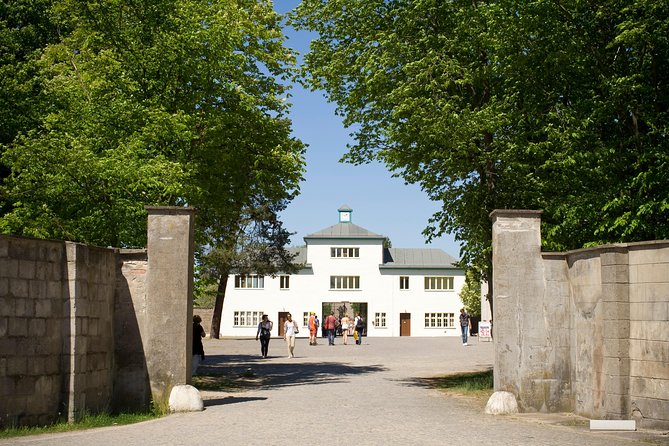
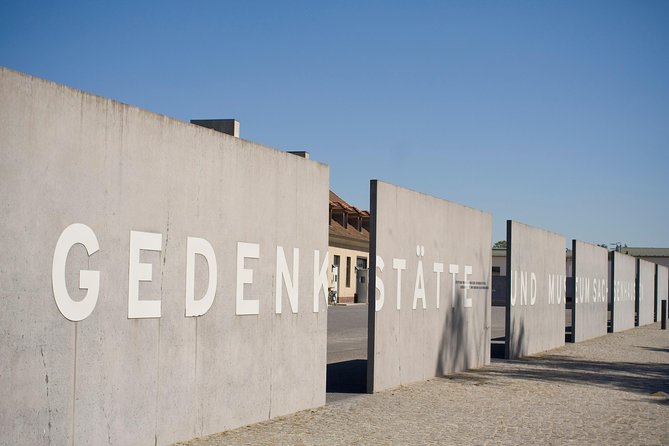
Sachsenhausen was built in 1936, during the Berlin Olympics hosted by Nazi Germany. Prisoners were forced to construct the new camp north of Berlin, which was intended for political enemies of the regime. Over the following decade, about 200,000 people were imprisoned there.
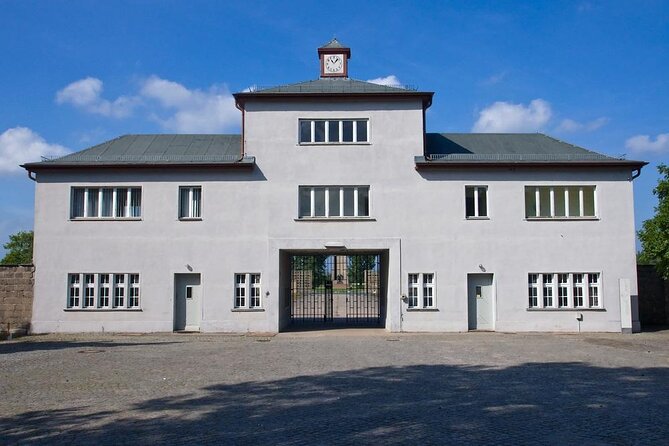
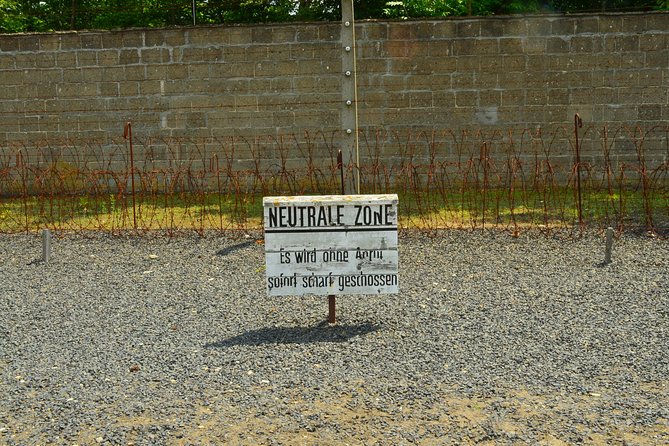
The camp’s layout carries part of the message. Tower A served as the main entrance. The triangular design allowed guards to control sightlines and movement from the perimeter. The roll call area recalls the daily system in which prisoners were made to stand for long periods, often in severe weather.
Your guide will explain how the camp was organized, how prisoners were treated, and how forced labor was used to break people physically and mentally. The subject is grim, but the value of a trained guide is that the horror is placed in a clear historical frame. You learn about leadership, administration, prisoner life, and the machinery that made abuse routine.
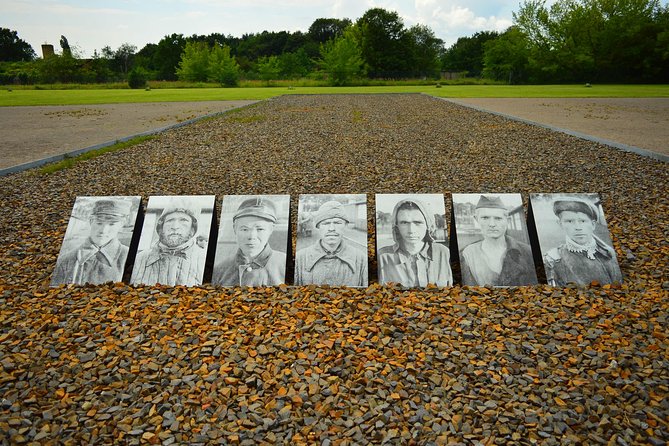
The former barracks area is especially important. The prison population was packed into spaces designed for far fewer people, and work was often deliberately exhausting or pointless. The intention was not only to extract labor. It was also to strip people of identity, dignity, and hope.
Survivor testimony can make these facts more immediate. Guides use individual accounts to show how prisoners tried to preserve small forms of community and humanity under conditions designed to destroy both. That personal scale keeps the visit from becoming a list of dates and statistics.
Same tracks, a different day out:
- Dachau Concentration Camp Memorial Tour with Train from Munich
★ 4.5 · 955 reviews - Guided Dachau Concentration Camp Memorial Site Tour with Train from Munich
★ 5.0 · 920 reviews - Nuremberg: Nuclear Bunker in Main Railway Station
★ 4.7 · 262 reviews - Herrenchiemsee Palace and Fraueninsel Rail Trip from Munich
★ 4.5 · 97 reviews
Station Z and the meaning of remembrance
Station Z is among the most chilling places on the grounds. It was used as a killing facility, and its name carried a grim logic: if Tower A marked the beginning of the camp’s system, Station Z represented the intended end.
The visit does not treat this site as a dramatic spectacle. You are there to understand what took place and why the memorial has preserved the location. The strongest guides explain the system plainly, then leave room for silence. One guide was praised for recognizing when the group needed a pause rather than another fact.
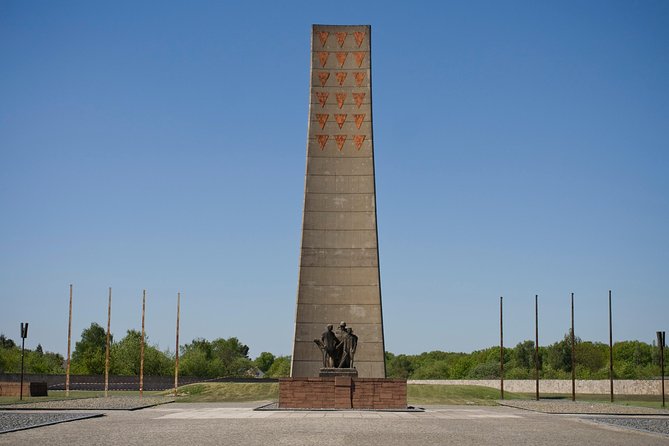
The memorial also addresses the period after the Nazi camp was liberated. After 1945, Soviet authorities used Sachsenhausen as a special camp for suspected war criminals, Nazis, and collaborators. About 60,000 people were imprisoned there during the next five years. This later chapter is part of the site’s story and prevents an overly simple ending at the collapse of Nazi Germany.
You should expect the visit to be emotionally demanding. Several people described it as sobering, horrifying, moving, or essential. Those words are not exaggerations. Plan something gentle for the evening rather than scheduling a crowded dinner, show, or demanding activity immediately afterward.
How much walking and time should you expect?
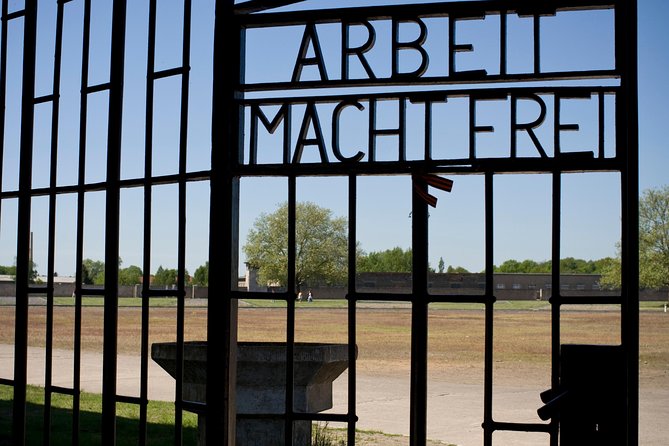
The advertised duration is about six hours, but the day includes hotel pickup, the train, the walk from Oranienburg, and the return journey. The time inside the memorial is often around three hours across the listed sections, with additional time for the town and transport.
Step counts vary. One account recorded close to 11,000 steps. Another reached 16,000 by the time the guest returned to the hotel. The ground can be uneven, and the walk from the station can feel longer after a serious indoor and outdoor visit.
This is not a good choice if you tire easily or need frequent seating. Tell the operator about mobility concerns before booking. The general policy does not recommend the tour for limited mobility, but individual guides have sometimes adjusted the route, arranged taxis, or found more accessible ways through the site. Do not assume that accommodation will be possible without discussing it first.
Bring water and consider bringing food. Food and drinks are not included, and amenities are limited for much of the day. The lack of a planned meal stop may not bother you, but hungry children or tired adults can find the final part of the tour harder.
What the $338.15 price really buys
At $338.15 per person, this is expensive compared with a standard group outing. The price makes more sense if you are traveling with several people and can use the group discount, or if you place a high value on a guide who can shape the visit around your questions.
You receive hotel pickup and drop-off, a private group, and a licensed guide trained by the memorial authority. You do not receive a private vehicle. The transport is mainly by train, with possible bus or taxi connections, and food is not included.
That difference explains the mixed value reactions. Some people felt the private attention made the cost worthwhile, especially when the guide handled a last-minute booking, managed tickets, or arranged taxis. Others expected a car because of the hotel pickup wording and felt overcharged when they had to use public transport and walk.
I would judge the price this way: it is fair for a tailored, expert-led day if you are a small group and want door-to-door guidance through the transport system. It is poor value if your main goal is simply to reach Sachsenhausen cheaply. In that case, a group tour or self-guided visit may suit you better.
The guides are the strongest part
The clearest strength of this experience is the guiding. Names repeatedly associated with strong visits include Maria, Xavier, Natalie, Klaus, Paul, Daniel, Jamie, Ioana, Martin, Chloe, Walid, Pip, Taylor, and Nickolai.
Their best qualities are not just factual command. They explain difficult material clearly, answer questions without rushing, notice when a group needs silence, and adjust the pace. Chloe was praised for allowing extra time in areas that mattered to the group. Walid helped arrange taxis for people who would have struggled with the full walk. Natalie found an accessible route for a guest using a wheelchair.
The experience can still vary by guide. The private format reduces the risk of being lost in a large crowd, but it cannot guarantee a perfect personal match. If you have a particular interest in prisoner life, Nazi administration, postwar East Germany, or transport logistics, tell the company in advance so it can make a suitable assignment.
Who should book this Sachsenhausen visit?
You should consider it if you:
- Want a private guide rather than a large fixed group
- Prefer asking questions as you go
- Are comfortable using Berlin public transport
- Can manage a long day with substantial walking
- Want Oranienburg and the local setting included
- Are willing to spend time on a difficult memorial visit
- Are traveling with family or friends who need a flexible pace
You may want another option if you:
- Expect a private car or chauffeur
- Have limited mobility without a confirmed plan
- Want a shorter visit
- Prefer to keep costs low
- Need a guaranteed meal stop
- Would rather explore the museum alone
Should you book it?
Book this private Sachsenhausen tour if the guide is the main reason you are going. The memorial is powerful on its own, but the right guide gives you the context, connections, and quiet pauses that make the visit meaningful.
Before paying, confirm three details: how train and bus tickets are handled, whether a taxi can replace some walking, and how much time your group will spend inside the memorial. If those answers suit you, the private format can justify the price, especially for a family or small group.
Skip it if you expect private transport or a light half-day outing. This is a serious, physically demanding day by public transport. For prepared visitors, it offers a careful and personal way to confront Sachsenhausen and the responsibility of remembering it.
FAQ
How long does the Sachsenhausen private tour take?
The tour lasts approximately six hours, including hotel pickup and drop-off, public transport, walking, and time at the memorial.
Is this a private tour?
Yes. Only your group participates, so you can ask questions and discuss the pace with your own guide.
How do you reach Sachsenhausen from Berlin?
You travel by train from Berlin to Oranienburg, then continue toward the memorial by walking, bus, or sometimes taxi.
Is hotel pickup included?
Yes. Hotel pickup and drop-off are included, with the guide meeting you at your accommodation.
Is transportation by private car?
No. The experience is specifically arranged around public train travel, with possible bus or taxi connections.
Are train tickets included?
The provided details do not clearly establish one universal ticket arrangement. Some guides have supplied or arranged transit tickets, while some guests have used their own. Confirm this before departure.
How much walking is involved?
The walk from Oranienburg station to the camp can take about 20 to 25 minutes. The full day may total roughly 11,000 to 16,000 steps, including uneven ground.
Is the tour suitable for people with limited mobility?
It is not generally recommended for people with limited mobility or walking impairments. Some guides have adapted routes or arranged taxis, so discuss your needs before booking.
Is food included?
No. Food and drinks are not included, and you should bring water and consider packing food for the day.
Just added around Germany
- City tour through Nuremberg with the little train – Christmas tour★ 4.0 · 23 reviews
- Salzburg History & Food Private Tour with Munich train add-on★ 4.5 · 24 reviews
- Take the U Train: An Audio Story of Berlin’s Oldest Elevated Railway Line★ 4.0 · 2 reviews
- From Berlin to Sachsenhausen Camp: Private Tour by Car or Train★ 5.0 · 3 reviews
- Stuttgart: Curling rail rental★ 3.3 · 9 reviews
- Potsdam Bike Tour with Rail Transport from Berlin★ 4.5 · 81 reviews
- City tour through Regensburg with the little train★ 4.0 · 67 reviews
- Herrenchiemsee Palace and Fraueninsel Rail Trip from Munich★ 4.5 · 97 reviews
Germany Train Journeys, compared.
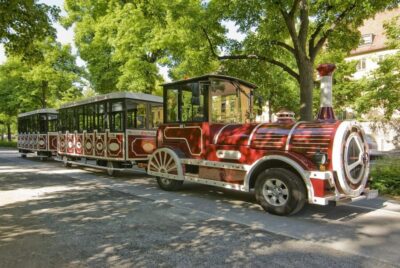
Würzburg: City Tour with the Bimmelbahn Train
Read our review →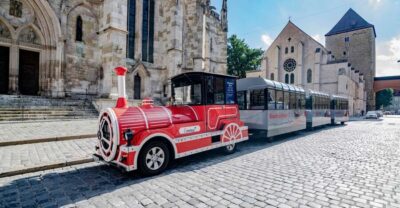
Regensburg: City Tour with the Bimmelbahn Train
Read our review →
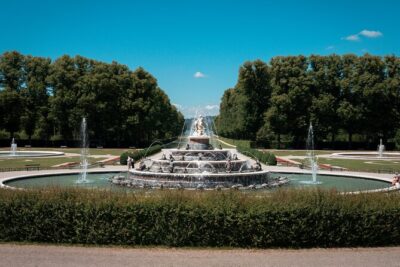
Herrenchiemsee Palace and Fraueninsel Rail Trip from Munich
Read our review →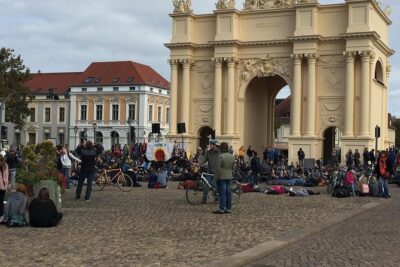
Potsdam Bike Tour with Rail Transport from Berlin
Read our review →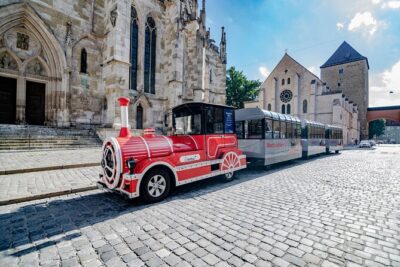
City tour through Regensburg with the little train
Read our review →
Salzburg History & Food Private Tour with Munich train add-on
Read our review →Browse the lists this tour appears in