
Review · BANGKOK
Small Group: Kanchanaburi Death Railway, Erawan Waterfall and Elephant
Waterfalls, war history, and elephants fill one long day. This small-group trip links Kanchanaburi’s biggest sights in about 12 hours, starting with Erawan Waterfall and ending at the famous Bridge over the River Kwai. I like the maximum group size of nine, which should make the long day easier to manage, and I like that transport, lunch, bottled water, entrance fees, and the elephant camp activity are included.
The main drawback is the pace. Erawan requires walking and possibly climbing over uneven ground, while the full journey from Bangkok makes for an early start and late finish. I would also treat the footwear advice carefully: flip-flops are accepted, but proper shoes will be much safer and more comfortable on the waterfall trails.
Key points to know before you book
- Erawan gets the largest share of the day: You have about three hours to swim, walk, and reach the upper waterfall levels.
- The tour covers several major Kanchanaburi sights: You visit Erawan, the Death Railway area, Kra Sae Cave, an elephant camp, and the River Khwae Bridge.
- A group of no more than nine keeps things personal: That is a useful size for a long day in a vehicle and for coordinating several short stops.
- Lunch and park admission are included: You do not need to arrange a separate meal or pay entrance fees during the tour.
- Bring serious footwear: Flip-flops may be allowed, but the waterfall climb can be slippery and tiring.
- The displayed price needs checking: The supplied price is $0.00, so confirm the actual amount before booking rather than assuming the day is free.
Why this Kanchanaburi day trip works
Kanchanaburi is a good choice when you want more than Bangkok’s temples and shopping streets. The province combines forest, waterfalls, World War II sites, railway history, and animal encounters. Seeing all of these in one day is ambitious, but this tour gives you a clear route and handles the driving.
The day begins at 6:00 AM at Hua LamphongRong Muang in Bangkok. That early meeting time matters. Kanchanaburi is far enough from Bangkok that a later departure would cut sharply into your time at Erawan Waterfall. You should expect a full day, not a relaxed outing with long breaks.
The vehicle is air-conditioned, and bottled water is supplied. Those are simple inclusions, but they matter in Thailand, especially after walking in the sun and humidity. With no more than nine people, you are likely to spend less time collecting people from different hotels or waiting for a large coach to fill.
The route has a good emotional range. You begin with water and trees, then move into the darker story of the Death Railway, followed by a short cave visit, an elephant activity, and a final stop at the bridge. That variety helps prevent the day from feeling like one long museum visit.
More Death Railway Tours in Bangkok:
- From Bangkok: Death Railway & Hellfire Pass Tour with Lunch
★ 4.6 · 931 reviews - Bridge on the River Kwai and Thailand-Burma Railway Tour
★ 4.5 · 658 reviews - Bridge on the River Kwai and Thailand-Burma Railway Guided Tour
★ 4.5 · 353 reviews
Three hours at Erawan Waterfall
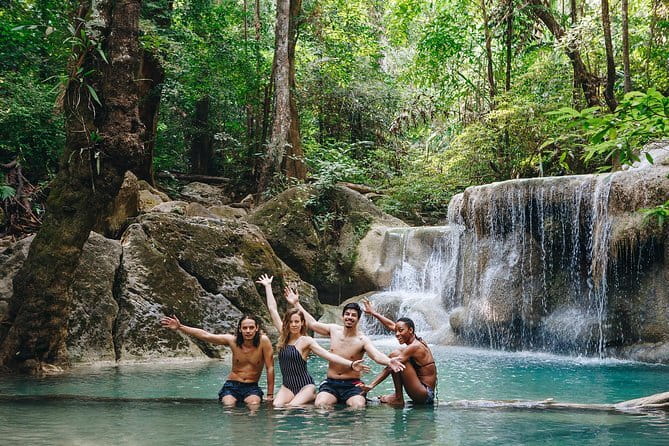
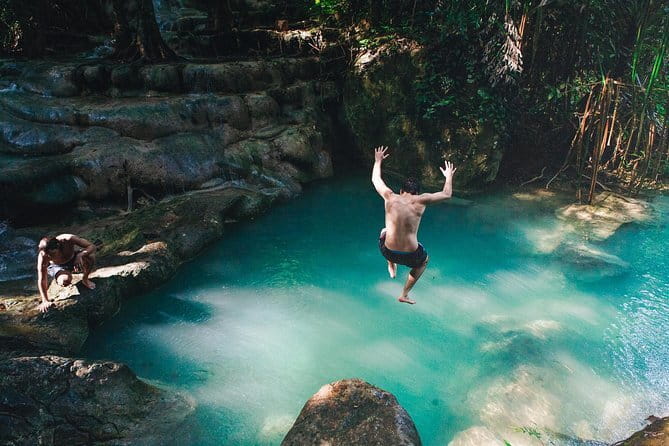
Erawan Waterfall is the centerpiece of the outing. You reach the park at about 9:00 AM and have roughly three hours there, which is more generous than the time allowed at the other stops. You can swim in the emerald-green pools, walk through the lower sections, or continue uphill toward the upper levels.
I like that the schedule gives you a choice. If you mainly want to cool off, you can spend more time near the pools. If you prefer walking, you can keep climbing and see how the waterfall changes from one level to the next. The description refers to the beauty of each level, so this is not simply a quick stop beside one cascade.
You should plan for a physical morning. The tour requires a moderate fitness level, and the waterfall trail includes a climb if you want to reach the higher sections. Wet rocks, uneven paths, and swimming all make footwear important. Flip-flops are considered acceptable for the activity, but they offer less support and grip than sturdy walking shoes or secure sandals.
One important practical point concerns the life jackets. A customer reported being required to carry one while climbing, which made the ascent more awkward. Even if you do not plan to swim, follow the guide’s instructions about safety equipment. Carrying an extra item uphill is inconvenient, but slipping near wet pools would be far worse.
If you want the full waterfall experience, arrive ready to get wet. Pack a swimsuit, a dry change of clothes, and a small bag for damp items. These items are not listed as included, so you should bring your own. The tour provides bottled water, but personal expenses are not covered.
Three hours sounds generous until you include changing, walking, swimming, and returning to the vehicle. I would not count on reaching every level and having a long swim. Choose your priority early. For most people, the best plan is to see several levels, then use the remaining time for a swim.
A short look at the Death Railway
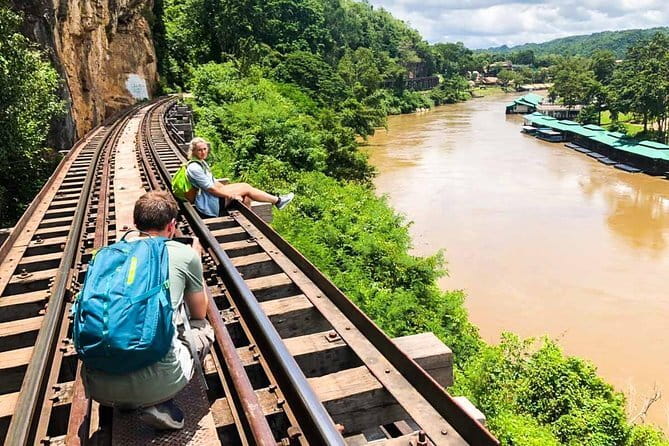
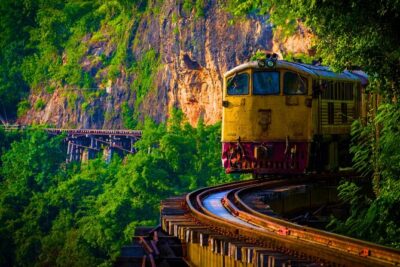
After Erawan, the group visits the Death Railway Museum and Research Centre area and walks along the railway beside the River Kwai. The allotted time is about 30 minutes, so this is an introduction rather than a full study of the railway story.
The Death Railway was built during World War II under brutal conditions. The route through Kanchanaburi is remembered for the prisoners of war and forced laborers involved in its construction, along with the enormous loss of life. The setting can look peaceful now, with the river and cliffs nearby, but that calm view needs to be held beside the human cost.
The walk itself is one of the more unusual parts of the day. The railway runs along a cliff, and the route offers views of the river. Take care with your footing and listen to the guide, particularly if the track area is narrow or busy.
Because the stop is brief, you will need to keep your expectations realistic. You may not have enough time for a lengthy museum visit and a detailed explanation of every stage of the railway’s construction. If this subject is a major reason for your trip, you may want a separate visit with more time. If you want to connect the railway to the wider Kanchanaburi route, this short stop gives useful context.
Kra Sae Cave and the wooden railway setting
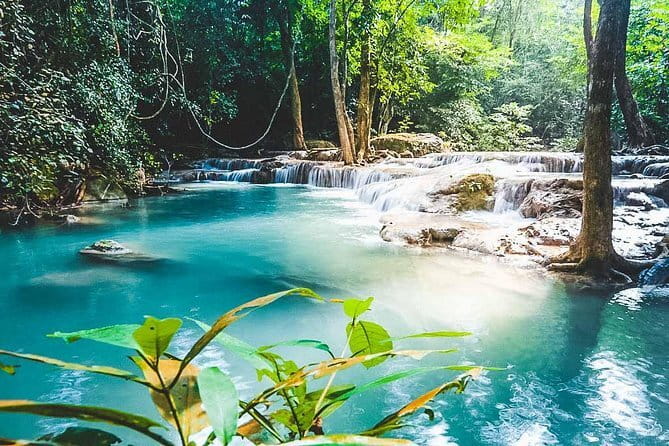
The next stop is Tham Kra Sae, also called Kra Sae Cave. Inside is a Buddha statue, and the cave was once used as a camp by prisoners of war during construction of the railway.
The stop lasts around 20 minutes. That is enough for a quick look inside, a moment with the Buddha image, and a chance to take in the railway setting. It is not enough for a slow exploration, so keep your camera ready and stay aware of the meeting time.
This stop connects a religious site, a natural cave, and wartime history in a small space. That combination gives the route more texture than a series of standard viewpoints. The cave may be modest in size, but its connection to the railway camp makes it meaningful.
You should also remember that this is not presented as a major cave adventure. The appeal comes from the setting and the story, not from a long underground walk. The free admission keeps it simple, but the short stop means the guide’s explanation will be important.
More Train Journeys in Bangkok:
- Day Trip to Bangkok Floating Market & Maeklong Railway
★ 5.0 · 1,528 reviews - Bangkok: Railway and Floating Market Tour with Dragon Temple
★ 4.6 · 1,225 reviews - Private Excursion to Maeklong Railway and Floating Markets
★ 5.0 · 850 reviews - From Bangkok: Railway & Damnoen Saduak Floating Market Tour
★ 4.6 · 775 reviews
The elephant camp and wet activity
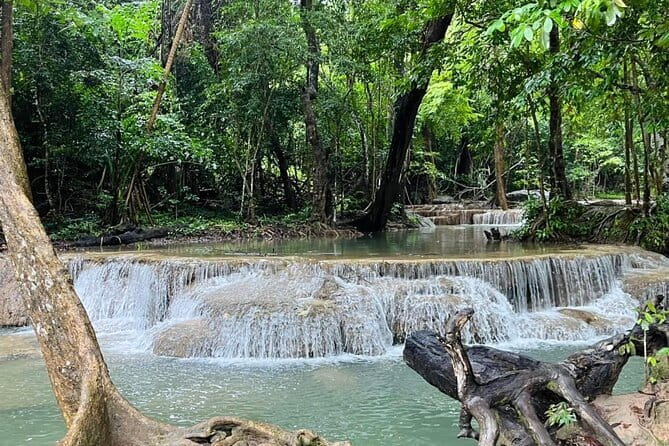
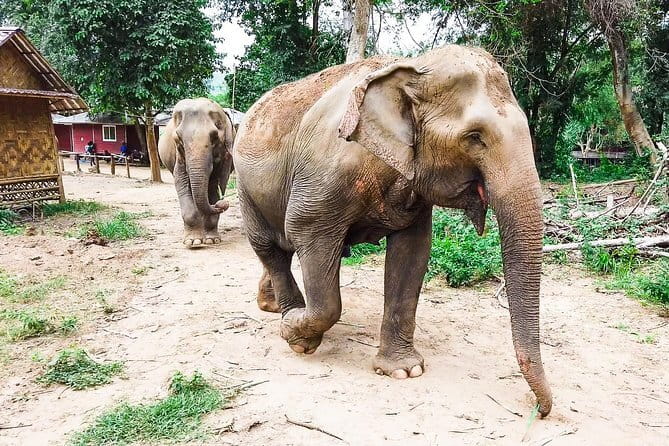
The tour then spends about an hour in Kanchanaburi learning about rescued elephants. A wet activity at the elephant camp is included, which gives this part of the day a more hands-on feel than a simple viewing stop.
The supplied details do not specify exactly what the wet activity involves. I would confirm the activity and what clothing you need before departure. You should assume that getting wet is possible and keep a towel or change of clothes accessible rather than buried in the luggage compartment.
The word rescued matters. The focus is presented as learning about elephants that have been taken into care, not simply seeing animals for a photo. Still, responsible animal tourism depends on how the camp handles contact, bathing, feeding, and movement. Ask the guide what the activity involves and follow the camp’s rules.
An hour is enough for an introduction, but it will not provide a complete picture of elephant care. Think of this as one part of the day, not the sole reason to travel to Kanchanaburi. The activity may suit you if you want a short, included encounter after the waterfall and railway stops.
The Bridge over the River Kwai
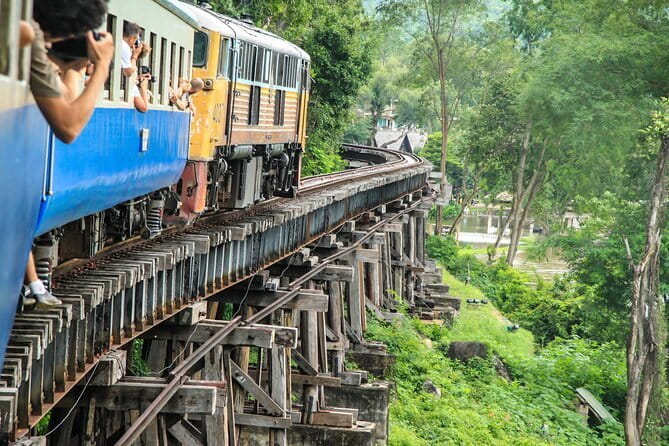
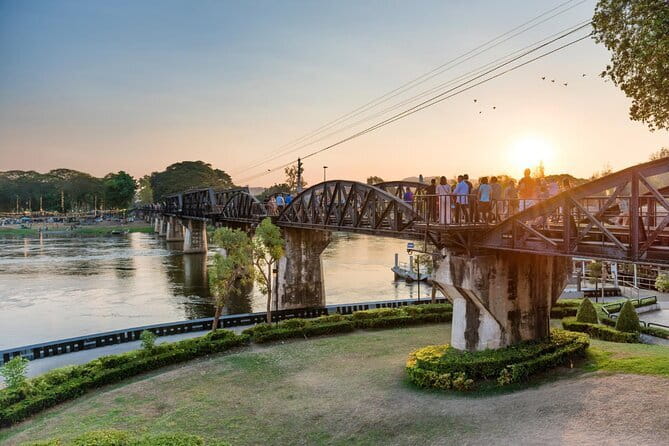
The final major sight is the River Khwae Bridge, better known to many visitors as the Bridge over the River Kwai. You have about an hour to walk along the iron bridge and consider its wartime past.
This is the most recognizable stop on the route, but the bridge is more than a photo backdrop. It is tied to the railway system built during World War II and to the suffering connected with that work. The metal structure, river below, and surrounding scenery make the past feel physically present.
An hour gives you time to walk across part of the bridge, look along the tracks, and take photographs without being rushed. At the same time, it is a public bridge, not a quiet memorial. You should remain alert while walking and follow any local instructions.
I like the order of this stop. After the earlier railway walk and Kra Sae Cave, you arrive at the best-known symbol with some context already in mind. If you visited the bridge first, it might feel like a famous movie location. After the other stops, it carries more weight.
Lunch, transport, and the real value
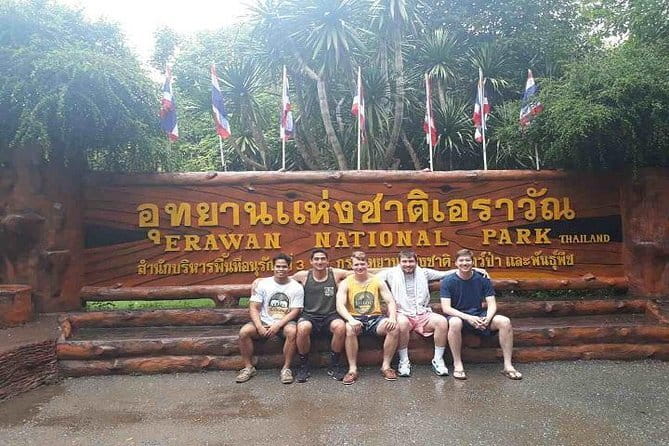
Lunch at a local restaurant is included, as are all admission fees, bottled water, and the air-conditioned vehicle. These inclusions make the day easier to budget. You are responsible for personal expenses, but the main costs inside the itinerary are covered.
The listed price is $0.00, which cannot be treated as a reliable final fare without checking the booking page or provider. Confirm the actual price, what currency applies, and whether any payment is required before you commit. If the displayed amount is a temporary placeholder, the value calculation will change.
At a normal paid rate, the strongest value comes from the range of sights rather than the depth of any one visit. You get a full day of transportation from Bangkok, a substantial waterfall stop, lunch, park entry, an elephant activity, and several railway sites. Doing the same route independently could require arranging transport between widely separated places.
The tradeoff is time. You spend much of the day moving between stops, and the museum, cave, and bridge visits are all relatively focused. I would choose this trip for breadth and convenience, not for long museum study or a slow stay at one waterfall.
Who should book this tour?
I would recommend this day for someone visiting Bangkok who has only one day for Kanchanaburi and wants a broad introduction. It suits you if you like mixing outdoor activity, local food, wartime history, and a short animal encounter.
It is also a good match if you prefer a small group to a large coach. Nine people or fewer should make instructions easier to hear and reduce the feeling of being moved through the countryside in a crowd.
You should think twice if you dislike early starts, long road journeys, or wet and uneven walking. The waterfall is not a passive viewpoint, and the tour asks you to change pace several times during one demanding day.
I would also look elsewhere if your main goal is detailed Death Railway history. The railway stops are important, but the time at the museum area and cave is short. A specialist history-focused visit would give that subject more room.
The footwear issue deserves special emphasis. Do not rely on flip-flops simply because they are accepted. Wear shoes with a secure fit and good grip, and bring something dry for the ride home. If the elephant activity involves water, keep your change of clothes easy to reach.
Final verdict
Book this tour if you want to see the main Kanchanaburi highlights in one organized day and you value included transport, lunch, entry fees, and a small group. Erawan Waterfall is the strongest part of the schedule because you receive enough time to swim or climb, while the railway and bridge stops add serious historical meaning.
Skip it if you want a slow, detailed visit or cannot manage a demanding day that begins at 6:00 AM. The route is ambitious, but for a first look at Kanchanaburi, it offers a useful mix of nature, memory, and local experiences.
FAQ
Where does the tour start and finish?
The tour starts at Hua LamphongRong Muang, Pathum Wan, Bangkok 10330, Thailand. It ends back at the same meeting point.
What time does the tour begin?
You meet the guide at 6:00 AM in the hotel lobby or at the stated meeting point. The total duration is about 12 hours.
How large is the group?
The tour has a maximum of nine travelers.
Is lunch included?
Yes. Lunch at a local restaurant is included in the tour.
Are entrance fees included?
Yes. All admission fees are included, including admission connected with the listed stops.
Can I swim at Erawan Waterfall?
Yes. You can swim in the waterfall pools or hike toward the higher levels. You should have a moderate level of physical fitness.
What is the cancellation policy?
You receive a full refund if you cancel at least 24 hours before the experience starts. Cancellations or changes made within 24 hours are not refunded or accepted.
Just added around Bangkok
- Train trip death railway Bridge on river Kwai from Bangkok to Kanchanaburi trip★ 4.0 · 17 reviews
- Historic Kanchanaburi: Train, Boat & Skywalk + Lunch From Bangkok★ 4.5 · 3 reviews
- River Kwai Bridge and Death Railway World War II Tour in Thailand★ 5.0 · 2 reviews
- Historic Kanchanaburi:Train, Boat, Skywalk from Bangkok(No Lunch)★ 5.0 · 2 reviews
- Private tour : Railway & Floating Market and the Bridge over river Kwae★ 5.0 · 2 reviews
- Private Tour: Kanchanaburi Erawan Waterfall Tour from Bangkok★ 4.5 · 13 reviews
- Bangkok: Railway and Floating Market Tour + Dragon Temple★ 4.5 · 9 reviews
- Maeklong & Damnoen Saduak Markets: Railway & Floating Market Tour★ 4.0 · 17 reviews
Death Railway Tours, compared.
Bridge on the River Kwai and Thailand-Burma Railway Tour
Read our review →
Bridge on the River Kwai and Thailand-Burma Railway Guided Tour
Read our review →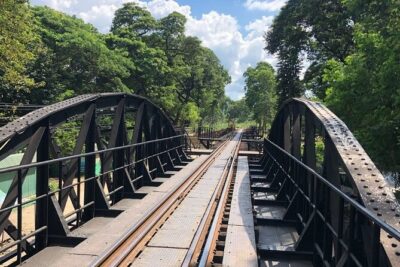
Bridge over River Kwai and Hellfire Pass Tour with Train Ride
Read our review →
Private Tour: Thai–Burma Death Railway Bridge on the River Kwai from Bangkok
Read our review →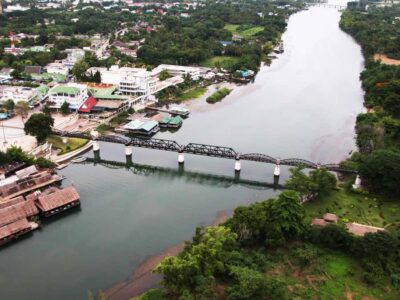
Death Railway & River Kwai Bridge Private Tour
Read our review →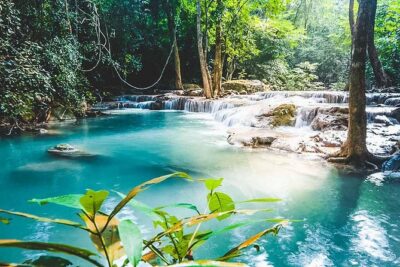
Private Tour: Death Railway, Hellfire Pass and Erawan Waterfall
Read our review →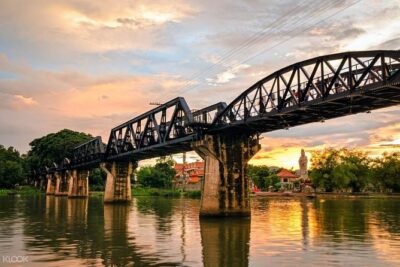
Bridge on the River Kwai and Thailand-Burma Railway Tour
Read our review →Browse the lists this tour appears in