
Review · ROME
Venice Day Trip from Rome: Private Tour by High Speed Train
Venice in one very long day. This private trip makes the impossible feel manageable, pairing a high-speed train ride with a personal guide who meets you in Venice and shapes the walk around your interests. I like the door-to-door feel of having someone escort you from the station, and I like that guides such as Sneh Wayne, Su Aydin, Mehmet, Alessandra, Giada, and Dogan Acar have earned strong praise for their care and local insight. The catch is simple: you spend roughly eight hours on trains for only about four hours in Venice.
This is a good fit if Venice is a must-see and you cannot spare an overnight stay. It is less appealing if you want leisurely museum time, a relaxed lunch, or a low-cost do-it-yourself outing. The second-class train tickets, food, drinks, attraction tickets, and hotel drop-off are not included, so the price deserves a hard look before you book.
Key points to know before booking
- The train ride takes most of the day: Expect about four hours each way, leaving roughly three and a half to five hours for Venice.
- A private guide meets you in Venice: The walk can be adjusted for your interests, with guides often helping arrange gondola rides, meals, and return-train timing.
- The price buys convenience, not luxury: At $602.39 per person, you are paying for planning, train tickets, a private guide, and reassurance in an unfamiliar city.
- Gondola rides are extra: This popular Venice experience is not included, though some guides can help you find an available gondolier.
- The route covers a lot of ground: You will see major landmarks, quieter squares, bridges, canals, churches, and working boat yards.
- Train-day discipline matters: Tickets are sent the day before, trains board early, and a missed departure can quickly spoil the day.
Leaving Rome before breakfast
The day begins at 6:30 a.m. at Roma Termini, on Via Giovanni Giolitti. The start time is described as indicative and may be moved earlier, so you should keep your morning flexible and check the final instructions carefully.
The train is the backbone of the experience. You travel in second class on a high-speed service, with the trip taking a little over four hours in one direction and about four hours on the return. The ride gives you a chance to rest, read, or watch Italy pass outside the window, but it is not a luxury rail experience. Seat selection may be assigned randomly, and special amenities are not part of the package.
The operator sends train information and tickets by email the day before. Download everything in advance, save the files on your phone, and confirm that you can open them before leaving your accommodation. A few people had trouble identifying the actual train tickets among the booking documents. That is a small problem with a large consequence when your train leaves on time.
One useful detail: trains may begin boarding around ten minutes before departure. I would arrive at Termini early, find the platform, and be ready before the scheduled time. You are responsible for getting onto the correct train, so do not treat the station as a place to arrive at the last minute.
Some bookings may include pickup to the station from accommodation within the Aurelian Walls, but this needs to be confirmed for your address. Hotel drop-off after the return is not included. You finish back at the meeting point, not necessarily at your hotel. That distinction has caused confusion, so budget for your own ride back if needed.
More High-Speed Trains in Italy
- Rome to Pompeii Guided Tour with Wine & Lunch by High Speed Train
★ 5.0 · 1,379 reviews - Rome: Pompeii Tour with Wine and Lunch by High Speed Train
★ 4.8 · 485 reviews - Venice Day Trip from Rome by High-Speed Train with Happy Hour
★ 4.5 · 445 reviews
Meeting your guide at Santa Lucia
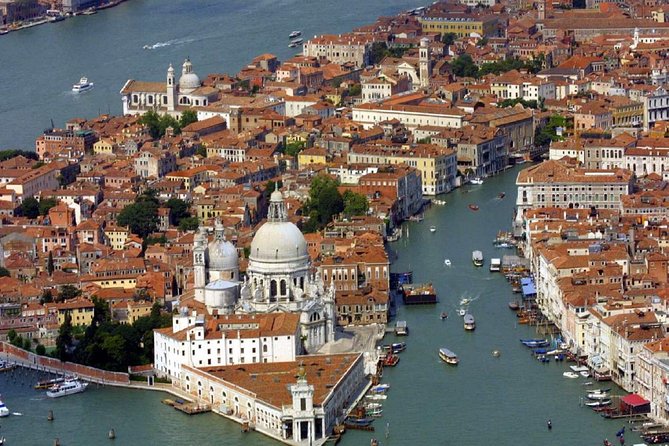
The best part of the arrangement begins when you arrive in Venice. Your guide meets you at the train station and leads you into the pedestrian maze. That first handoff matters because Venice can feel confusing even when the map looks simple. Bridges, canals, narrow lanes, and multiple names for the same area can eat into a short visit.
The guides praised most warmly include Sneh Wayne and Su Aydin, along with Mehmet, Alessandra, Giada, and Dogan Acar. The strongest descriptions point to guides who explain the city clearly, answer questions, suggest practical places to eat, and adjust the route to suit the group. Sneh, in particular, was praised for engaging teenagers and helping a family fit in food stops without wasting valuable time.
The private format means only your group participates. That gives you a better chance to ask questions, change the pace, or request a gondola ride. It does not guarantee a slow tour. With only a few hours in the city, the walk can still feel brisk, especially if you want to see most of the listed sights.
The Grand Canal gives you your first Venetian lesson
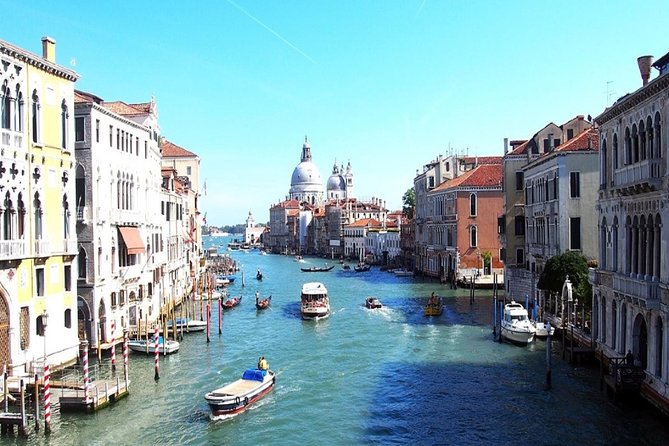
The Grand Canal is the natural opening act. It cuts through Venice in a broad S shape for about four kilometres, functioning less like a road beside the city than a main street through it. Palaces and churches face the water, and the canal immediately explains why Venice feels unlike any other major Italian city.
Your guide can help you read the buildings and the traffic on the water. You will likely cross or walk beside the canal several times during the day, but this first look gives you the city’s basic orientation.
Do not expect a long boat excursion here. The tour includes transport by train and walking with your guide, but it does not automatically include a vaporetto ride or gondola trip. If you want time on the water, ask early and understand that an extra fee applies.
San Giorgio dei Greci and the leaning campanile
The Church of San Giorgio dei Greci introduces a quieter side of Venice. It was built for the Greek community, including sailors and merchants, and its adjoining bell tower is known for its noticeable lean. Construction finished in 1592, but the tower reportedly began tilting from the start.
This stop is valuable because it moves you away from the most famous postcard views and toward the communities that helped shape Venetian life. You may also have the chance to see the Sanctuary of St. Lucy.
Admission is not included. Since the schedule is tight, ask your guide whether entering fits your priorities or whether a brief exterior visit makes more sense. If churches and art are important to you, this is one place where planning ahead helps.
More High-Speed Trains in Rome:
- From Rome: Day Trip to Venice by High-Speed Train
★ 4.6 · 352 reviews - Rome to Florence: High-Speed Train Day Trip with Guided City Tour
★ 4.0 · 235 reviews - From Rome: Pompeii and Naples Day Trip by High-Speed Train
★ 4.7 · 234 reviews - Amalfi Coast Day Trip from Rome by High-Speed Train
★ 4.5 · 162 reviews
Strada Nova leads toward Rialto
Strada Nova is the widest street in Venice, though the name can be misleading if you picture a conventional road. It is a chain of broad pedestrian streets and bridges created in the 19th century to link the railway station with Rialto more directly.
This route offers a useful contrast with Venice’s narrow lanes. You will feel the city shift from quiet side streets toward its shopping and sightseeing core. The wide path is easier for keeping a group together, but it can also be busy and less atmospheric than the smaller lanes nearby.
Because the guide controls the route, you may get both versions of Venice: the efficient pedestrian corridor and the more winding streets that make the city memorable. Comfortable shoes are essential. Even a short visit can involve a surprising number of bridges.
Rialto Bridge and the old commercial heart
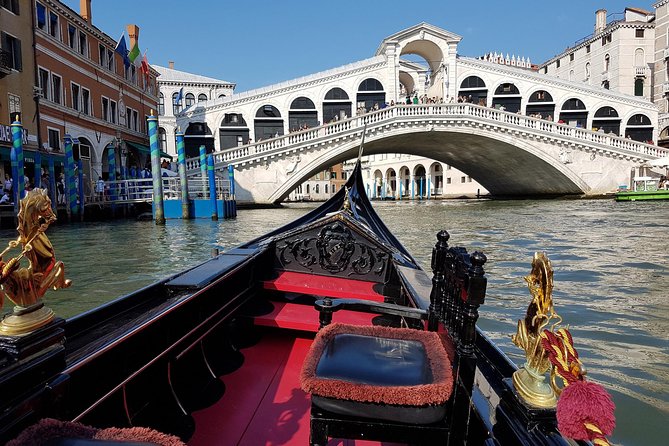
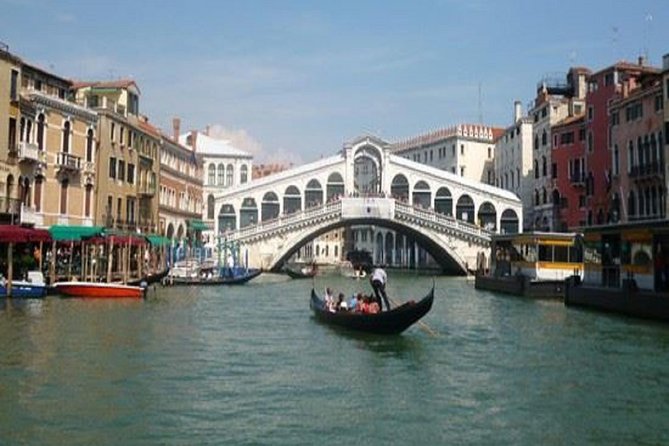
The Rialto Bridge is the oldest of the four bridges crossing the Grand Canal. It is famous for its stone structure, busy views, and connection to Venice’s former trading center.
This is a natural photo stop, but it is also a place where the guide can explain how commerce shaped the city. You will see the Grand Canal from a higher angle, with boats moving below and historic buildings lining both banks.
The bridge can become crowded, and stopping for long periods may slow the whole route. I would take your photos promptly, listen to the explanation, and stay alert for the next turn. The private format helps here because your guide can tell you when there is time to pause and when the schedule requires moving on.
St. Mark’s Square and the golden basilica
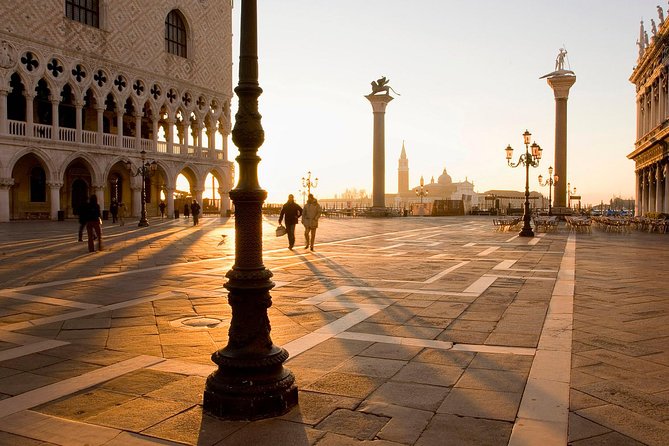
St. Mark’s Square is the emotional center of the day. Napoleon famously called it the most beautiful hall in Europe, and the open space still provides one of Venice’s strongest first impressions.
St. Mark’s Basilica dominates the square with its domes, ornate facade, and gold-ground mosaics inside. The mosaics show saints, prophets, and biblical scenes, covering domes, vaults, and upper walls with a glow that is very different from the lighter stone outside.
Entrance to the basilica is not included. This is an important value issue. If you want to go inside, you need to allow time and pay separately. Lines and entry rules can affect the route, so tell your guide early rather than waiting until the group reaches the square.
With only a few hours available, you may need to choose between entering the basilica, taking a gondola ride, eating a proper lunch, and visiting additional churches. You can see the square without spending extra, but the interior is one of the day’s most worthwhile optional additions for art and architecture lovers.
The Bridge of Sighs and San Zaccaria
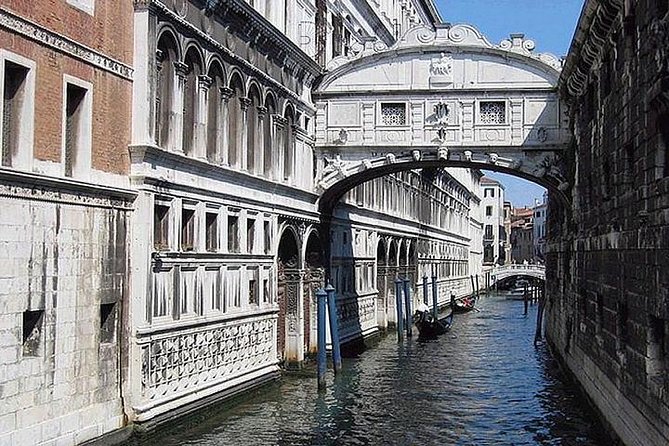
The Bridge of Sighs links the Doge’s Palace with the historic prison across the canal. Its name comes from the old story that prisoners sighed as they caught their last view of the outside world while crossing to confinement.
The bridge is small but loaded with atmosphere. Your guide can explain its purpose and point out the best angles for photographs. The view is often more meaningful once you understand that this was a passage between legal power and imprisonment, not simply a pretty bridge.
Nearby, San Zaccaria offers another architectural change. The former monastic church was built between 1458 and 1515, with a facade that blends late Gothic and Renaissance design. Admission is not included, so you will need to decide if an interior visit is worth taking time from the rest of the walk.
Accademia Bridge and the southern canal
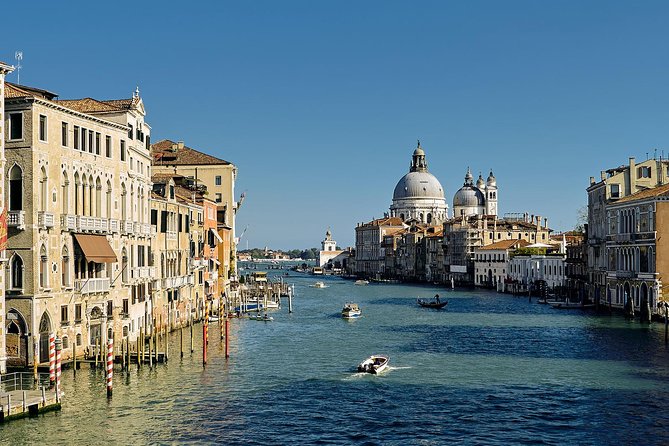
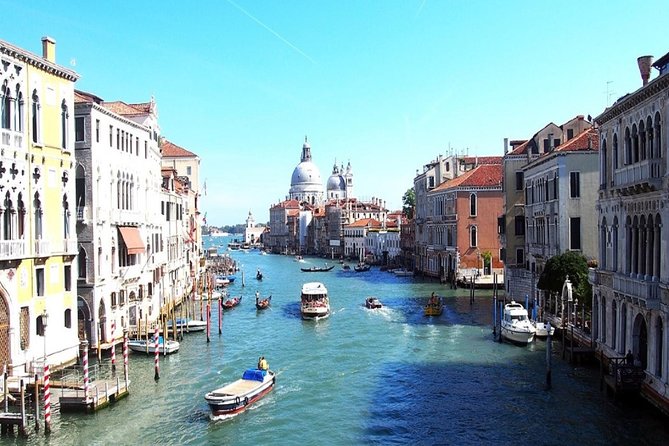
The Ponte dell’Accademia is one of only four bridges across the Grand Canal. It sits near the southern end and takes its name from the Accademia di Belle Arti di Venezia.
This bridge offers another broad view over the water and the buildings along the canal. It is a good place to pause, especially if you have not had time for a boat ride. The stop also helps you understand Venice’s shape, since the Grand Canal is not just a scenic feature but the main dividing line through the city.
The practical drawback is time. You cannot linger at every bridge and church on a short day trip. Your guide may need to keep the group moving so you can reach the final stops and return to the station on time.
San Trovaso shows Venice at work
Squero di San Trovaso is one of the city’s oldest boatyards. A squero repairs small wooden boats, including gondolas, and this stop gives you a glimpse of Venice as a working city rather than a collection of monuments.
You can look toward the boatyard and may see gondolas being built or repaired. This is a particularly good stop for anyone who wants something more genuine than a string of famous facades. It also puts the gondola into context: these elegant boats require regular skilled work.
A gondola ride itself costs extra. Some guides have helped arrange one, but availability can be limited even on a relatively quiet day. If you want the ride, make it a priority at the beginning of your tour.
Campo San Pantalon and the university quarter
Campo San Pantalon offers an unusual modern detail in an old city. You can see the artwork commonly called the shipwrecked or migrant child, associated with Banksy.
The stop is quick and works best as a change of pace. Instead of another grand church or bridge, you get a piece of contemporary public art that connects Venice with present-day migration and social concerns.
Campo Santa Margherita brings you into the Dorsoduro district near university buildings. It serves as a gathering place for students, giving you a feel for daily Venetian life beyond the main sightseeing route.
These squares help break up the monument-heavy itinerary. They are also the sort of places where your guide’s local suggestions can matter most, particularly for coffee, gelato, or a quick meal.
Piazzale Roma and the trip home
Piazzale Roma marks the edge of Venice’s historic island city. Cars and buses can reach this area, while the rest of the central city is largely pedestrian and water-based. It is also near the route back to the railway station.
By this point, you may have crossed more than a dozen bridges and walked several districts. The official itinerary gives many stops one hour each, but you should not read that as twelve separate hours. The entire experience lasts about twelve hours, and the train takes most of it. In practice, the Venice walk is often closer to three and a half to five hours, depending on train delays, optional stops, lunch, and the guide’s route.
Your guide should escort you back toward the train and help you board the correct service. That final help is one reason the private arrangement can feel worthwhile. A late arrival in Venice does not always ruin the day. In some cases, guides have waited for delayed trains or helped shift the return time, but you should never assume that a change is guaranteed.
Is $602.39 per person a fair price?
At $602.39 per person, this is an expensive way to see Venice. The price includes second-class train transport, a professional private guide, a private walking tour, and the Venice visitor fee. It does not include meals, drinks, attraction admission, gondola rides, or hotel drop-off.
You can likely spend less by buying train tickets yourself and exploring Venice independently. That option makes sense if you are comfortable navigating Termini, handling the train connection, planning a route, and accepting responsibility for getting back on time.
The private tour earns its premium through convenience and guidance. If you have limited time, want a personal route, or feel uneasy about managing Venice and the Italian rail system alone, the extra cost may be reasonable. If you mainly want to reach St. Mark’s Square, take photos, and wander without explanations, you are paying for services you may not use.
Group discounts may improve the per-person value for larger parties. Since prices can change, check the current figure at booking and compare it with the cost of a self-guided return train journey plus any admission fees you plan to pay.
Who should book this long day trip?
I would recommend it to people who have already based themselves in Rome and cannot fit an overnight in Venice. It also suits families or small groups who want one guide, one shared plan, and help with the train day.
You should be ready for an early start, a long seated journey, plenty of walking, and a quick pace. Wear comfortable shoes and dress for the weather, since the tour operates in rain or shine.
I would skip it if you dislike rushed sightseeing or want substantial time inside St. Mark’s Basilica, San Giorgio dei Greci, and San Zaccaria. Venice rewards slow wandering, and this trip can only offer a concentrated sample.
Should you book it?
Book this private day trip if your priority is seeing Venice at all during a Rome-based holiday. The strongest value comes from the guide, not the train seat. Guides such as Sneh, Su, Mehmet, Alessandra, Giada, and Dogan have helped make the tight schedule more personal by explaining the city, adjusting routes, suggesting food, and escorting groups back to the train.
Do not book it expecting a luxury rail journey or a full Venice experience. You will spend most of the day in transit, pay extra for major attractions and gondola rides, and arrange your own return from Termini. For a once-only glimpse with personal help, it can work very well. For relaxed sightseeing and better value, stay overnight or go independently.
Cancellation is free up to 24 hours before the start time, but train tickets are purchased 48 hours before departure and may be charged if you cancel after that point. Read the final ticket email closely and prepare before the morning of travel.
FAQ
How long does the Venice day trip from Rome last?
The experience lasts approximately 12 hours, including the train journey between Rome and Venice.
What time does the tour start?
The stated start time is 6:30 a.m. at Roma Termini. The starting time is indicative and may be moved earlier.
Where does the tour begin and end?
It begins at Roma Termini, Via Giovanni Giolitti 40, Rome, and ends back at the meeting point.
Are train tickets included?
Yes. Transport by second-class train is included. Seats may be assigned randomly by the railway company.
Is a gondola ride included?
No. Gondola rides are not included in the price. You can ask your guide about arranging one during the Venice visit.
Are food, drinks, and attraction tickets included?
No. Food, drinks, and admission to places such as St. Mark’s Basilica, San Giorgio dei Greci, and San Zaccaria are not included.
Is hotel pickup and drop-off included?
Pickup may be available for accommodation within the Aurelian Walls, but hotel drop-off after the tour is not included. The activity ends at the Rome meeting point.
More One-Day Trips in Rome
- From Rome: Day Trip to Florence by High-Speed Train
★ 4.7 · 44 reviews - Pompeii Express Day Trip: High-Speed Train from Rome
★ 4.5 · 31 reviews - Florence Day Trip by High-Speed Train From Rome
★ 4.0 · 6 reviews - Naples Day Trip with High-Speed Train & Naples Underground
★ 3.5 · 3 reviews
Just added around Rome
- Private Tour of Rome from Florence in fast train★ 5.0 · 2 reviews
- Florence from Rome by High Speed Train at your pace★ 4.5 · 11 reviews
- Pompeii Guided Tour with Train Included from Rome★ 4.5 · 40 reviews
- Positano & Amalfi Small Group Boat Tour from Rome with Fast Train★ 5.0 · 42 reviews
- Naples Day Trip with High-Speed Train & Naples Underground★ 3.5 · 3 reviews
- Florence & Uffizi Ticket by High speed Train: Day Trip from Rome★ 4.0 · 2 reviews
- Florence Day Trip by High-Speed Train From Rome★ 4.0 · 6 reviews
- Pompeii Express Day Trip: High-Speed Train from Rome★ 4.5 · 31 reviews
High-Speed and Bullet Trains, compared.

Mt Fuji & Hakone Cruise, Drum Show Bullet Train 1 Day from Tokyo
Read our review →
Tokyo Mt Fuji 5th St & Hakone Cruise Bus Tour w/Bullet Train
Read our review →
Taj Mahal & Agra Tour by Gatimaan Express Train
Read our review →
Pompeii Tour with Wine and Lunch by High Speed Train
Read our review →
Venice Day Trip from Rome by High-Speed Train with Happy Hour
Read our review →
Mt. Fuji and Hakone Day Trip From Tokyo with Bullet Train Option
Read our review →
Suzhou Private Day Trip from Shanghai with Bullet Train Option
Read our review →
Browse the lists this tour appears in