
Review · BANGKOK
River Kwai Bridge and Death Railway World War II Tour in Thailand
History rides the rails here. This private day trip from Bangkok combines the Kanchanaburi War Cemetery, JEATH War Museum, River Khwae Bridge, and a one-hour Death Railway train ride. I like the personal format and the chance to see the railway from the train itself, not only from a roadside viewpoint. The main drawback is the long day, about 10 hours, with much of it spent getting to and from Kanchanaburi.
I also like that lunch, museum admission, train tickets, snacks, drinks, and private transport are included. The air-conditioned van and English-speaking guide can make a big difference on a full-day outing. At $179.49 per person, this costs more than basic group tours, so it makes the most sense for couples, families, or small groups who value space, flexible attention, and a better meal.
Key points at a glance
- The 6,892-grave war cemetery offers the quietest and most serious part of the day.
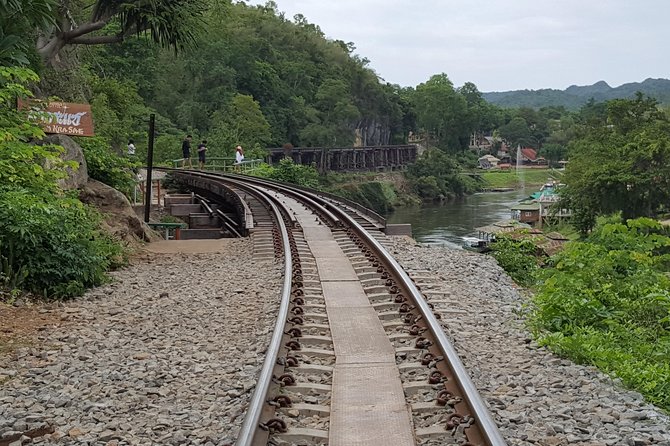
- The Death Railway train ride lasts about one hour, passing along the river and the old railway route toward Krasae Cave.
- A private air-conditioned van gives your group more room and a guide focused on your questions.
- Lunch is Thai food at a restaurant, not simply a quick sandwich or snack.
- The River Khwae Bridge is a reconstruction, so the site combines wartime memory with a functioning tourist attraction.
- The tour requires at least two people, and moderate physical fitness is recommended.
Why the River Kwai trip matters
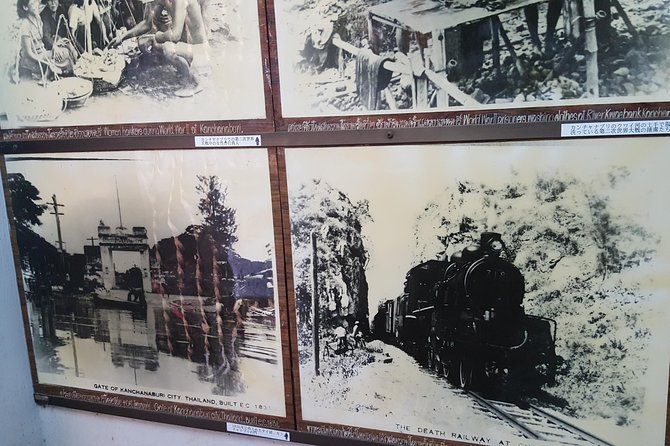
The River Kwai area is not just a scenic stop outside Bangkok. The railway was built during World War II by prisoners of war and civilians under brutal conditions. The route through Kanchanaburi helps you connect separate pieces of that story: the graves, the museum, the bridge, the railway cutting along the river, and the cave near Krasae.
I find that sequence useful. A bridge by itself can become a quick photo stop. Here, the cemetery and museum give the bridge a human setting, and the train ride shows how difficult the route was to build through hills and beside the river.
The experience is also plainly structured around remembrance. You will see attractive countryside during the train ride, but the purpose is not simply sightseeing. Your guide is expected to explain the wartime setting and the hardships faced by prisoners of war, including poor food and harsh treatment.
More Death Railway Tours in Bangkok:
- From Bangkok: Death Railway & Hellfire Pass Tour with Lunch
★ 4.6 · 931 reviews - Bridge on the River Kwai and Thailand-Burma Railway Tour
★ 4.5 · 658 reviews - Bridge on the River Kwai and Thailand-Burma Railway Guided Tour
★ 4.5 · 353 reviews
Leaving Bangkok in a private van
The day begins from Terminal 21 Asok, with the tour ending back at the meeting point. Pickup is offered, and the experience is described as private transport from and to your hotel, so confirm the exact pickup arrangement when you book. The published meeting point is Terminal 21 Asok at Sukhumvit 19.
A private vehicle matters here because Kanchanaburi is far enough from Bangkok to make the return journey tiring. You avoid sharing a vehicle with a large group, and your guide can spend more time answering questions. One past booking specifically praised the personal air-conditioned van and the guide’s strong English.
The guide team is described as professionally trained and certified through Tourism Authority of Thailand training. Mike is one guide praised for clear English and strong explanations from the memorial sites through the train ride. You may not be assigned Mike, but the experience appears designed around direct guide contact rather than a recorded commentary or rushed group handling.
The tour runs for roughly 10 hours. That makes an early start likely, although a precise departure time is not provided. Plan for a full day, not a casual half-day outing squeezed between Bangkok attractions.
Kanchanaburi War Cemetery and 6,892 graves
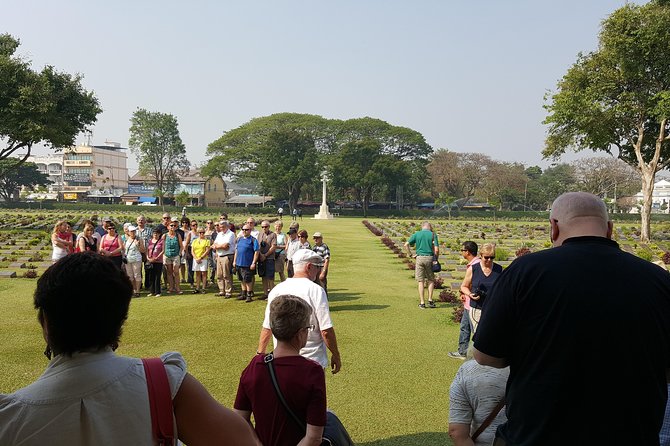
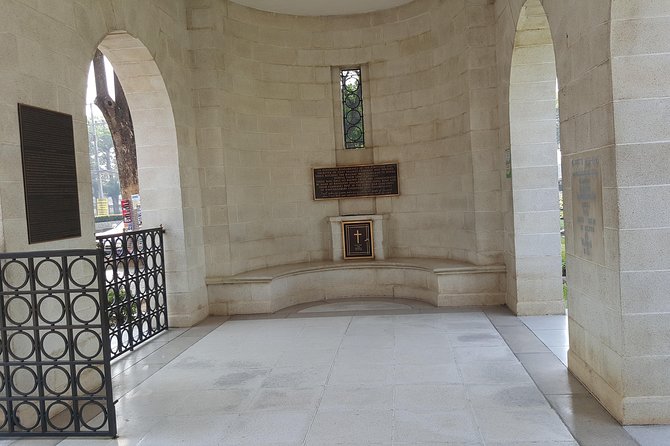
The first stop is Kanchanaburi War Cemetery, with about 30 minutes here and no admission charge. This is likely to be the most restrained stop of the day.
The cemetery contains the graves of 6,892 prisoners of war who died during the railway project. Neat rows of graves make the scale of the loss easier to grasp than a short paragraph in a guidebook. I would use these 30 minutes for quiet observation and for asking your guide how the cemetery connects to the railway story.
Do not expect a long museum visit here. Thirty minutes is enough to walk through and pause, but not enough for a detailed study of every name. If you prefer slow visits at memorials, the schedule may feel tight. Still, placing the cemetery first gives the rest of the day a serious frame.
Comfortable shoes are sensible. The tour calls for moderate physical fitness, and although no strenuous hike is listed, you will be getting in and out of the vehicle and walking between several sites.
JEATH War Museum in 40 minutes
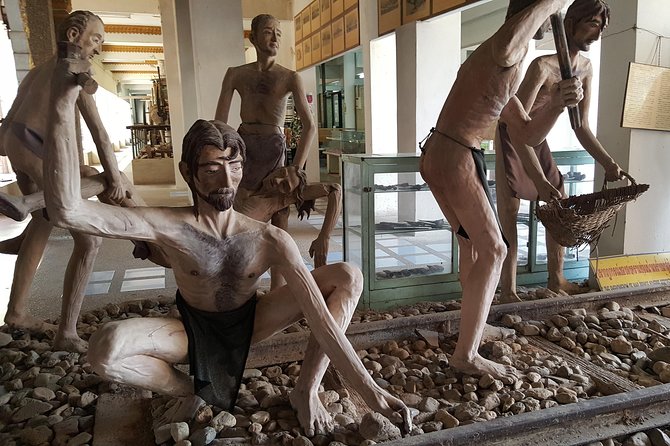
The next stop is JEATH War Museum, with admission included and about 40 minutes scheduled. The museum presents the story of the Thai-Burmese railway and the prisoners of war involved in its construction.
This stop adds context before you see the bridge and railway. I like that order. After the cemetery establishes the human cost, the museum can help you understand the work itself, the wartime setting, and why the railway became known as the Death Railway.
Forty minutes gives you time to see the main displays, though it is not a leisurely museum afternoon. Your guide can help point out what matters most, especially if the exhibits feel crowded or the material is presented in a compact way.
The name JEATH refers to Japan, England, America, Australia, Thailand, and Holland, the countries associated with the wartime railway story. That detail is commonly connected with the museum, but the information provided for this tour focuses mainly on its role in explaining the railway and POW experience. Keep your attention on the exhibits and use the guide for extra context.
More Train Journeys in Bangkok:
- Day Trip to Bangkok Floating Market & Maeklong Railway
★ 5.0 · 1,528 reviews - Bangkok: Railway and Floating Market Tour with Dragon Temple
★ 4.6 · 1,225 reviews - Private Excursion to Maeklong Railway and Floating Markets
★ 5.0 · 850 reviews - From Bangkok: Railway & Damnoen Saduak Floating Market Tour
★ 4.6 · 775 reviews
Seeing the reconstructed River Khwae Bridge
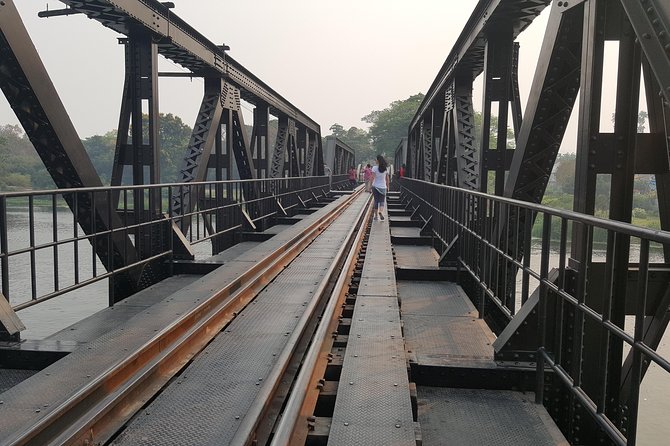
The bridge stop lasts about 30 minutes and has no separate admission fee. The bridge was originally built by prisoners of war in 1942, while the present structure is a reconstruction maintained by the Thai government as a memorial to the World War II period.
That distinction matters. You are not walking across the exact original wartime bridge in its untouched form. You are seeing a rebuilt structure at the historic site, one that now serves as a major attraction in Kanchanaburi.
The stop works best when you connect the bridge to the earlier cemetery and museum. On its own, it can look like a scenic railway crossing. With the earlier explanations in mind, you can see it as one section of a much larger and punishing construction project that ran from Kanchanaburi toward the Burmese border.
Thirty minutes should allow time for photographs and a short walk, but it may feel brief if the bridge is busy. Keep an eye on your return time. The train ride is the next major part of the day, and missing the planned departure would affect the whole schedule.
The one-hour Death Railway train ride
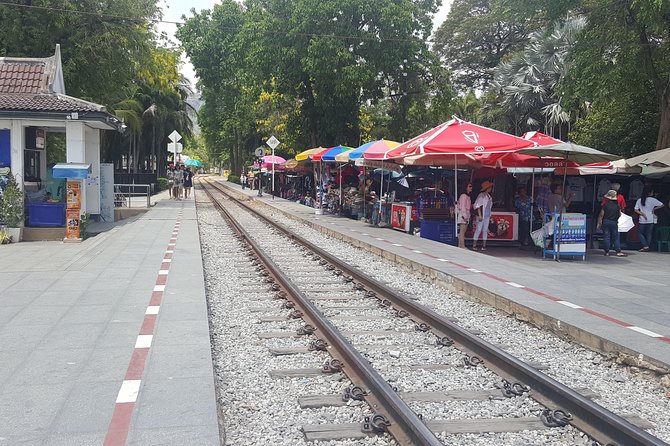
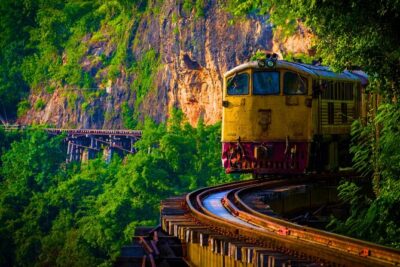
The train ride is the strongest reason to choose this outing over a simple bridge visit. From the main station near the River Khwae Bridge, you ride for about one hour along the old railway route toward Krasae Cave.
The train makes the story physical. You are not only hearing that the railway followed rivers and mountains. You are watching the countryside pass while the track works through difficult terrain. The route includes riverside scenery and the sharp curves associated with the railway near Krasae.
I would pay attention to the engineering as much as the views. The scenery is described as beautiful, but the point is also to recognize how demanding the construction must have been for people working without proper food or humane treatment.
Train conditions and views can vary, and no specific seating arrangement is promised. The ticket is included, which removes one practical worry. The ride lasts about an hour, so it is long enough to feel like a real part of the tour rather than a token photo opportunity.
This is also the part most likely to appeal to anyone who enjoys rail journeys. You get a better sense of distance and terrain from the carriage than you would from a van. At the same time, remember that the modern ride is a sightseeing experience layered over a painful history.
Lunch near Tham Krasae
Lunch is scheduled for one hour at a local Thai restaurant near Tham Krasae, and it is included in the price. Thai food is served, along with mineral water, with two bottles per person listed among the inclusions.
A proper restaurant meal is a real advantage on a 10-hour outing. One past booking praised the meal as substantially better than the skimpy lunches or sandwiches sometimes found on cheaper day trips. That does not guarantee a particular menu, but it suggests that lunch is treated as part of the experience rather than an afterthought.
Soft drinks and personal expenses are not included. If you want something beyond the provided water, bring extra money. Snacks, food, and drinks are listed as included, though the exact snack selection is not specified.
The hour gives you time to eat without turning lunch into a rushed stop. It also provides a useful break after the train ride and before the final visits around the bridge and cave.
Tham Kra Sae Bridge and the riverside curve
The Tham Kra Sae Bridge stop lasts about 30 minutes. This is described as a dangerous bridge running along a mountain cliff and beside the river, with a distinctive sharp curve.
The setting is visually striking because the railway appears to cling to the rock above the water. You can see why this section helps explain the railway’s construction challenges better than a museum display alone.
Take care with your footing and listen to local instructions. The tour specifically describes the bridge as dangerous, so this is not the place for careless wandering or a rushed photograph. The schedule allows time to see the structure, but not necessarily to linger for a long walk.
I like this stop because it brings together the day’s two themes: hard engineering and natural scenery. You may find the river and hills beautiful, but the guide’s explanation should keep the human cost in view.
Tham Krasae Cave and the Big Buddha
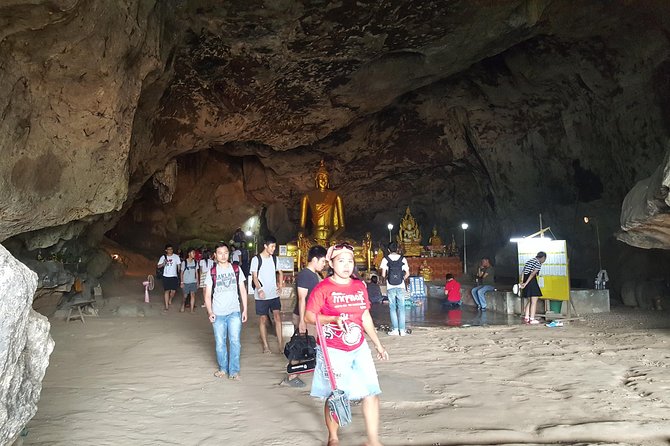
The final listed stop is Tham Krasae Cave, with about 30 minutes allotted. The cave is described as a Buddhist place where monks can stay away from the village for meditation. A Big Buddha is located inside.
This gives the afternoon a different mood. After the cemetery, museum, bridge, and railway, the cave offers a quiet spiritual setting. It is not presented as a large attraction with a long guided program. Instead, you get a short visit to a Buddhist cave beside the Death Railway.
Dress and behave respectfully in the cave. The available information does not specify a dress code, but a religious site deserves a calm approach and modest clothing. The schedule is short, so you will likely have time to see the Buddha and understand the cave’s purpose without a lengthy stay.
The stop also fits naturally with the railway route. The cave is right by the railway bridge, so you are not adding a distant detour at the end of an already long day.
Is $179.49 good value?
At $179.49 per person, this is not the cheapest way to reach Kanchanaburi. The value comes from what is bundled together: private transport, an English-speaking professional guide, museum admission, train tickets, lunch, snacks, drinks, and mineral water.
I would compare it with the cost of arranging transport, tickets, food, and a guide separately. You are also paying for a private air-conditioned van and a day planned around your own group rather than a large coach. For two people, the total is significant. For a family or small group, the private format may feel more reasonable because the price buys comfort and attention for everyone.
Cheaper tours may work if you only want to see the bridge and take a quick train ride. I would choose this option if you want the cemetery and museum explained properly, prefer a private vehicle, and care about having a full restaurant lunch.
The price does not include soft drinks or personal spending. The minimum group size is two people, so solo booking may not work unless another arrangement is confirmed.
Who should book this day trip?
I think this tour suits you if you want a serious World War II history day with some scenery and a train journey mixed in. It is particularly useful for couples, families, and small groups who want private transport and a guide available throughout the day.
You should also consider it if your time in Bangkok is limited. Kanchanaburi is covered in one organized day, with the main memorial sites, bridge, railway, lunch, and cave included.
I would hesitate if you dislike long road journeys, prefer to spend hours at one museum, or want a relaxed pace. The schedule is full, and each stop has a set time. The 10-hour duration can also feel demanding in hot weather, even with an air-conditioned vehicle.
The tour requires at least two people and moderate physical fitness. Service animals are allowed, and the meeting point is near public transportation. Confirmation is provided at booking. Free cancellation is available up to 24 hours before the start time, while poor weather or failure to meet the minimum number of participants can lead to a different date or a full refund.
Should you book the River Kwai tour?
Book it if you want more than a bridge photograph. The cemetery, JEATH museum, train ride, and Tham Krasae section form a useful chain, and the private van and included restaurant lunch help justify the higher price.
I would choose this tour for a first visit to Kanchanaburi, especially if you value a guide who can explain the memorials in clear English. I would skip it only if you want the lowest possible price or a slower, museum-heavy day. For a full and practical introduction to the River Kwai area from Bangkok, this is a strong choice.
FAQ
How long does the River Kwai tour last?
The tour lasts approximately 10 hours and returns to the starting point.
Where does the tour start and end?
The published meeting point is Terminal 21 Asok at 88 Soi Sukhumvit 19 in Bangkok. The activity ends back at the meeting point.
Is hotel pickup available?
Pickup is offered, and the tour is described as private transport to and from your hotel. Confirm the exact pickup details when booking because the listed meeting point is Terminal 21 Asok.
Is this a private tour?
Yes. Only your group participates in the private tour or activity.
How many people are required to operate the tour?
The tour operates with a minimum of two participants.
Is lunch included?
Yes. Lunch with Thai food at a restaurant is included, along with snacks, food, drinks, and mineral water.
Is the Death Railway train ticket included?
Yes. The train ride ticket is included in the tour price. The ride lasts about one hour.
Is the River Khwae Bridge the original bridge?
The original bridge was built by prisoners of war in 1942. The bridge you see today is a reconstruction maintained by the Thai government as a memorial.
Can I cancel for a full refund?
You can cancel at least 24 hours before the experience start time for a full refund. Cancellations or changes made less than 24 hours in advance are not accepted for a refund.
Just added around Bangkok
- Train trip death railway Bridge on river Kwai from Bangkok to Kanchanaburi trip★ 4.0 · 17 reviews
- Small Group: Kanchanaburi Death Railway, Erawan Waterfall and Elephant★ 4.0 · 3 reviews
- Historic Kanchanaburi: Train, Boat & Skywalk + Lunch From Bangkok★ 4.5 · 3 reviews
- Historic Kanchanaburi:Train, Boat, Skywalk from Bangkok(No Lunch)★ 5.0 · 2 reviews
- Private tour : Railway & Floating Market and the Bridge over river Kwae★ 5.0 · 2 reviews
- Private Tour: Kanchanaburi Erawan Waterfall Tour from Bangkok★ 4.5 · 13 reviews
- Bangkok: Railway and Floating Market Tour + Dragon Temple★ 4.5 · 9 reviews
- Maeklong & Damnoen Saduak Markets: Railway & Floating Market Tour★ 4.0 · 17 reviews
Death Railway Tours, compared.
Bridge on the River Kwai and Thailand-Burma Railway Tour
Read our review →
Bridge on the River Kwai and Thailand-Burma Railway Guided Tour
Read our review →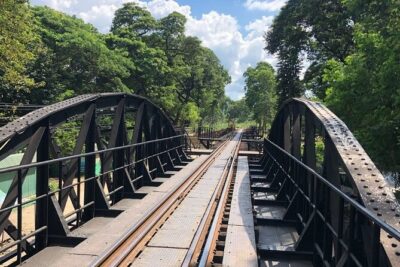
Bridge over River Kwai and Hellfire Pass Tour with Train Ride
Read our review →
Private Tour: Thai–Burma Death Railway Bridge on the River Kwai from Bangkok
Read our review →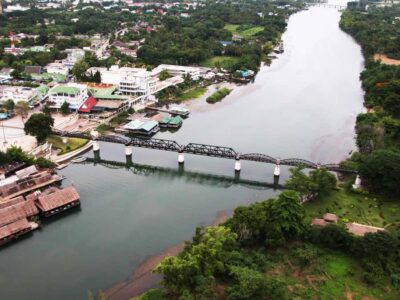
Death Railway & River Kwai Bridge Private Tour
Read our review →
Private Tour: Death Railway, Hellfire Pass and Erawan Waterfall
Read our review →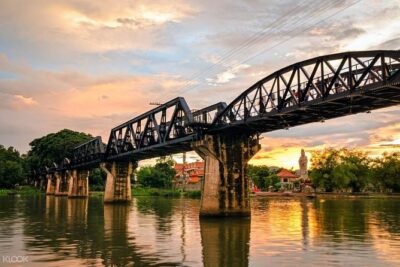
Bridge on the River Kwai and Thailand-Burma Railway Tour
Read our review →Browse the lists this tour appears in