
Review · BANGKOK
Bridge on the River Kwai and Thailand-Burma Railway Tour
History hits differently beside the River Kwai. This long day from Bangkok takes you to Kanchanaburi’s war cemetery and JEATH War Museum, then adds a long-tail boat ride, a walk across the famous bridge, and a scenic train journey on the Death Railway. I like the thoughtful mix of serious memorial sites and memorable transport, especially the boat approach to the bridge and the 90-minute railway ride through the countryside.
I also like that lunch, entrance fees, hotel pickup from selected Bangkok hotels, and an air-conditioned vehicle are included in the $108.17 price. The main drawback is the length of the day. You leave around 6:30 in the morning, drive roughly 130 kilometers each way, and may spend much of the tour on the road. The museum can also feel basic if you want a detailed, modern presentation of the war.
Key points to know before booking
- The cemetery is the emotional heart of the day: Allow yourself a quiet moment among the carefully kept graves.
- The bridge is reached by boat: The long-tail ride gives you a more memorable approach than simply arriving by road.
- The train ride lasts about 90 minutes: Expect countryside views, a slower pace, and sometimes a first-come, first-served seating scramble.
- The guide can shape the whole experience: Guides such as Betty, Luck, Peter, Jenny, Suki, and Tiny have been praised for clear explanations and personal care.
- The day begins early and runs long: The stated duration is about nine to ten hours, not counting possible traffic delays.
- A seat upgrade costs extra: About 200 baht includes a guaranteed seat, cold towel, and drinking water. About 300 baht adds tea or coffee and a certificate.
Why this Kanchanaburi day trip matters
The Thailand-Burma Railway was built during World War II as part of the Japanese effort to support its occupation of Burma, now Myanmar. Prisoners of war and forced laborers built the railway under brutal conditions, and thousands died.
That background gives every part of the day more weight. The bridge is not simply a famous film location. The train is not just a pleasant ride through rural Thailand. Both are linked to a painful wartime project that cost many lives.
I appreciate that this tour begins with the cemetery and museum before the lighter parts of the day. You first see the human cost, then follow the route by boat and train. That order helps you understand what you are seeing instead of treating the bridge as a quick photo stop.
The experience has earned an overall rating of 4.3 out of 5 from 658 ratings, which fits its character. The strongest points are the guides, the range of included activities, and the emotional impact. The weaker points are the long road journey, uneven comfort in the vehicle, and limited museum presentation.
More Death Railway Tours in Bangkok:
- From Bangkok: Death Railway & Hellfire Pass Tour with Lunch
★ 4.6 · 931 reviews - Bridge on the River Kwai and Thailand-Burma Railway Guided Tour
★ 4.5 · 353 reviews - Bridge over River Kwai and Hellfire Pass Tour with Train Ride
★ 5.0 · 199 reviews
The early departure from Bangkok
Pickup begins at about 6:30 a.m. from selected Bangkok hotels. You must provide your hotel details when booking. If you do not, the booking may be canceled, so this is not a detail to leave until the last minute.
The drive to Kanchanaburi takes you away from Bangkok’s dense city streets and into agricultural Thailand. You might see sugarcane, rice paddies, and pineapple plantations along the way. This rural stretch gives you a useful change of setting, though it also takes time.
The vehicle is air-conditioned, and hotel pickup and drop-off are included. Comfort may vary. One account praised the organization but found the car less comfortable than expected, so I would bring water, a small neck pillow, and something to occupy you during the longer road sections. Drinks are not included, although restrooms are available during the experience.
The maximum group size is listed as 99 people. That is large enough for a busy coach-style outing rather than a private tour. The actual feel may depend on the number booked that day, but you should expect a structured group experience with set timings.
Kanchanaburi War Cemetery: the quietest stop
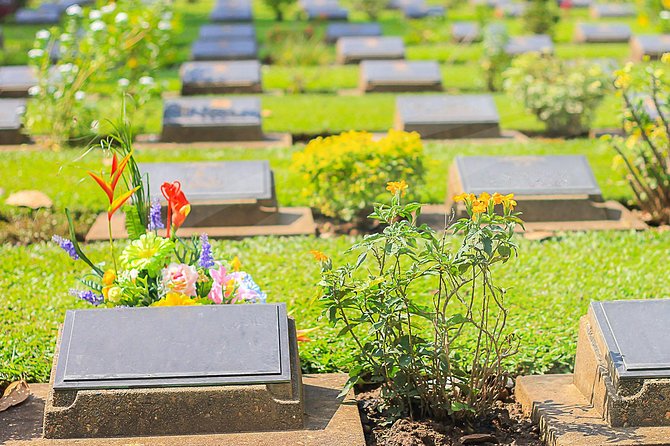
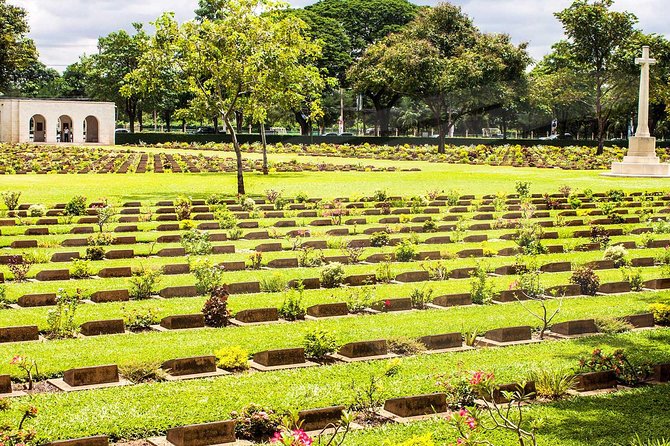
The Kanchanaburi War Cemetery is the most sobering stop on the itinerary. It is the main prisoner of war cemetery for those who died during the construction of the Burma Railway in World War II.
You have about 30 minutes here, with admission included. That is enough to walk through the grounds and read some of the headstones, but it may feel short if you want time for extended reflection. One useful tip is to listen carefully to the guide before wandering off, since the context helps explain what you are seeing.
The cemetery is carefully maintained, and its calm appearance can make the story even harder to absorb. Rows of graves, names, ages, and dates reduce a huge wartime project to individual lives. I would treat this as a place for quiet attention rather than casual sightseeing.
Several accounts describe the cemetery as moving, beautiful, and tragic. That combination is accurate. The setting is peaceful, but the reason it exists is not. If your main reason for booking is World War II history, this stop alone gives the day purpose.
JEATH War Museum: useful, but fairly basic
The JEATH War Museum follows the cemetery and gives you about 20 minutes. Its displays include historical photographs and paintings related to the railway and the prisoners who built it.
The museum helps put faces and images to the story, but you should keep your expectations in check. Some descriptions call the presentation basic, and the short visit does not allow much time for careful study. If you want a large, polished museum with extensive explanations, this may disappoint you.
Still, I would not skip it. The museum adds visual material before you reach the bridge and railway. It is also one of the few points in the day where the guide can explain the construction project in a concentrated way.
Listen for details about the proposed railway link between Bangkok and Rangoon, now Yangon, and the role the line played in Japanese wartime plans. The guide’s skill matters here. Guides such as Betty, Luck, Peter, Jenny, Suki, and Tiny have been praised for making the history clear and for helping with timing and photographs.
More Train Journeys in Bangkok:
- Day Trip to Bangkok Floating Market & Maeklong Railway
★ 5.0 · 1,528 reviews - Bangkok: Railway and Floating Market Tour with Dragon Temple
★ 4.6 · 1,225 reviews - Private Excursion to Maeklong Railway and Floating Markets
★ 5.0 · 850 reviews - From Bangkok: Railway & Damnoen Saduak Floating Market Tour
★ 4.6 · 775 reviews
The long-tail boat to the bridge
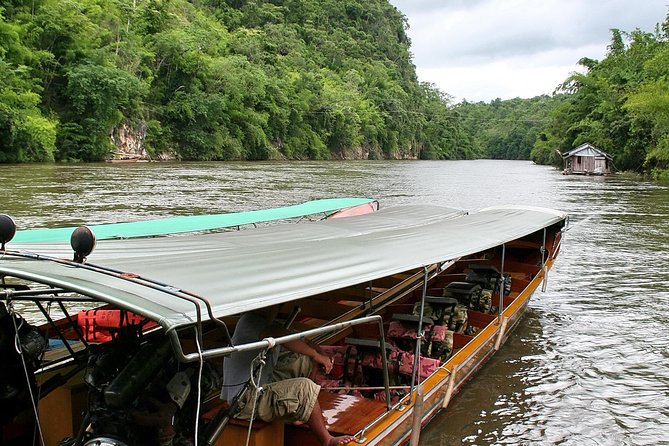
The boat ride lasts about 20 minutes and takes you along the Kwai River toward the bridge. This is one of the tour’s most enjoyable touches.
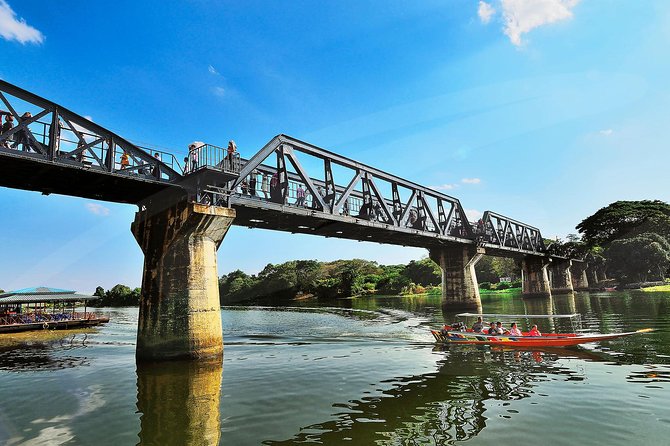
A long-tail speedboat is noisier and more lively than a standard sightseeing boat. You get a fast-moving view of the river and approach the bridge from the water, including a passage under the bridge. That arrival feels more memorable than stepping off a coach beside the road.
The ride is also a welcome change after the drive and museum. You are outdoors, moving quickly, and seeing the bridge from a different angle. Several accounts describe the boat ride as entertaining, with one comparison to a movie-style speedboat sequence.
Keep in mind that the boat is included, but the itinerary does not promise a long cruise or extensive commentary from the water. The ride is a short transfer and viewing experience, not a full river excursion. You then have time near the bridge to walk, take photographs, and look at the structure on your own.
Walking across the River Khwae Bridge
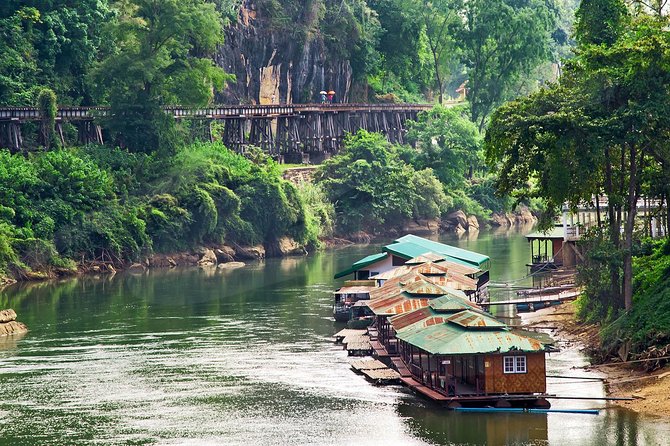
The famous bridge is the tour’s most recognizable sight. Its importance comes from both the wartime railway and the way popular culture made it known around the world.
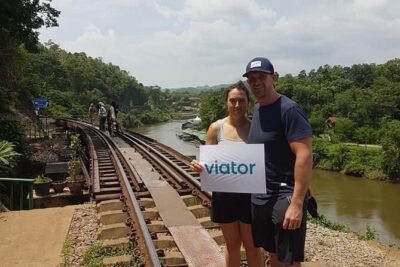
You have about 20 minutes listed at the bridge. That gives you time to cross part of it, take photographs, and look down toward the river. Some groups arrive early enough to walk over the bridge before the train ride, which is useful because the train schedule can make the later visit feel more hurried.
The bridge area can be busy, and the visit is not designed as a long, private period of reflection. Still, it is valuable to see the structure from above after approaching by boat. You can connect the river, bridge, and railway in one sequence.
The bridge is also where the tour’s historical and scenic sides meet. You may spend a few minutes taking photographs, then find yourself thinking about the labor that made the railway possible. That contrast is part of the experience.
The Death Railway train ride
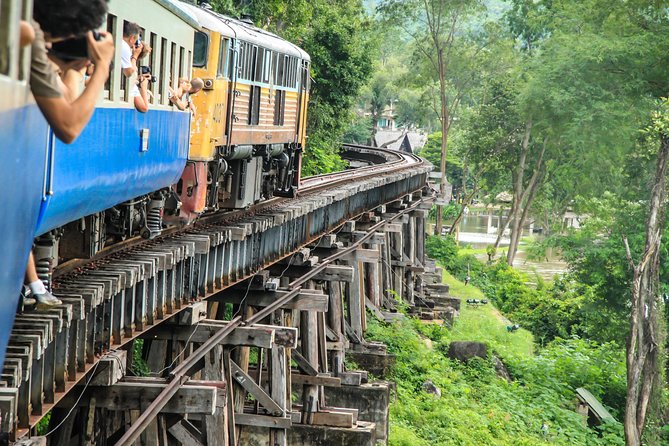
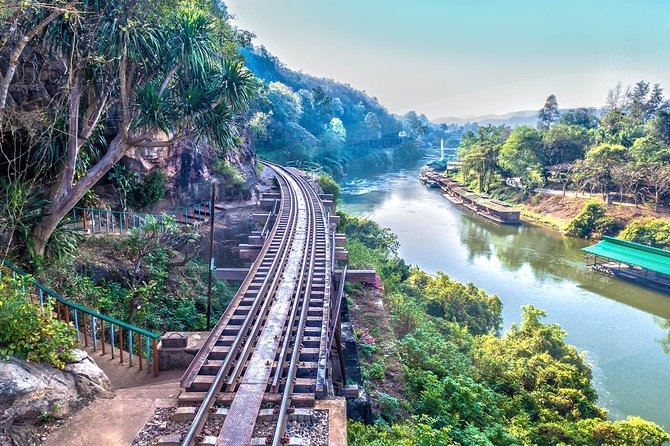
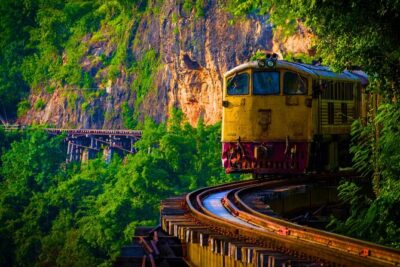
The train journey is the most scenic portion of the day. The ride lasts about 1 hour and 30 minutes and takes you through the countryside on the Death Railway.
You will see rural Thailand from a slower, lower viewpoint. The route shows why a railway project through this region required difficult work, including sections that curve through rocky terrain. The trip is not a luxury rail journey. It is a working train ride with simple seating and a strong sense of place.
The seating system deserves attention. Without an upgrade, seating is first come, first served. If you want to guarantee a seat, an optional upgrade costs about 200 baht and includes a cold towel and drinking water. A roughly 300-baht option adds tea or coffee, drinking water, a cold towel, and a certificate.
Those extras are not essential, but the guaranteed seat may be worthwhile after such an early start. A few accounts describe paying for an upgraded section and enjoying the added comfort. Ask about the upgrade when you book or before boarding, since availability and the exact arrangement are not explained in detail.
The train is especially rewarding if you enjoy railways. If you dislike long periods of simple scenery or expect a fast, dramatic ride, you may find it slow. For me, the slower pace is the point. The train gives you time to look out, think about the railway’s purpose, and see how the route fits into the surrounding countryside.
Lunch and the day’s rhythm
Lunch is included, and several accounts praise the meal and the restaurant setting. One description particularly liked the restaurant and called the food delicious. The tour also accommodated a dietary issue with an alternate meal, though you should still provide any dietary information in advance.
Lunch arrives after several major stops, so it gives the day a useful pause. Beverages are not included, meaning you should budget for drinks or carry some with you. The tour includes admission fees, the vehicle, guide, boat, train, and lunch, which makes the package easier to manage than paying separately throughout the day.
The timing is fairly full. You move from cemetery to museum, river, bridge, train, and lunch with little room to linger. Some people will appreciate the efficient schedule. Others may wish they had longer at the cemetery or bridge.
The guides make the difference
The most praised part of this experience is the guiding. Strong guides explain the war, keep the group moving, answer questions, and help you use short stops well.
Betty was praised for detailed explanations and for helping with photographs. Luck was credited with good timing and a personal touch. Peter was described as entertaining and informative from pickup through the railway ride. Jenny was praised for clear English, kindness, and making sure everyone saw the main sights.
Suki was noted for explaining the railway and bridge while caring for a small group, and Tiny was praised for explaining Thai customs as well as the local history. These details matter because the schedule is tight. A guide who gives vague information can make the drive feel much longer. A good guide can turn each transfer into useful context.
The quality may vary by departure, since you cannot choose a particular guide from the information provided. Still, the repeated praise for different guides suggests that interpretation is a major strength of this experience.
Is $108.17 good value?
At $108.17 per person, this is not the cheapest way to see Kanchanaburi, but it covers a lot. You receive hotel pickup and drop-off from selected hotels, an air-conditioned vehicle, a local guide, entrance fees, lunch, a long-tail boat ride, and the Death Railway train.
A private trip could offer more time at each site, but it would likely cost more. A cheaper independent visit might give you more control, yet you would need to arrange transport, tickets, food, and transfers yourself. This tour earns its price through convenience and the number of elements packed into one day.
The value is strongest if you want the full sequence without managing details. It is weaker if you want a slow visit, a small group, or a serious museum study. The group limit of 99 means you should not book this expecting an intimate, custom-paced outing.
Who should book this experience?
I would recommend it to first-time visitors to Bangkok who want a clear introduction to Kanchanaburi and the Death Railway. It suits people interested in World War II, railways, local countryside, or a day away from the capital.
You should have a moderate level of physical fitness. The day includes walking at the cemetery and bridge, boarding the boat and train, and spending many hours on the move. The early start and long return drive also require stamina.
I would hesitate to recommend it to anyone who wants a relaxed day with few scheduled stops. It may also disappoint you if your main goal is a large, detailed war museum. The JEATH Museum is useful but not extensive.
Free cancellation is available if you cancel at least 24 hours before the start time. The tour requires a minimum number of bookings, so a cancellation by the operator is possible if that number is not reached. In that case, an alternative or full refund is offered.
Should you book the Bridge on the River Kwai tour?
Book it if you want a well-organized history day with several different ways to experience the railway. The cemetery gives the story a human face, the museum adds photographs and context, the boat makes the bridge approach memorable, and the train gives you time to see the route itself.
Skip it if you need a small group, extensive museum time, or a leisurely schedule. The road journey from Bangkok is long, the vehicle may not feel luxurious, and some stops are brief.
For most first-time visitors with one free day, I think the combination is worthwhile. Go with realistic expectations, listen closely to the guide, consider the seat upgrade, and allow the cemetery more than a quick photograph. The bridge is famous, but the people who built the railway are the reason this day matters.
FAQ
How long does the tour last?
The tour lasts approximately nine to ten hours, with pickup beginning around 6:30 a.m.
Where does the tour start?
Pickup is offered from selected hotels in Bangkok. You must provide your hotel details when booking.
Is transportation included?
Yes. The tour includes hotel pickup and drop-off from selected hotels and transport in an air-conditioned vehicle.
Is lunch included?
Yes. Lunch is included, but beverages are not.
What historical sites does the tour visit?
The tour visits Kanchanaburi War Cemetery and the JEATH War Museum, followed by the River Khwae Bridge and the Death Railway route.
Is the long-tail boat ride included?
Yes. A long-tail boat ride along the Kwai River is included, with a cruise under or toward the River Kwai Bridge.
How long is the train ride?
The Death Railway train ride lasts about 1 hour and 30 minutes.
Can I guarantee a seat on the train?
An optional upgrade of about 200 baht guarantees a seat and includes a cold towel and drinking water. An option costing about 300 baht also includes tea or coffee and a certificate.
Can I cancel for a full refund?
Yes. You can cancel for a full refund if you cancel at least 24 hours before the experience begins. Changes or cancellations made less than 24 hours before the start time are not accepted for a refund.
Just added around Bangkok
- Train trip death railway Bridge on river Kwai from Bangkok to Kanchanaburi trip★ 4.0 · 17 reviews
- Small Group: Kanchanaburi Death Railway, Erawan Waterfall and Elephant★ 4.0 · 3 reviews
- Historic Kanchanaburi: Train, Boat & Skywalk + Lunch From Bangkok★ 4.5 · 3 reviews
- River Kwai Bridge and Death Railway World War II Tour in Thailand★ 5.0 · 2 reviews
- Historic Kanchanaburi:Train, Boat, Skywalk from Bangkok(No Lunch)★ 5.0 · 2 reviews
- Private tour : Railway & Floating Market and the Bridge over river Kwae★ 5.0 · 2 reviews
- Bangkok: Railway and Floating Market Tour + Dragon Temple★ 4.5 · 9 reviews
- Maeklong & Damnoen Saduak Markets: Railway & Floating Market Tour★ 4.0 · 17 reviews
Death Railway Tours, compared.
Bridge on the River Kwai and Thailand-Burma Railway Guided Tour
Read our review →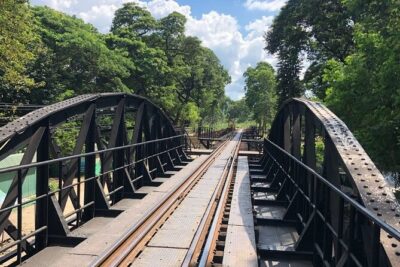
Bridge over River Kwai and Hellfire Pass Tour with Train Ride
Read our review →
Private Tour: Thai–Burma Death Railway Bridge on the River Kwai from Bangkok
Read our review →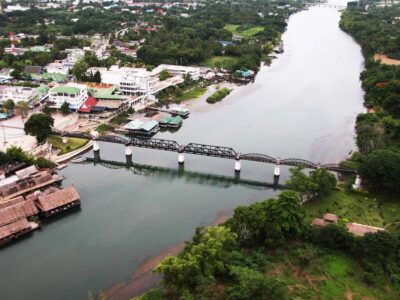
Death Railway & River Kwai Bridge Private Tour
Read our review →
Private Tour: Death Railway, Hellfire Pass and Erawan Waterfall
Read our review →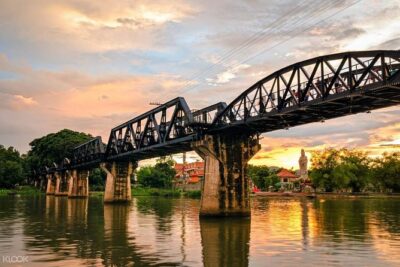
Bridge on the River Kwai and Thailand-Burma Railway Tour
Read our review →
Erawan Waterfalls-Death Railway & River Kwai Tour
Read our review →Browse the lists this tour appears in