
Review · CUSCO
Cusco: 4-Day Salkantay Trek to Machu Picchu, Panoramic Train
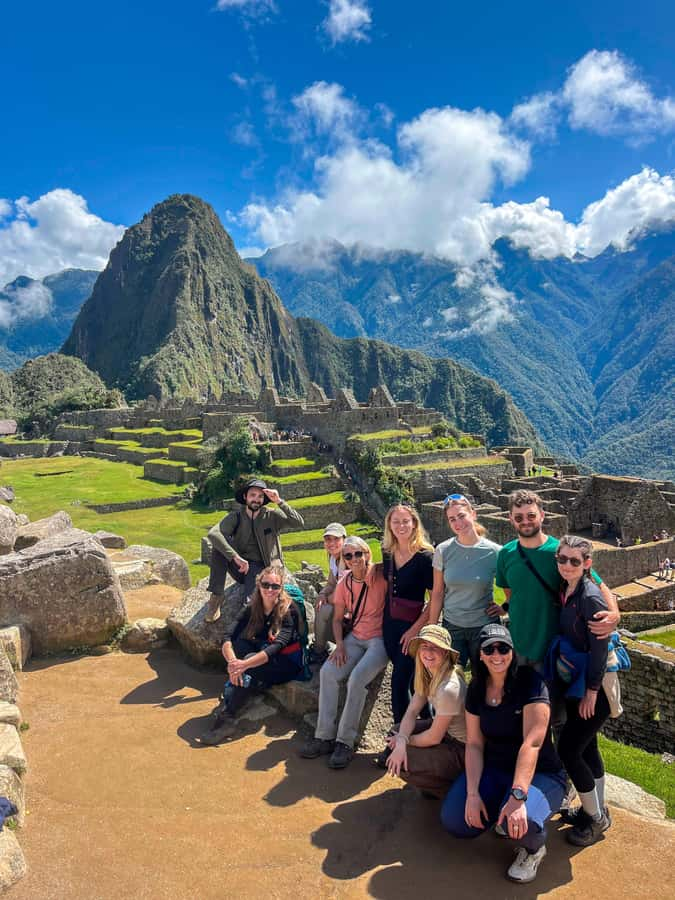
High Andes, jungle, and Machu Picchu in four days. This Salkantay trip packs a lot into a short time, from turquoise Humantay Lake and the 4,630-meter Salkantay Pass to a warm hotel bed in Aguas Calientes. I especially like the mix of serious mountain walking and comfortable overnight stops, plus the Pachamanca barbecue and coffee-making session that bring local food traditions into the trip.
I also like the small-group limit of 16 people and the strong support system: guides, cooks, duffle transport, first-aid gear, oxygen, and a satellite phone. The main caution is the second night in Collpapampa. The Andean huts and paid hot shower may feel basic, and one part of the accommodation has received criticism. This is still a demanding trek, not a casual walk.
Key points before you book
- The highest point is 4,630 meters: Day two is the physical test, with a two-hour climb to Salkantay Pass followed by a long descent.
- Humantay Lake comes early: You reach the famous turquoise lake on day one, but the short, steep hike can be hard before your body adjusts.
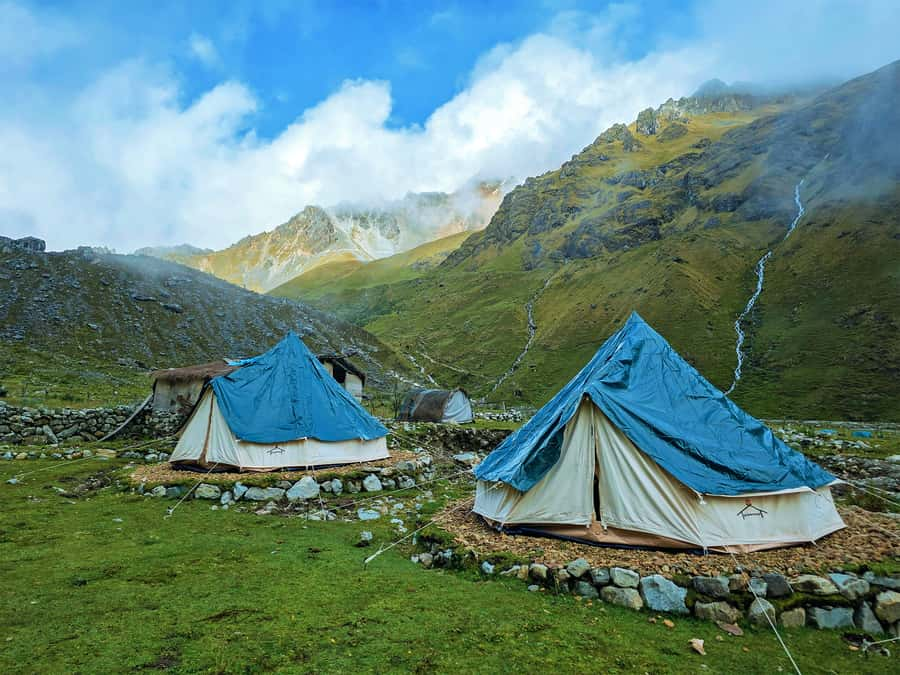
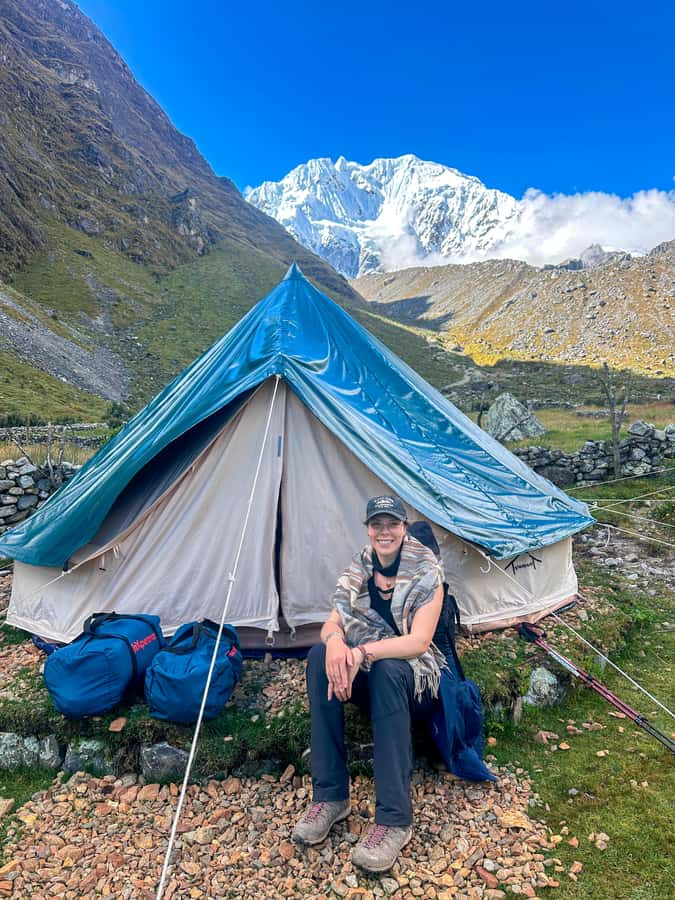
- You sleep three different ways: Expect a glamping tent, an Andean hut, and a 3-star hotel in Aguas Calientes.
- Food is part of the experience: Trail meals, a Pachamanca barbecue, and a local coffee session are included.
- The group stays small: A maximum of 16 people makes guide support and pacing easier.
- The return train is a treat: The Vistadome or 360° train gives you a more scenic finish than a basic rail service.
Why the Salkantay route is worth four demanding days
The Salkantay Trek is a good choice if you want Machu Picchu with more mountain time than the usual rail-first visit. In four days, you move through several distinct zones: high Andean valleys, icy peaks, cloud forest, coffee-growing country, and the Urubamba area around Aguas Calientes.
You also get a more active route to the citadel. The price is $552 per person, which is not a budget walk, but it covers transport, guiding, accommodation, meals on the trail, the special food activities, a duffle bag, and the upgraded return train. Those inclusions matter because arranging this route alone would require separate transport, camps, meals, train tickets, and Machu Picchu planning.
The tradeoff is a very early start and long hiking days. You need to be comfortable walking uphill and downhill for several hours. The tour is not suited to people with heart or back problems, limited mobility, or those who are pregnant. Wheelchair users cannot take part.
More Machu Picchu Train Tours in Cusco:
- Cusco: Machu Picchu 2-Day Inca Trail with Panoramic Train
★ 4.9 · 260 reviews - The First Class Machu Picchu Train by Inca Rail
★ 4.0 · 182 reviews - Excursion to the Sacred Valley and Machu Picchu by Panoramic Train
★ 5.0 · 45 reviews
Day one: Cusco to Humantay Lake and SalkaGlamp
Your day begins around 4:30 a.m. with pickup from a hotel in Cusco’s historic center. That early departure is not glamorous, but it gives you time to reach Mollepata for breakfast and continue to Challacancha, where the trek begins.
The route to Humantay Lake is short compared with the following days, but it is not easy. The path climbs toward the turquoise water, and the altitude makes the effort feel larger than the distance suggests. At the lake, you get views of clear water, steep mountain slopes, and the peaks around Humantay. This is one of the trip’s best photo stops, but do not treat it as a quick stroll.
After spending time at the lake, you descend to Soraypampa for lunch. The descent gives your legs a break from climbing, though loose or uneven ground can still demand attention. You then continue to the Salkantaypampa glamping camp.
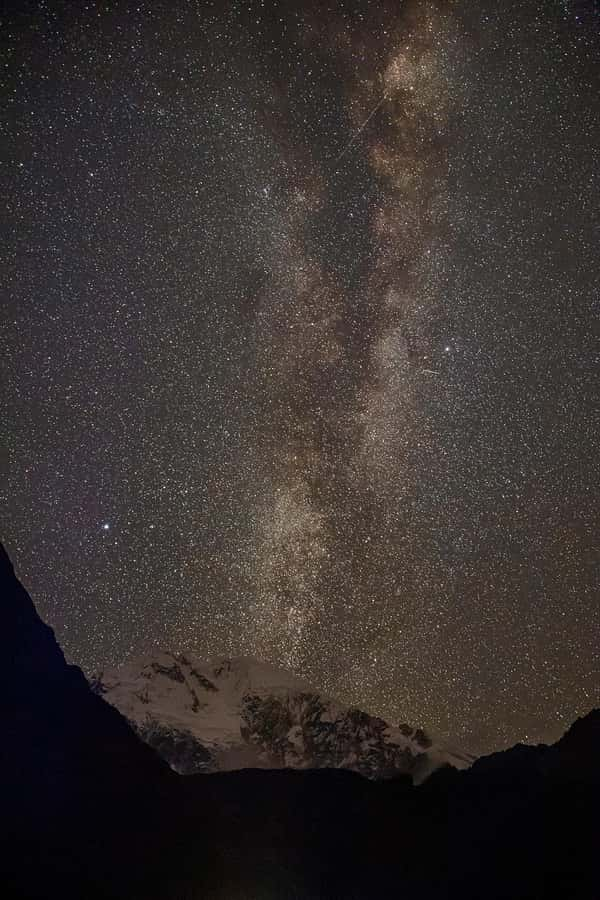
The camp is a welcome change from a standard tent. You sleep in a prepared tent with a pillow and sleeping pad supplied, and dinner is served at camp. The setting beneath the Andes and the star-filled sky gives the first night a strong sense of place. It is still camping, so bring warm, weather-appropriate clothing and do not expect the same facilities as a hotel.
A useful part of this night is the chance to rest at a higher camp before the next morning’s pass crossing. One guide team has been praised for choosing a higher campsite to help the group adjust before the hardest day. That kind of planning can make a real difference at altitude.
Day two: Salkantay Pass at 4,630 meters
Day two is the heart of the trek. Coffee or coca tea is brought to your tent before breakfast, a small comfort when you are preparing for the longest and highest section.
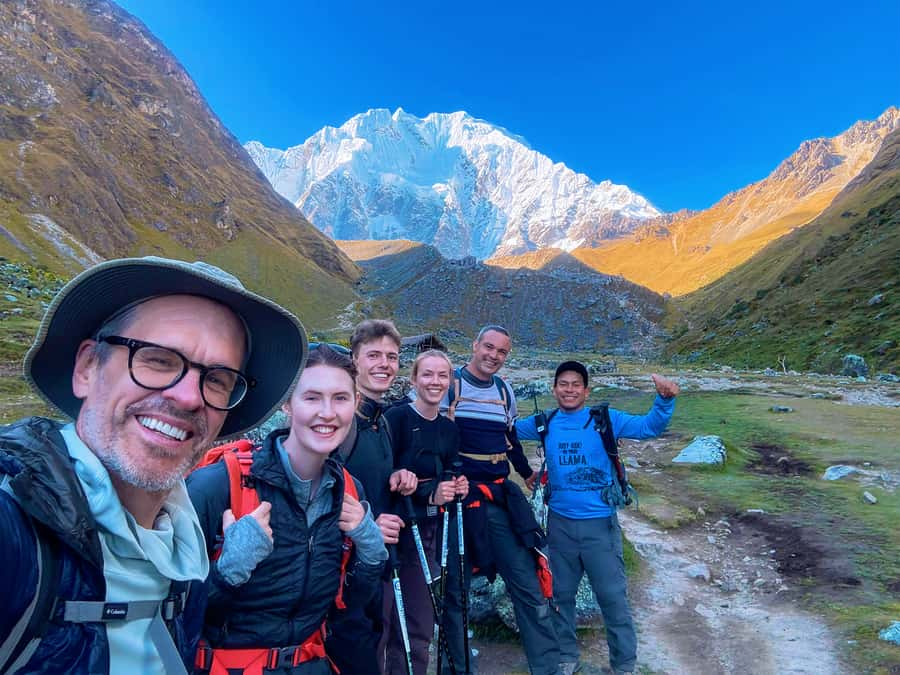
The climb to Salkantay Pass takes about two hours. At 4,630 meters, or 15,190 feet, the air is thin and the pace should be steady. You will see snow-capped peaks and the lake below Salkantay Mountain. The view is the reward, but the altitude is the part you need to respect.
After the pass, you descend for roughly three hours to Wayracmachay, where lunch provides a needed pause. Descending can be just as tiring as climbing, particularly on knees and ankles. Trekking poles are available to rent, and I would consider them worthwhile for this section.
The afternoon brings a dramatic change. Over another three hours, the high mountain setting gives way to cloud forest. Flowers, orchids, and hummingbirds replace the stark upper slopes. That quick shift in scenery is one of the route’s strongest features, since you see several Andean environments in a single day.
You finish in Collpapampa, sleeping in Andean huts. The setting is peaceful, with natural sounds around the camp, but the accommodation is the least polished part of the trip. The huts and bathroom facilities may be basic, and a warm shower costs extra. If a private shower and spotless facilities are important to you, this is the night to set expectations low.
Day three: Pachamanca, coffee, and the route to Aguas Calientes
After breakfast, you hike for about three hours to Lucmabamba. This section is less about conquering altitude and more about moving through the lower, warmer country. The route connects the mountain trek with local food and farming traditions.
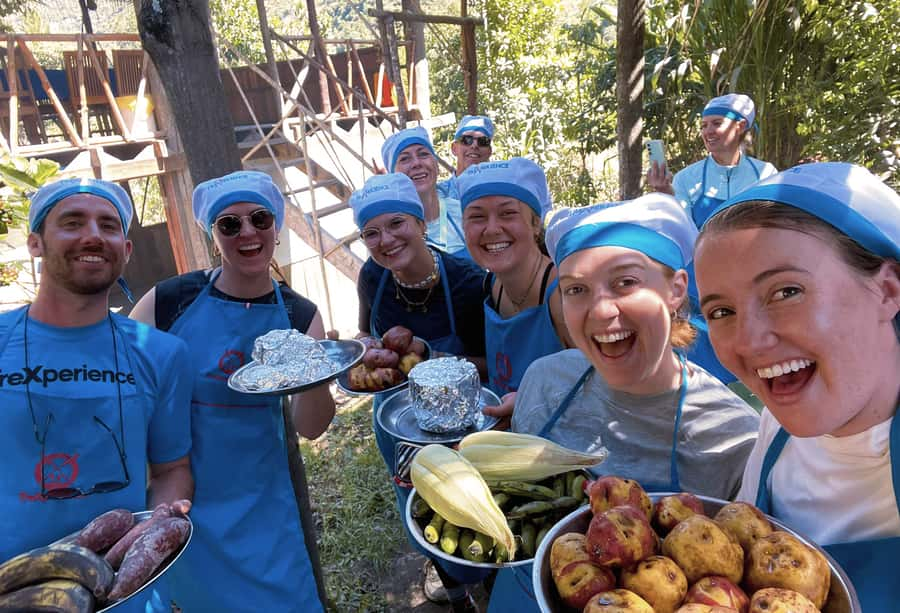
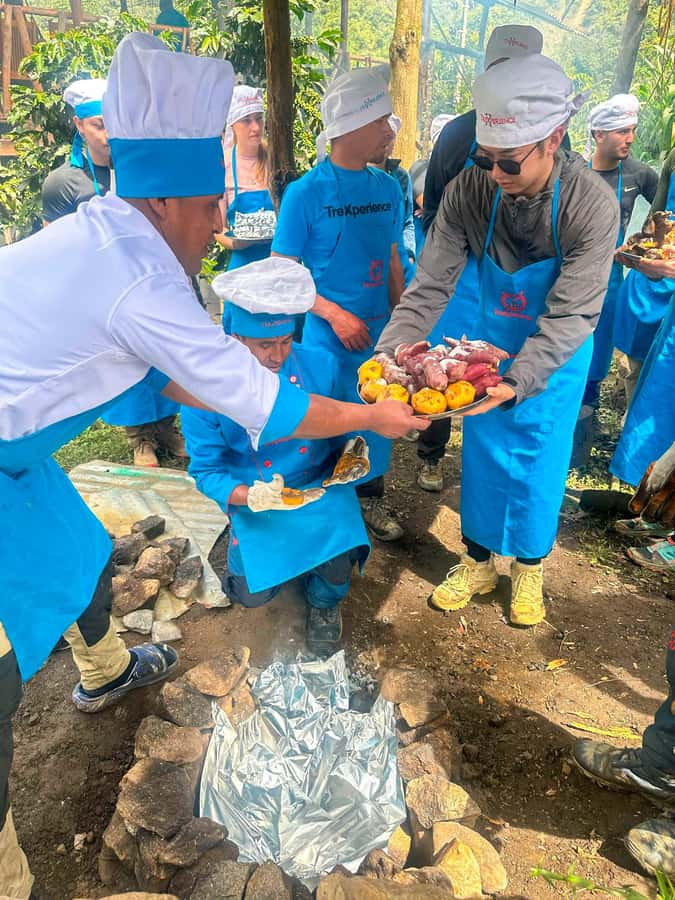
The Pachamanca barbecue is a memorable stop. Vegetables, fruits, and meats are cooked underground with hot stones, producing a meal that is both practical and ceremonial in feel. It is not just another lunch buffet. You get to see a traditional Andean cooking method and taste food prepared in the ground.
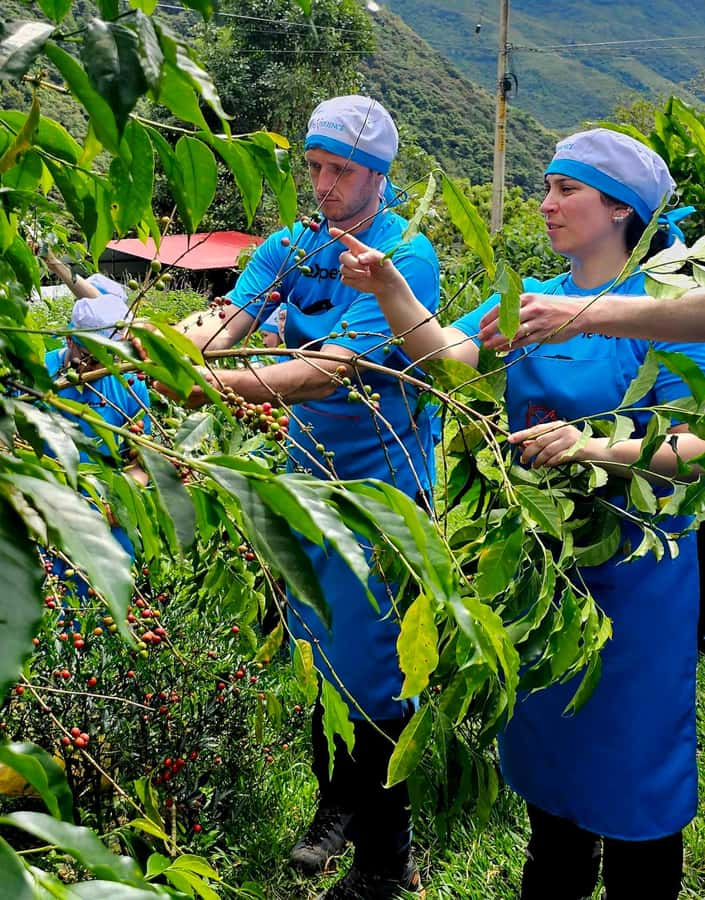
The coffee experience adds another local connection. At a coffee farm, you learn how beans move from plant to cup, then prepare your own fresh espresso. This is a pleasant contrast after two hard days of walking, and coffee lovers will appreciate having time to understand the work behind the drink rather than simply ordering one at breakfast.
From there, a vehicle takes you to Hidroelectrica. You then walk for about three hours along the route to Aguas Calientes. This final stretch is much lower than the Salkantay Pass, but it can still feel long after the morning hike and activities.
In Aguas Calientes, you check into a 3-star hotel, eat dinner at a local restaurant, and sleep in a proper bed. The change from camp and huts is welcome. Breakfast is included at the hotel, but lunch on the final day is not.
More Scenic Railways in Cusco:
- Inca Trail 4 Day Adventure to Machu Picchu with Panoramic Train
★ 5.0 · 34 reviews - Private Machu Picchu Day Tour by Panoramic Train
★ 5.0 · 32 reviews - Cusco: 4-Day Lares Trek to Machu Picchu with Panoramic Train
★ 4.9 · 20 reviews - 2-Day Inca Trail Hike to Machu Picchu & Panoramic Train
★ 4.7 · 7 reviews
Day four: Machu Picchu before the crowds build
The final morning starts early, with one of the first buses up to Machu Picchu. The early departure gives you a chance to see morning light over the surrounding mountains and begin the visit before the day feels too crowded.
A professional guide leads a two to three-hour visit through the citadel. Circuit 2 is assigned by default, though Circuit 1 or Circuit 3 may be used if it is sold out. The exact circuit matters because Machu Picchu now controls movement through designated routes, and each one gives a different view of the site.
The standard visit focuses on the main areas and the story of the Inca settlement. If you want Huayna Picchu or Machu Picchu Mountain, those tickets require advance booking. Do not assume you can add either hike at the last minute.
After the guided visit, you return to Aguas Calientes for lunch at your own cost. Then you board either the Vistadome or 360° panoramic train for the return journey. Large windows and a more scenic carriage make this a fitting end after four days on foot.
The package says the team will meet you on arrival in Cusco and transfer you to your hotel. That final transfer is useful after a long rail journey, especially if your legs are tired and your luggage is already being handled by the support team.
Food, luggage, and support on the trail
Food is one of the strongest parts of this experience. The package includes three breakfasts, three lunches, three dinners, water, and daily snacks during the trek. Guides and cooks have received especially strong praise, with cooks named Zenobio, Ismael, Felix, Dionissios, and other team members credited for hearty meals and varied local dishes.
That matters because the second day is long and high. A good meal does more than add comfort; it gives you the fuel to keep moving. Special dietary needs should be provided when you book.
You can send up to 7 kilograms of personal belongings in the supplied duffle bag. Keep your daypack light, but carry the essentials yourself: passport, rain gear, water, sunscreen, a hat, snacks if desired, toiletries, and a flashlight. The package supplies a pillow, sleeping pad, rain poncho, and hand towels.
Sleeping bags, air mattresses, and trekking poles are available to rent. Since the nights can be cold and the ground can be uneven, check what is included in your rental before departure rather than assuming the supplied sleeping pad is enough for you.
The safety equipment is reassuring. The group has access to a first-aid kit, oxygen tank, and satellite phone. These do not remove the risks of high-altitude trekking, but they show that the operator has planned for remote sections of the route.
Guides and group size
A group limit of 16 is a useful middle ground. You get the energy of a shared trek without the feel of a large procession. A small group also gives the guides more opportunity to watch the slower walkers and explain the route.
Guide support has been a repeated strength. Alex has been praised for explaining Inca history and mountain stories while keeping the group updated about the plan. José and Evangelino have also been singled out for patience and practical help, especially when someone needed extra time or assistance with belongings.
Roger and William have received similar praise for their humor, historical explanations, and care for people at the back of the group. That last point is important. You should not book this expecting everyone to walk at one speed. If you are slower, tell the guide early and use the support available rather than pushing beyond your limits.
English and Spanish guiding are offered. Passport details are needed when booking, and you should carry your passport during the trip.
Price, comfort, and the main compromises
At $552, the trip offers solid value if you want a guided, organized route with several comfort upgrades. Transport from Cusco, trail meals, three nights of accommodation, a duffle bag, Machu Picchu guiding, and the panoramic train are all significant costs when arranged separately.
The comfort is uneven by design. The glamping camp is pleasant, the Collpapampa huts are basic, and the Aguas Calientes hotel is the most familiar stop. That variety is part of the appeal, but it also means you should not expect hotel standards every night.
There is one booking detail you should clarify before paying. The package information says Machu Picchu entrance tickets are included, but another note says Machu Picchu tickets must be booked ahead. Confirm exactly what is covered, which circuit you will receive, and whether any ticket supplement applies.
The activity is non-refundable, so check your dates, passport details, fitness, and ticket choices carefully before booking.
What to pack for this specific trek
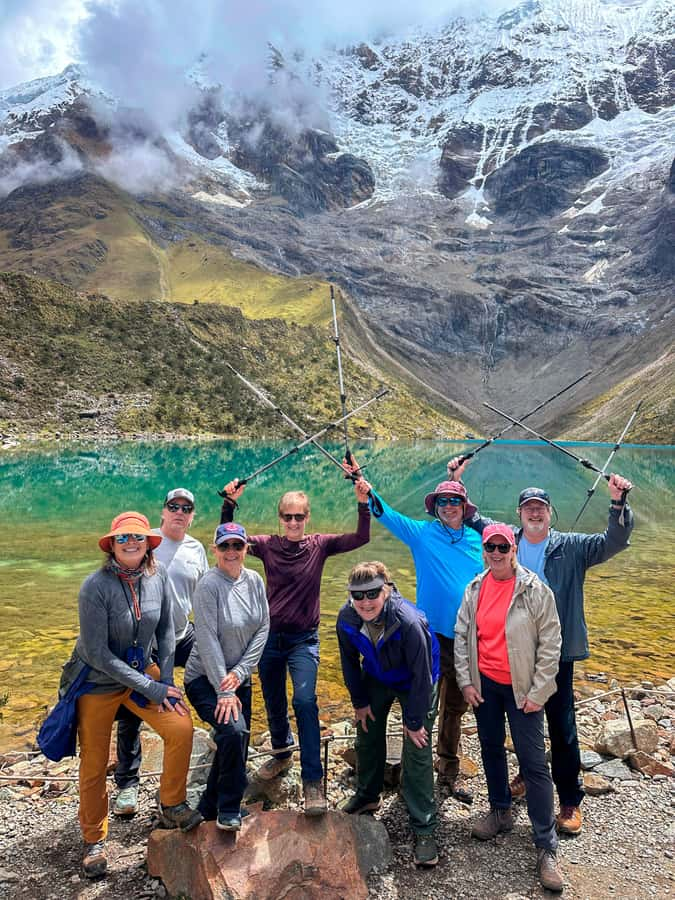
Pack for changing conditions rather than one type of weather. You need hiking shoes, comfortable clothes, hiking pants, rain gear, sunscreen, insect repellent, sunglasses, a sun hat, and a change of clothes.
Bring warm layers for the high camp and Salkantay Pass, along with lighter clothing for the warmer cloud forest. A flashlight, hand sanitizer or tissues, toiletries, cash, and a camera are also listed as useful items.
A student card may be needed if you are using a student rate or student eligibility for an entry ticket. Bring your passport, since it is required for the booking and Machu Picchu visit.
Weapons and sharp objects are not allowed. Smoking, alcohol, drugs, littering, feeding animals, and making fires are prohibited. Children must be accompanied by a responsible adult, and unaccompanied minors cannot join.
Who should book this trek?
I would recommend it to an active visitor who wants Machu Picchu as part of a real mountain journey, not simply as a day trip from the train. It is especially good for people who value local food, varied scenery, a small group, and practical support.
I would be more cautious if you dislike early mornings, basic accommodation, long descents, or high altitude. The trip is also a poor fit for anyone with serious mobility, back, heart, or pregnancy-related concerns.
Should you book the Salkantay Trek?
Book it if you want a challenging four-day route with strong meals, attentive guides, and a comfortable finish in Aguas Calientes. The combination of Humantay Lake, Salkantay Pass, cloud forest, Pachamanca cooking, coffee, and Machu Picchu gives you far more variety than a simple rail visit.
Before booking, confirm the Machu Picchu ticket details and decide if you are comfortable with the basic second night. If you can accept that tradeoff, the $552 price is reasonable for the amount of transport, food, guiding, lodging, and train service included.
FAQ
How long is the Salkantay trek?
The experience lasts four days, including the visit to Machu Picchu and the return journey to Cusco.
What time is pickup in Cusco?
Pickup begins at about 4:30 a.m. from accommodation in Cusco’s historic center. You should be in the hotel lobby 10 minutes before the scheduled pickup.
What is the highest point of the trek?
The highest point is Salkantay Pass, at 4,630 meters or 15,190 feet above sea level.
Where do you sleep during the trek?
You spend one night in a glamping tent at Salkantay Camp, one night in Andean huts at Collpapampa, and one night in a 3-star hotel in Aguas Calientes.
Are meals included?
Three breakfasts, three lunches, three dinners, water, and daily snacks are included during the trail portion. Lunch in Aguas Calientes on the final day is not included.
Is the Pachamanca barbecue included?
Yes. The experience includes a traditional Pachamanca barbecue, a cooking class, and a local coffee experience.
Is the return train included?
Yes. The return to Cusco is by either the Vistadome or 360° panoramic train.
Can I add Huayna Picchu or Machu Picchu Mountain?
Optional hikes to Huayna Picchu or Machu Picchu Mountain are available with advance booking. Huayna Picchu tickets are not included by default.
What Machu Picchu circuit is used?
Circuit 2 is assigned by default. If it is sold out, Circuit 1 or Circuit 3 will be assigned.
Is the tour suitable for people with limited mobility?
No. The trek is not suitable for wheelchair users or people with mobility impairments. It is also not recommended for pregnant women or people with back or heart problems.
More Four-Day Trips in Cusco
- 4-Day Isle of Skye & Jacobite Steam Train (train ride included)
★ 5.0 · 82 reviews - 4-Day Cork, Ring of Kerry, Dingle, Cliffs of Moher and Galway Bay Rail Tour
★ 4.5 · 48 reviews - Borobudur & Prambanan in Yogyakarta, train to Malang, hike Bromo & Ijen // 4D3N
★ 5.0 · 18 reviews - 4 Days Nile cruise luxor, Aswan,Hot air balloon&abu simbel with Train from Cairo
★ 4.5 · 12 reviews
More Hiking Trips in Cusco
- Tour with the Mountain Train, Trek to Mystic Forest and Castle
★ 5.0 · 101 reviews - Sapa: 3-Day, 3-Night Trek and Hotel with Overnight Train
★ 4.2 · 64 reviews - Saint Kitts Train Trek
★ 4.0 · 60 reviews - Lake Como: Easy Mountain Trek with Funicular & Boat Ride
★ 4.7 · 24 reviews
Just added around Cusco
- Private Machu Picchu Day Tour by Panoramic Train★ 5.0 · 32 reviews
- Excursion to MachuPicchu with Train Vistadome Full Day★ 4.5 · 31 reviews
- Belmond Hiram Bingham Train to Machupicchu – Full Day★ 4.5 · 33 reviews
- Inca Trail 4 Day Adventure to Machu Picchu with Panoramic Train★ 5.0 · 34 reviews
- From Cusco: Machu Picchu Private Day Trip on Panoramic Train★ 5.0 · 6 reviews
- Excursion Cusco – Puno – Titicaca Observatory Train★ 5.0 · 3 reviews
- Cusco: 4-Day Lares Trek to Machu Picchu with Panoramic Train★ 4.9 · 20 reviews
- 2-Day Inca Trail Hike to Machu Picchu & Panoramic Train★ 4.7 · 7 reviews
Scenic Railways, compared.
Lake Como Cruise, St. Moritz & Bernina Red Train
Read our review →
Self-Guided Kuranda Trip with Train and Skyrail
Read our review →
Bernina Red Train, Swiss Alps & St Moritz From Milan
Read our review →
Swiss Alps Bernina Red Train and St.Moritz Tour from Milan
Read our review →
Milan to St. Moritz: Scenic Bernina Train Tour with Guide
Read our review →
Bernina Train, Swiss Alps & St. Moritz Day Trip
Read our review →Browse the lists this tour appears in