
Review · ITALY
Genoa: Guided Panoramic City Tour with Funicular
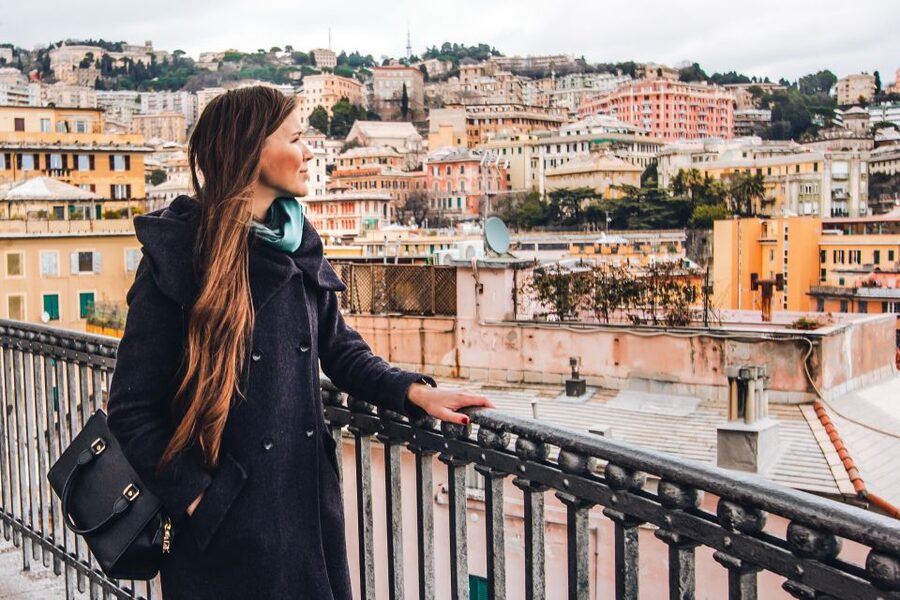
Genoa reveals itself from above. This three-hour walk combines hilltop views, old footpaths, and public funiculars with stories about the city’s maritime past, making it a good choice if you want more than a standard harbor stroll. I especially like the unusual musical touch: the guide carries a small guitar and sings original songs about Genoa and its people. I also like that the tour reaches corners you might skip on your own, including a medieval district and colorful hillside neighborhoods.
The main thing to consider is the walking. Genoa’s creuze, the old stone paths climbing through the city, come with steps and slopes. The route is not described as especially tiring, but it is not suitable for wheelchair users, people with mobility limits, or anyone with a low level of fitness. The snack also deserves a note: it is part of the experience as described, yet food and drinks are listed as excluded, and one participant said none was offered.
Key points at a glance
- A guitar-playing guide brings Genoa’s past to life: Alessandro received especially warm praise for writing and performing three songs during the tour.
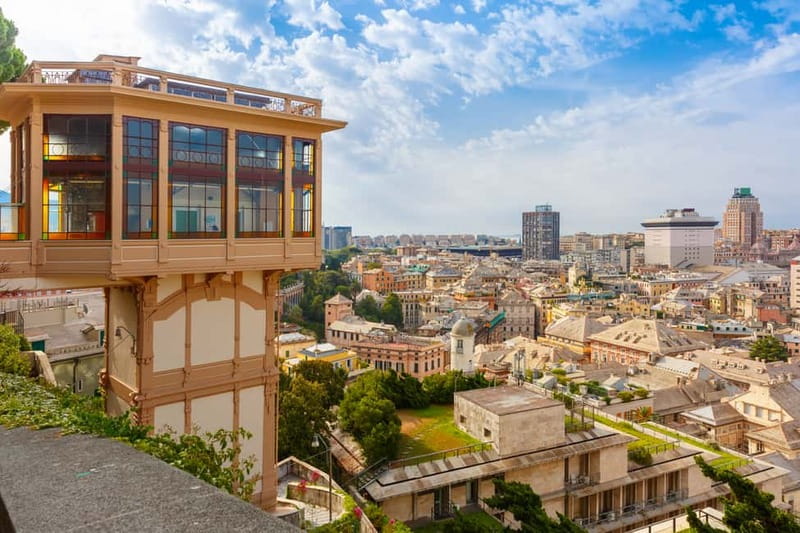
- The funicular saves your legs while opening the views: Public elevators, cable railways, and either a funicular or bus help connect the lower and upper parts of the city.
- The route uses Genoa’s old creuze: These picturesque paths show how the city links the sea with its steep hillsides.
- You get more than a viewpoint: The walk includes a medieval district, historic stories, and a colorful area of houses, gardens, trees, and flowers.
- Plan for hills and steps: Comfortable shoes are essential, and the tour is not suitable for wheelchair users or people with certain medical conditions.
- The $42 price pays for a small, focused experience: You are paying for three hours with a live English or Italian guide, public transport, and a personal look at Genoa beyond the main streets.
Why Genoa looks different from the hills
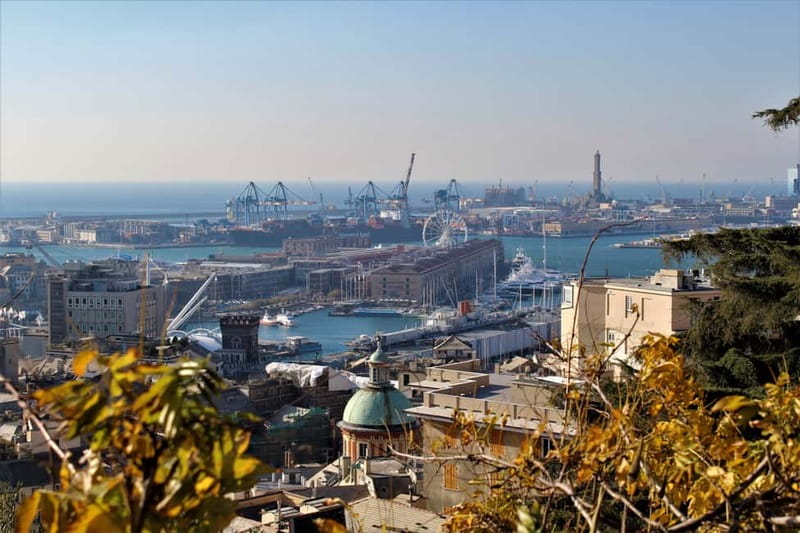
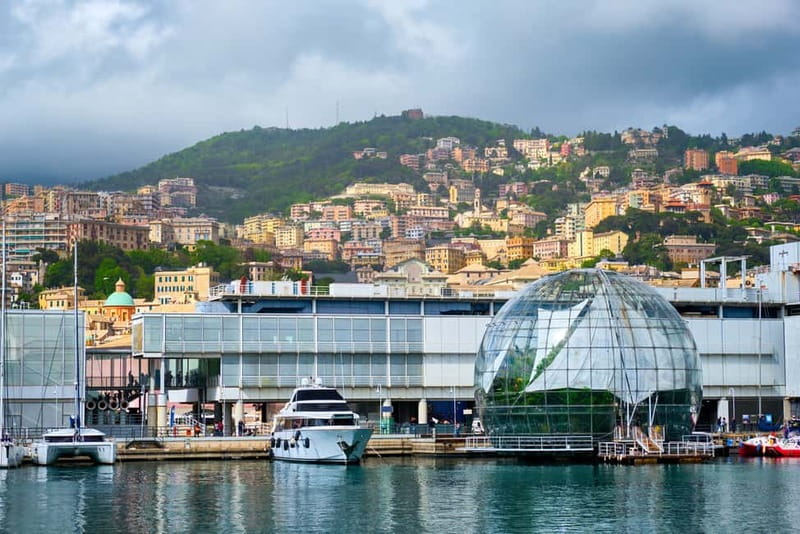
Genoa is a city squeezed between the Ligurian Sea and surrounding hills. From street level, the city can feel dense and tightly packed. From above, its shape makes sense. You see the relationship between the harbor, the old center, and the neighborhoods climbing inland.
That contrast is the central idea of this tour. You do not simply ride to a lookout, take a picture, and return. You walk through the routes that have long linked the upper city with the center. These paths give the experience a local texture that a coach tour cannot provide.
I like this approach because the views are tied to the city’s structure. You learn why Genoa developed vertically, rather than seeing a panorama with no context. The guide’s stories about the ancient maritime republic add another layer, especially if this is your first introduction to Genoa.
The tour also gives you several angles on the city. One viewpoint may show the sea and rooftops, while another reveals the steep lanes, gardens, and hillside homes. That variety matters. You are not standing in one place for three hours hoping the view carries the whole experience.
More Funicular Rides in Italy
- Naples: Panoramic Walking Tour with Funicular
★ 4.8 · 828 reviews - Capri: DIY Day Trip with Blue Grotto, Funicular & Lunch
★ 4.3 · 129 reviews - Lake Como: Easy Mountain Trek with Funicular & Boat Ride
★ 4.7 · 24 reviews
Meeting the guide under the Banco di Sardegna sign
The meeting point is specific: look for the guide under the sign marked Banco di Sardegna. The guide will be carrying a small guitar in a black cover, which should make the group easier to spot.
That guitar is not just a meeting marker. It is part of the tour’s character. The guide uses original songs to explain Genoa’s history and the personality of its inhabitants. This is a more personal style than a standard talk about dates and buildings.
Alessandro was singled out for his energy and musicianship. He reportedly played three songs he had written himself, and the music helped make a three-and-a-half-hour experience pass quickly. The advertised duration is three hours, so allow a little flexibility if the tour runs longer on the day.
The musical element will not suit everyone. If you prefer a tightly scheduled tour with only conventional historical commentary, the songs may feel like a detour. I think they are a useful reason to choose this experience over a more ordinary city walk, but you should book it knowing that storytelling and performance are central parts of the format.
Riding upward by funicular and public transport
The ascent uses Genoa’s public transportation network, including an elevator and funicular or bus. This is a practical feature, not a minor extra. The hills are part of the tour, but you do not have to climb every section from the lower city on foot.
The funicular also gives the tour a natural rhythm. You begin in the city, move upward, and then explore the upper areas on foot. From the high point, the route descends toward the center through a more residential area with colorful houses, gardens, trees, and flowers.
I like that public transport is included in the experience. You do not need to figure out which lift, cable railway, or bus to use while trying to follow the route. The rides also show you how local residents connect the lower and upper parts of Genoa.
Keep in mind that public transport does not remove the physical demands of the walk. You still encounter steps and hills, and the route goes up and down the creuze. The transport simply makes the overall plan manageable for someone who is comfortable walking but does not want a nonstop uphill climb.
Walking Genoa’s ancient creuze
The old footpaths are likely to be the most distinctive part of the route. Genoa’s creuze are not broad sightseeing avenues. They are narrow, traditional paths that climb through the city and its hillsides.
Their appeal comes from the way they connect different parts of Genoa. Instead of moving from one major sight to another by the most direct street, you follow routes that show how the city grew around its difficult terrain. You might find steps, uneven surfaces, and changing slopes along the way.
Comfortable shoes are essential. Sandals with little support would be a poor choice, especially if the stone paths are slippery or uneven. The information for this experience specifically warns about steps and hills, so treat that as a real planning point rather than a routine disclaimer.
The walk is described as not particularly tiring, but that is different from being flat or effortless. You should be willing to walk for three hours and handle repeated climbs and descents. The tour is not suitable for people with mobility impairments, wheelchair users, or people with a low level of fitness. It is also listed as unsuitable for people with heart problems or epilepsy.
More Scenic Railways in Italy
- From Milan: Lake Como Cruise, St. Moritz & Bernina Red Train
★ 4.6 · 5,648 reviews - From Milan: Bernina Train and St. Moritz Day Trip
★ 4.5 · 4,495 reviews - Bernina Red Train, Swiss Alps & St Moritz From Milan
★ 5.0 · 2,954 reviews - Swiss Alps Bernina Red Train and St.Moritz Tour from Milan
★ 4.5 · 2,369 reviews
Reaching the high city for the panoramas
At the highest point, the tour gives you the broad views that justify its name. Genoa spreads below, with the sea and dense urban center set against the hills. The changing viewpoints help you see how close the mountains and water are to one another.
The best value here is not simply the photograph. The guide explains what you are looking at and connects the view to Genoa’s past as a maritime republic. That context helps you understand why the city became such an important port and why its neighborhoods developed in layers up the slopes.
You also get a different view of the city than you would from the waterfront. At sea level, Genoa’s buildings can block your sense of scale. From above, you can see how far the city climbs and how the older center relates to the upper neighborhoods.
Weather will affect this part of the tour. The provided details do not promise a particular visibility level, so do not book solely for a guaranteed perfect panorama. The route still has value in cloudy conditions because of the lanes, history, and music, but clear weather will make the high viewpoints more rewarding.
Hearing Genoa sung instead of simply explained
The guide is called a storyteller, and that description matters. The original songs are designed to explain the city’s history and the character of its people. This approach can make facts easier to remember than a long spoken lecture.
Several details point to the guide as the strongest part of the experience. Alessandro was praised for playing songs he wrote himself, and one participant called him spectacular. Other high ratings describe the tour as informative, interesting, and relaxed. That combination is important. You get historical content, but the tone appears more personal than academic.
The live performance also gives the group a shared moment while moving between neighborhoods. It breaks up the walking and makes the city feel less like a collection of facts. If you enjoy local music or unusual cultural storytelling, this is a real advantage.
There is one small caution about organization. One participant found the guide informative but said the plan changed as the guide decided and that not everything was explained in advance. If you prefer to know each stop before you reach it, ask questions as the tour unfolds. A flexible route may be part of the storytelling style, but clear communication still matters.
Exploring the medieval district and lower neighborhoods
The route includes a medieval district, which gives you a closer look at Genoa’s older urban fabric. The information does not name the district or promise particular monuments, so you should not book this expecting a fixed list of famous buildings.
Instead, think of this section as a walk through the city’s texture. The old paths, close buildings, steps, and changing elevations show how Genoa was shaped by limited space. The guide’s stories add the human side, including the habits and personality of local people.
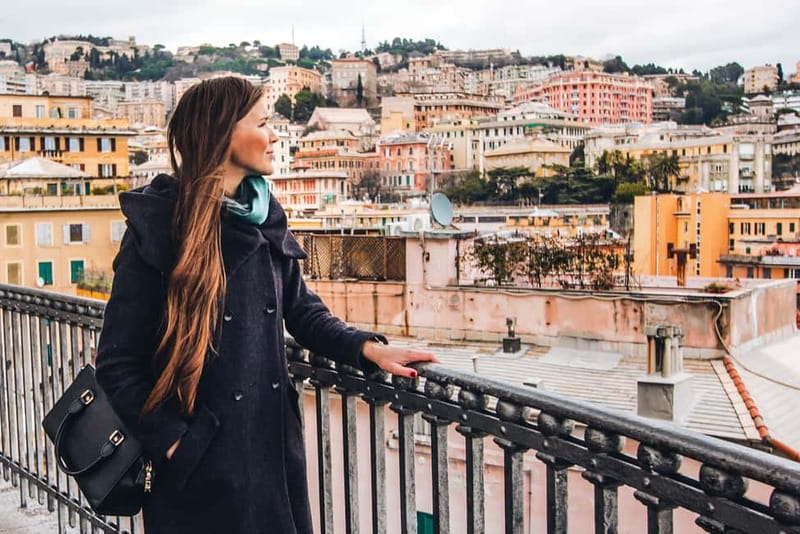
After reaching the high point, you descend toward the center through an area described with colorful houses, gardens, trees, and flowers. This sounds like a quieter change of pace after the more historic sections. It also gives you a look at Genoa beyond the busiest central streets.
The route seems designed to show contrasts: sea and hills, old paths and public transport, medieval streets and residential gardens, spoken history and sung stories. That range is why the tour feels more substantial than a simple lookout visit.
What the $42 price really covers
At $42 per person, this is not the cheapest way to see Genoa’s views. You can reach some viewpoints independently for less, especially if you already understand the public transport system and enjoy exploring without a guide.
The value comes from combining several services into one three-hour outing. You receive a live guide in English or Italian, public transportation using an elevator and funicular or bus, historical explanation, several viewpoints, and a guided route through the old paths and medieval area.
The small group option improves the value if available for your departure. A smaller group can make it easier to hear the guide, ask questions, and stay together on narrow paths. Group size can affect the feel of a walking tour, especially when the route includes steps and changing directions.
The snack is less clear. The experience is described as including a traditional snack in the overall outline, but food and drinks are also listed as not included. One participant specifically said no snack was offered. I would not count on food as part of the $42 unless you confirm it before booking, and I would carry water and a small snack for yourself.
Free cancellation up to 24 hours before the start and the option to reserve now and pay later make the booking less rigid. Those policies are useful if your Genoa schedule depends on weather or changing port plans.
Who will enjoy this tour most
I would recommend this experience to you if you want a strong first look at Genoa and enjoy walking through places that are not obvious on a basic city route. It suits curious visitors who like local stories, live performance, and broad views in equal measure.
It is especially useful early in your stay. The high viewpoints can help you understand the city’s layout, while the guide introduces the old center and hillside neighborhoods. You may finish with a clearer sense of where you want to return on your own.
You should choose another activity if you need step-free access, have difficulty with hills, or want a fully predictable itinerary. This is also not ideal if your main goal is a long, formal lecture about Genoa’s art and architecture. The musical storytelling and changing route are central to the experience.
Bring comfortable shoes, water, and patience for uneven paths. If the snack matters to you, ask about it before departure. The meeting point is under the Banco di Sardegna sign, and the guitar in its black cover should help you identify the guide.
Should you book the Genoa panoramic tour?
Book it if you want Genoa explained through its hills, old paths, and people rather than only through its grand waterfront buildings. The combination of funicular travel, multiple viewpoints, medieval lanes, and original guitar songs gives the three hours a clear personality.
The strongest reason to go is the guide-led storytelling, especially if Alessandro is leading your group. The main reasons to hesitate are the hills, steps, uncertain snack arrangement, and possibly flexible route.
For a reasonably fit visitor who likes a little music with their history, $42 is fair value. You are not just paying for a ride uphill. You are paying for a guided way to understand how Genoa connects its sea, slopes, and old neighborhoods.
FAQ
How long does the Genoa panoramic tour last?
The advertised duration is three hours. One participant described spending three and a half hours on the experience, so allow some extra time if your schedule is tight.
What languages are available?
The tour is offered in English and Italian.
Where is the meeting point?
Meet the guide under the sign marked Banco di Sardegna. The guide will be carrying a small guitar in a black cover.
Is public transportation included?
Yes. The experience includes public transportation using an elevator and a funicular or bus.
Do I need to be fit for the walk?
You should be comfortable walking on hills and steps. The tour is not suitable for people with mobility impairments, wheelchair users, people with heart problems, people with epilepsy, or people with a low level of fitness.
Is food included?
Food and drinks are listed as not included, although the experience description refers to a traditional snack. Since one participant said no snack was offered, confirm this before booking and plan to bring your own water and food.
Just added around Italy
- Verona Private City Tour including Arena and Funicular for Kids and Families★ 5.0 · 6 reviews
- Private Full Day Tour from Milan to Venice with local tour guide and fast train★ 4.5 · 3 reviews
- Venice Tour by High-Speed train from Florence★ 5.0 · 6 reviews
- Venice Beginner’s Kayak Tour: train & visit the Medieval Arsenal★ 5.0 · 5 reviews
- Etna Wine Tasting and Train Tour★ 4.0 · 8 reviews
- Private Tour of Rome from Florence in fast train★ 5.0 · 2 reviews
- Florence from Rome by High Speed Train at your pace★ 4.5 · 11 reviews
- Venice Day Trip from Rome: Private Tour by High Speed Train★ 4.0 · 58 reviews
Scenic Railways, compared.
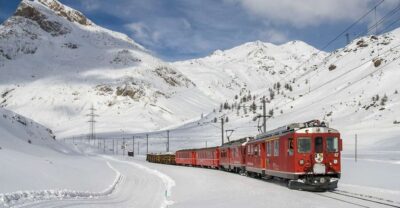
Lake Como Cruise, St. Moritz & Bernina Red Train
Read our review →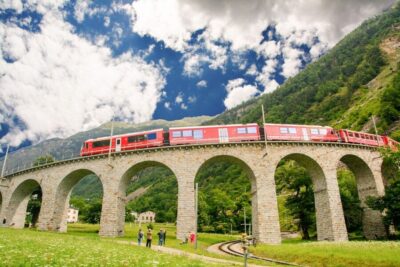
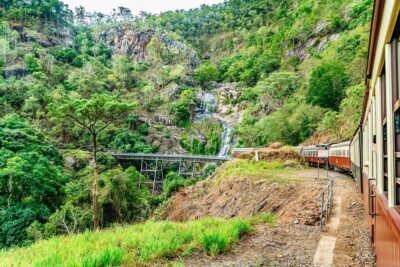
Self-Guided Kuranda Trip with Train and Skyrail
Read our review →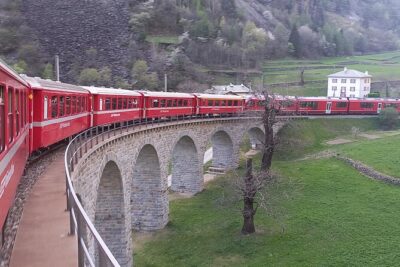
Bernina Red Train, Swiss Alps & St Moritz From Milan
Read our review →
Swiss Alps Bernina Red Train and St.Moritz Tour from Milan
Read our review →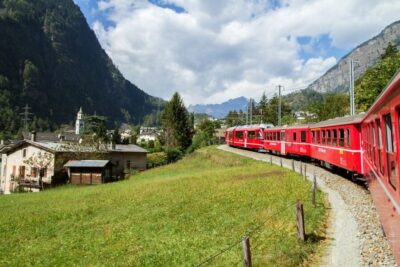
Milan to St. Moritz: Scenic Bernina Train Tour with Guide
Read our review →
Bernina Train, Swiss Alps & St. Moritz Day Trip
Read our review →Browse the lists this tour appears in