
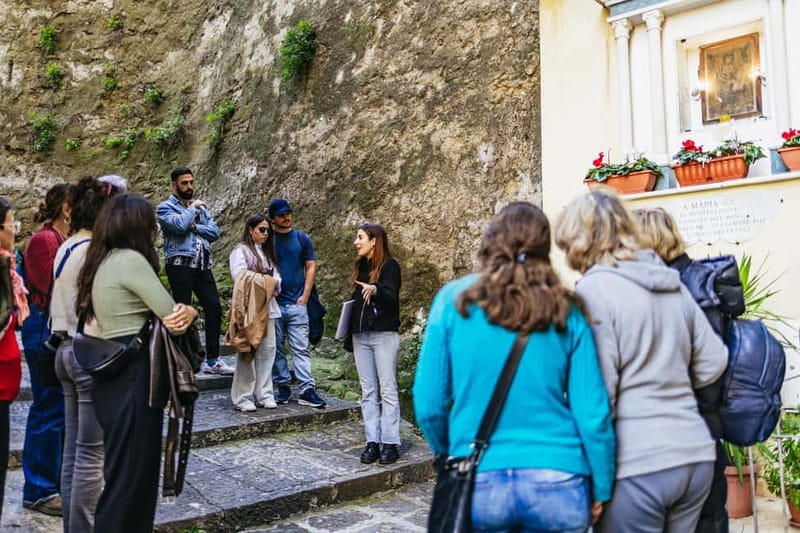
Review · NAPLES
Naples: Panoramic Walking Tour with Funicular
Naples reveals itself from the hills downward. This two-hour walk links elegant Vomero with the Spanish Quarters, using the funicular to spare you the uphill climb and a guide to explain what changes as you descend. I especially like the wide views toward Capri, Vesuvius, Sorrento, and the Amalfi Coast, plus the walk down the Petraio stairways, a route many visitors would miss on their own.
I also like the way the tour ends at Pignasecca Market, where Naples feels direct, noisy, and local rather than carefully arranged for sightseeing. The main consideration is physical: this is a downhill walk with stairways and uneven urban paths, so it is not suitable for wheelchair users, people with heart problems, or anyone with a low level of fitness.
Five things to know before you book
- Vomero gives you a calmer start: Tree-lined streets, Liberty-style buildings, and a quieter residential mood contrast sharply with central Naples.
- The best views come from Via Palizzi: You can see across the Gulf of Naples toward Capri and Mount Vesuvius, with Sorrento and the Amalfi Coast also in view when conditions allow.
- The Petraio route is the tour’s signature walk: You descend through stairways and smaller paths rather than simply following busy streets.
- The guide makes the contrasts useful: Guides such as Miriam, Virginia, Roberta, Barbara, Serena, and Stefano have been praised for explaining local history, architecture, daily life, and city customs in clear, lively ways.
- Pignasecca is a real finish, not a staged attraction: Fresh produce, street food, vendors, and narrow streets give you a taste of working Naples.
- The $24 price is fair: It includes the guide, visual material, and one-way funicular ticket, making it good value for a first look at the city.
Starting at Augusteo and riding uphill
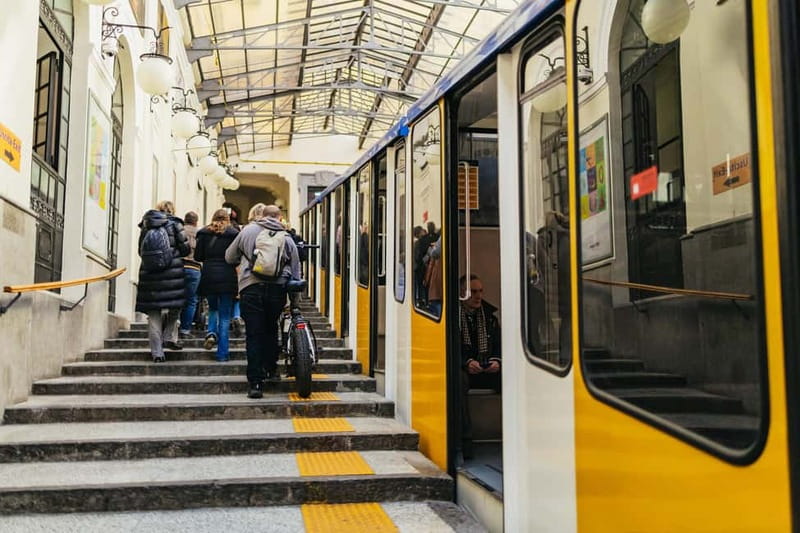
The meeting point is Pasticceria Galiero near Augusteo. That is a practical place to begin, since the tour starts near the lower part of Naples and quickly moves upward by funicular.
The one-way cable car ride takes about 10 minutes. It is not just transport. It introduces one of Naples’ useful ways of moving between the lower city and the hill districts, while saving your legs for the more interesting part of the outing.
The tour does not return you to Augusteo. You ride up at the start, then walk downhill through several parts of the city before finishing at Via Pignasecca. If you need to collect luggage, meet a train, or return to your hotel, allow extra time after the stated two hours.
More Funicular Rides in Italy
- Capri: DIY Day Trip with Blue Grotto, Funicular & Lunch
★ 4.3 · 129 reviews - Genoa: Guided Panoramic City Tour with Funicular
★ 4.8 · 24 reviews - Lake Como: Easy Mountain Trek with Funicular & Boat Ride
★ 4.7 · 24 reviews
Vomero: a different Naples
At the top, the mood changes quickly. Vomero is known for its peaceful streets, elegant buildings, and Liberty-style architecture. The area feels more residential and ordered than the crowded center below.
This contrast is one of the strongest reasons to take the tour. Naples can seem confusing if you only visit the historic center. Vomero shows you another side of the city, one with quieter streets and a more settled rhythm.
Your guide places the buildings and neighborhoods in context rather than simply pointing out façades. Several guides have been praised for explaining how the city’s different districts relate to one another. Roberta, described as a local guide familiar with the area’s corners and buildings, is one example of the kind of local perspective this walk aims to provide.
You should not expect a long architecture lecture. The route moves at a practical pace, with short guided stops and time to look around. The explanations cover architecture, history, present-day life, and local attitudes. That mix helps the upper district feel like part of a living city, not just a viewpoint.
Via Palizzi and the Gulf views
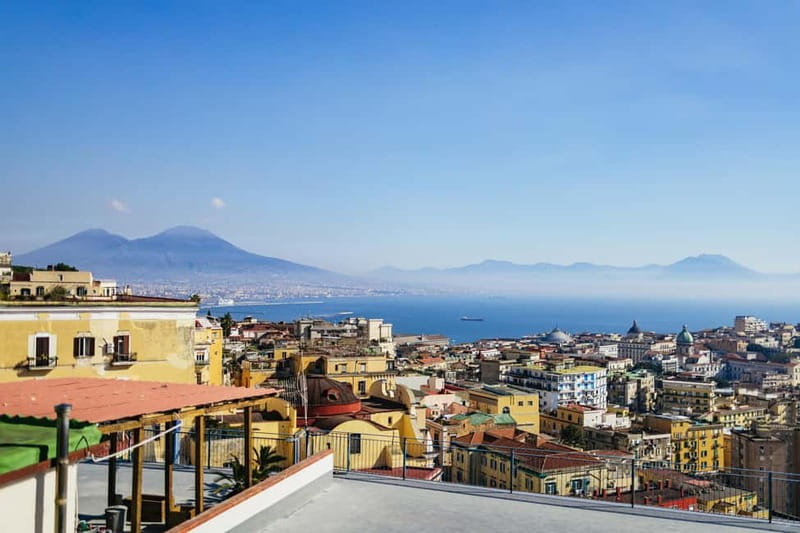
The panoramic portion comes at Via Palizzi. Here the reward is the broad view over Naples and the Gulf. Capri, Mount Vesuvius, Sorrento, and the Amalfi Coast may appear along the horizon, depending on weather and visibility.
Bring your phone or camera, but do not rush this section. The view gives you a useful map of the city. From above, you can understand the relationship between the hills, the coast, and the dense central neighborhoods. Later, when you are walking through the Spanish Quarters, the crowded streets make more sense because you have already seen the city’s larger shape.
This is also where the guide’s commentary matters. The coastal setting is not just pretty scenery. It helps explain why Naples feels compressed between hills and sea, and why its neighborhoods can change so sharply over a short distance.
A good guide will point out the main sights and explain what you are seeing without turning the stop into a long pause. Serena, Virginia, Barbara, and Stefano have all been praised for mixing clear information with humor and enthusiasm. That style suits a view stop well. You get facts, but you also get a sense of how locals see their city.
Down the Petraio stairways

The route then turns downward along the Petraio stairways. This is the most distinctive part of the outing, but also the section that requires the most care.
You are walking downhill, not climbing up. That makes the tour easier than a full uphill route, yet the stairs still demand steady footing. Comfortable shoes are essential, and sandals with poor grip would be a bad choice. The tour information specifically advises comfortable clothing and shoes.
Petraio connects upper Naples with the lower districts through a series of stairways and paths. It offers a slower view of the city than a taxi or bus can provide. You pass from a quieter hill area toward denser streets, and the change happens gradually rather than all at once.
The stairways are not a polished museum corridor. Urban paths can be uneven, and the pace may need to adjust for the group. One guide, Stefano, was praised for handling a participant who could not manage the physical demands, but you should still judge your own fitness honestly before booking.
This part also explains why the tour is not suitable for wheelchair users or people with serious mobility limits. Baby strollers are not allowed either. Pets are also not allowed.
More Scenic Railways in Italy
- From Milan: Lake Como Cruise, St. Moritz & Bernina Red Train
★ 4.6 · 5,648 reviews - From Milan: Bernina Train and St. Moritz Day Trip
★ 4.5 · 4,495 reviews - Bernina Red Train, Swiss Alps & St Moritz From Milan
★ 5.0 · 2,954 reviews - Swiss Alps Bernina Red Train and St.Moritz Tour from Milan
★ 4.5 · 2,369 reviews
Corso Vittorio Emanuele and the changing city
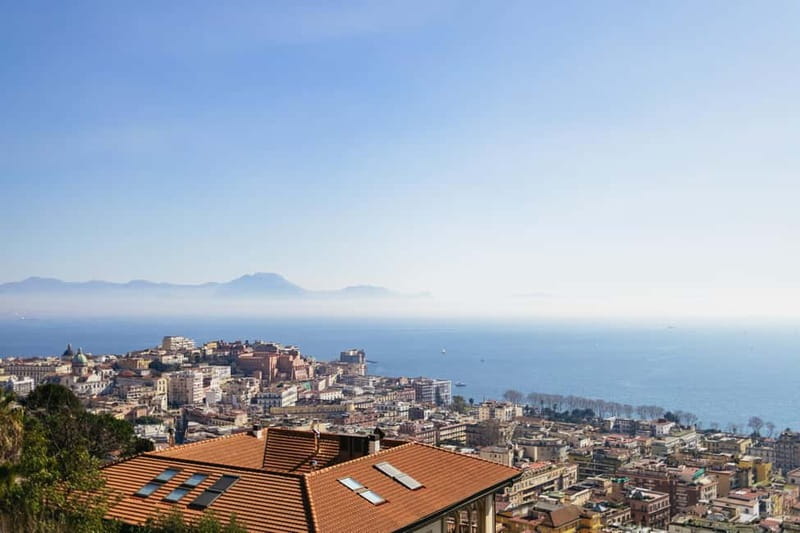
The walk includes Corso Vittorio Emanuele, a useful point for understanding Naples as the route transitions from hill to center. The guide continues to connect what you see with the city’s past and present.
Several people who took the tour valued this explanation of different faces of Naples. That phrase fits the route. The tour is not trying to show every major monument. Instead, it follows a change in atmosphere: calm Vomero, hillside paths, a broad coastal view, and then the close-packed streets below.
The route includes several short guided walking sections, photo stops, and a longer stretch through the Spanish Quarters. The timing is broken into pieces rather than one long lecture, which helps keep the outing manageable. You will still spend much of the two hours on your feet, but the plan has regular points for looking, listening, and taking pictures.
If you have only a few hours in Naples, this format makes sense. One person who used the tour before a flight found it a useful way to gain a city overview quickly. I would place it early in a Naples visit, since the guide can help you understand the neighborhoods and suggest places to see afterward.
Entering the Spanish Quarters
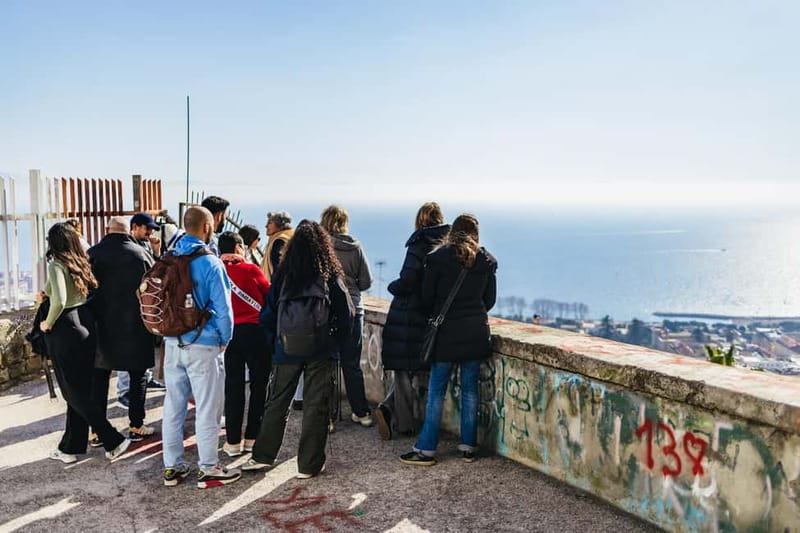
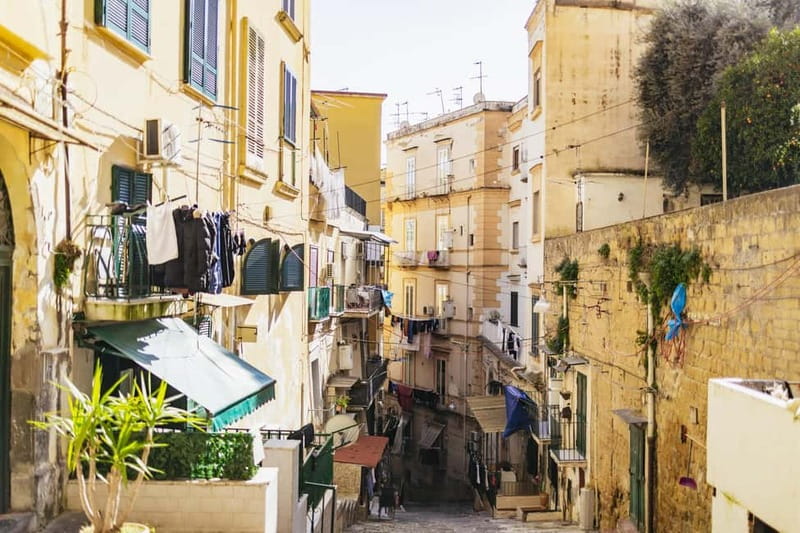
The Spanish Quarters mark another sharp change. Narrow streets, colorful murals, and close-set buildings replace the open views of Vomero.
This is where the tour becomes less about scenery and more about street life. You see how Naples works at ground level, with people, shops, sounds, and movement close around you. The contrast with the peaceful upper district is the point, not a flaw.
Do not expect the Spanish Quarters to feel quiet or tidy. Naples is famously energetic, and this part of the route reflects that. Some streets may feel crowded or rough around the edges. One useful practical comment from a past participant was to watch where you step, since dog mess can be an issue in Naples.
The guide helps you read the area without reducing it to stereotypes. Guides have been praised for discussing local mentality, daily behavior, history, and culture in an approachable way. Miriam was described as particularly good at putting historical events into a modern context, while Virginia was praised for explaining architecture and culture with a lively style.
The multilingual setup is another plus. Tours are offered in Italian, English, French, and Spanish. Guides have handled groups with more than one language, including a session in English and French. Still, if your group is multilingual, the commentary may take a little longer as explanations are repeated.
Finishing at Pignasecca Market

The tour finishes at Via Pignasecca, beside the Pignasecca Market. This is a smart ending because it leaves you in a place where you can continue exploring on your own.
Fresh produce, food stalls, vendors, and loud conversation create a strong final impression. It is not a museum version of Naples. It is a working market and a useful place to pause after the walk.
You are not provided with food or drinks, so plan accordingly. You can explore the market after the guide leaves, but any purchases are your responsibility. If you enjoy trying local food, this is the natural point to continue, though the tour itself does not include tastings.
The market also gives the route a sense of direction. You begin near Augusteo, rise to Vomero, cross the hillside, pass through the Spanish Quarters, and finish in a central market district. The path tells a story through geography instead of moving between isolated sights.
What the guide adds for your $24
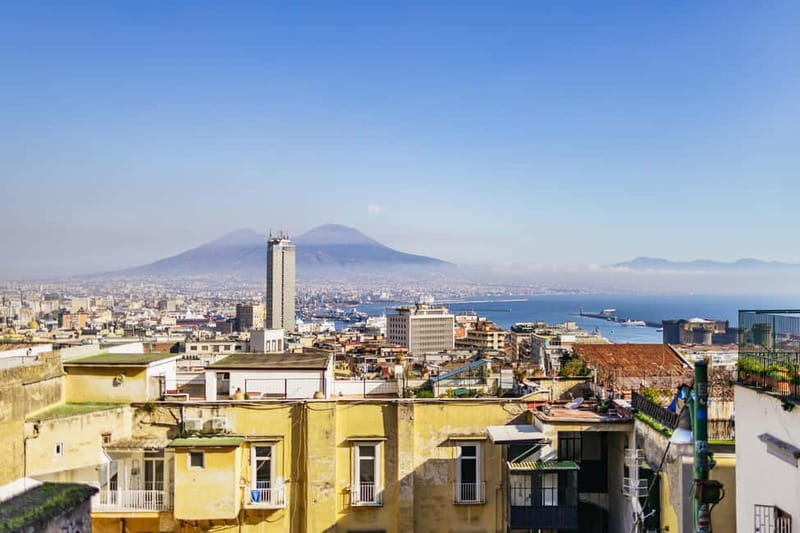
At $24 per person, the price is reasonable for a two-hour guided outing. The fee includes the one-way funicular ticket, a live guide, and visual material. You are mainly paying for interpretation and route planning, not expensive admission tickets.
That distinction matters. You could ride the funicular and visit viewpoints independently for less, but you would need to work out the route, find Petraio, understand the neighborhood changes, and decide where to finish. The guide turns those separate pieces into one coherent walk.
The strongest part of the value is the local explanation. Guides including Roberta, Serena, Barbara, Miriam, Virginia, Stefano, Simone, and Arianna have been praised for being clear, friendly, funny, and well prepared. Their styles vary, of course, but the repeated praise points to a consistent strength: the tour depends on good storytelling, and the guides appear to take that role seriously.
The tour can also be booked as a private group. That may suit families or friends who want a more personal pace, though the supplied information does not give a separate private-group price.
Who should take this walk?
I would recommend it to a first-time Naples visitor who wants an overview before tackling individual sights. It is especially useful if you want views, neighborhood context, and local stories in one compact outing.
It also suits you if you prefer a city walk with a clear change of scenery. The funicular removes the uphill section, while the downhill route keeps the journey active and varied.
You may want to skip it if you dislike stairs, have limited fitness, or need step-free access. This is not a gentle sightseeing bus tour. The two-hour length is manageable for many people, but the stairways and uneven paths are real parts of the experience.
The tour is also less suited to someone focused only on famous monuments. You will not spend the outing inside churches, museums, or archaeological sites. The reward is the city itself: its neighborhoods, views, buildings, markets, and everyday rhythms.
Practical details that matter
Meet at Pasticceria Galiero near Augusteo. Wear sturdy, comfortable shoes and clothing suited to walking. Bring water, since food and drinks are not included, and consider mosquito spray if you are sensitive to bites.
The tour is offered in Italian, English, French, and Spanish. A private group option is available. You can cancel up to 24 hours before the start for a full refund, and reserve now while paying later, which is useful if your Naples schedule is still changing.
Late arrivals and no-shows are not refundable, so arrive with enough time to find the meeting point. The tour lasts two hours, but keep extra time afterward if you plan to browse Pignasecca Market or continue into the city center.
Should you book the Naples panoramic walk?
I would book this tour early in a Naples visit, especially if you want help making sense of the city quickly. The combination of funicular transport, Via Palizzi views, Petraio stairways, Vomero architecture, the Spanish Quarters, and Pignasecca Market gives you a strong first look for $24.
Book it if you enjoy walking downhill, asking questions, and seeing ordinary neighborhoods along with fine views. Skip it if stairs are a problem or if you want a monument-by-monument tour. For most fit visitors who want Naples beyond the standard postcard stops, this is a well-priced and useful introduction.
FAQ
How long does the Naples panoramic walking tour last?
The tour lasts two hours.
Where does the tour begin?
Meet your guide at Pasticceria Galiero near Augusteo.
Where does the tour finish?
The tour finishes at Via Pignasecca, near Pignasecca Market.
Is the funicular ticket included?
Yes. The price includes one one-way funicular ticket.
What areas does the walking tour visit?
The route connects Vomero, Via Palizzi, the Petraio stairways, Corso Vittorio Emanuele, the Spanish Quarters, and Pignasecca Market.
Which languages are available?
The live tour is offered in Italian, English, French, and Spanish.
Is the tour suitable for wheelchair users?
No. The tour is not suitable for wheelchair users. It is also not recommended for people with heart problems or a low level of fitness.
What should I bring?
Bring comfortable shoes and comfortable clothes. Food and drinks are not included, so you may also want to bring water.
Just added around Italy
- Verona Private City Tour including Arena and Funicular for Kids and Families★ 5.0 · 6 reviews
- Private Full Day Tour from Milan to Venice with local tour guide and fast train★ 4.5 · 3 reviews
- Venice Tour by High-Speed train from Florence★ 5.0 · 6 reviews
- Venice Beginner’s Kayak Tour: train & visit the Medieval Arsenal★ 5.0 · 5 reviews
- Etna Wine Tasting and Train Tour★ 4.0 · 8 reviews
- Florence from Rome by High Speed Train at your pace★ 4.5 · 11 reviews
- Venice Day Trip from Rome: Private Tour by High Speed Train★ 4.0 · 58 reviews
- Private Tour of Rome from Florence in fast train★ 5.0 · 2 reviews
Scenic Railways, compared.

Lake Como Cruise, St. Moritz & Bernina Red Train
Read our review →
Self-Guided Kuranda Trip with Train and Skyrail
Read our review →
Bernina Red Train, Swiss Alps & St Moritz From Milan
Read our review →
Swiss Alps Bernina Red Train and St.Moritz Tour from Milan
Read our review →
Milan to St. Moritz: Scenic Bernina Train Tour with Guide
Read our review →
Bernina Train, Swiss Alps & St. Moritz Day Trip
Read our review →Browse the lists this tour appears in