
Review · BANGKOK
Private Historic River Kwai Death Railway, War Cemetery and Hellfire Pass Tour
Some places ask you to slow down. This private day trip from Bangkok takes you into Kanchanaburi’s wartime past, with stops at the Kanchanaburi War Cemetery and Hellfire Pass before reaching the famous Bridge over the River Kwai. I like the personal format, which lets your group ask questions and adjust the pace, and I like that lunch, transport, water, and entrance fees are included. The catch is the distance: with a 6:30 a.m. start and roughly ten hours on the road, this is a long and serious day.
I also like the mix of museum time, memorial visits, walking, and railway sites. Guide Nan received especially warm praise for making the experience informative and eye-opening, while Peter and the driver were noted for being punctual, friendly, and flexible. Still, you should weigh the $162.40 price against the fact that several sites have free admission and could be visited with a hired driver for less.
Key points at a glance
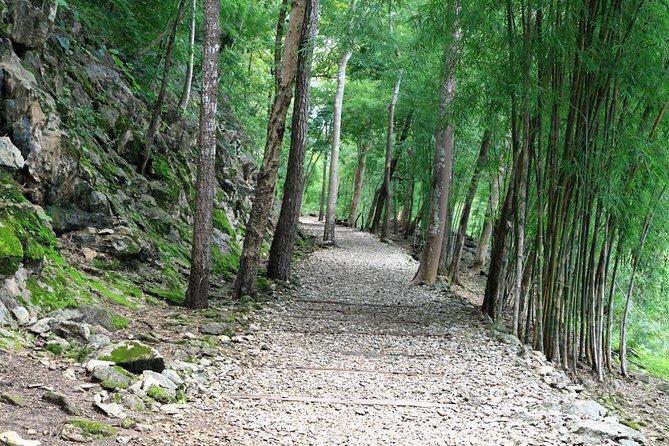
- Hellfire Pass is the emotional center: You walk along a railway cutting linked to the deaths of more than 16,000 Allied prisoners and countless Asian laborers.
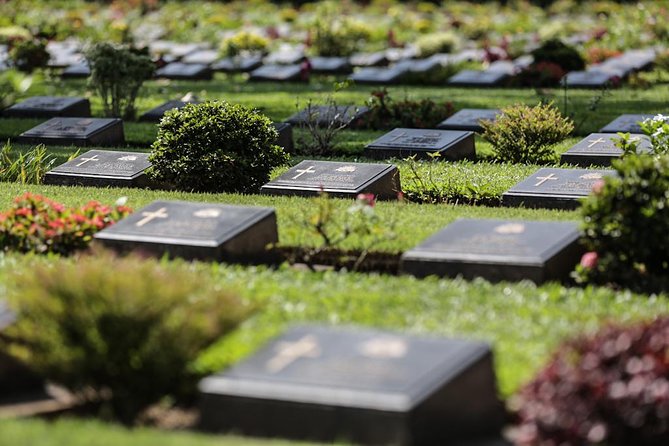
- The cemetery is quiet and carefully maintained: Nearly 7,000 Allied POWs are buried at Kanchanaburi War Cemetery.
- This is a genuinely private outing: Only your group takes part, with a guide and private air-conditioned transport.
- Expect a very early start: Pickup begins at 6:30 a.m., helping you make the most of a long day outside Bangkok.
- The route combines several different experiences: Memorials, a museum, railway walking, a cave with a Buddha image, and the River Khwae Bridge.
- The value depends on your priorities: The guide, private vehicle, lunch, and convenience may justify the cost, but independent visitors can spend less.
Why this River Kwai day trip matters
The River Kwai region is not just a scenic escape from Bangkok. It is a place where engineering, war, forced labor, and memory meet. The Thai-Burma Death Railway was built during World War II under brutal conditions, using Allied prisoners of war and large numbers of Asian laborers.
That background changes the way you see the railway. The bridge is famous, but it is only one part of the story. Hellfire Pass, the cemetery, and the museums give the day its weight. I appreciate that this tour does not reduce the area to a quick photo stop at a well-known bridge.
The private setup is useful here. You are not folded into a large group, so you can ask about the parts of the story that interest you most. A guide can also connect the separate stops, which matters because the route includes both formal memorials and places that require more imagination.
This is not a light sightseeing day. Some stops are sobering, and the subject is difficult. You should choose it because you want historical context, not simply a scenic train ride or a break from Bangkok.
More Death Railway Tours in Bangkok:
- From Bangkok: Death Railway & Hellfire Pass Tour with Lunch
★ 4.6 · 931 reviews - Bridge on the River Kwai and Thailand-Burma Railway Tour
★ 4.5 · 658 reviews - Bridge on the River Kwai and Thailand-Burma Railway Guided Tour
★ 4.5 · 353 reviews
Leaving Bangkok at 6:30 a.m.
The day begins early. A 6:30 a.m. start gives you time to reach Kanchanaburi, visit the main sites, and return within the roughly ten-hour schedule.
That early departure is one of the practical advantages of booking a private tour. You do not have to arrange separate transport, navigate the route, or work out how to connect sites spread across the region. You can settle into an air-conditioned vehicle and let the driver handle the road.
The downside is obvious: this is not a relaxed late-morning outing. The journey from Bangkok can take a large part of the day, and one review described the full day as involving about three hours each way. Thai traffic can make the drive longer, so I would keep your evening plans flexible.
The vehicle, bottled water, and lunch are included. Those details do not sound glamorous, but they matter on a long road day. You can focus on the memorials instead of hunting for food or organizing local transfers.
Kanchanaburi War Cemetery and 6,982 graves
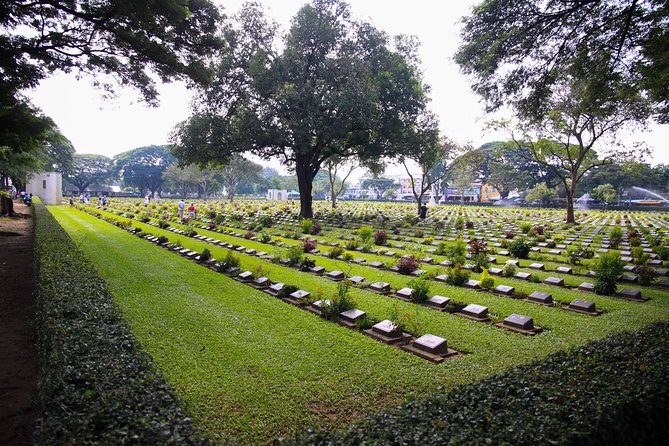
The first major stop is Kanchanaburi War Cemetery. Nearly 7,000 Allied POWs who died during construction of the Thai-Burma Death Railway are buried here, with the stated total reaching 6,982.
You have about 30 minutes at the cemetery. That is enough time to walk through the grounds, read the markers, and take in the scale of the loss. It is a place that rewards quiet attention rather than a fast checklist approach.
The cemetery is free to enter, but its value is not measured by an admission ticket. The orderly rows and personal names make the wartime statistics more immediate. I find this stop useful early in the day because it gives you a human frame for the sites that follow.
Do not expect a dramatic attraction. The power comes from the silence and the sheer number of graves. If you prefer a fast-paced sightseeing schedule, the stillness may feel slow. If you want the history to make sense, this is an essential opening.
Hellfire Pass: the hardest walk of the day
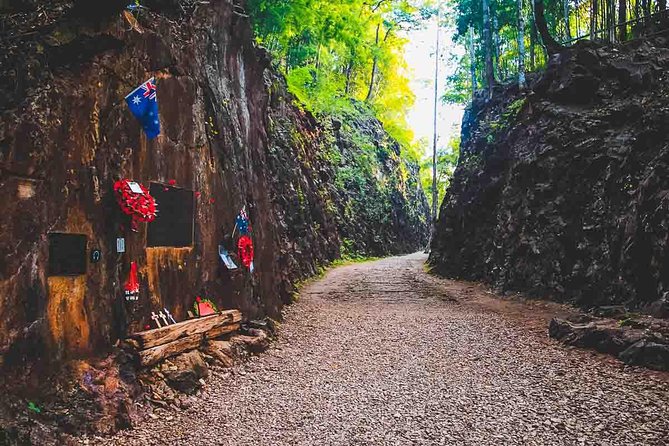
Hellfire Pass is the central reason to choose this experience. The site is a cutting through rock on the Death Railway, associated with the deaths of more than 16,000 Allied prisoners and countless Asian laborers during World War II.
You spend around two hours at the Hellfire Pass Interpretive Centre and Memorial Walking Trail. That gives you time for the museum and for walking toward the cutting. The combination is important. The museum provides information, while the trail lets you see the physical conditions that made the railway so punishing to build.
The walk gives the history a physical scale. You are no longer looking only at dates or displays. You are moving through the kind of confined, demanding space where prisoners and laborers worked under terrible conditions.
A moderate level of physical fitness is recommended. The tour does not present this as a strenuous expedition, but you should be comfortable walking along the memorial trail. Wear practical footwear and be prepared for the fact that the subject matter can be emotionally heavy.
This is also where a good guide can make a real difference. Nan was praised for making the experience informative and eye-opening, particularly in explaining how badly the soldiers were treated. The private format lets you pause for questions instead of trying to hear a short explanation over a large group.
More Train Journeys in Bangkok:
- Day Trip to Bangkok Floating Market & Maeklong Railway
★ 5.0 · 1,528 reviews - Bangkok: Railway and Floating Market Tour with Dragon Temple
★ 4.6 · 1,225 reviews - Private Excursion to Maeklong Railway and Floating Markets
★ 5.0 · 850 reviews - From Bangkok: Railway & Damnoen Saduak Floating Market Tour
★ 4.6 · 775 reviews
Walking the Death Railway
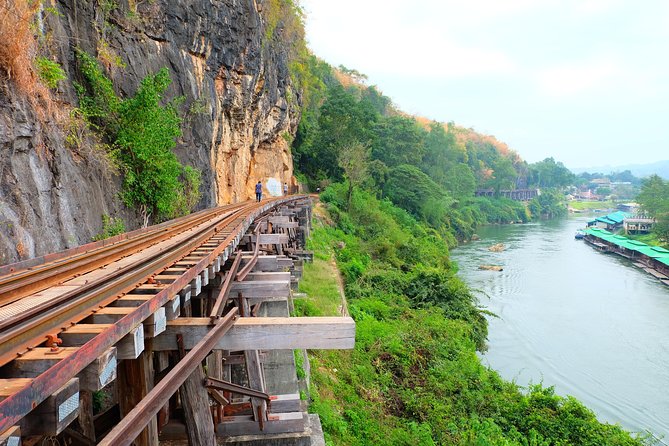
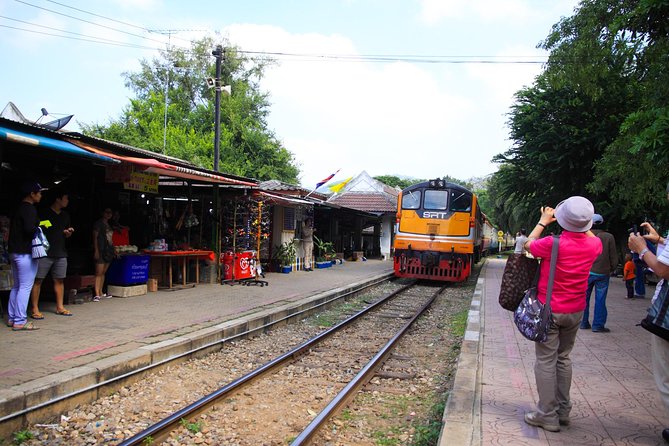
The next stop is listed as the Death Railway Museum and Research Centre, with about 30 minutes set aside. The schedule also includes a walk on the railway itself, so you get a chance to see the route beyond museum displays.
This short stop works best as a bridge between the larger memorial visits. After the cemetery and Hellfire Pass, the railway is not just an old transport line. It becomes evidence of the scale of the wartime project and the human cost behind it.
The 30-minute timing means you should not expect a long museum study session. If you like reading every panel and examining every display, you may want more time than the schedule allows. On the other hand, the compact visit helps keep a demanding day moving.
The railway setting also adds variety. Hellfire Pass is a cutting and memorial trail, while this section gives you a different view of the route and its construction. Together, the stops show why the Death Railway cannot be understood from a single viewpoint.
Tham Kra Sae Bridge and the POW cave
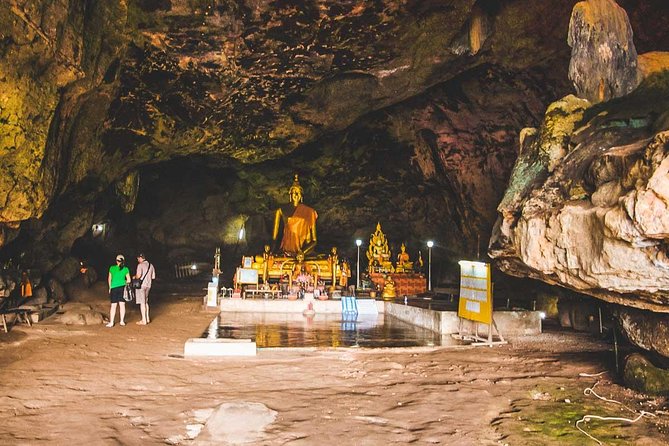
Tham Kra Sae Bridge receives about 15 minutes. This is a short stop, but it adds a distinctive detail to the route: a cave containing a Buddha image.
The cave was formerly a POW camp during construction of the railway. That fact gives the stop more importance than its brief duration suggests. You are seeing a religious site connected to the same railway project, rather than simply stopping for a photograph.
Fifteen minutes is enough for a quick visit, but not for a long exploration. Keep your expectations in check. This is a compact part of the day, and the tour does not promise an extended cave or temple experience.
I like this stop because it breaks up the memorial and museum visits with a physical place that has its own story. It also reminds you that the railway passed through lived-in areas and existing cultural sites, not an empty historical setting.
One hour at the Bridge over the River Kwai
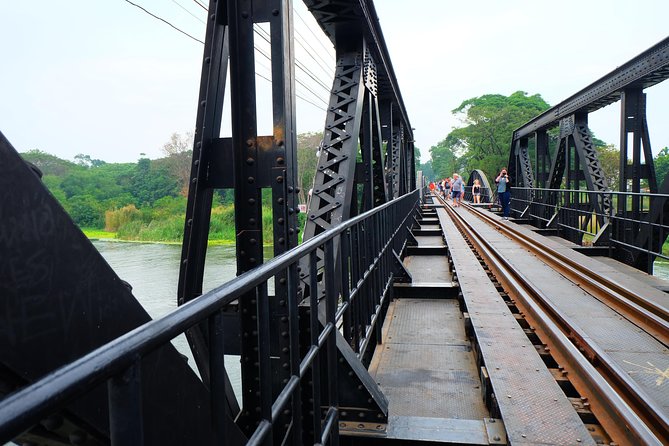
The final major stop is the famous River Khwae Bridge, with around an hour to walk along the iron bridge and take in its setting.
The bridge is the most recognizable image connected with this tour, but it can also be the easiest place to oversimplify. A short walk across the structure does not explain the full wartime story. That is why the earlier stops matter so much.
With an hour here, you should have time to walk, look at the river, and consider how the bridge fits into the larger railway project. The bridge itself is a historic structure associated with bloodshed and conflict during World War II, not merely a scenic crossing.
The stop also provides a visual change after the cemetery and Hellfire Pass. The river setting can feel calmer, but the history remains present. I would treat the bridge as a final reflection point, not the main educational portion of the day.
Because this is a popular name, you might be tempted to judge the tour by the bridge alone. That would miss the point. The strongest parts of the experience are the places that show the human cost behind the famous image.
What the private guide and vehicle add
The tour includes private transportation, an air-conditioned vehicle, a professional guide, lunch, bottled water, and entrance fees. Only your group participates, which gives the day a more personal feel than a large coach excursion.
A private guide is most useful at places such as Hellfire Pass, where the setting needs context. The cemetery and bridge can be visited without a guide, but a guide can explain how they connect to the wider history and answer questions as they arise.
The feedback on the guiding is positive but not uniform. Nan was praised for being informative and making the subject eye-opening. Peter and the driver were described as friendly, punctual, and willing to shape the day around the group. One less enthusiastic assessment argued that the sites were easy to visit independently and that a professional guide may not justify the higher price for everyone.
That is a fair criticism. The included admissions do not carry much financial weight because several stops are free. You are mainly paying for the private vehicle, the long-distance convenience, lunch, and the guide’s time.
The driver also matters more than you might expect. Traffic between Bangkok and Kanchanaburi can turn a ten-hour plan into a tiring day. A punctual driver who handles the roads well helps protect the time available at the memorials.
Is $162.40 a fair price?
At $162.40 per person, this is not the cheapest way to see the River Kwai sites. If you are traveling alone, the price may feel high because this is a private tour rather than a shared group departure.
The calculation changes if you are traveling with family or friends. Group discounts are offered, and the vehicle, guide, lunch, water, hotel transfers, and entrance fees are bundled together. You also avoid the work of arranging a driver and deciding how to connect several sites across Kanchanaburi.
The strongest case for the price is convenience plus interpretation. You leave Bangkok early, visit the major locations in one day, and have someone available to answer questions. You also avoid the uncertainty of finding transport between stops.
The strongest case against the price is simple: the memorial sites are free to enter, and you could hire a driver for less. If you are comfortable reading the displays yourself and do not need a guide, independent transport may offer better value.
I would pay the premium if history is the main reason for your visit and you want a private, organized day. I would skip it if you mainly want to see the bridge and take a few photographs.
Who should book this experience?
This tour suits you if you want a focused World War II day trip from Bangkok and prefer not to manage the logistics yourself. It is especially useful for people who value personal explanations and want to ask questions at their own pace.
It also suits families or small groups who can share the private vehicle and benefit from the group discount. The ability to adjust the day to your group’s interests is a real advantage, even though the overall route still covers a lot of ground.
You should be comfortable with an early start, long road travel, walking, and difficult subject matter. A moderate fitness level is recommended, particularly for the Hellfire Pass trail.
This may not suit you if you dislike long day trips or want a relaxed schedule. The route covers several sites, and a review of the experience described the day as informative but very long. You will get more from it if you accept that the distance is part of the deal.
Final booking advice
I would book this tour if you want the full historical route, not just the famous bridge. Hellfire Pass, the cemetery, the railway sites, and the cave create a much clearer picture of the Death Railway than a quick independent visit to one landmark.
I would think twice if price is your main concern. Since some admissions are free, a private driver without a guide could cost less. The extra money here pays for convenience, lunch, private transport, and personal interpretation.
The best reason to choose this experience is its balance of serious history and practical organization. The best reason to skip it is the long day and premium price. If those trade-offs suit you, this is a thoughtful and well-planned way to visit one of Thailand’s most important wartime sites.
FAQ
What time does the tour start?
The tour starts at 6:30 a.m.
How long does the experience last?
The tour lasts approximately 10 hours.
Is this a private tour?
Yes. Only your group participates in the activity.
What is included in the price?
The price includes an air-conditioned vehicle, private transportation, a professional guide, lunch, entrance fees, and bottled water.
Is hotel pickup available?
Yes. Hotel transfers are provided.
What level of fitness is required?
A moderate level of physical fitness is recommended, especially because the tour includes walking at Hellfire Pass and along the Death Railway.
Can I cancel for a full refund?
Yes. You can cancel at least 24 hours before the experience starts for a full refund. Changes or cancellations made less than 24 hours before the start time are not accepted for a refund.
Just added around Bangkok
- Train trip death railway Bridge on river Kwai from Bangkok to Kanchanaburi trip★ 4.0 · 17 reviews
- Small Group: Kanchanaburi Death Railway, Erawan Waterfall and Elephant★ 4.0 · 3 reviews
- Historic Kanchanaburi: Train, Boat & Skywalk + Lunch From Bangkok★ 4.5 · 3 reviews
- River Kwai Bridge and Death Railway World War II Tour in Thailand★ 5.0 · 2 reviews
- Historic Kanchanaburi:Train, Boat, Skywalk from Bangkok(No Lunch)★ 5.0 · 2 reviews
- Private tour : Railway & Floating Market and the Bridge over river Kwae★ 5.0 · 2 reviews
- Private Tour: Kanchanaburi Erawan Waterfall Tour from Bangkok★ 4.5 · 13 reviews
- Bangkok: Railway and Floating Market Tour + Dragon Temple★ 4.5 · 9 reviews
Death Railway Tours, compared.
Bridge on the River Kwai and Thailand-Burma Railway Tour
Read our review →
Bridge on the River Kwai and Thailand-Burma Railway Guided Tour
Read our review →
Bridge over River Kwai and Hellfire Pass Tour with Train Ride
Read our review →
Private Tour: Thai–Burma Death Railway Bridge on the River Kwai from Bangkok
Read our review →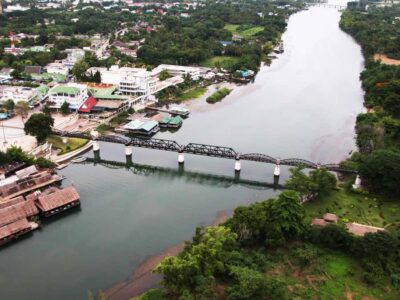
Death Railway & River Kwai Bridge Private Tour
Read our review →
Private Tour: Death Railway, Hellfire Pass and Erawan Waterfall
Read our review →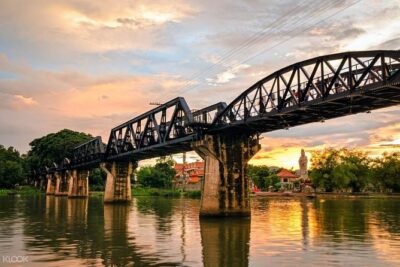
Bridge on the River Kwai and Thailand-Burma Railway Tour
Read our review →Browse the lists this tour appears in