
Review · USHUAIA
Ushuaia: End of the World Train Ride & Tierra del Fuego Park
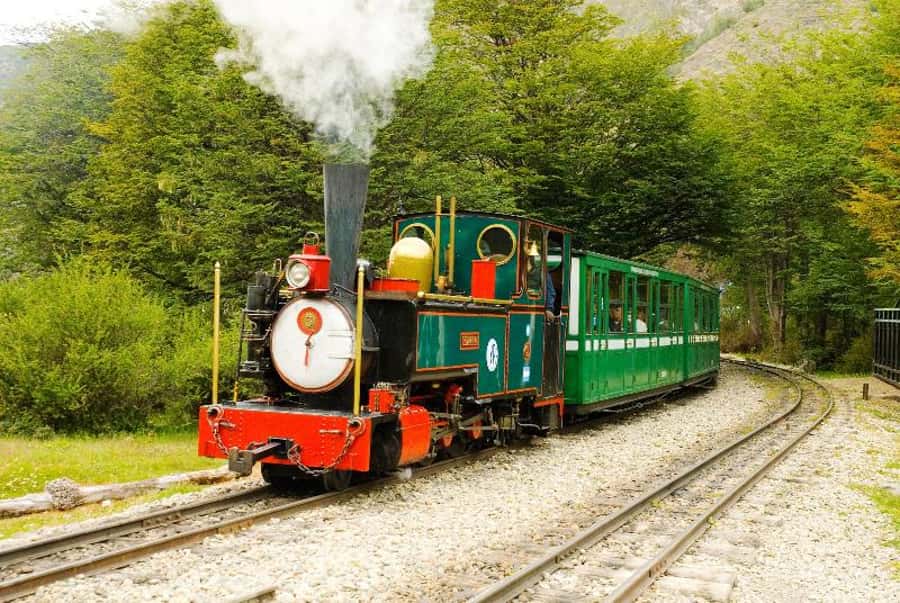
Prison rails lead into wild Tierra del Fuego. This 330-minute outing combines the End of the World Train with a guided visit to Tierra del Fuego National Park, giving you both Ushuaia’s unusual prison history and its dramatic southern scenery. I like the vintage steam train, with its large windows and multilingual audio, and I like that the park portion reaches major sights such as Lapataia Bay, Lake Acigami, and Laguna Verde.
The main concern is value. At $140 per person, plus a national park entry fee of about $22, this is a costly half-day if you mainly want transportation. The train ride is also short enough that you should book it for the story and setting, not for a long railway journey.
Key points to know before you book
- The train runs one way from End of the World Station to National Park Station, where a guide continues the park visit by road.
- The steam train tells the story of Ushuaia’s prison railway, including the prisoners who cut wood in the surrounding forest.
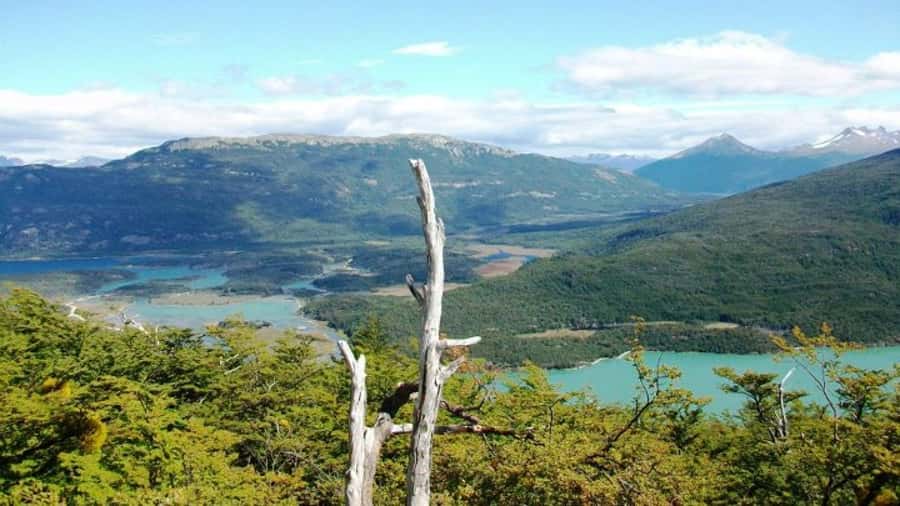
- The park includes both mountains and sea coast, a rare combination within Argentina’s protected areas.
- Lapataia Bay marks the end of the Pan-American Highway, making it the symbolic high point of the road portion.
- A short walk and photo stops depend on weather, so the amount of time outside can change.
- Train confirmation depends on available seats, and complete passenger details are required to secure the reservation.
The train begins at End of the World Station
Pickup is included from participating hotels in Ushuaia. Some hotels are outside the pickup route, so you may be assigned a nearby meeting point. You need to wait in the lobby at the stated location, and port pickup or drop-off is not available.
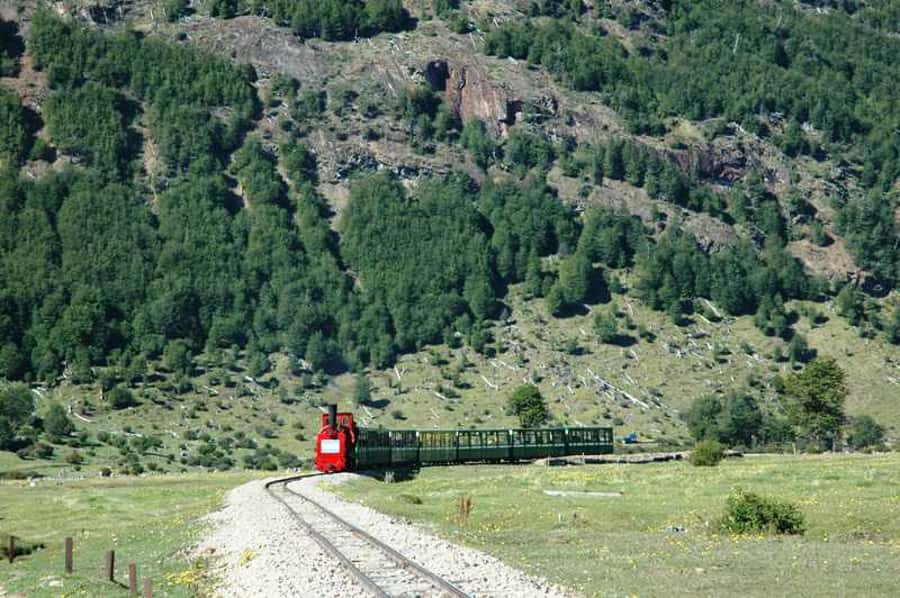
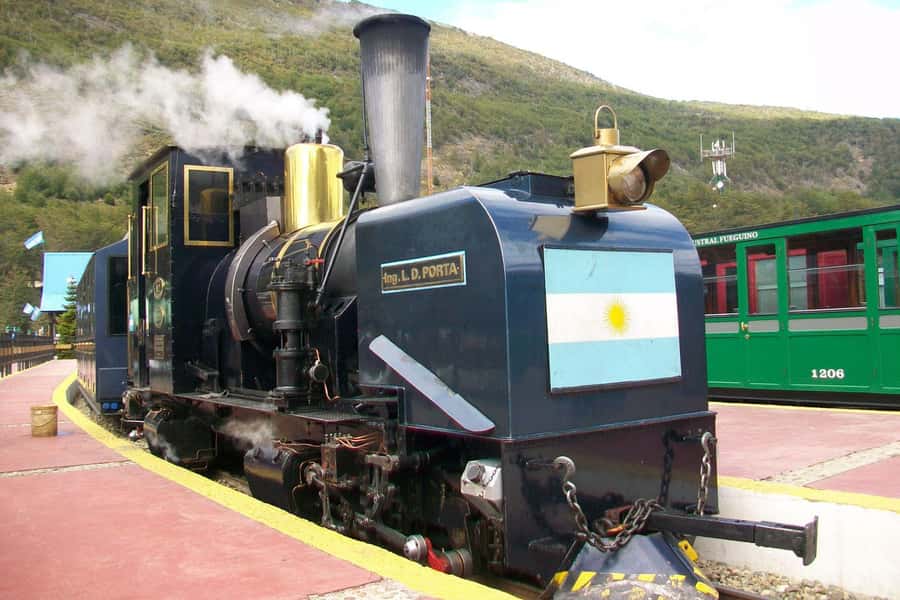
The train boards at End of the World Station, outside the city. The ride then follows the old route associated with Ushuaia’s prison railway. Prisoners were brought here each day to cut wood, an essential but harsh part of the settlement’s early development. The onboard commentary connects the railway to that past instead of treating the train as a simple scenic ride.
I like this historical angle because it gives the scenery a human story. Without it, the woods, river, and old railway could blur into a pleasant but forgettable ride. The audio system is available in seven languages, while live guiding is offered in English and Spanish.
The cars have large windows, which help you see the forest and water without constantly standing up. You can choose Tourist Class or Premium Class, depending on the option you book. The upgrade may matter if you care about seating differences, but the main attraction is the route itself, not luxury onboard service.
A practical warning: the train ticket is subject to availability. Do not assume that a confirmed booking automatically guarantees your preferred departure until the train seat has been confirmed. You must provide each passenger’s full name, date of birth, passport or ID details, nationality, hotel, and telephone number. For anyone under 18, a passport photo is required.
More Train Journeys in the world:
- Mt Fuji & Hakone Cruise, Drum Show Bullet Train 1 Day from Tokyo
★ 4.0 · 7,413 reviews - Montserrat & Cogwheel Train, Gourmet Wine Tasting & Tapas/Lunch
★ 5.0 · 6,290 reviews - From Milan: Lake Como Cruise, St. Moritz & Bernina Red Train
★ 4.6 · 5,648 reviews
Pipo River and the first views from the railway
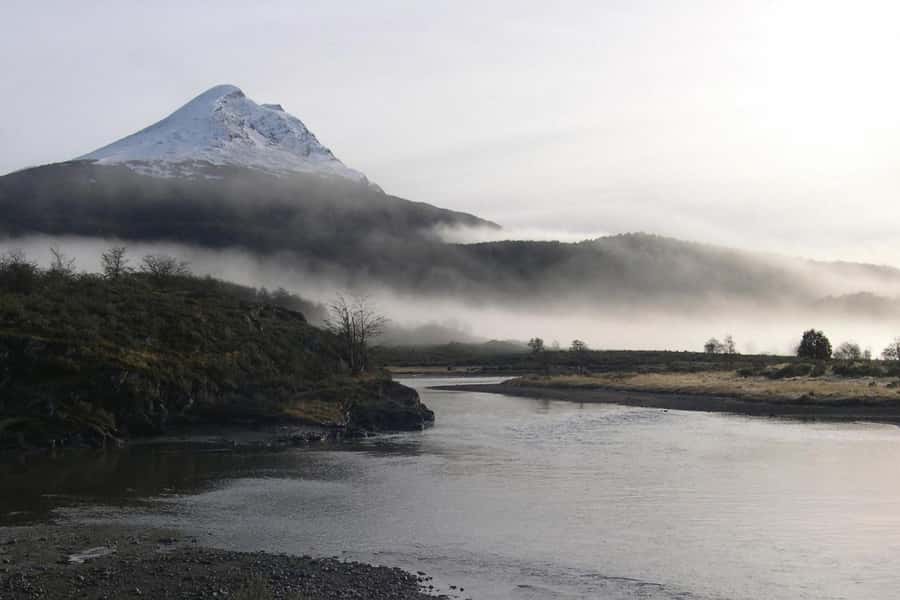
One of the early sights is the winding Pipo River, which gives the ride a sense of movement and place. The route is not a fast dash through empty woods. It pauses the story long enough for you to notice how water, forest, and mountains fit together around Ushuaia.
The train also passes Mount Susana, the La Macarena waterfall, and the tree cemetery. Each offers a different piece of the area’s character. The waterfall adds a clear natural landmark, while the tree cemetery recalls the labor of cutting wood and the demanding conditions faced by the prisoners.
The tree cemetery is especially useful as a reminder that this railway was built for work, not tourism. You are looking at a route shaped by forced labor and basic survival. That gives the vintage cars and steam locomotive a more serious meaning than a standard heritage train ride.
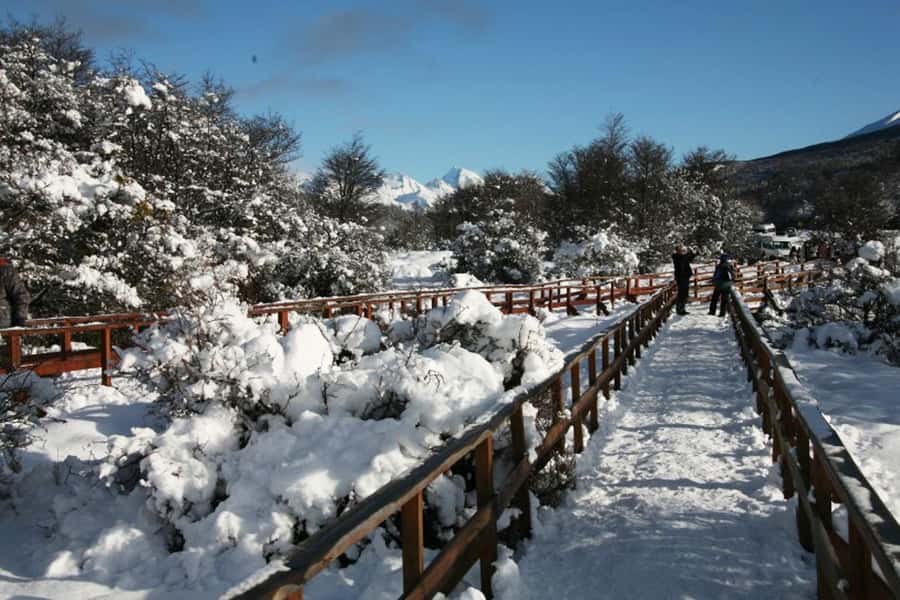
The forest is largely made up of lenga trees, a familiar sight in southern Tierra del Fuego. In good weather, the combination of tall trees, open water, and distant mountains makes the train ride highly photogenic. In poor weather, the large windows still help, though cloud and rain can limit the views.
The train ride is not designed for a long day of railway travel. Its appeal comes from the setting, the old route, and the story. If you want a lengthy locomotive trip with many onboard services, this may feel brief. If you want a compact introduction to Ushuaia’s past before visiting the park, it works well.
National Park Station changes the pace
At National Park Station, the rail portion ends. Your guide meets you there and continues the excursion through Tierra del Fuego National Park by shared transfer.
This change matters. You are not simply riding the train back and forth. The train covers the historic railway route, while the vehicle reaches places that the rails do not. That makes the combined experience more useful than booking the train alone if your main goal is to see the park’s major points.
The guide explains the area’s plants, animals, geography, and the history of the original prisoner train. One clear strength of the experience is the guiding. The guide can answer questions about what you are seeing and help connect the railway story to the wider park.
The language balance may matter to you. Live guiding is in English and Spanish. The onboard audio is available in seven languages, but the English explanations may be shorter than the Spanish commentary at some points. If you prefer detailed spoken interpretation in English, keep that limitation in mind.
Lake Acigami brings mountains and water together
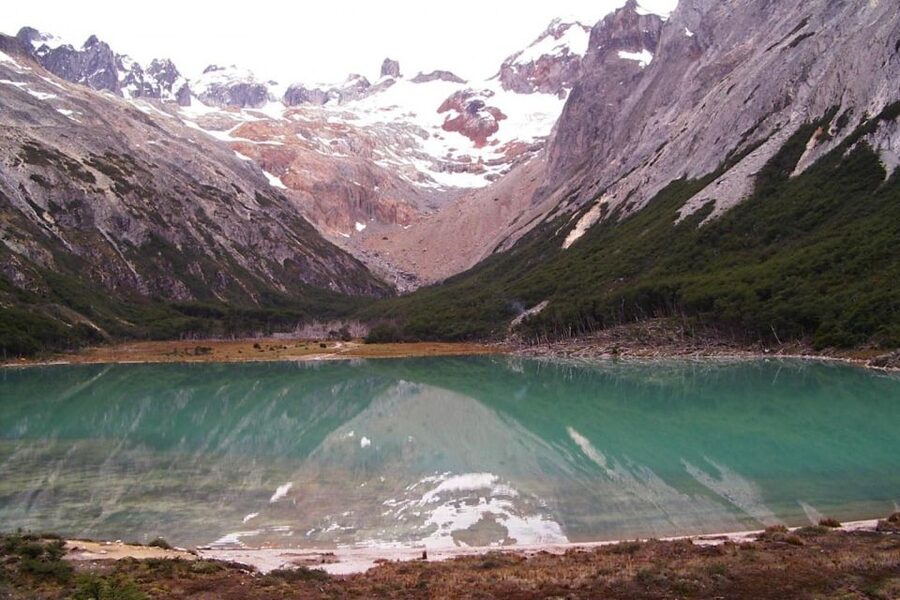
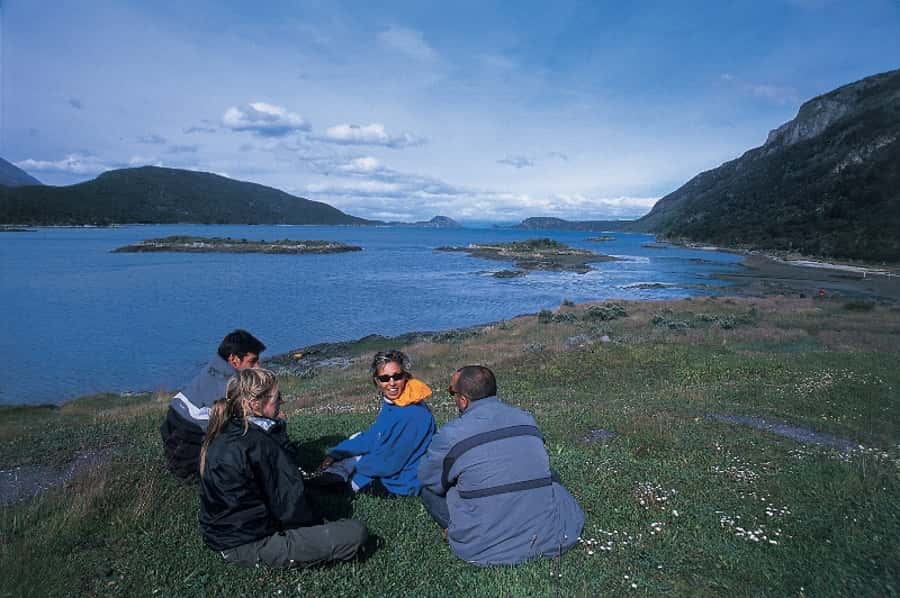
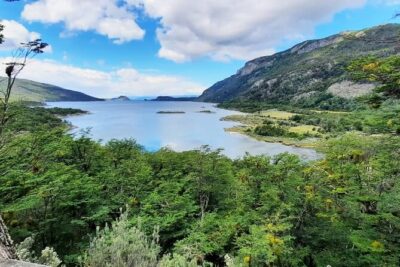
The road portion includes Lake Acigami, one of the park’s notable water features. Here, the appeal is the meeting of lake, forest, and mountains. The scenery is broad and open compared with the enclosed railway woods, so this is a good place to pause and take photographs.
The weather can change how much you enjoy the stop. In clear conditions, you may get strong views across the water toward the surrounding peaks. Under cloud or rain, the scene becomes moodier, but distant details may disappear.
The park is protected because of its unusual mix of environments. It includes rugged mountains, rivers, valleys, lakes, subantarctic forest, and the shores of the Beagle Channel. You are not seeing only one type of southern scenery. The route gives you a quick look at several of them in a single outing.
The word quick is important. The complete experience lasts 330 minutes, or five and a half hours, and that includes transport, the train, guiding, stops, and the return to Ushuaia. You will see a lot, but you will not have unlimited time at each location. One useful expectation is to treat this as an overview of the park rather than a slow hiking day.
Same tracks, a different day out:
- Tokyo Mt Fuji 5th St & Hakone Cruise Bus Tour w/Bullet Train
★ 4.4 · 5,024 reviews - From Milan: Bernina Train and St. Moritz Day Trip
★ 4.5 · 4,495 reviews - Christ the Redeemer Entry Ticket by Corcovado Train
★ 4.4 · 4,476 reviews - From Málaga: Ronda+Setenil de las Bodegas with Little Train
★ 4.6 · 4,115 reviews
Alakush Visitor Center and Laguna Verde
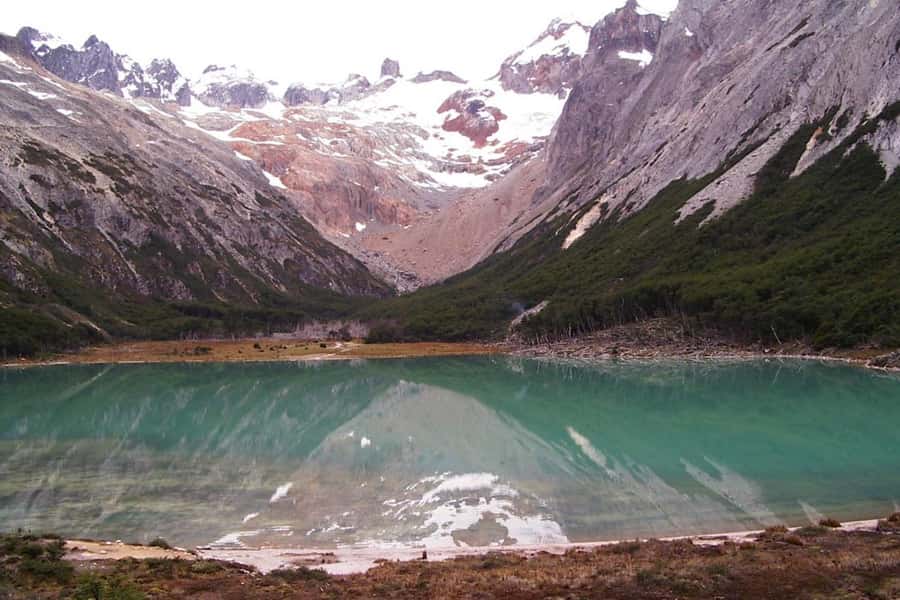
The route also reaches the Alakush Visitor Center and Laguna Verde. These stops break up the transfer time and give you more chances to view the park from different angles.
The Alakush Visitor Center provides a natural pause during the road portion. The supplied information does not promise a particular exhibit or activity there, so you should think of it as a planned stop within the park visit rather than a separate attraction requiring a long stay.
Laguna Verde offers another water-and-forest setting. The name points to the color of the lagoon, but weather and light affect how strongly that color appears. Like Lake Acigami, it is best appreciated as part of the wider pattern of lakes, woods, and mountain valleys.
A short hike is included when conditions allow. This is not presented as a demanding trek, and the exact amount of walking depends on the weather. Wear shoes suitable for an outdoor stop and expect the guide to adjust the plan if rain, wind, or other conditions make walking unpleasant.
You may also spot wildlife. Possible sightings include the Fuegian red fox and birds such as the cachaña, giant woodpecker, rayadito, Patagonian thrush, and caranca goose. Wildlife is never guaranteed, so the right approach is to enjoy the forest and keep watch rather than treat animal sightings as a promised feature.
The caranca goose is especially tied to the park’s identity, since it is described as the national park’s emblematic goose. Bird lovers will find the setting interesting, but this is not a dedicated birdwatching tour. Your time is divided among history, scenic stops, transport, and the final bay.
Lapataia Bay marks the southern finish
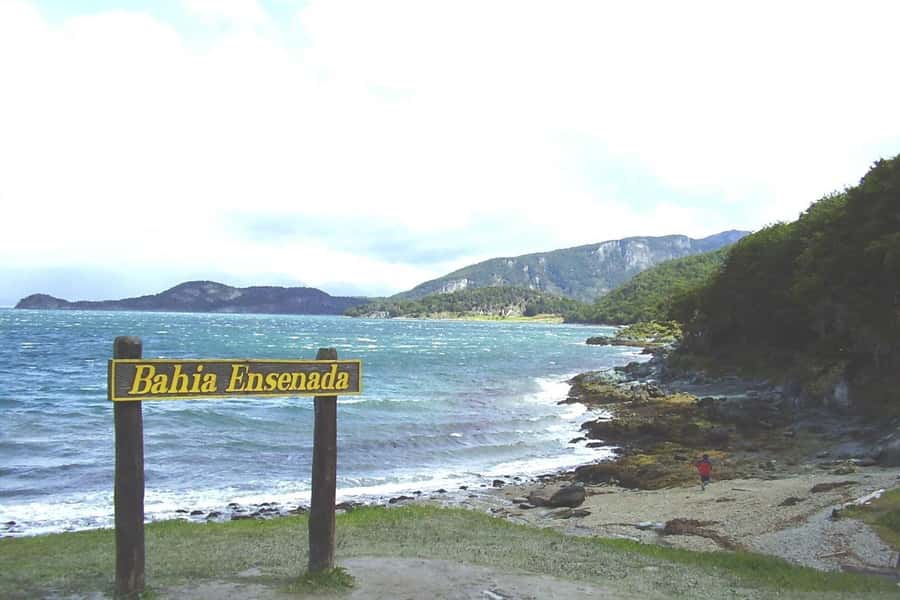
The final major stop is Lapataia Bay, where the Pan-American Highway ends. This is the place that gives the road portion its strongest sense of arrival. A sign or photograph at the end of the highway is enjoyable, but the setting matters just as much: the bay, forest, mountains, and water show why the park is one of Ushuaia’s main sights.
Lapataia Bay is also a useful point of context. You are standing at the end of a famous road system that runs across the Americas, while the nearby railway recalls a much older and more local route. In one outing, you get two very different forms of travel history.
Expect a photo stop rather than a long stay. The schedule must still return you to Ushuaia, and earlier stops take time. If you want to linger at Lapataia Bay, walk at your own pace, or wait for perfect light, a private park visit would give you more control.
At the end, the group returns from the park to Ushuaia by shared transfer. Hotel drop-off is included where the route permits. As with pickup, some hotels may require a nearby meeting point, and the port is not served for pickup or drop-off.
Is $140 a fair price?
The listed price is $140 per person, before the national park entrance fee of about $22. That places the practical cost at roughly $162 per person, depending on the exact fee charged and the class you select.
I would call the price reasonable only if you value convenience and want both major pieces in one booking. You receive hotel pickup and drop-off from eligible hotels, a one-way train ticket, a Tourist or Premium Class seat, a guided park visit, and shared transport between the train station, park sights, and Ushuaia.
The value is weaker if you see the train as a short transfer and do not care much about its prison history. One assessment specifically found the excursion expensive for the amount of transport involved, and that is a fair criticism. The ride itself does not fill five and a half hours. Much of the total time comes from road transfers and stops.
The park visit improves the calculation. Reaching Lake Acigami, Laguna Verde, Alakush Visitor Center, and Lapataia Bay on your own may require arranging separate transport. Here, the train and park are joined in one half-day plan, with a guide handling the route.
I would choose Premium Class only if the seating difference is important to you. The scenery, guide, and park access are the core benefits. A more expensive train class will not change the weather or give you extra time at Lapataia Bay.
Who will enjoy this half-day outing?
I think this experience suits you best if:
- You have limited time in Ushuaia and want a broad introduction to the area.
- You want the End of the World Train and the national park in one outing.
- You enjoy scenic stops but do not need a long or strenuous hike.
- You like having a guide explain the prisoner railway and local plants and animals.
- You are comfortable with a shared transfer and a fixed schedule.
It may not suit you if you want a quiet, slow visit with plenty of time at each location. It is also a poor match if your schedule is tight on departure day. One booking was changed because train seats were unavailable, and the replacement date conflicted with a morning flight. Since the activity is non-refundable, do not place it on a day when a change would cause a serious problem.
The experience also needs a little flexibility. Train confirmation depends on seat availability, and the walk or photo stops may change with the weather. Plan with room for adjustment rather than building another fixed appointment immediately afterward.
Should you book the End of the World Train and park tour?
Book it if you want a convenient overview of Ushuaia’s railway history and Tierra del Fuego National Park, and you are willing to pay for organized transport. The strongest parts are the old prison railway story, the steam locomotive setting, the range of park scenery, and the chance to reach Lapataia Bay without arranging several separate transfers.
Skip it if you mainly want a cheap ride or a long train journey. The five-and-a-half-hour duration includes several elements, but the railway portion is only one part of the day, and the schedule can feel tight at the stops. I would also avoid booking it immediately before a flight, especially because train seat confirmation is subject to availability and the activity cannot be refunded.
For most first-time visitors with a free half-day, this is a useful introduction to the far south. Just price in the park fee, confirm the train seat, check the pickup point, and keep your expectations focused on variety rather than leisurely exploration.
FAQ
How long does the experience last?
The stated duration is 330 minutes, or five and a half hours. This includes the train ride, the visit to Tierra del Fuego National Park, stops, transfers, and the return to Ushuaia.
Is hotel pickup included?
Yes. Pickup and drop-off are included from participating hotels in Ushuaia. Some hotels are outside the pickup routes, in which case you will be given a nearby pickup location and should wait in that hotel lobby.
Can the tour pick me up or drop me off at the port?
No. Port pickup and drop-off are not available.
What languages are offered?
Live guiding is available in English and Spanish. The train has an individual audio system with commentary in seven languages.
Is the national park entrance fee included?
No. The national park entry fee is not included and is approximately $22.
Is the train ticket always confirmed when I book?
Train ticket confirmation depends on availability. Complete information for every passenger is required, including full name, date of birth, ID or passport, nationality, hotel, and telephone number. A passport photo is also required for passengers under 18.
Just added around the world
- Zermatt Village & Gornergrat Railway Tour | From Bern★ 5.0 · 2 reviews
- Zagreb: Plitvice With Secured Tickets, Boat And Train Ride★ 4.6 · 15 reviews
- With the steam train through Transylvania- 8 Day★ 5.0 · 2 reviews
- Winter Tour Viking Village, Nærøyfjord Cruise & Flåm Railway★ 4.6 · 26 reviews
- York Day Rail Tour from London including Hop-on Hop-off tour★ 5.0 · 3 reviews
- Ventura: Rail Bike Guided Tour with Farm Stand Stop★ 4.1 · 18 reviews
- Virginia City Day Tour From Lake Tahoe with Train Ride★ 4.8 · 19 reviews
- Exclusive Panoramic Train Journey though the Heart of Swiss★ 5.0 · 8 reviews
Ushuaia Train Journeys, compared.
National Park & Train of the End of the World Tour
Read our review →
National Park and Train Trip End of the World Guided Tour
Read our review →
National Park, Train, and Beagle Channel Navigation
Read our review →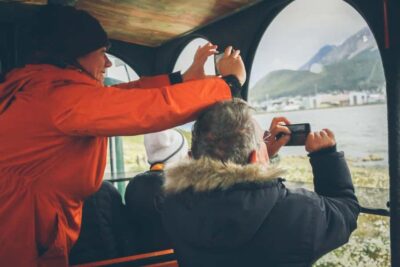
Half-Day Tierra del Fuego National Park with Train
Read our review →
Tierra del Fuego Park & Train Tour for Cruisers (no tickets)
Read our review →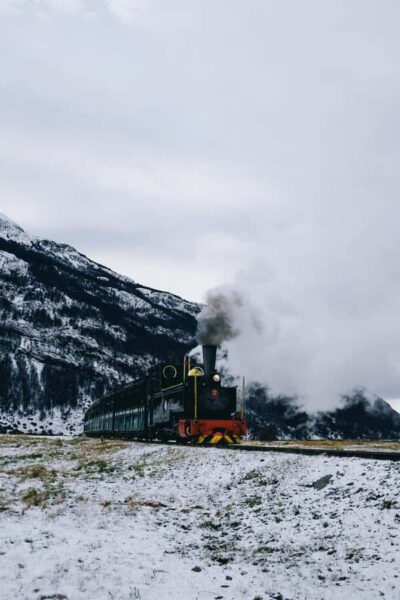
USHUAIA | Tierra del Fuego National Park & Optional Train
Read our review →Browse the lists this tour appears in