
Review · KYOTO
Kyoto: Arashiyama Tour with optional Sagano Romantic Train
Bamboo, bridges, and a scenic train make a fine Kyoto day. This small-group Arashiyama tour brings together several of Kyoto’s best-known sights in three to four hours, with an English-speaking guide to explain the customs, beliefs, and stories behind them. I especially like the optional Sagano Romantic Train, which adds a pleasant 30-minute ride through Kyoto’s maple country, and the useful mix of famous sights and local food stops.
I also like the small group, limited to nine people. Guides such as Shingo, Eloise, Leo, and Arsushi have been praised for clear history, photo help, food suggestions, and a relaxed pace. The main consideration is walking: you will cover bamboo paths, temple grounds, streets, and park areas, so this is not a good fit if you have limited mobility or serious heart, respiratory, or pregnancy-related concerns.
Key points at a glance
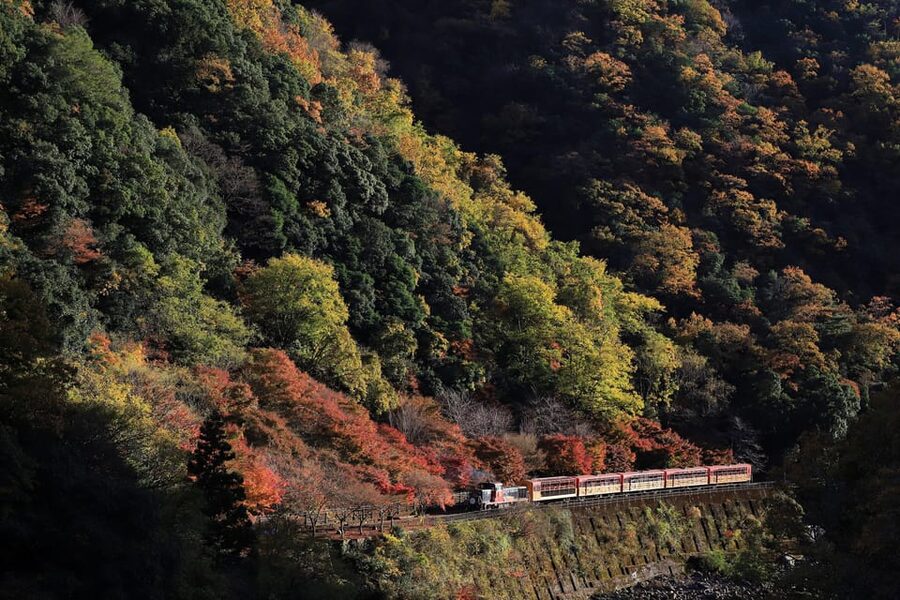
- The train option begins at JR Umahori Station: If you add the Sagano Romantic Train, you meet at Umahori and ride for about 30 minutes before reaching Arashiyama.
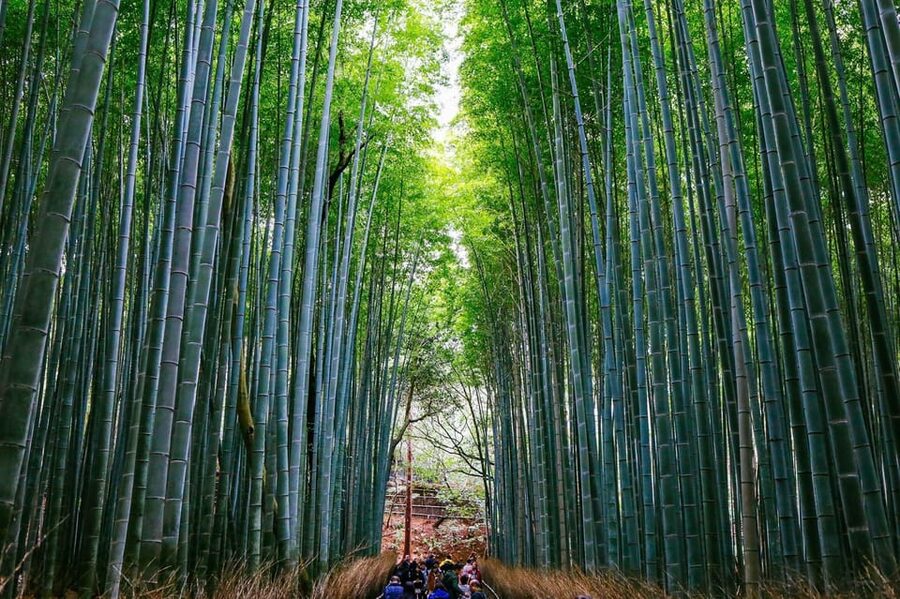
- The bamboo forest gets a proper 45-minute visit: You have time to walk beneath the tall stalks rather than simply stop for a quick photograph.
- Tenryu Temple admission is included: The tour covers this UNESCO World Heritage site and its famous Zen garden.
- The guide adds cultural context: You will hear about Shinto beliefs, Buddhist temples, Japanese history, and the unusual Mikami Shrine, dedicated to the God of Hair.
- Food costs extra: A local café or street food stop is part of the route, but snacks and drinks are paid for separately.
- The group stays small: With no more than nine participants, it is easier to ask questions, pause for photographs, or request a short rest.
Why Arashiyama works well in a half-day
Arashiyama gives you a compact sample of Kyoto. Within one outing, you can see a famous temple, walk through a bamboo grove, cross an iconic bridge, browse local food, and spend time beside the river and parkland. That variety is the chief strength of this tour.
You are not spending the whole morning inside one temple complex. Instead, the route shifts between religious sites, natural scenery, food, and city streets. For a first visit to western Kyoto, that makes the area easier to understand.
The schedule lasts three to four hours, so it fits neatly into a busy Kyoto plan. You could pair it with another activity later in the day, though I would avoid booking something that requires a precise arrival time. The route includes several walking sections, and Arashiyama can take longer than expected when you stop for photographs or food.
The tour has earned a 4.7 rating from 18 reviews, with especially warm praise for the guides. That matters here. Arashiyama’s main sights are easy to identify, but a good guide helps you connect a shrine, a Buddhist temple, a bamboo grove, and Japanese beliefs rather than treating them as unrelated photo stops.
More Train Journeys in Japan:
- Mt Fuji & Hakone Cruise, Drum Show Bullet Train 1 Day from Tokyo
★ 4.0 · 7,413 reviews - Tokyo Mt Fuji 5th St & Hakone Cruise Bus Tour w/Bullet Train
★ 4.4 · 5,024 reviews - Mt. Fuji and Hakone Day Trip From Tokyo with Bullet Train Option
★ 4.0 · 368 reviews
Choosing the Sagano Romantic Train
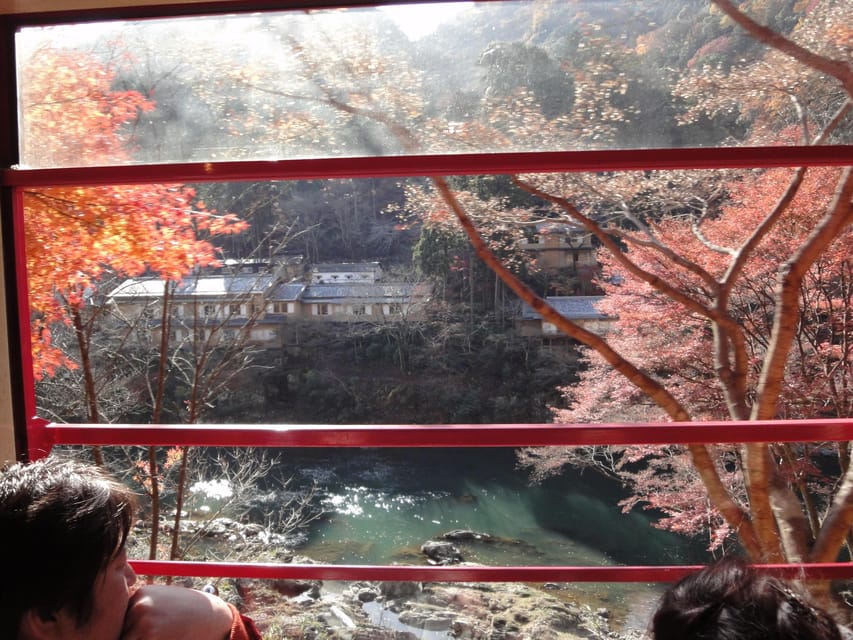
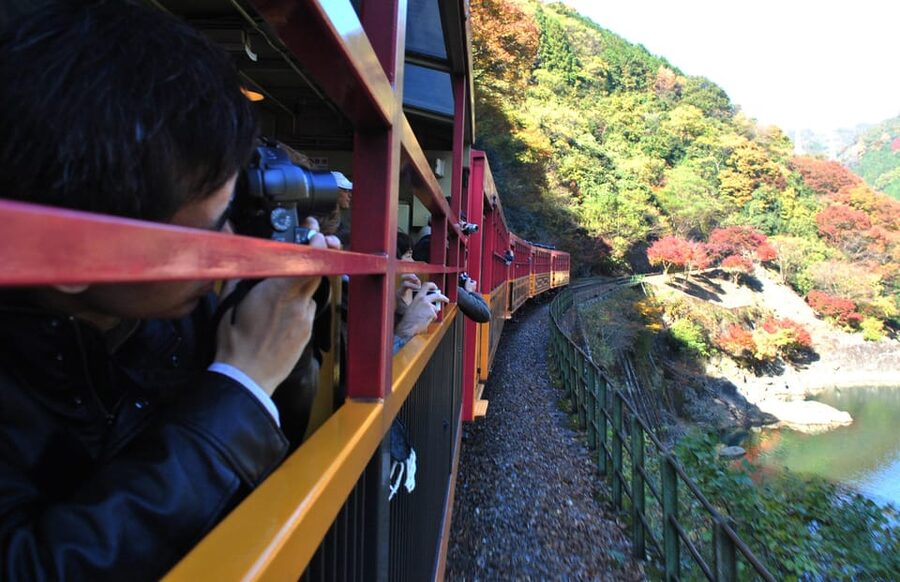
The optional train is one of the most appealing parts of the experience. If you select it, the meeting point is JR Umahori Station, and the train ride lasts about 30 minutes. You travel through Kyoto scenery toward Torokko Arashiyama Station, where the walking portion begins.
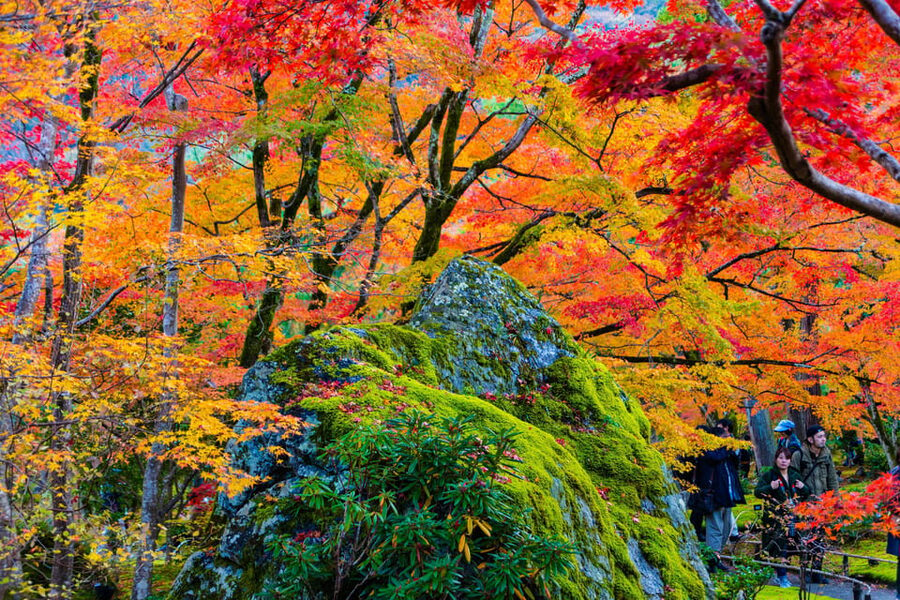
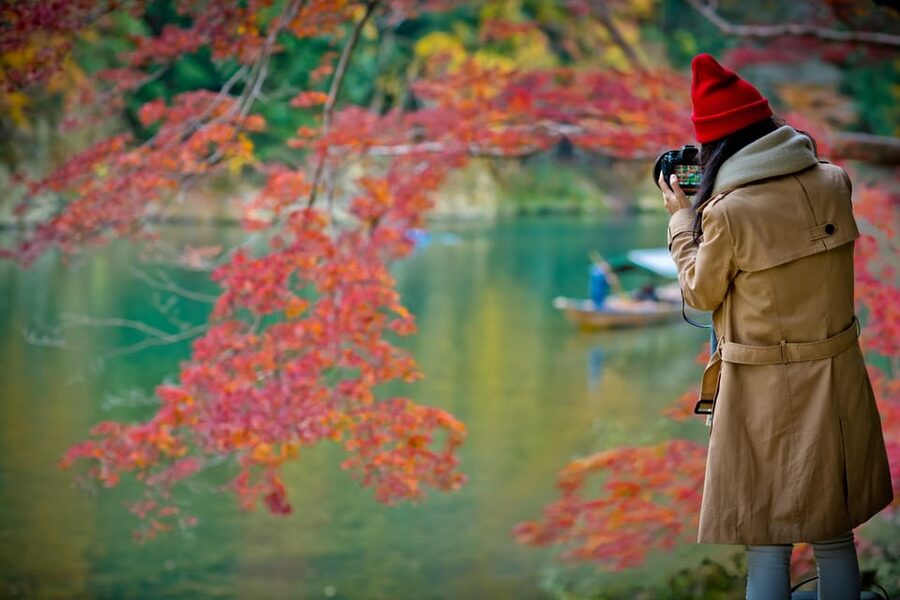
The ride is particularly attractive during maple season, when the leaves turn red and orange. The train gives you a calm change of pace before the busier walking sections, and it lets you see the area from a different angle. For many people, this will be the most distinctive part of the package.
There is one practical point to watch: train availability can be limited. One participant who booked too late could not take the train and instead joined the walking tour. The guide handled the change well, but you should not assume the rail option will always be available if you wait too long.
If the train is important to you, check the selected option and available time before paying. If it is unavailable, the rest of the tour still covers the core Arashiyama sights. The walking version begins at Torokko Arashiyama Station, so the two meeting arrangements are different.
Mikami Shrine and the God of Hair
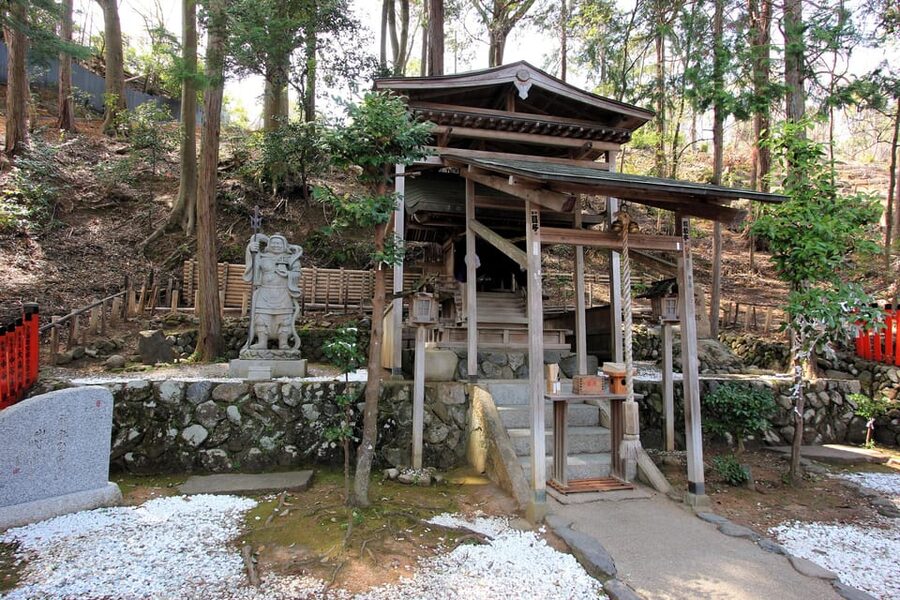
After the train, the tour visits Mikami Shrine for about 15 minutes. The shrine is dedicated to the God of Hair, an unusual detail that gives the route a memorable opening.
This is a short stop, but it adds a layer that you might miss if you simply followed the main road through Arashiyama. Japanese religious sites often connect everyday concerns with spiritual practice, and hair care is a more personal subject than the grand ceremonies many visitors expect from Kyoto.
Your guide can also help explain the difference between Shinto shrine customs and Buddhist temple traditions later in the route. One particularly strong account of the tour described learning about both forms of belief, along with Japanese history and religious ideas. That kind of explanation is useful because the buildings alone do not always tell you how a place is used.
Do not expect a long shrine visit. Fifteen minutes is enough for an introduction, a look around, and photographs, but not an extended examination of the grounds.
Walking through the Arashiyama Bamboo Forest
The bamboo forest receives about 45 minutes, making it one of the main parts of the tour. Tall bamboo rises on both sides of the path, creating one of Kyoto’s most recognizable scenes.
The setting is photogenic, but it is worth keeping expectations in check. This is a famous public attraction, not a private woodland walk. The best approach is to slow down, look upward, and listen to your guide instead of treating the path as a race to the next photo.
A guide is useful here because the forest can otherwise become a short stop with little context. Your guide may point out good places for photographs and explain why Arashiyama became such a strong symbol of Kyoto. Eloise received particular praise for helping with photo locations, while Shingo was commended for stopping when a break was needed.
The path also explains why comfortable shoes are important. You will be walking for much of the outing, and the bamboo visit is only one section of the route. Bring a camera, but do not forget water and a little cash for the food stop.
Same tracks, a different day out:
- From Osaka: Sagano Train Ride and Kyoto Guided Day Tour
★ 4.3 · 180 reviews - Fukuoka: Takachiho Gorge & Scenic Railway One Day Tour
★ 4.8 · 178 reviews - Sagano Romantic Train & Arashiyama, Kiyomizudera, Fushimi Inari Taisha Day Tour
★ 4.5 · 171 reviews - Hakone: Train Pass with Unlimited Rides & Activity Discounts
★ 4.4 · 102 reviews
Tenryu Temple and its Zen garden
Tenryu Temple follows the bamboo forest, with about 20 minutes set aside for a guided visit. Entry to the temple is included in the tour price, which improves the value of the package.
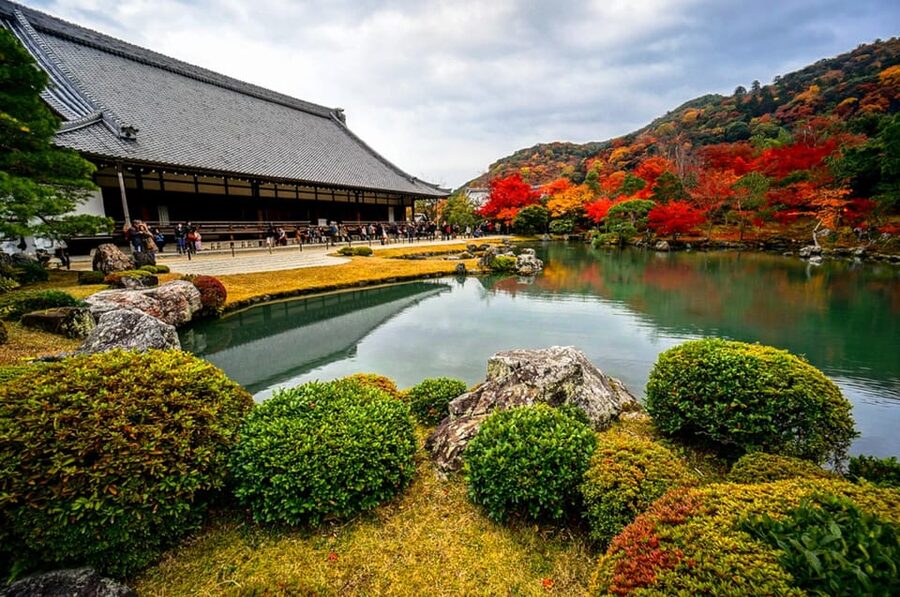
Tenryu Temple is a UNESCO World Heritage site and one of Arashiyama’s essential cultural stops. Its Zen garden gives you a quieter counterpoint to the popular bamboo path. Rather than simply photographing the buildings, listen for the guide’s explanation of Buddhist practice, temple design, and the role of gardens in creating a place for contemplation.
Twenty minutes is enough for an introduction, but it is not a slow, independent temple visit. If you want to study every garden detail or linger in silence, you may prefer to return on your own later. The advantage of the guided stop is that you get a focused explanation without having to research the temple before arriving.
The temple also gives the tour a stronger cultural center. The bamboo forest is visually striking, but Tenryu Temple provides the deeper sense of why this part of Kyoto matters.
A local café and Kyoto street food
The food portion lasts about 30 minutes and includes local snacks at a café or along the route. Food and drinks are not included, so bring cash and expect to pay for anything you choose.
I like this arrangement because it lets you decide how much to eat. You can sample a small Kyoto treat, ask your guide what is worth trying, or keep the stop light if you already have dinner plans. Eloise was praised for guiding people toward good local food, and several guides have offered restaurant recommendations as well.
This is not a full meal, so plan accordingly. If you are hungry after the bamboo walk, budget extra time and money for additional food beyond the included schedule. The guide can help you understand what you are buying, which is especially helpful when a snack is unfamiliar or the menu is not easy to read.
Food adds a welcome everyday element to the outing. Temples and shrines show formal Kyoto, while a snack stop gives you a more ordinary sense of the neighborhood.
Togetsukyo Bridge and Arashiyama Park
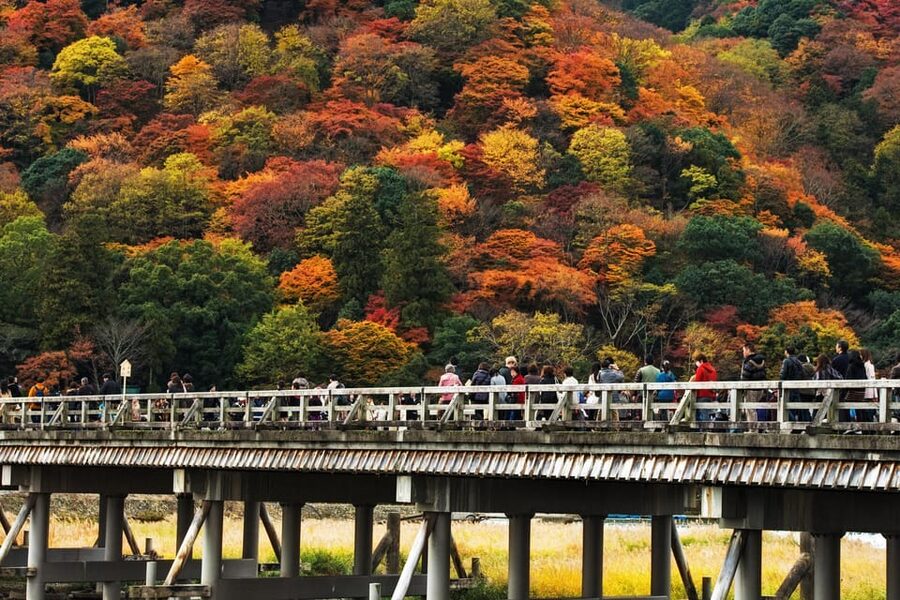
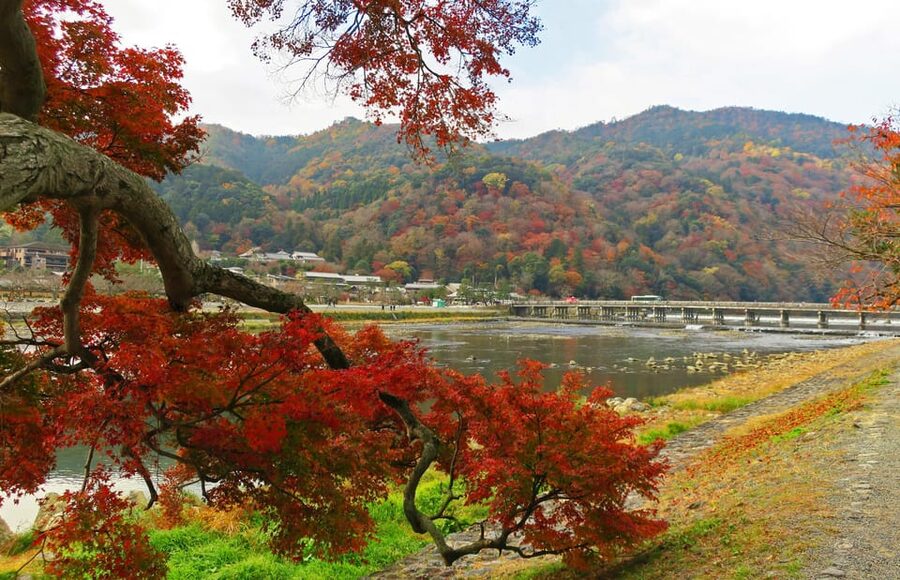
The later part of the route brings you to Togetsukyo Bridge and Arashiyama Park. The bridge is one of the area’s signature views, and it is a natural place to take photographs.
The bridge also helps you see how the parts of Arashiyama fit together. After the confined feeling of the bamboo path and the ordered space of the temple garden, the open view around the bridge feels broader and calmer. Your guide can help position you for photographs and explain what makes the bridge such a familiar Kyoto image.
The final visit to Arashiyama lasts about 30 minutes, with the tour ending at Arashiyama Station. This closing section gives you some breathing room rather than ending immediately after the temple. You can relax, take more pictures, or ask for food and shopping suggestions before leaving.
The exact stop listed after the café is not clearly identified in the supplied details, so you should confirm the precise route with the guide on the day. The stated highlights make clear that Togetsukyo Bridge and Arashiyama Park are part of the closing portion.
What the guide adds to the experience
The best reason to book this tour is not simply transportation between sights. It is the human explanation along the way.
The strongest guide feedback centers on history, religion, photographs, food, and care with the pace. Leo was praised for making the day friendly and relaxed while pointing out places that would have been easy to miss. Arsushi explained Buddhist and Shinto traditions, Japanese history, and religious beliefs in a way that made the visit more meaningful.
Shingo’s approach sounds especially helpful if you do not want to rush. He stopped for rests and helped set up good photo moments. That kind of attention is valuable because a fixed walking tour can otherwise feel like a march from one landmark to the next.
The guide’s quality may vary by date, but the small group improves your chances of getting personal help. You can ask about restaurants, shopping, local customs, or the meaning of a shrine. With a maximum of nine people, the experience should feel more flexible than a large coach outing.
Price, timing, and practical value
The listed price is $105 per person. That is not a low-cost stroll, but it includes an English-speaking guide and Tenryu Temple admission. If you choose the train option, the Sagano Romantic Train ride is included as well.
The value depends on what you would otherwise arrange yourself. You are paying for a compact route, cultural explanation, help with photographs, and a small group. The price makes more sense if you want several major Arashiyama sights in one organized visit and prefer not to work out the train, temple, and walking order alone.
It makes less sense if you already know Arashiyama well, want a long unhurried temple visit, or prefer to choose every food stop yourself. The tour is designed for coverage and guidance, not complete independence.
Cancellation is free up to 24 hours before the start, and you can reserve now and pay later. Starting times depend on availability, so check the schedule before you build the rest of your Kyoto day around it.
Wear comfortable shoes. Bring a camera and cash. The outing is not suitable for people with mobility impairments, pregnant women, or people with heart or respiratory problems. The stated walking demands are worth taking seriously.
Who should book this Arashiyama tour?
I would recommend it most strongly for a first-time Kyoto visitor who wants a clear introduction to Arashiyama without spending a full day there. It also suits you if you enjoy cultural explanation, want help finding photo spots, and like trying small local foods without planning every detail in advance.
The train option is a good match for anyone visiting during maple season or looking for a scenic ride that feels different from ordinary city transport. Families with older children may also appreciate the mix of train, bamboo, temple, bridge, and snacks, provided everyone can manage the walking.
I would be more cautious if you have a strict diet, since food is purchased separately and the food stop is not described in detail. I would also think twice if you want a quiet, solitary experience. Arashiyama’s main sights are popular, and a guided schedule keeps you moving.
Should you book it?
Book this tour if you want a well-shaped introduction to Arashiyama, especially with the Sagano Romantic Train and a guide who can explain the difference between shrine and temple traditions. The small group, included Tenryu Temple entry, and practical photo and food advice make the $105 price easier to justify.
Skip it if you prefer to explore slowly, spend a long time at Tenryu Temple, or avoid organized schedules. For most first visits, though, this is a smart way to connect Arashiyama’s famous views with the culture behind them.
FAQ
How long does the Arashiyama tour last?
The tour lasts approximately three to four hours. Starting times vary, so you should check availability when booking.
Where does the tour start?
There are two possible starting points. The train option begins at JR Umahori Station, while the walking option begins at Torokko Arashiyama Station.
Is the Sagano Romantic Train included?
The train ride is included only if you select the option with the train. The ride takes about 30 minutes.
Is food included in the tour price?
No. Food and drinks are not included. You can buy local snacks during the café or street food stop, so bringing cash is recommended.
Is Tenryu Temple admission included?
Yes. Entrance to Tenryu Temple is included in the tour price.
How large is the tour group?
The tour is limited to nine participants and includes an English-speaking live guide.
Just added around Japan
- Train in Samurai Swordsmanship and Defeat the Demon in Tokyo★ 5.0 · 5 reviews
- Private tour with Yasushi and Yoko – by car, train, on foot★ 5.0 · 2 reviews
- Mt Fuji & Hakone Private Tour from Tokyo: Return by Bullet Train★ 5.0 · 22 reviews
- Bullet Train and Mt. Fuji Famous Food Tour★ 5.0 · 4 reviews
- Bullet Train Experience & Mishima Shrine Private Tour from Tokyo★ 5.0 · 9 reviews
- Tokyo-Izu: Volcano, Ocean& Capybara Cuddle with Izu Scenic Train★ 3.5 · 3 reviews
- 3-Day Private Tokyo and Nagano: Snow Monkeys, Tsukiji Market and Bullet Train★ 5.0 · 2 reviews
- Guided Half-day Tour(PM) to Toyota Commemorative Museum & SCMAGLEV Railway Park★ 5.0 · 3 reviews
Kyoto Train Journeys, compared.
Arashiyama Day Tour with Train, Boat, and Onsen
Read our review →
Kyoto Bus Tour: Sagano Railway & Hozugawa River Boat Ride
Read our review →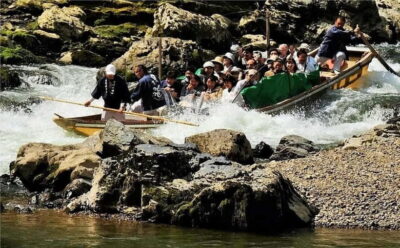
Kyoto Hozugawa River Boat Sagano Romantic Train Tour
Read our review →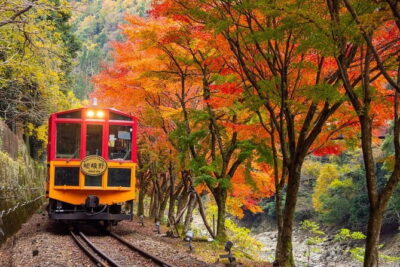
Kyoto Sagano Romantic Train in Arashiyama Bus Tour
Read our review →

Browse the lists this tour appears in