
Review · MUMBAI
Mumbai: Dharavi Slum and Dhobi Ghat Tour with Train Ride
Mumbai reveals itself in layers. This three-hour tour links Dharavi, Dhobi Ghat, and a local train ride, giving you a close look at work, travel, and daily life in one compact outing. I like the way the route moves beyond postcard Mumbai, and I especially like that local guides such as Bhaarti and Abhishek bring personal knowledge of Dharavi to the walk.
The $26 price is fair for a small group of up to 10 people, especially since train tickets, bottled water, and an English-speaking guide are included. My main caution is that Dharavi is a working residential area, not a theme park. You need to approach it with respect, listen carefully, and accept that narrow lanes, busy streets, and frank views of poverty may feel intense.
The local train is the tour’s great jolt of energy. The Dhobi Ghat viewing platform gives you a clear photo and a useful introduction, while the Dharavi walk adds the human stories that make the route worthwhile. I would choose this tour for a first visit to Mumbai, but not if you want a quiet or polished sightseeing morning.
Key points to know before booking
- Dharavi is the main event: A two-hour guided walk covers local businesses, homes, work, and community life.
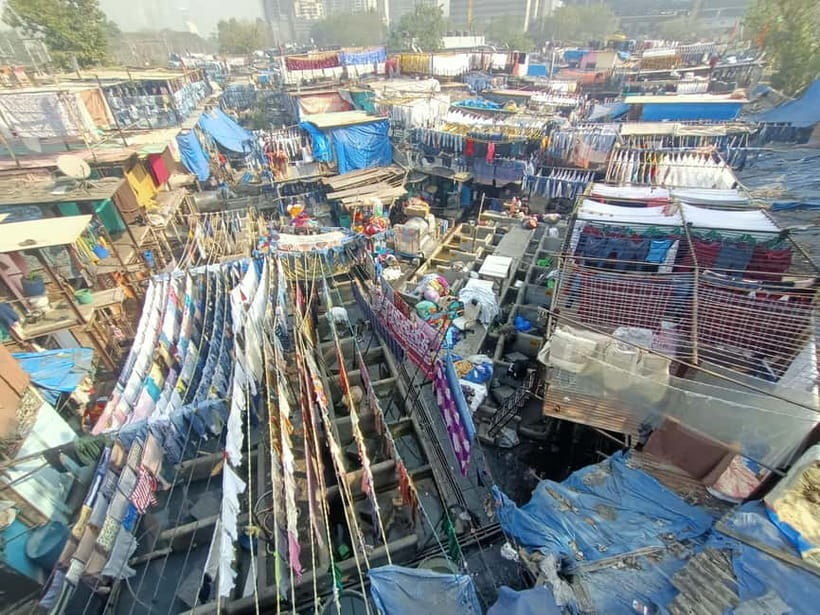
- Dhobi Ghat offers the best overview: From the viewing deck, you can watch the open-air laundry at work and take in a memorable city scene.
- The train ride feels genuinely local: You use Mumbai’s everyday rail system rather than a tourist vehicle, which adds movement and atmosphere.
- Local guides add real context: Bhaarti and Abhishek were praised for their personal connection to Dharavi, while Hardik and Alkama were noted for clear explanations and warm company.
- The group stays small: With no more than 10 participants, you should have a better chance to hear the guide in tight lanes.
- Dress matters: Short skirts and skirts are not allowed, so choose modest clothing.
Why this three-hour route works
Mumbai can feel enormous. Its districts, rail lines, work areas, and residential quarters spread far beyond the usual sightseeing circuit. This tour works because it connects three very different parts of the city in a short period: a laundry district, a commuter train, and Dharavi.
I like the structure. You begin at Third Wave Coffee, then spend about two hours in Dharavi, use the train to connect with Dhobi Ghat, and finish at the Dhobi Ghat Viewing Deck. The supplied timings contain obvious errors for the train and Dhobi Ghat portions, but the advertised total duration is three hours. Treat this as a brisk morning or afternoon outing, not a full-day excursion.
The order may vary in practice, so check the exact meeting instructions before you leave. What matters is the contrast. You see laundry work at scale, feel the rush of Mumbai’s rail system, and then walk through a neighborhood where homes and small industries sit close together.
More Train Journeys in Mumbai:
- Dabbawala, Dhobi Ghat & Dharavi slum Tour with Local Train Ride
★ 5.0 · 102 reviews - Primmum Mumbai Sightseeing With Local Train Ride Experience
★ 5.0 · 7 reviews - Mumbai City + Dabbawala aka Lunchbox + Train Ride Tour – The Unfeigned Mumbai.
★ 5.0 · 6 reviews
Starting at Third Wave Coffee
The meeting point is Third Wave Coffee. This gives you a clear place to begin, but you should allow enough time to find the correct branch and meet the guide. The information provided does not specify a start time, so you need to check availability for the date you want.
The group is limited to 10 people. That is useful here. Dharavi’s lanes can make a large group awkward, and a smaller party should make it easier to stay together and hear the guide. It also gives you a better chance to ask questions without turning the walk into a lecture.
Your guide is one of the most important parts of the morning. Bhaarti received particularly warm praise for being professional and for having grown up in the area. Abhishek was also described as a local resident who could answer questions from personal experience. Hardik was praised for his warmth and clear explanations, and Alkama for combining strong knowledge with an engaging manner.
Those details matter. Dharavi is best understood through people, not just statistics. A guide with local ties can explain how residents work, live, and support their families without reducing the neighborhood to a poverty display.
Walking through Dharavi for two hours
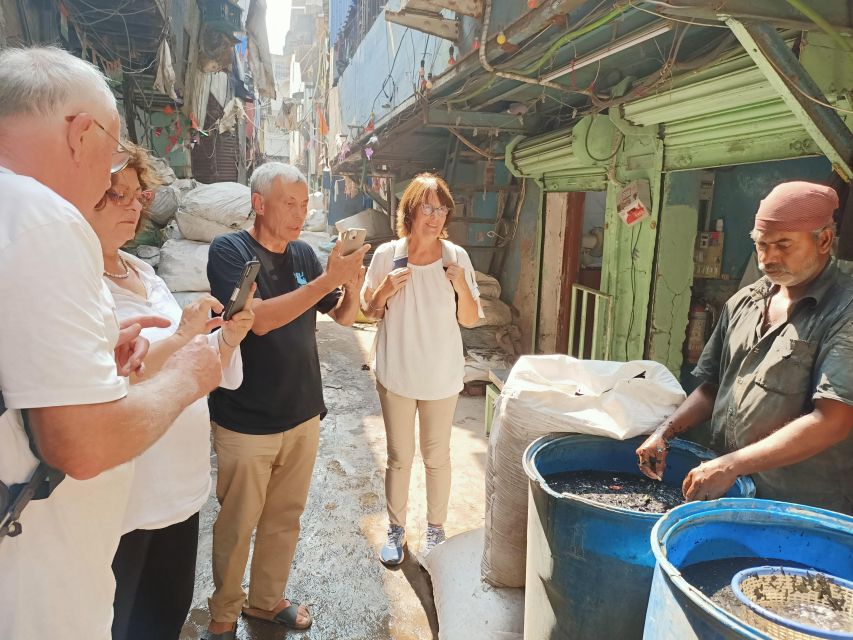
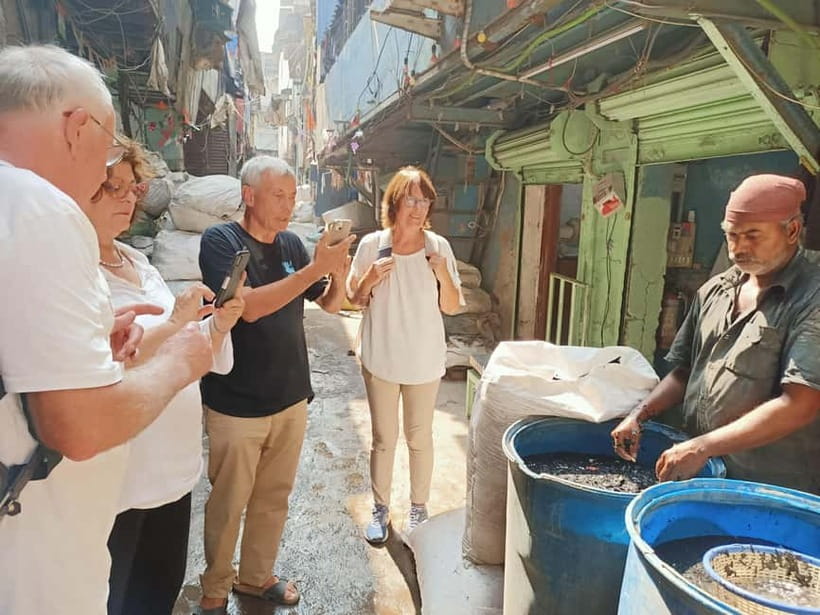
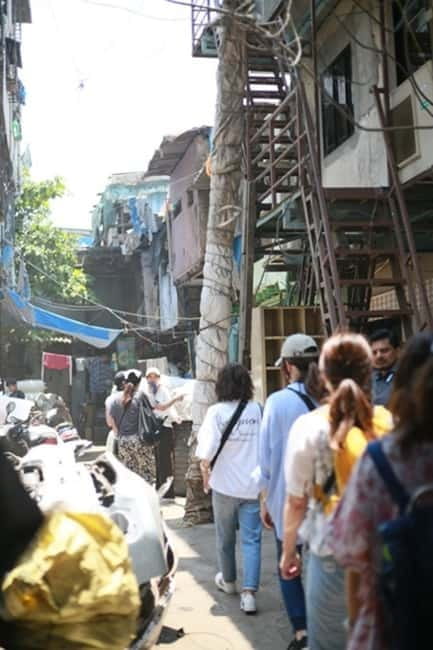
The Dharavi portion takes about two hours and is the longest part of the tour. You walk through narrow lanes, see working areas, and learn about the businesses and families that make the neighborhood function.
The strongest part is the focus on work. Dharavi is presented as a place of industry and enterprise, not simply as a poor district. You might see how small businesses operate in close quarters and gain a clearer sense of the long working days that support families. The exact businesses visited can depend on local conditions, so avoid expecting a fixed showroom-style route.
You also see living quarters. That can be confronting. Homes and workplaces may be close together, and the walk asks you to look at difficult realities without turning residents into scenery. Keep your camera away unless the guide clearly indicates that photography is acceptable, and follow the guide’s lead around homes and people.
I appreciate that the tour stresses resilience and community spirit, but you should still keep your expectations grounded. Two hours cannot explain every part of Dharavi. The value is in the focused introduction, the questions you can ask, and the chance to see how daily work fits into a dense urban neighborhood.
The walk may suit you if you want social and cultural context. It may not suit you if you dislike crowded areas, have difficulty walking through tight lanes, or prefer sightseeing with little interaction. The supplied information does not give accessibility details, so ask the operator directly if that is important for you.
Riding Mumbai’s local train
The train ride adds a useful change of pace. Instead of sitting in a private vehicle, you use Mumbai’s local rail system between parts of the tour. That gives you a quick look at one of the city’s most important daily routines.
The ride was described as exhilarating, with open train doorways and air rushing past. That is part of the appeal, but it is also a reminder to take care. Do not lean out, crowd the doorway, or treat the train as a photo set. Follow the guide and local safety instructions.
The train tickets are included, which removes one small hassle. The tour information does not specify the exact train station, route, or travel time. You should think of this as a short, practical part of the route rather than a dedicated rail tour.
I like the train because it connects the sightseeing stops in a meaningful way. Mumbai’s railways are not just transport for tourists. They are part of the city’s working rhythm. Even a short ride can make the distance between neighborhoods feel more real.
Same tracks, a different day out:
- Mumbai: Dhobi Ghat Tour with Dharavi and Train Ride Options
★ 3.4 · 5 reviews - Dharavi Slum & Dhobi Ghat Mumbai: Private Guided Tour
★ 5.0 · 4 reviews - Dhobi Ghat Laundry and Dharavi Slum Tour with Local Train
★ 5.0 · 4 reviews - Mumbai Unseen: Local Train Ride And Sightseeing Tour
★ 5.0 · 3 reviews
Seeing Dhobi Ghat from the viewing deck
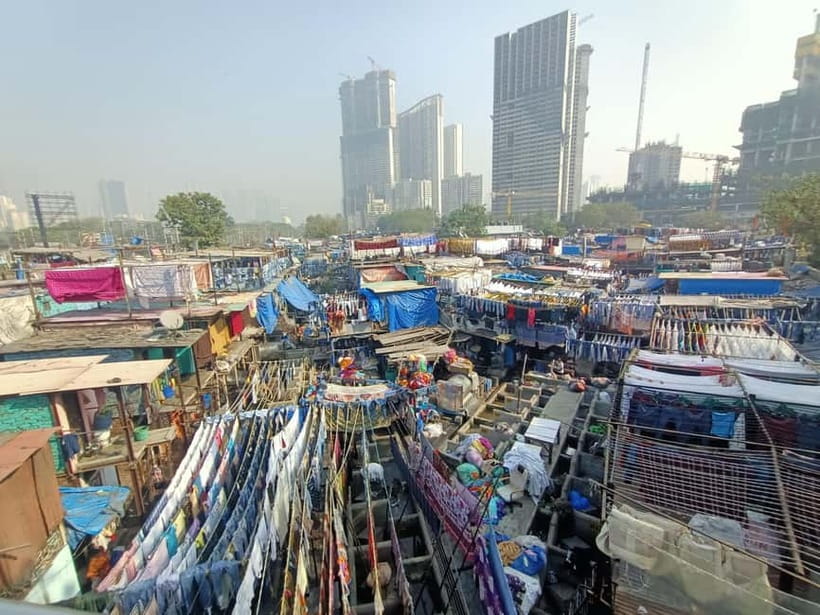
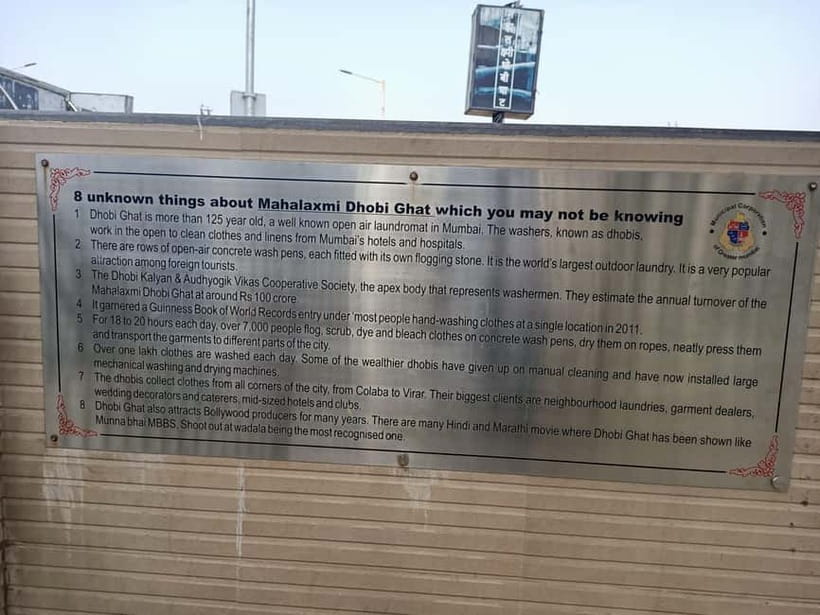
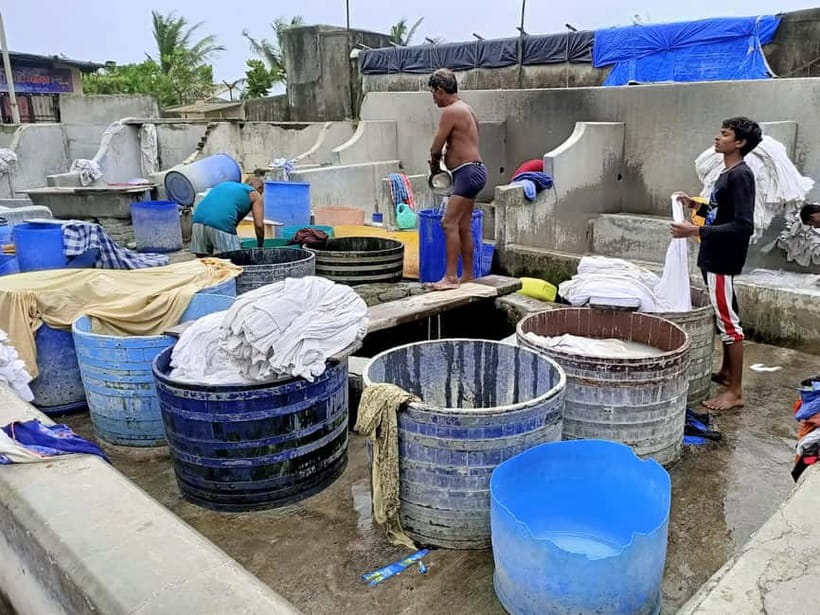
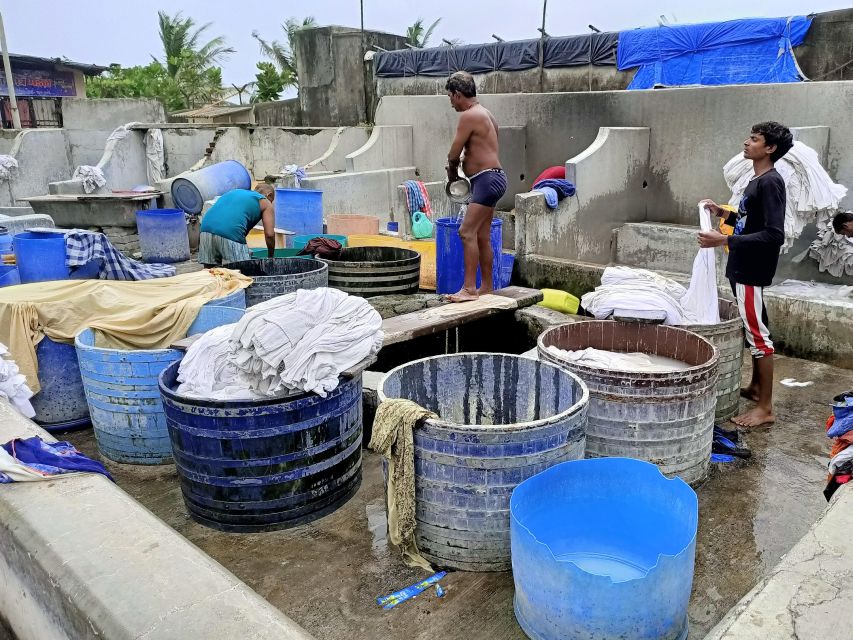
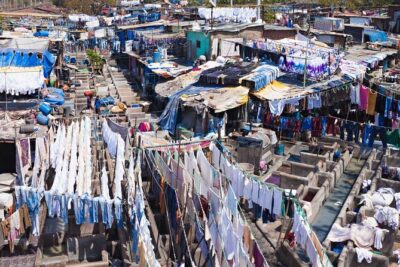
Dhobi Ghat is the tour’s most immediately photogenic stop. From the viewing deck, you look down on Asia’s largest open-air laundry and watch workers handle the city’s garments in a large communal setting.
The viewing platform gives you the best broad view. It helps you understand the scale of the operation in a way that would be hard from street level. You can take a strong photograph from here, but the guide’s explanation is what turns the scene into more than a quick picture.
Some tours may offer a closer look or access inside the laundry area, though the exact program can vary. One account described entering the laundry as a rare and memorable part of the visit. Do not assume that access is guaranteed every time.
Dhobi Ghat also balances the Dharavi visit. At Dharavi, the focus is on homes, local businesses, and community life. At Dhobi Ghat, the emphasis is on a specialized form of urban work. Together, the two stops show how much of Mumbai depends on labor that visitors rarely notice.
The tour finishes at the Dhobi Ghat Viewing Deck. That is convenient if you want to continue sightseeing from there, but you will need to arrange your own onward transport because no later transfer is listed.
What the $26 price really buys you
At $26 per person, I see this as good value for a three-hour introduction to Mumbai’s working neighborhoods. You receive a live English-speaking guide, train tickets, and bottled mineral water. The small group size is important because personal explanation is the tour’s main product.
The value is strongest if you would otherwise avoid using the local train or feel uncertain about entering Dharavi alone. The guide provides structure and local context, while the train ticket keeps the route simple.
The price does not include meals, private transport, or a longer stay in either neighborhood. You are paying for a compact guided visit, not a private cultural program. If you want lots of time for photography, shopping, or extended conversation, this may feel short.
The free cancellation policy allows cancellation up to 24 hours before the tour for a full refund, and you can reserve now and pay later. Those terms are useful if your Mumbai schedule is still changing. Starting times depend on availability, so confirm the slot before planning the rest of your day.
How to prepare for a respectful visit

Wear modest clothing. Short skirts and skirts are listed as not allowed, so choose longer, comfortable clothing that lets you walk easily.
Bring as little as you need. Bottled mineral water is included, but you may still want a small bag for essentials. Comfortable footwear is sensible because the Dharavi section is a walking tour, though the operator does not provide a formal walking-distance or accessibility statement.
Keep your attention on the guide. Dharavi is a real residential and work community, and respectful behavior matters more than collecting dramatic images. Ask before taking photographs, avoid blocking lanes, and do not make a spectacle of people’s homes or jobs.
You should also prepare for strong impressions. The tour presents both resourcefulness and hardship. I think it works best when you arrive ready to listen rather than searching for a simple story about poverty or success.
Who should book this tour?
I would recommend it to first-time visitors who want a guided look at Mumbai beyond major landmarks. It is especially suitable if you are curious about local work, urban life, and public transport, and if you value a guide who can speak from personal experience.
It is also a good fit for people with only a few hours available. The route covers three distinct experiences without requiring a full day. A small group makes the format more personal, and the $26 cost keeps it accessible.
I would hesitate if you want a relaxed sightseeing trip, dislike trains, or feel uncomfortable visiting a residential neighborhood as part of a tour. Dharavi requires tact. You should book only if you are willing to follow local guidance and treat the community with dignity.
Final verdict: a worthwhile introduction to working Mumbai

I would book this tour for the contrast it offers. The Dhobi Ghat viewing deck gives you the big picture, the train ride puts you briefly inside Mumbai’s daily commute, and the Dharavi walk supplies the human detail.
The strongest reason to choose it is the guide. Bhaarti and Abhishek were praised for their local connection, while Hardik and Alkama were remembered for warmth and strong explanations. Ask for a guide who can offer that same personal context when you reserve.
At $26, the package is fairly priced, practical, and focused. It will not show every side of Mumbai, and the three-hour schedule is tight. But if you want an honest, carefully guided look at how people work and live in the city, this is one of the more useful short tours available.
FAQ
How long is the tour?
The advertised duration is three hours. The Dharavi guided walk takes about two hours, and the Dhobi Ghat visit takes about 30 minutes, with the train ride connecting the route.
Where does the tour start?
The starting point is Third Wave Coffee. The exact meeting instructions and starting time depend on the selected date and availability.
Where does the tour finish?
The tour finishes at the Dhobi Ghat Viewing Deck.
Is the train ticket included?
Yes. Train tickets are included in the tour price.
Is bottled water included?
Yes. One of the included services is bottled mineral water.
What language does the guide speak?
The live tour guide speaks English.
How large is the group?
The tour is offered as a small group with a maximum of 10 participants.
Can I cancel the booking?
Yes. You can cancel up to 24 hours in advance for a full refund. You can also reserve now and pay later.
Just added around Mumbai
- Mumbai Slum Tour with Dhobi Ghat Laundry & Train Ride Tour★ 5.0 · 2 reviews
- Mumbai Unseen: Local Train Ride And Sightseeing Tour★ 5.0 · 3 reviews
- All in one-Combo of City, Dhobighat, Slum & Dabbawala with ferry and train ride.★ 4.5 · 2 reviews
- Dharavi Slum & Dhobi Ghat Mumbai: Private Guided Tour★ 5.0 · 4 reviews
- Meet Dabbawala Visit Dhobi Ghat & Dharavi slum with Train★ 5.0 · 2 reviews
- Dhobi Ghat Laundry and Dharavi Slum Tour with Local Train★ 5.0 · 4 reviews
- Mumbai: Dhobi Ghat Tour with Dharavi and Train Ride Options★ 3.4 · 5 reviews
- Dabbawaala Dhobi Ghat Dahravi slum With Local Train Ride★ 5.0 · 2 reviews
Mumbai Train Journeys, compared.
Dabbawala, Dhobi Ghat & Dharavi slum Tour with Local Train Ride
Read our review →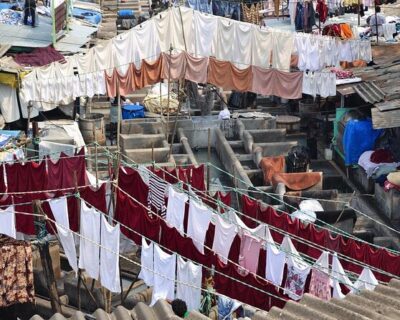
Primmum Mumbai Sightseeing With Local Train Ride Experience
Read our review →
Mumbai City + Dabbawala aka Lunchbox + Train Ride Tour – The Unfeigned Mumbai.
Read our review →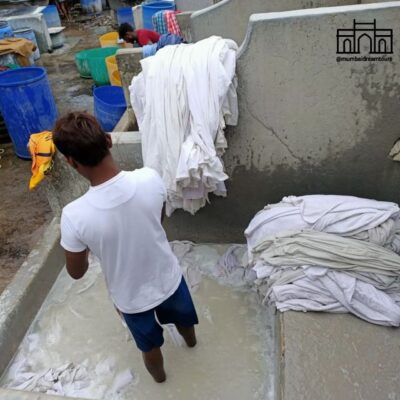
Dhobi Ghat Tour with Dharavi and Train Ride Options
Read our review →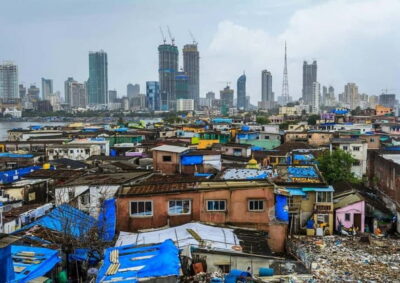
Dhobi Ghat Laundry and Dharavi Slum Tour with Local Train
Read our review →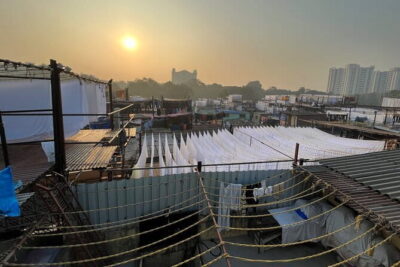
Dharavi Slum & Dhobi Ghat Mumbai: Private Guided Tour
Read our review →
Best Combo Tour: Dabbawalas, Dhobi Ghat and Slum with Train
Read our review →
Mumbai Unseen: Local Train Ride And Sightseeing Tour
Read our review →Browse the lists this tour appears in