
Review · MUMBAI
Dharavi Slum & Dhobi Ghat Mumbai: Private Guided Tour
Mumbai makes its economy visible. This three-hour private tour pairs Dharavi’s working industries with a look at Mahalaxmi Dhobi Ghat, giving you more than a quick walk through narrow lanes. I like the focus on pottery, leather, recycling, and local enterprise, along with the chance to hear the city explained by guides such as Priti, Shruti, Max, or Ruba. The main consideration is that the tour is on foot, and some parts of Dharavi are crowded, active workplaces rather than polished sightseeing stops.
I also like the practical setup: train tickets, bottled water, and an English-speaking guide are included, while the private format lets you ask questions without keeping pace with a large group. Dhobi Ghat is viewed from outside rather than entered, so you get context and photographs but not an inside look at the laundry yards. At $17.57 per person, the price is especially appealing for a private experience, though you should confirm the exact meeting sequence before setting out because the supplied route details describe the stops in different orders.
Key points to know before you book
- Dharavi is presented as an economic center, with leatherwork, pottery, plastic recycling, textiles, and other small businesses.
- Kumbharwada pottery workshops offer one of the tour’s most distinctive cultural details.
- Dhobi Ghat is viewed from a designated outside vantage point, not entered.
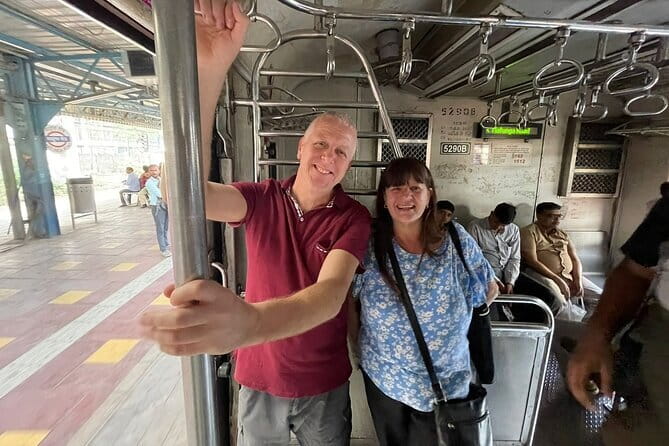
- The tour lasts about three hours and includes walking, train tickets, water, and an English-speaking professional guide.
- Only your private group participates, making it easier to ask direct questions about work and daily life.
- Guide quality is central, with especially strong praise attached to Priti, Shruti, Max, and Ruba.
Why this Dharavi tour is different from a quick photo stop
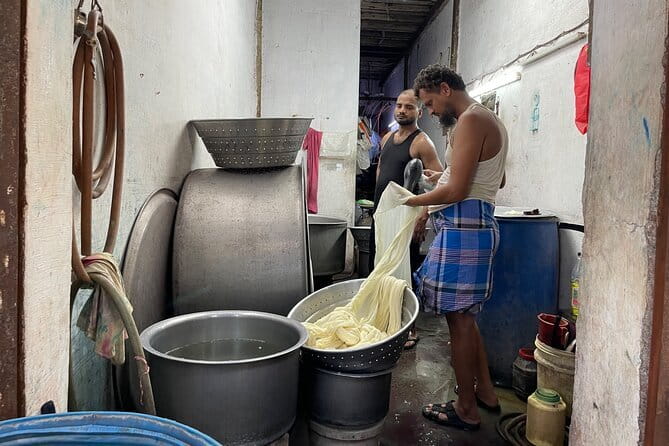
Dharavi is often reduced to a single label. This tour tries to correct that by showing how much work takes place inside the district. The focus is not only on homes and lanes, but also on workshops, production, recycling, and trade.
That shift matters. You see Dharavi as a place where people earn a living, build businesses, and serve Mumbai’s wider economy. The guide explains the community’s history and working patterns while you walk, giving you a better way to understand what you are seeing.
I appreciate the stated aim of treating the area with dignity. The tour is designed around local stories and practical activity, rather than asking you to view residents as scenery. You should still behave with care: listen to your guide, avoid intrusive photography, and remember that the lanes are people’s homes and workplaces.
The private setup helps here. You are not one person in a large crowd moving through a neighborhood. You can pause for an explanation, ask about a workshop, or raise a question about the way businesses operate. That makes a difference on a tour where context matters as much as the sights.
Other train trips people book around Mumbai:
- Dabbawala, Dhobi Ghat & Dharavi slum Tour with Local Train Ride
★ 5.0 · 102 reviews - Mumbai: Dharavi Slum and Dhobi Ghat Tour with Train Ride
★ 5.0 · 9 reviews - Primmum Mumbai Sightseeing With Local Train Ride Experience
★ 5.0 · 7 reviews
The Dharavi walk: leather, recycling, pottery, and enterprise
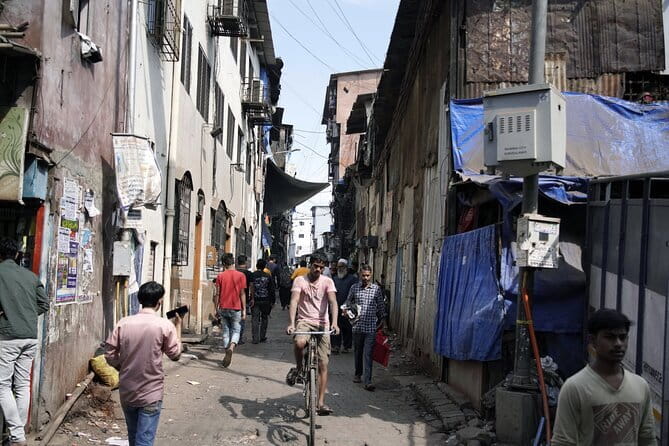
The Dharavi portion takes about two hours, making it the main part of the experience. You walk through narrow lanes with a local guide who explains the district’s history, economy, and community life.
The most interesting feature is the range of industries packed into this small area. The tour highlights leather production, pottery, plastic recycling, and textile work. These are not decorative demonstrations arranged for visitors. The point is to see working activity and understand how many small operations contribute to Mumbai’s economy.
The leather industry gives you a look at one of Dharavi’s best-known trades. The description does not promise a single factory visit or a hands-on workshop, so you should expect to observe activity as the route allows. Your guide’s explanations will help you understand what the businesses do and why they matter.
Kumbharwada, the pottery area, adds a different side of Dharavi. Here, the emphasis is on pottery workshops and the craft traditions connected with them. It is a useful contrast to the industrial work elsewhere on the route, showing how skilled manual production and family or small-business enterprise can exist close together.
Plastic recycling is another notable stop in the tour’s story. The description points to sophisticated recycling units, which is important because it moves the conversation beyond poverty and toward resourcefulness and urban systems. You get a sense of how discarded material can become part of a local business network.
The walk also includes references to textiles and other small-scale work. Since the exact businesses open on a given day are not specified, keep your expectations flexible. The value is in seeing the district’s working pattern and hearing it explained, not in receiving a fixed list of guaranteed shop visits.
The lanes can be tight and active. You need comfortable shoes and a willingness to walk at a steady pace. This is not the right choice if you want a quiet, air-conditioned sightseeing outing from start to finish, even though private air-conditioned transfers are part of the experience described.
Dhobi Ghat from the outside: a short stop with a big view
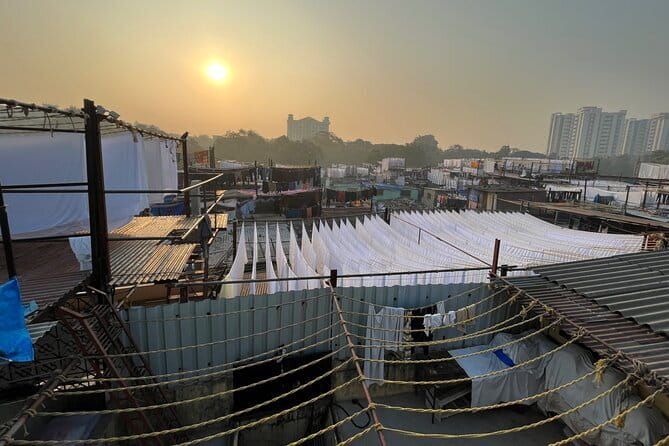
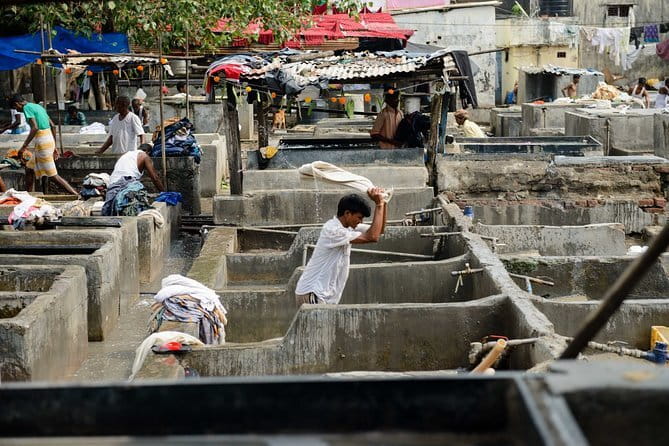
The Dhobi Ghat stop lasts about 15 minutes and is free of an additional admission charge. From a designated viewpoint, you see the famous open-air laundry rather than walking inside the work area.
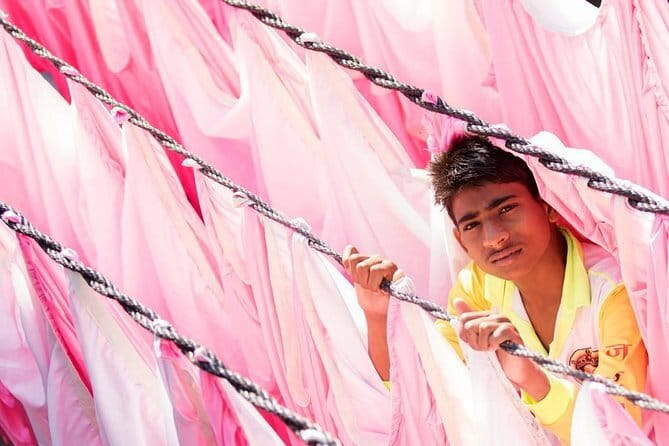
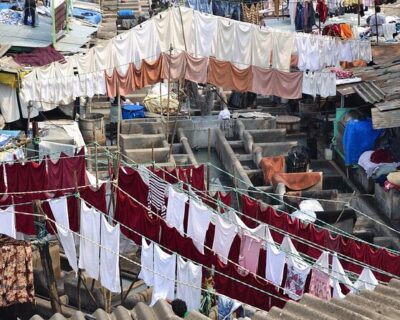
That outside view is still useful. The guide explains how Mumbai’s dhobis wash, dry, and press clothing by hand, and how the service connects with hotels, hospitals, and households. You get a sense of the scale and organization from above or outside, without interrupting the work.
This is a quick stop, so do not expect a long visit or a detailed workshop tour. The strength is the explanation and the visual overview. You can watch the rows of washing, drying, and pressing areas while your guide fills in the daily routine and wider importance of the laundry.
The stop also offers a practical photography point. The tour promises a clear vantage point for photographs, but you should still follow your guide’s advice and avoid treating workers as props. A respectful picture from a public viewing position is very different from moving into an active work area.
One detail worth checking before booking is the route order. The supplied itinerary lists Dhobi Ghat first and Dharavi second, while the end point is also given as Dhobi Ghat. That may simply reflect the operator’s route format, but I would confirm the day’s sequence and final meeting instructions so your transport plans match the actual schedule.
A private format that makes questions easier
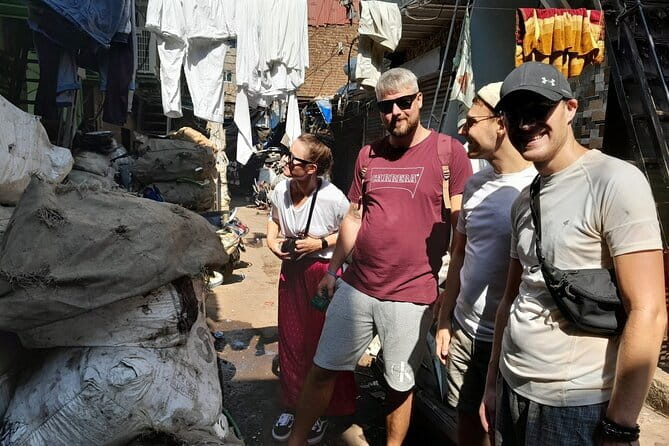
This is a private tour, so only your group takes part. That is valuable in Dharavi because you may want to ask questions that do not fit a standard script. You can ask about the industries you see, the purpose of a lane, or how the neighborhood connects with the rest of Mumbai.
The guide is the key to the experience. The listed guides include Priti, Shruti, Max, and Ruba, and each received particularly warm praise for being friendly, attentive, prompt, or informative. Priti was singled out as an especially strong choice, while Shruti was praised for answering questions and handling the details carefully. Max received praise for paying close attention to requests, and Ruba was noted for explaining daily life clearly.
Guide assignment may depend on availability, so you should not assume you will receive a particular person unless the operator confirms it. Still, these names give you a useful idea of what the company values: clear explanations, patience, and attention to individual questions.
The English-speaking guide is included in the price. That is important because the experience depends on interpretation. Without context, a lane of workshops or a row of laundry stations can be easy to misunderstand. With a good guide, you can connect each sight to Mumbai’s work, housing, and daily routines.
Same tracks, a different day out:
- Mumbai City + Dabbawala aka Lunchbox + Train Ride Tour – The Unfeigned Mumbai.
★ 5.0 · 6 reviews - Mumbai: Dhobi Ghat Tour with Dharavi and Train Ride Options
★ 3.4 · 5 reviews - Dhobi Ghat Laundry and Dharavi Slum Tour with Local Train
★ 5.0 · 4 reviews - Mumbai Unseen: Local Train Ride And Sightseeing Tour
★ 5.0 · 3 reviews
Transport, meeting point, and the three-hour timetable
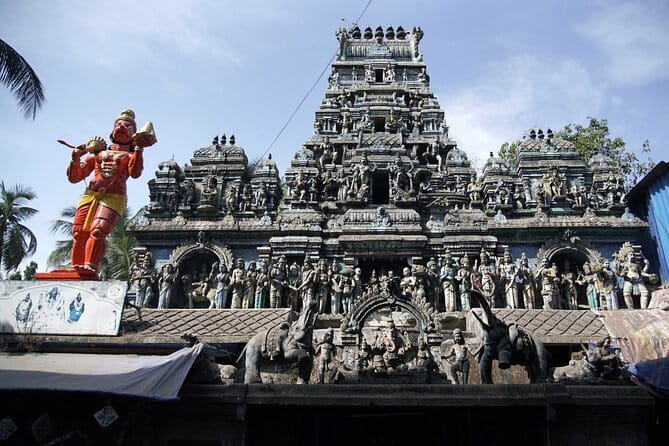
The meeting point is Third Wave CoffeeTip Road, Unit 58, Ground, Ram Mahal, Senapati Bapat Marg, Marinagar Colony, Station, Mahim, Mumbai, Maharashtra 400016. The tour includes train tickets and is near public transport.
Private air-conditioned transfers are also described as part of the experience. Since the listed meeting and end details include both train travel and transfers, check the exact pickup arrangement at booking. The available information confirms the inclusions, but it does not set out every transfer leg in detail.
The tour lasts about three hours. Roughly two hours are allocated to Dharavi and 15 minutes to Dhobi Ghat, leaving time for movement between areas and explanations. That is a sensible length for a first introduction, but it is not enough for a slow, exhaustive study of every industry.
The stated end point is Dhobi Ghat, Shanti Nagar, Lower Parel, Mumbai. From there, you can catch an Uber or take a train back to your hotel. This makes the finish practical if you are planning to continue sightseeing in central Mumbai, but allow a little flexibility because the timing is approximate.
Bottled water is included. I would still wear light, comfortable clothing and shoes suited to walking. The tour data says most people can participate, but it does not provide a detailed accessibility assessment for narrow lanes, uneven surfaces, or steps, so ask the operator if mobility is a concern.
Is $17.57 a fair price?
At $17.57 per person, the tour offers good value if the private arrangement and included transport work for your plans. You receive an English-speaking guide, train tickets, bottled water, and a three-hour route covering two of Mumbai’s most distinctive working areas.
The value is not based on admission fees. Both stops are listed with no additional ticket charge. You are paying mainly for access to a local explanation, the private format, route planning, and the chance to connect separate parts of Mumbai’s economy.
That makes the price especially attractive for two or more people sharing a booking, though group discounts are also available. A solo visitor may still find it worthwhile if the private guide and transport remove the stress of navigating the route alone.
The low price also means you should keep expectations realistic. This is not a luxury tour with an elaborate meal, a long indoor workshop, or a formal museum component. It is a compact walking experience built around local knowledge and observation.
What may not suit every person
The subject matter requires a thoughtful attitude. Dharavi is a living community, not a theme park. If you want only grand monuments, air-conditioned vehicles, and polished attractions, this tour may feel demanding.
The walk can also be visually intense. Narrow lanes, working areas, recycling activity, and crowded streets are part of the setting. You should be ready to listen more than you photograph and to accept that the route may not feel neatly organized in the way a museum visit does.
Dhobi Ghat is a short outside viewing stop. If your main goal is to enter the laundry and meet workers inside, this experience will not provide that. You get a guided look from a designated vantage point instead.
The limited review sample is very positive, with a five-star overall rating from four reviews, but that is a small number. I would place more weight on the tour design, the private structure, and the named guide feedback than on the rating alone.
Who should book this Mumbai experience?
I would recommend it to you if you want to understand how ordinary work shapes Mumbai. It suits curious first-time visitors, photographers who value context, and anyone interested in small businesses, recycling, crafts, and urban communities.
It is also a good choice if you prefer a private guide to a large group. You can ask more questions and move at a pace suited to your party, within the limits of the three-hour schedule.
Families with older children may find the industries and train travel engaging, provided everyone is comfortable with walking and the serious subject matter. The tour can also suit solo visitors who want a local guide and a planned route rather than managing the transport alone.
I would think twice if you have limited walking ability, dislike crowded urban lanes, or want a long indoor visit at Dhobi Ghat. The supplied information says most people can participate, but it does not promise a step-free route or detailed accessibility support.
Free cancellation is available if you cancel at least 24 hours before the start time. Cancellations within 24 hours are not refunded, and changes during that period are not accepted, so keep that deadline in mind.
Should you book the Dharavi and Dhobi Ghat tour?
Book it if you want a respectful look at Mumbai’s working life and value a guide who can explain what you are seeing. The focus on leather, pottery, recycling, textiles, and laundry makes this far more useful than a quick drive past the district.
The strongest reasons to go are the private format, the low price, included train tickets, and the chance to learn from guides praised for their friendliness and attention. Ask if Priti, Shruti, Max, or Ruba is available, but understand that guide assignment may vary.
Before confirming, check the exact route order, pickup details, and walking conditions. If those suit you, this is a practical, affordable way to see a side of Mumbai that many visitors miss.
FAQ
How long does the tour last?
The experience lasts approximately three hours. About two hours are allocated to Dharavi, and Dhobi Ghat is listed as a 15-minute stop, with the remaining time used for travel and explanations.
Is this a private tour?
Yes. Only your group participates in the private activity.
What is included in the price?
The tour includes bottled water, train tickets, and a professional English-speaking guide. Private air-conditioned transfers are also described as a feature of the experience.
Where does the tour start?
The meeting point is Third Wave CoffeeTip Road, Unit 58, Ground, Ram Mahal, Senapati Bapat Marg, Marinagar Colony, Station, Mahim, Mumbai, Maharashtra 400016, India.
Where does the tour finish?
The stated end point is Dhobi Ghat, Shanti Nagar, Lower Parel, Mumbai, India. From there, you can use an Uber or take a train back to your hotel.
Will I enter Dhobi Ghat?
No. The visit is from a designated outside vantage point. Your guide explains the laundry’s work and history while you view the site from outside.
What will I see in Dharavi?
The route focuses on leatherwork, pottery in Kumbharwada, plastic recycling, textile production, small-scale industries, and community life.
Is the tour suitable for most people?
The available information says most people can participate and notes that the tour is near public transportation. It is a walking experience, so ask the operator for more details if you have specific mobility needs.
Can I cancel for a full refund?
Yes, if you cancel at least 24 hours before the experience start time. Cancellations or changes made within 24 hours are not refunded or accepted.
Just added around Mumbai
- Mumbai Slum Tour with Dhobi Ghat Laundry & Train Ride Tour★ 5.0 · 2 reviews
- Mumbai Unseen: Local Train Ride And Sightseeing Tour★ 5.0 · 3 reviews
- All in one-Combo of City, Dhobighat, Slum & Dabbawala with ferry and train ride.★ 4.5 · 2 reviews
- Meet Dabbawala Visit Dhobi Ghat & Dharavi slum with Train★ 5.0 · 2 reviews
- Dhobi Ghat Laundry and Dharavi Slum Tour with Local Train★ 5.0 · 4 reviews
- Mumbai: Dhobi Ghat Tour with Dharavi and Train Ride Options★ 3.4 · 5 reviews
- Dabbawaala Dhobi Ghat Dahravi slum With Local Train Ride★ 5.0 · 2 reviews
- Best Combo Tour: Dabbawalas, Dhobi Ghat and Slum with Train★ 3.5 · 3 reviews
Mumbai Train Journeys, compared.

Dabbawala, Dhobi Ghat & Dharavi slum Tour with Local Train Ride
Read our review →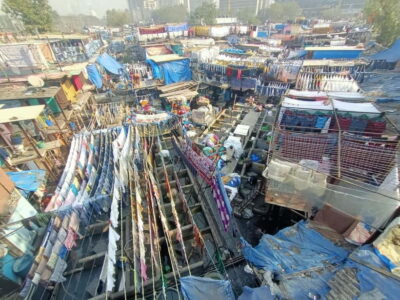
Primmum Mumbai Sightseeing With Local Train Ride Experience
Read our review →
Mumbai City + Dabbawala aka Lunchbox + Train Ride Tour – The Unfeigned Mumbai.
Read our review →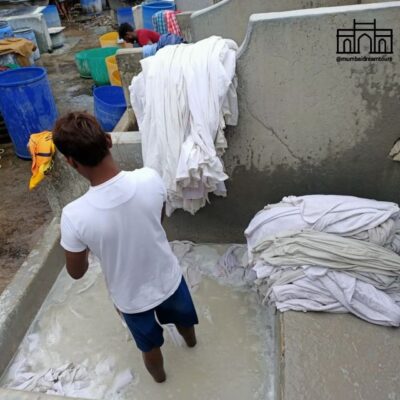
Dhobi Ghat Tour with Dharavi and Train Ride Options
Read our review →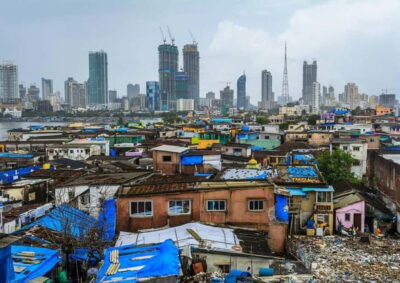
Dhobi Ghat Laundry and Dharavi Slum Tour with Local Train
Read our review →
Best Combo Tour: Dabbawalas, Dhobi Ghat and Slum with Train
Read our review →
Mumbai Unseen: Local Train Ride And Sightseeing Tour
Read our review →Browse the lists this tour appears in